Effects of Hybridization and Triploidization on Transcription of Core Metabolic and Stress Response Genes in Rainbow Trout (Oncorhynchus mykiss) × Brook Trout (Salvelinus fontinalis) Hybrids—Preliminary Results
Marcin Kuciński, Rafał Rożyński, Konrad Ocalewicz

TL;DR
This study explores how hybridization and triploidization affect gene expression related to metabolism and stress in trout hybrids, finding mixed results on growth and stress response.
Contribution
The study provides preliminary insights into transcriptional changes in triploid hybrids of rainbow and brook trout, linking gene expression to growth and stress response.
Findings
Most genes showed stable expression in triploid hybrids compared to diploid parents, with some upregulation in energy and protein synthesis genes.
Triploid hybrids exhibited downregulation of Hsp90B1, suggesting altered stress response regulation.
Upregulated genes in triploid hybrids did not translate into improved growth performance.
Abstract
The transcriptomic effects of hybridization and triploidization were investigated in diploid and triploid rainbow trout, diploid brook trout, as well as triploid hybrids of rainbow trout and brook trout. The examined fish were reared under identical conditions for about two and a half years after hatching. Expression of ten genes involved in cellular respiration (Atp5bp, Slc25a5), mitochondrial functioning (Mrpl28, Micu2), ribosome biogenesis (Rpl24, Rps24), proteasome-mediated protein turnover (Derl1, Psmc2), and protein chaperoning (Hsp90B1, Pdia4) was studied in liver and muscle tissues. Most of the analyzed genes (Atp5bp, Slc25a5, Mrpl28, Micu2, Rpl24, Rps24, Derl1, and Psmc2) displayed comparable expression levels in the liver tissue across the examined triploid hybrids and diploid parental species, with stabilization of genes that were both positively and negatively compensated in…
Genes, proteins, chemicals, diseases, species, mutations and cell lines named across the full text — each resolved to its canonical identifier and authoritative record.
Click any figure to enlarge with its caption.
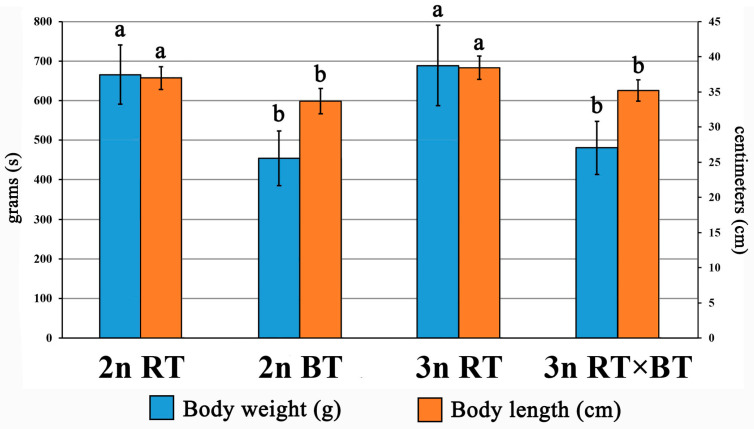 Figure 1
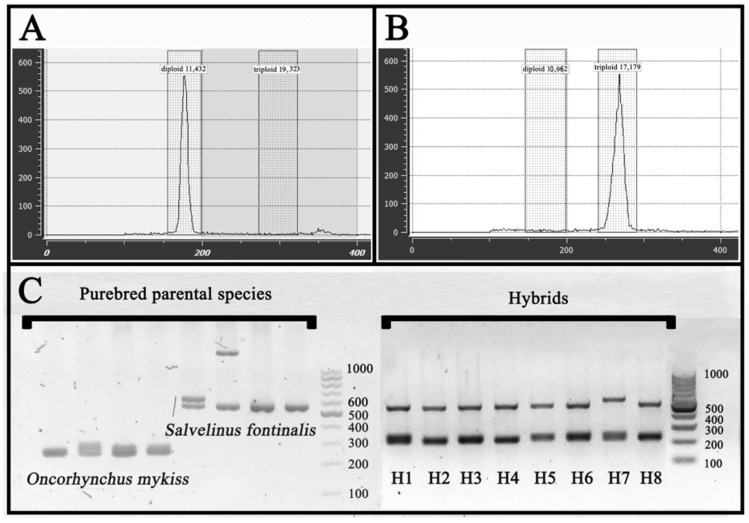 Figure 2
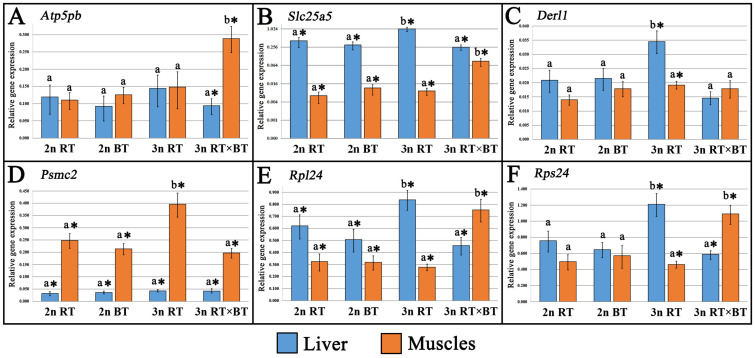 Figure 3
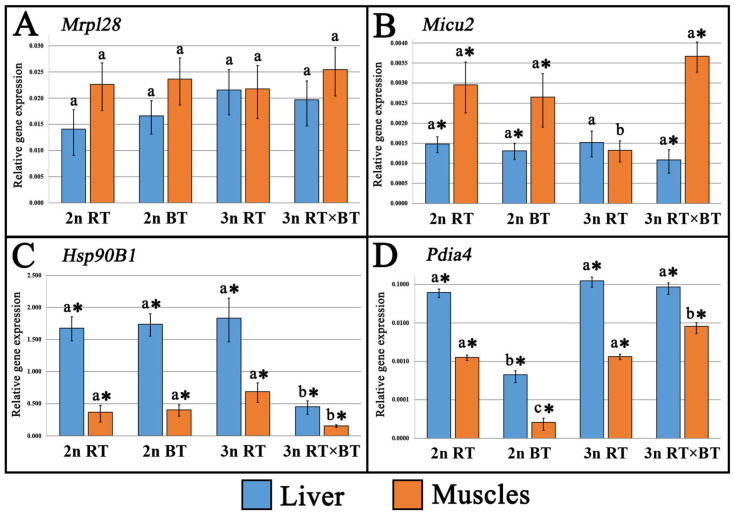 Figure 4
Peer Reviews
No public reviews on file for this paper yet. If you reviewed it on a platform where reviews are public (OpenReview, ICLR, NeurIPS, ICML), you can paste yours below so the community can read it here.
Videos
No videos yet. Explain this paper in a talk, walkthrough, or lecture? Add one.
Taxonomy
TopicsReproductive biology and impacts on aquatic species · Aquaculture Nutrition and Growth · Aquaculture disease management and microbiota