Lipid Deterioration Mitigation in Brown Rice Milled from Long-Term Stored Paddy by Microwave: A Lipidomic Perspective
Senfan Luo, Beibei He, Li Wang, Luyao Zhao, Weiwei Wang

TL;DR
Microwave treatment can significantly reduce lipid deterioration in long-stored brown rice, improving its quality through enzyme inactivation and metabolic changes.
Contribution
The study reveals that microwave treatment reprograms lipid metabolism and activates autophagy, beyond just enzyme inactivation.
Findings
Microwave treatment reduced free fatty acid value by up to 76.3% in stored brown rice.
FT-IR analysis showed microwave treatment inhibited lipid oxidation and hydrolysis.
Lipidomics revealed metabolic reprogramming and autophagy pathway activation.
Abstract
The utilization of brown rice from long-term stored paddy is severely limited by lipid deterioration, which is primarily characterized by a high free fatty acid value (FAV). Although microwave treatment shows promise in mitigating lipid deterioration, its underlying mechanism in degraded grains remains poorly understood. This study systematically investigated the efficacy and mechanism of microwave treatment using a multi-analytical approach. Brown rice from long-term stored paddy (Longjing-46, stored for 6 years) was treated using a laboratory microwave oven (420 W or 560 W, 1–5 min). The reduction in FAV was quantified, lipid structural changes were analyzed by FT-IR spectroscopy, and lipid metabolic alterations were profiled using untargeted lipidomics. Results showed that microwave treatment significantly reduced FAV in a time- and power-dependent manner, with a maximum reduction of…
Genes, proteins, chemicals, diseases, species, mutations and cell lines named across the full text — each resolved to its canonical identifier and authoritative record.
Click any figure to enlarge with its caption.
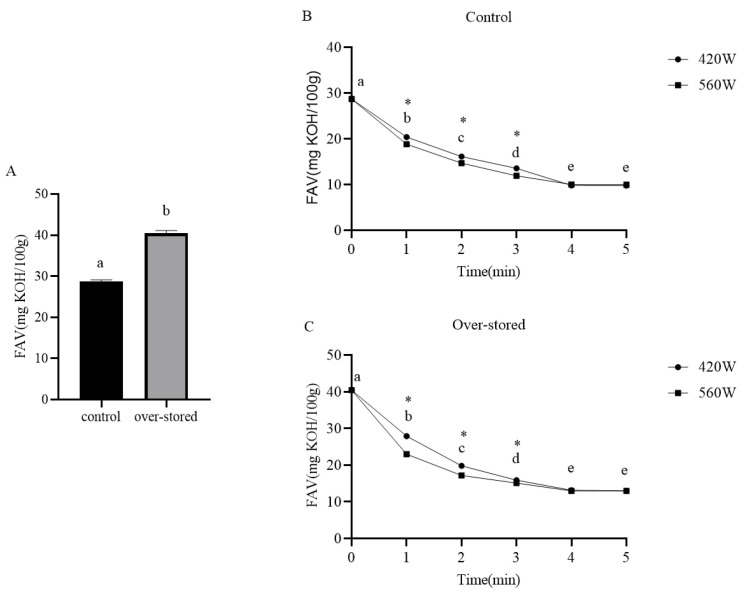 Figure 1
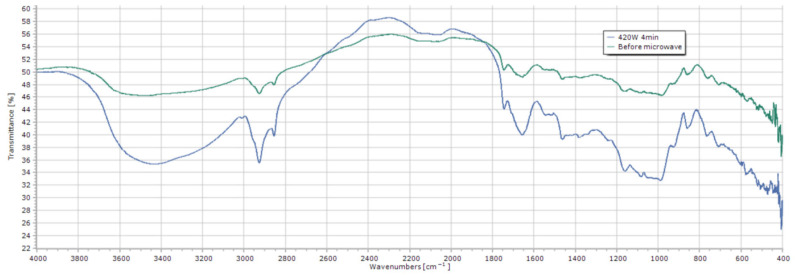 Figure 2
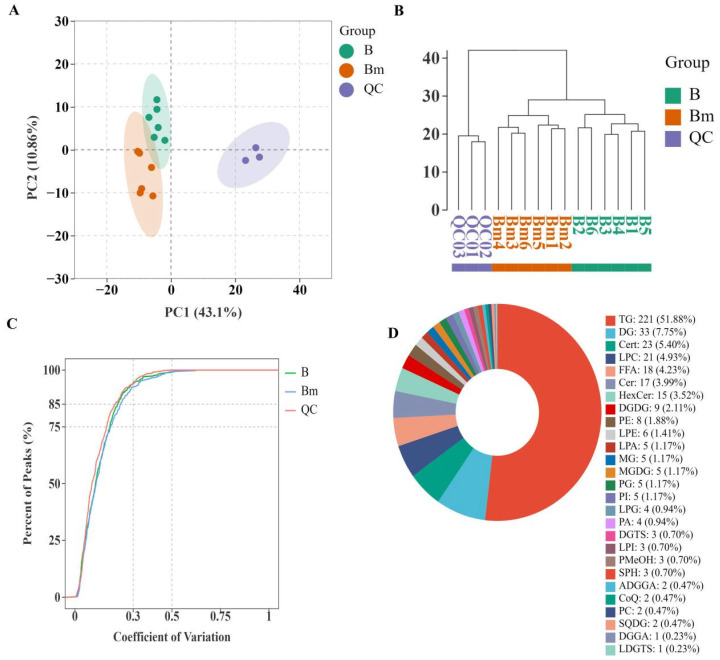 Figure 3
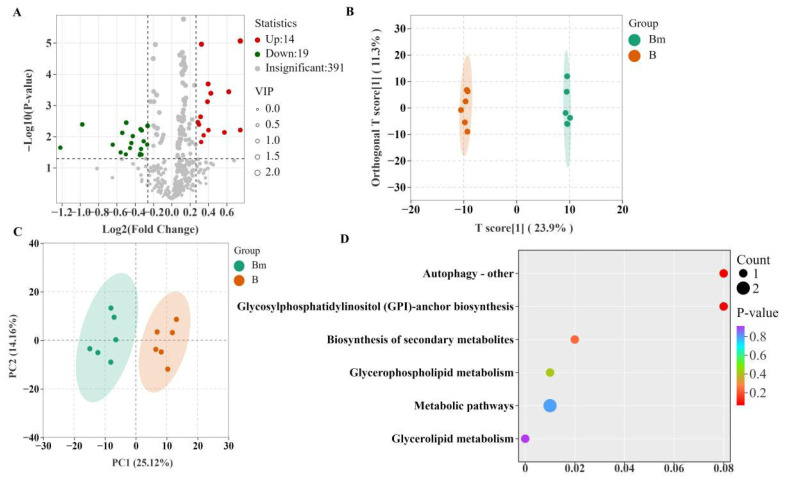 Figure 4
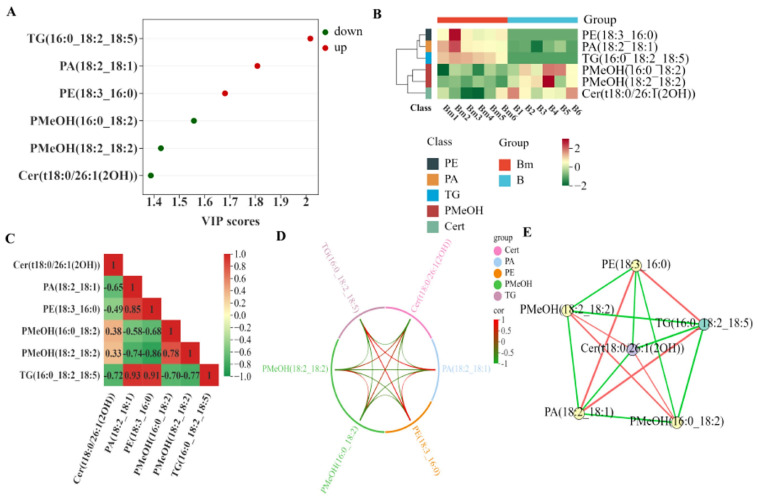 Figure 5
- —National Key Research and Development Program of China
- —Youth Talent Support Program of the National Food and Strategic Reserves Administration
Peer Reviews
No public reviews on file for this paper yet. If you reviewed it on a platform where reviews are public (OpenReview, ICLR, NeurIPS, ICML), you can paste yours below so the community can read it here.
Videos
No videos yet. Explain this paper in a talk, walkthrough, or lecture? Add one.
Taxonomy
TopicsEdible Oils Quality and Analysis · Food composition and properties · Food Drying and Modeling
1. Introduction
The long-term storage of paddy rice often leads to irreversible quality deterioration in its milled products, representing a significant postharvest loss within the global grain supply chain [1]. This deterioration is primarily driven by the hydrolysis and oxidation of lipids in the bran layer, resulting in a marked increase in free fatty acid value (FAV), a key indicator of rancidity and a factor that downgrades rice from food-grade to feed or even industrial use [2,3]. Furthermore, rice high in free fatty acid (FFA), when used as animal feed can negatively affect animal product quality (e.g., eggs, meat), reducing both nutritional value and market competitiveness [4]. Therefore, developing effective strategies to mitigate lipid deterioration and reduce FAV in brown rice from long-term stored paddy is crucial for resource recovery and value addition.
Among non-thermal technologies, microwave treatment is a promising, rapid intervention. Its efficacy is attributed to its ability to inactivate key spoilage enzymes, such as lipase and lipoxygenase, through both thermal and potential athermal effects, thus delaying lipid hydrolysis and oxidation in grains [5]. While its effectiveness in preserving fresh grains is well-documented, there remains a knowledge gap regarding its application to already-degraded grains, specifically brown rice from long-term stored paddy [6]. Moreover, the mechanism by which microwave treatment reduces FFAs remains largely unclear. Current understanding relies primarily on bulk chemical indicators, without elucidating the underlying lipid molecular reprogramming [7,8]. This lack of mechanistic insight limits process optimization and the rational deployment of microwave technology for grain quality stabilization.
We hypothesize that microwave treatment induces a systemic remodeling of the lipid profile in brown rice from long-term stored paddy, and that this molecular-level reorganization is closely linked to the observed reduction in FFAs. To test this hypothesis and address the aforementioned knowledge gap, this study was designed to move beyond conventional quality assessment. We first optimized microwave parameters for maximal FFA reduction. Then, we employed an untargeted lipidomics approach, a powerful tool for providing detailed insights into lipid composition and metabolic pathways in food systems, including stored grains [9,10]. This approach was used to identify differential lipid species and map the altered metabolic pathways in response to treatment. Finally, integrative correlation analysis was conducted to establish links between lipidomic shifts and FFA reduction. This work provides the first mechanistic, lipid-centric explanation of microwave-mediated quality improvement in brown rice from long-term stored paddy. By integrating process optimization with advanced metabolomics, our findings offer a scientific basis for transforming microwave treatment from a generic processing tool into a targeted, knowledge-driven strategy for valorizing degraded grain stocks and improving postharvest resource efficiency.
2. Materials and Methods
2.1. Materials
Longjing-46 brown rice samples (Heilongjiang, China) were obtained from paddy rice stored for two years (designated as fresh-stored control) and six years (designated as long-term stored) under ambient warehouse conditions (~20 °C, relative humidity ~65%). The six-year storage period exceeds the recommended duration for maintaining optimal rice quality, thus constituting a model for studying storage-induced deterioration.
2.2. Microwave Treatment
The brown rice samples from long-term stored paddy were subjected to microwave treatment using a laboratory microwave (JTONE-J1-3, Hangzhou, China) oven (frequency: 2450 MHz; maximum power output: 800 W). To determine the optimal processing conditions, samples were treated at two power levels: 420 W (medium-low) and 560 W (medium-high). At each power level, treatment durations of 1, 2, 3, 4, and 5 min were applied. The samples (200 g) were spread in a single layer (approximately 6–8 mm thickness) on a glass plate during treatment to ensure uniform exposure. After treatment, all samples were immediately cooled to room temperature in a desiccator prior to subsequent analysis.
2.3. Determination of Free Fatty Acid Value (FAV)
The FAV was determined according to a standard alkaline titration method with minor modifications [11]. Briefly, brown rice samples were ground to pass through a 425 μm sieve using an IKA M20 grinder (IKA, Shanghai, China). A precisely weighed sample (10.00 ± 0.01 g) was mixed with 50 mL of absolute ethanol in a sealed conical flask and shaken at 100 strokes/min for 10 min. After filtration, 25.0 mL of the filtrate was titrated with a standardized 0.01 M potassium hydroxide (KOH) solution using phenolphthalein as an indicator. A blank titration was performed using 25.0 mL of absolute ethanol. The moisture content of each sample was determined by oven-drying at 105 °C to constant weight. All measurements were performed in triplicate. The FAV was calculated as follows and expressed as mg KOH per 100 g of dry matter:
FAV (mg KOH/100 g dry basis) = [(V_1_ − V_0_) × C × 56.11 × 2 × 100]/(m × (1 − w)), where V_1_ and V_0_ are the KOH titration volumes (mL) for the sample and blank, respectively; C is the exact concentration of the KOH solution (mol/L); m is the sample mass (g); and w is the moisture content (g/g).
2.4. Fourier Transform Infrared (FT-IR) Spectroscopic Analysis
Lipid structural changes were analyzed using FT-IR spectroscopy (Nicolet iS50, Thermo Fisher Scientific, Waltham, MA, USA) with the potassium bromide (KBr) pellet method [12]. Briefly, KBr powder was dried overnight at 100 °C. Brown rice samples were finely ground and homogeneously mixed with dried KBr at a 1:100 (w/w) ratio. The mixture was pressed into transparent pellets under 8 MPa for 2 min. Spectra were acquired using a Bruker Alpha II FT-IR spectrometer (Bruker Optics GmbH, Ettlingen, Germany) in the range of 4000–400 cm^−1^ with a resolution of 4 cm^−1^. For each sample, 64 scans were co-added to improve the signal-to-noise ratio. Background spectra of pure KBr pellets were recorded and automatically subtracted from the sample spectra.
2.5. Lipidomics Analysis
A comprehensive, untargeted lipidomics approach was employed to profile lipid metabolites. Sample preparation followed a modified methyl tert-butyl ether (MTBE) extraction protocol [13]. Freeze-dried and finely ground (filtered through a 180 μm sieve) brown rice powder (20 mg) was extracted with 1 mL of MTBE/methanol (3:1, v/v) by vortexing for 15 min. After the addition of 300 µL of water, the mixture was centrifuged (12,000× g, 10 min, 4 °C). The upper organic layer was collected, dried under a gentle nitrogen stream, and reconstituted in 200 µL of methanol/isopropanol (1:1, v/v). Lipid separation was performed using ultra-performance liquid chromatography (UPLC, ExionLC™ AD, AB SCIEX, Framingham, MA, USA) equipped with a C18 column maintained at 45 °C. The mobile phase consisted of (A) acetonitrile/water (60:40, v/v) and (B) isopropanol/acetonitrile (90:10, v/v), both containing 10 mM ammonium formate and 0.1% formic acid. A 20 min linear gradient was used [14].
Mass spectrometric detection was carried out on a tandem mass spectrometer (MS/MS; QTRAP^®^ 6500+, AB SCIEX, Framingham, MA, USA) operated in both positive and negative electrospray ionization modes, essential for comprehensive lipid coverage and consistent with the UPLC-MS/MS approach reported by refs. [15,16] for lipid profiling. Prepared samples were stored at −80 °C until analysis. All operations were conducted under low-light conditions to prevent photo-oxidation. Quality control (QC) samples, prepared by pooling aliquots from all samples, were injected at regular intervals to monitor system stability.
2.6. Statistical Analysis
Experiments were conducted with three (for microwave treatment and FAV) or six (for lipidomics) biological replicates as specified in the respective sections. Data were expressed as mean ± standard deviation (SD). Statistical analysis was conducted using SAS 9.4 software (SAS Institute Inc., Cary, NC, USA) with one-way ANOVA and the Student–Newman–Keuls multiple-range test, with statistical significance set at p < 0.05. For lipidomics data, multivariate statistical analyses were performed using MetaboAnalyst 6.0 (McGill University, Montreal, QC, Canada). Unsupervised principal component analysis (PCA) was first applied to observe intrinsic clustering. Subsequently, supervised orthogonal partial least squares-discriminant analysis (OPLS-DA) was used to maximize group separation and identify lipids contributing most to the variance (VIP > 1.0). Significantly altered lipids (p < 0.05, fold change > 2 or <0.5) were subjected to pathway enrichment analysis based on the Kyoto Encyclopedia of Genes and Genomes (KEGG) database [17,18].
3. Results and Discussion
3.1. Optimization of Microwave Parameters for FAV Reduction
The assessment revealed a clear effect of storage duration on lipid stability. The free fatty acid value (FAV) of the brown rice milled from long-term stored paddy (6 years) was 40.45 ± 0.69 mg KOH/100 g, significantly higher (p < 0.05) than that of the control (2 years) at 28.68 ± 0.42 mg KOH/100 g (Figure 1A). This 41% increase aligns with established knowledge that prolonged storage accelerates lipid hydrolysis via endogenous lipase activity, leading to free fatty acid (FFA) accumulation [19,20].
Microwave treatment proved highly effective in reversing this deterioration. As shown in Figure 1B,C, the FAV decreased significantly in a time-dependent manner at both power settings (420 W and 560 W). Statistical analysis (Table 1) confirmed that microwave power, treatment time, and their interaction all had highly significant effects on FAV reduction (p < 0.01). The reduction kinetics followed a biphasic pattern: a sharp, linear decrease during the first 3–4 min, after which it plateaued. Notably, the plateau FAV for long-term stored samples (~13 mg KOH/100 g) remained higher than that for control samples (~10 mg KOH/100 g), indicating a baseline level of irreversible hydrolytic damage from long-term storage. For long-term stored rice treated at 420 W, the FAV was reduced by 75.5% after 4 min, with no significant further reduction at 5 min.
A key finding was the differential response based on storage history. The maximum achievable FAV reduction rate was higher for long-term stored samples (76.3%) than for controls (69.1%) under identical conditions (560 W, 5 min). We hypothesize that this enhanced efficacy stems from the higher initial activity of lipid-degrading enzymes (e.g., lipase, lipoxygenase) in long-stored rice. Microwave treatment, through its rapid thermal effect, may more effectively denature these pre-activated enzymes, leading to a proportionally greater suppression of hydrolysis [21]. From a practical, energy-conscious perspective, treating long-term stored rice at 420 W for 4 min emerged as the optimal condition, achieving 75.5% reduction (comparable to the maximum reduction) while consuming approximately 33% less energy than the 560 W/5 min protocol.
3.2. Molecular-Level Evidence from FT-IR Spectroscopy
Fourier-transform infrared (FT-IR) spectroscopy provided direct, molecular-level evidence supporting the observed FAV trends and elucidating the structural changes in lipids. The comparative spectra of untreated and microwave-treated long-term stored rice are shown in Figure 2, with key regions annotated.
In the C–H stretching region (2800–3050 cm^−1^), the untreated sample exhibited notably weaker absorption at 3010 cm^−1^, characteristic of the =C–H stretch in unsaturated fatty acids. This attenuation is a classic indicator of oxidative scission at carbon–carbon double bonds, confirming that long-term storage induced oxidation of unsaturated lipids [22,23]. After microwave treatment, the intensity at 3010 cm^−1^ increased relative to the untreated sample, suggesting that the treatment halted or slowed further oxidation, thereby preserving the remaining unsaturated structures.
More definitive evidence came from the carbonyl stretching region (1700–1750 cm^−1^). The spectrum of untreated rice displayed a prominent peak at 1720 cm^−1^, assigned to the C=O stretch of carboxylic acids in free fatty acids (FFAs), alongside a shoulder at 1740 cm^−1^, corresponding to the ester C=O in triglycerides (TGs). The strong 1720 cm^−1^ signal visually corroborated the high FAV measurement. After microwave treatment, a decisive spectral shift occurred: the intensity at 1740 cm^−1^ increased significantly while the peak at 1720 cm^−1^ diminished. This inverse relationship provides direct spectroscopic proof that microwave treatment suppressed the hydrolysis of ester bonds in TGs, thereby reducing the accumulation of FFAs. This finding is in full agreement with the quantitative FAV data and aligns with studies on microwave mitigation of lipid hydrolysis in other cereal matrices [24].
3.3. Comprehensive Lipidomic Profiling and Pathway Analysis
To go beyond bulk indicators and structural fingerprints, we employed untargeted lipidomics to achieve a systems-level understanding of the metabolic changes. The high quality and reproducibility of the data were affirmed by the tight clustering of quality control (QC) samples in the principal component analysis (PCA) score plot (Figure 3A) and a coefficient of variation (CV) distribution showing over 75% of lipids had a CV below 0.3 in QCs (Figure 3C), ensuring robust downstream analysis [25].
A total of 27 lipid classes were identified and quantified (Figure 3D). Triglycerides (TGs), diglycerides (DGs), and ceramides (Cers) were the most abundant, reflecting the typical storage and membrane lipid composition of cereal grains [26,27]. Comparative analysis between microwave-treated and untreated long-term stored rice, using strict criteria, revealed 33 significantly differentially abundant lipids (14 upregulated, 19 downregulated; volcano plot in Figure 4A, detailed list in Table 2). Notably, among the downregulated lipids were multiple ceramide species and free fatty acids (e.g., stearic acid, heptadecanoic acid), directly linking the lipidomic shift to the observed reduction in the FAV [28]. Supervised multivariate analyses, including PCA and orthogonal partial least squares-discriminant analysis (OPLS-DA) performed specifically on these differential lipids, showed a clear and distinct separation between the two groups (Figure 4B,C), confirming that microwave treatment induces a profound reprogramming of the lipidome.
Kyoto Encyclopedia of Genes and Genomes (KEGG) pathway enrichment analysis of these differential lipids identified several significantly impacted metabolic pathways (Figure 4D). Most notably, the autophagy pathway was prominently enriched. This is a compelling finding, as autophagy is a conserved cellular process that clears and recycles damaged organelles and macromolecules, including peroxidized lipids, in response to stress. Our results suggest that microwave treatment may act as a mild stressor, activating autophagic machinery to facilitate the removal of oxidation-damaged lipids and their breakdown products, thus contributing to the overall reduction in FFA levels. This hypothesis is supported by literature linking autophagy to lipid homeostasis in eukaryotic systems [29].
4. Identification of Key Regulatory Lipids and Synergistic Mechanism
To extract actionable insights from the complex lipidomic data, we identified the lipids most critical for distinguishing the treated and untreated states using Variable Importance in Projection (VIP) analysis from the OPLS-DA model (Figure 5A). Three lipids with VIP scores > 1.5 were highlighted as key contributors: two phosphatidyl methanol species (PMeOH(16:0_18:2) and PMeOH(18:2_18:2)) and a hydroxylated ceramide (Cer(t18:0/26:1(2OH))). All three were significantly downregulated following microwave treatment (Table 2), with PMeOH(18:2_18:2) showing the most dramatic decrease (fold change = 0.43).
Subsequent correlation analyses, including a correlation heatmap (Figure 5C), a chord diagram (Figure 5D), and a network analysis (Figure 5E), revealed a strong positive correlation among these three key lipids. This indicates their levels co-vary, suggesting they are metabolically linked and undergo coordinated, synergistic degradation in response to microwave energy. The degradation of these specific lipids presents a novel mechanistic insight. While triglyceride (TG) hydrolysis directly contributes to FFAs, the downregulation of phosphatidyl methanol (PMeOH), a less common glycerophospholipid, and ceramide (Cer), a central sphingolipid involved in signaling, suggests broader regulatory effects. The hierarchical clustering heatmap (Figure 5B) further visually corroborates that these key lipids cluster together and exhibit a consistent downregulation pattern in the treated group. Ceramides are known to interact with fatty acid metabolism, and their alteration can influence overall lipid homeostasis [30]. Microwave treatment, through its combined thermal and potential non-thermal field effects, may simultaneously inactivate hydrolytic enzymes and disrupt the metabolic network connecting these lipid pools.
5. Conclusions
This study demonstrates that microwave treatment is an effective technology for rapidly improving the lipid quality of brown rice derived from long-term stored paddy, addressing the challenge of postharvest grain loss. The optimal treatment condition (420 W, 4 min) reduced the fatty acid value by 75.5%, achieving a balance between efficacy and energy efficiency. Beyond direct enzyme inactivation, the novel mechanism involves a microwave-induced reprogramming of the lipid metabolic network. This reprogramming is characterized by the synergistic downregulation of key lipid species, including specific phosphatidyl methanols and ceramides, and the potential activation of the autophagy pathway, collectively mitigating lipid hydrolysis and oxidation.
These findings provide the first mechanistic, lipid-centric elucidation for microwave-mediated quality restoration in long-term stored grains, moving beyond phenomenological description. They establish a scientific foundation for applying microwave technology in the valorization of degraded grain stocks for feed use. Future research should focus on scaling up the process, conducting feeding trials to validate nutritional outcomes, and exploring the economic feasibility of industrial implementation to bridge the gap between laboratory proof-of-concept and practical application in sustainable postharvest management.
The reference list from the paper itself. Each links out to its DOI / PubMed record.
- 1Food and Agriculture Organization of the United Nations (FAO) The State of Food and Agriculture 2023: Revealing the True Cost of Food to Transform Agrifood Systems Food and Agriculture Organization of the United Nations Rome, Italy 2023
- 2Liu L. Guo J. Zhang R. Wei Z. Deng Y. Guo J. Zhang M. Effect of degree of milling on phenolic profiles and cellular antioxidant activity of whole brown rice Food Chem.201518531832510.1016/j.foodchem.2015.03.15125952874 · doi ↗ · pubmed ↗
- 3Pascual C. Massaretto I.L. Kawassaki F. Barros R. Noldin J.A. Marquez U. Effects of parboiling, storage and cooking on the levels of tocopherols, tocotrienols and γ-oryzanol in brown rice Food Res. Int.20135067668110.1016/j.foodres.2011.07.013 · doi ↗
- 4Palomar M. Garcés-Narro C. Piquer O. Sala R. Tres A. García-Bautista J.A. Soler M.D. Influence of free fatty acid content and degree of fat saturation on production performance, nutrient digestibility, and intestinal morphology of laying hens Anim. Nutr.20231331332310.1016/j.aninu.2023.03.00237197305 PMC 10184043 · doi ↗ · pubmed ↗
- 5Qu C. Wang H. Liu S. Wang F. Liu C. Effects of microwave heating of wheat on its functional properties and accelerated storage J. Food Sci. Technol.2017543699370610.1007/s 13197-017-2834-y 29051665 PMC 5629179 · doi ↗ · pubmed ↗
- 6Ilowefah M. Bakar J. Ghazali H.M. Muhammad K. Enhancement of nutritional and antioxidant properties of brown rice flour through solid-state yeast fermentation Cereal Chem.20179451952310.1094/CCHEM-08-16-0204-R · doi ↗
- 7Dong X. Dong J. Chen M. Maker G. Tang P. Dormancy-induced inhibition of lipid degradation enhances rice storage stability Food Chem.202549514654710.1016/j.foodchem.2025.14654741067027 · doi ↗ · pubmed ↗
- 8Liu X. Wang W. Li Z. Xu L. Lan D. Wang Y. Lipidomics analysis unveils the dynamic alterations of lipid degradation in rice bran during storage Food Res. Int.202418411424310.1016/j.foodres.2024.11424338609222 · doi ↗ · pubmed ↗