Eye Tracking for Rehabilitation and Training in Paediatric Neurodevelopmental Disorders: A Systematic Review
Guido Catalano, Sara Abbondio, Roberta Nicotra, Valentina Berselli, Marta Guarischi, Valentina Vezzali, Sabrina Signorini

TL;DR
Eye-tracking technology helps improve attention and cognitive skills in children with neurodevelopmental disorders by engaging their gaze and brain functions.
Contribution
This systematic review highlights the novel use of gaze-contingent eye-tracking interventions to modulate neurocognitive functions across multiple pediatric disorders.
Findings
Eye-tracking systems improve attention, inhibitory control, and social orienting in children with neurodevelopmental disorders.
Gaze-contingent interventions modulate core functions like attentional control and visuomotor integration across diagnostic categories.
Eye-tracking promotes personalized rehabilitation with high engagement and user satisfaction in pediatric populations.
Abstract
What are the main findings? Gaze-contingent eye-tracking interventions leverage the coupling between oculomotor control and fronto-striatal executive networks, producing improvements in attention, inhibitory control, social orienting, and visual processing in paediatric neurodevelopmental disorders.Eye-tracking systems modulate core neurocognitive functions (e.g., attentional control, joint attention, visuomotor integration) that cut across diagnostic categories. Gaze-contingent eye-tracking interventions leverage the coupling between oculomotor control and fronto-striatal executive networks, producing improvements in attention, inhibitory control, social orienting, and visual processing in paediatric neurodevelopmental disorders. Eye-tracking systems modulate core neurocognitive functions (e.g., attentional control, joint attention, visuomotor integration) that cut across diagnostic…
Genes, proteins, chemicals, diseases, species, mutations and cell lines named across the full text — each resolved to its canonical identifier and authoritative record.
Click any figure to enlarge with its caption.
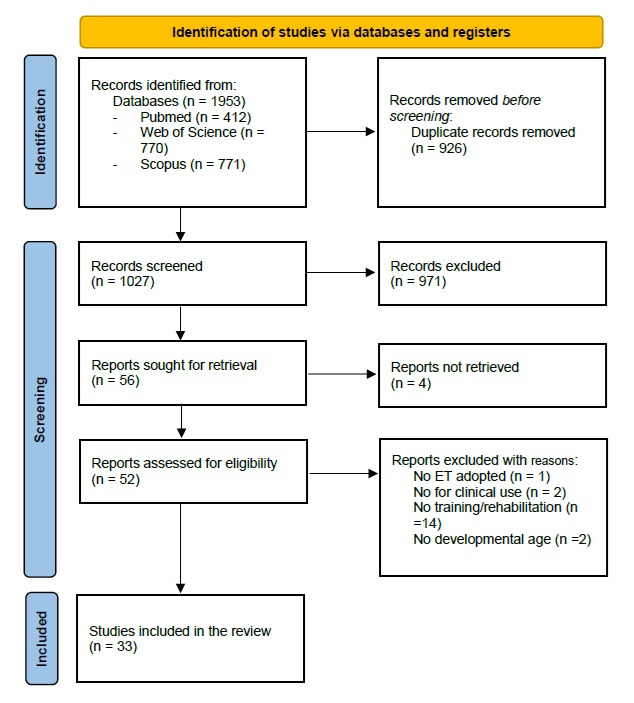 Figure 1
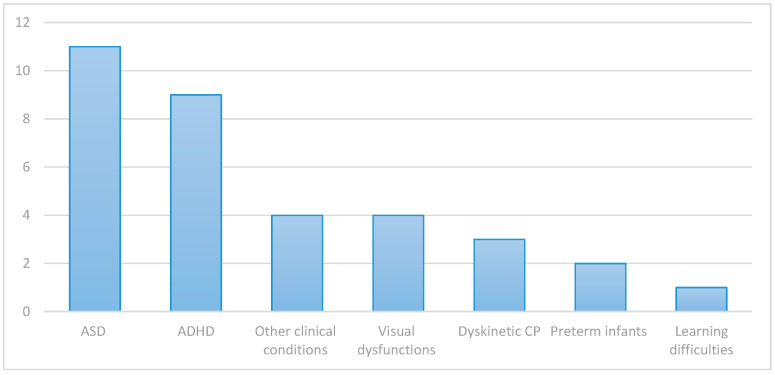 Figure 2
- —Italian Ministry of Health (Ricerca Corrente 2025)
Peer Reviews
No public reviews on file for this paper yet. If you reviewed it on a platform where reviews are public (OpenReview, ICLR, NeurIPS, ICML), you can paste yours below so the community can read it here.
Videos
No videos yet. Explain this paper in a talk, walkthrough, or lecture? Add one.
Taxonomy
TopicsGaze Tracking and Assistive Technology · Assistive Technology in Communication and Mobility · Autism Spectrum Disorder Research
1. Introduction
Oculomotor control in infancy is foundational for visual development, as it enables infants to explore their environment, track moving objects, and interact with others. Through these processes, infants acquire visual, perceptual, and sensorimotor experiences that support the development of relational, cognitive, and motor milestones [1,2,3]. As a consequence, the presence of atypical oculomotor patterns represents a transnosographic condition in several developmental disorders, often associated with the atypical affective and behavioural patterns specific to various neurodevelopmental disorders [4]. Thus, children with autism spectrum disorder (ASD) commonly present oculomotor dysfunctions, including saccade dysmetria, difficulty in inhibiting saccades, and impaired tracking of moving targets [5]. Similarly, children with attention-deficit/hyperactivity disorder (ADHD) often exhibit abnormal saccadic eye movements, such as increased latency in anti-saccades and decreased accuracy in pro-saccades [6,7]. These oculomotor deficits are thought to contribute to the difficulties these patients experience in facial emotion recognition, social–affective tasks, and inhibitory control, as well as attention regulation [8]. Children with severe physical conditions often show impairments in motor, communicative, and relational skills, leading to a profound and multilevel disruption of their overall functioning with significant consequences in daily life participation [9]. In such cases, both in degenerative conditions (e.g., Rett syndrome [10]) and in non-degenerative developmental disabilities (e.g., cerebral palsy, CP), eye movements could represent a rehabilitative target and/or a relatively spared function. Among these conditions, CP represent a group of permanent neurological disorders affecting movement, balance, and posture, caused by damage or abnormal development in the brain, arising from non-progressive disturbances that occurred during a foetus or infant’s brain development [11]. Based on the predominant motor dysfunction, CP can be classified into spastic, dyskinetic, ataxic, and mixed forms. In spastic CP, ocular motor function is known to vary according to clinical severity and subtype, with most severe impairments typically observed in cases of quadriplegia [12]. Conversely, in children with dyskinetic CP, voluntary eye movements are often relatively preserved [13]. This residual eye-gaze function paves the way for its use in communication, education, leisure activities, and social interactions, offering new ways for these children to engage with their environment and the social context [14]. In early acquired/congenital visual impairment, atypical oculomotor patterns represent a common consequence of the visual deficit, often resulting in the presence of difficulties in fixation, smooth pursuit and saccades or abnormal ocular movements such as nystagmus or roving movements [15,16].
Given the pivotal role of oculomotor function in children’s development, the enhancement of this ability may constitute a valid goal for rehabilitation across various neurodevelopmental disorders, targeting their specific challenges and needs.
In recent years, the integration of new technologies in paediatric rehabilitation has expanded significantly. Digital and interactive tools, such as serious games or interactive training platforms, can support the development of highly engaging environments that promote active and focused patient participation [17,18,19]. In this context, the integration of eye-tracking systems represents a valuable tool for objectively assessing patients’ visual attention and engagement during technology-based rehabilitation tasks. Therefore, eye tracking has shown promising results for both communicative tools and the administration of neuropsychological assessments in patients with compromised verbal and/or motor skills. Eye-tracking technology provides objective and quantifiable physiological data on eye movement patterns, offering insights into mental processes and behaviour. These measurements are captured using eye trackers, digital devices that precisely record eye position and gaze direction over time, allowing researchers to analyse how individuals visually explore their environment. Eye-tracking data typically include different types of eye movements, such as fixations (periods in which the gaze remains relatively stable and visual information is processed) and saccades (rapid eye movements that shift gaze between points of interest). In some experimental paradigms, gaze-contingent techniques are used, in which the visual stimulus dynamically changes depending on the participant’s gaze position. Together, these measures allow researchers to investigate visual attention and cognitive processes and have shown increasing relevance in clinical neuroscience, particularly for understanding how individuals perceive and interact with their environment [20].
However, a systematic integration of eye tracking with traditional rehabilitation methods to improve oculomotor strategies in paediatric neurodevelopmental disorders remains underexplored. Hence, despite the growing interest in ET applications, there is limited understanding of gaze-contingent effectiveness for the above-mentioned paediatric populations, particularly regarding their feasibility and efficacy in improving oculomotor competences.
This review aims to focus on the use of ET devices as tools to support rehabilitative interventions in heterogeneous paediatric clinical populations. By summarising the available evidence, the review seeks to provide an up-to-date and critical appraisal of the advantages and limitations of this approach, highlighting its potential in enhancing rehabilitation outcomes and identifying gaps in the existing body of research.
2. Materials and Methods
2.1. Search Strategy
A systematic search was performed across three electronic databases: PubMed, Web of Science, and Scopus. The search included studies published in the last 20 years (from January 2004 to August 2025) in English or Italian. The following Boolean string was used: (“training” OR “oculomotor training” OR “oculomotor” OR “rehabilitation” OR “game” OR “gaming”) AND (“eye tracking” OR “eye tracker” OR “eye pointer” OR “eye gaze”) AND (“children” OR “infant*” OR “adolescent*” OR “pupil*”).
Additional references were identified through manual search of bibliographies of included articles and previous reviews. Details of the search strategy and terms used for each database are reported in Supplementary Table S1.
2.2. Eligibility Criteria
Randomised controlled trials, clinical trials, protocols for feasibility studies, and single-case studies investigating the use of ET systems for training or rehabilitation in paediatric developmental disorders were included. The populations of interest were children and adolescents (0–18 years old) affected by neurological, neurodevelopmental and visual disorders (e.g., ASD, ADHD, learning disorders, cerebral palsy, amblyopia, genetic syndromes). Only studies adopting gaze-contingent ET protocols for training where eye movements were used to trigger events on the screen in response to the participant’s gaze were included, such as gaze-controlled serious games, gaze-driven attention trainings, and dichoptic games. Conversely, studies were excluded if ET techniques had been addressed only as a tool to either measure treatment outcomes or provide feedback signals in a closed-loop system (e.g., in vestibular treatment). Moreover, ET-based protocols that were developed in non-clinical contexts, such as sport training, workplace evaluation, or non-rehabilitative medical fields (e.g., surgery trainings or procedures), were excluded.
2.3. Selection Process
All records were independently screened by two reviewers (VB, SA) using the Rayyan QCRI platform [11]. First, titles and abstracts were reviewed; then, full texts were assessed for eligibility. Disagreements were resolved by a third reviewer (RN). Reference management was performed using Mendeley Desktop (the Mendeley Cite v1.69.3).
2.4. Data Extraction and Synthesis
For each included study, data were extracted on the following: author(s), year, study design, sample size and characteristics, clinical condition, intervention type and duration, outcome measures, and main results. Data were organised in a summary table (see Appendix A). Narrative synthesis was performed due to high heterogeneity in populations, interventions, and outcomes. Due to variability in study designs and reporting standards, a formal meta-analysis was not feasible.
3. Results
3.1. Study Selection
After data extraction, 33 studies were selected for this review, all involving paediatric participants (0–18 years) with neurodevelopmental or neurological conditions. The PRISMA flowchart detailing the identification and selection process is presented in Figure 1. The PRISMA checklist is available as Supplementary Material.
3.2. Clinical Populations and Study Designs
The selected studies encompassed a heterogeneous range of clinical conditions (see Figure 2), including attention-deficit/hyperactivity disorder (ADHD, n = 9), autism spectrum disorder (ASD, n = 11), dyskinetic cerebral palsy (CP, n = 3), Rett syndrome (n = 1), amblyopia (n = 2), and low vision (n = 2). Additionally, a few studies focused on very preterm infants (n = 2), learning difficulties (n = 1), children with Fragile X Syndrome (n = 1), or other neurodevelopmental profiles (e.g., special educational needs and physical impairments, n = 2). The resulting sum is 34, as one paper [21] addressed two populations (ASD and ADHD patients).
Methodologically, most of the studies employed a variety of designs, including randomised controlled trials, pilot or feasibility studies, or clinical trials. A smaller subset employed single- or multiple-case designs. In addition to the previously mentioned studies, four study protocols [22,23,24,25] were also included, in order to widen the description of possible applications of ET for clinical purposes in developmental disorders. Most studies were conducted in clinical or research settings, though a significant portion adopted home-based interventions [22,23,26,27,28].
3.3. Intervention Characteristics
Across the reviewed studies, eye-tracking (ET) devices were employed in various rehabilitative interventions. The common element was the use of gaze-contingent systems, whereby the child’s eye movements directly triggered or modulated events within interactive environments. The majority of studies reported qualitative indicators of feasibility, including high levels of engagement, adherence, and positive feedback from parents or caregivers.
ET-based interventions were highly heterogeneous, including gaze-contingent serious games targeting inhibitory control (e.g., go/no-go paradigms), interactive environments such as virtual hide-and-seek tasks, and structured training modules in which children were required to maintain fixation on targets while ignoring distractors, with progressively increasing difficulty levels [26,29,30].
Most interventions [24,26,31,32,33] aimed to improve executive functioning (e.g., attention, inhibitory control, impulse control), cognitive abilities and learning abilities such as memory, and cognitive flexibility [21,27,30,34,35,36]. Others aimed to enhance visual outcomes (e.g., visual acuity, stereoacuity) [37,38,39,40], social cognition and gaze behaviour (e.g., eye contact, gaze direction, joint attention) [25,41,42,43,44,45,46]. Studies addressing more severe conditions had a specific focus on supporting and/or facilitating patients’ communication and participation [14,39,47,48]. Finally, only one study focused on promoting fine visuomotor coordination competences [33]. The duration of interventions ranged from brief, intensive two-week protocols to more extended programmes lasting up to eight months. Delivery formats included home-based gaming, school-based cognitive training, and structured telerehabilitation protocols, demonstrating the flexibility and adaptability of ET devices across settings.
3.4. Functional Domains Targeted by Interventions
The following section describes the most targeted domains in the included interventions. Table 1 reports which domain has been targeted for each condition. Functional domains were defined pragmatically based on the primary targets of the interventions reported in the included studies. Because many eye-tracking-based training paradigms simultaneously target attentional regulation and executive control processes (e.g., inhibitory control or goal-directed gaze behaviour), attention and executive functions were grouped within a single domain for descriptive purposes.
3.4.1. Attention and Executive Functions
The most robust evidence emerged in the domain of attentional control and executive functioning, particularly among children with ADHD. Several studies reported improvements from the use of ET-based interventions in sustained attention, reaction times, and inhibitory control. For instance, García-Baos et al. [28] observed significant gains in fixation, reaction time and impulsivity after a three-week home-based game, while Lee et al. [31] and Rudolf et al. [33] respectively documented improved inhibitory control and focused attention. Moreover, home-based training with ET has been demonstrated to be useful in promoting visuospatial attention in school-aged children with ASD [49]. The review also included two study protocols: one targeting children at familial risk of ADHD [23] and the other one targeting very preterm (VP) infants [24]. Moreover, one RCT [32] investigated the feasibility of Attention Control Training in very preterm infants, showing promising results in domains related to attentional regulation.
3.4.2. Cognitive and Learning Enhancement
Several interventions were designed to enhance broader cognitive and learning-related abilities such as memory processes and learning speed in children with neurodevelopmental disorders.
Chan and colleagues [21,34] showed substantial improvements in learning speed and visuospatial working memory in children with ADHD, ASD, and learning difficulties. Janmohammadi et al. [30] and Garcia-Zapirain et al. [35] also reported that training in gaze control and visual pursuit led to behavioural regulation and faster learning in children with attention problems. Eye-gaze training has also been used to test reading ability improvements in nonverbal children with special educational needs by Arnold and colleagues [36]. However, the results did not provide significant evidence for treatment efficacy.
3.4.3. Social Cognition and Gaze Behaviour
In ASD populations, many studies focused on improving sensitivity to social cues, eye contact, and emotional processing through ET-based interventions. Sosnowski et al. [50] developed a gaze-contingent video game combining applied behaviour analysis with ET, reporting improved emotion recognition post-intervention. Other approaches implemented self-monitoring and reinforcement strategies to enhance spontaneous eye contact in children with ASD, obtaining significant evidence of training feasibility and efficacy [41,45]. A randomised controlled trial was conducted by Tang and colleagues [46] to investigate the effects of storytelling with social contextual information in improving visual attention and gaze direction in children with ASD. The results show that storytelling with social contextual information improved gaze behaviour toward faces or eyes in ASD and TD when both were assessed with photos displayed on a screen. Wang et al. [51] provided evidence that even toddlers at risk for ASD can benefit from gaze-based social attention training, particularly in directing gaze toward faces.
Additionally, ET training has been implemented with Virtual Reality (VR) systems to enhance gaze fixation in ASD children [29,42], respectively showing potential efficacy of the approach and significant positive results in subgroup comparison. Social cognition and gaze behaviour have also been investigated in other conditions, such as Fragile X Syndrome [44] and dyskinetic cerebral palsy [43], respectively showing improvements in social gaze and oculomotor performances after the training.
3.4.4. Communication and Participation
Concerning patients with severe physical impairments, especially children with dyskinetic CP and Rett syndrome, ET devices were employed as assistive technologies to facilitate interaction, autonomy, and participation. Several studies [14,47,48] demonstrated increased goal achievement and sustained use of gaze-based systems for communication in daily life. Notably, Puttemans et al. reported positive outcomes across multiple metrics including psychosocial impact, autonomy, and heart rate variability. Another study [27] showed promising preliminary results after remote eye-tracking training in facilitating access to telerehabilitation and remote school tasks for girls with Rett syndrome.
3.4.5. Vision Rehabilitation
In children with amblyopia or low vision, ET training has been proposed as an alternative or supplement to conventional therapies such as patching. Two studies [37,38] found that gaze-based dichoptic interventions were comparable in efficacy to traditional occlusion therapy, with better adherence and acceptability. Additionally, Donmez & Cagiltay [28,39] developed ET-supported visual training games that were well-received by children with visual impairments, supporting their potential in remote or school-based rehabilitation. Lee and colleagues [40] investigated the effectiveness of computerised eye-tracking training in improving saccadic eye movements in children with ADHD, obtaining significant results in both saccade latency decrease and saccade accuracy after ET training.
4. Discussion
4.1. Principal Findings
This review specifically addressed the use of eye-tracking devices as rehabilitative tools in paediatric populations, positioning its scope in the broader field of gamified and technology-enhanced neurorehabilitation in childhood [52]. It demonstrates that ET devices have been increasingly integrated into paediatric rehabilitation, with promising results across multiple neurodevelopmental conditions. In some studies, oculomotor functions (e.g., fixation stability or saccadic control) represented the direct target of the training, whereas in others, eye movements were primarily used as a tool to support the rehabilitation of higher-level cognitive or social functions. Thus, although heterogeneous in design and target populations, the included studies demonstrate that gaze-contingent systems can enhance multiple functional domains: attention and executive functions, social cognition, communication, and participation. The strongest concentration of evidence emerged for autism spectrum disorder (ASD) and attention-deficit/hyperactivity disorder (ADHD), likely reflecting both the prevalence and the concurrent large body of literature regarding such conditions and the suitability of ET-based paradigms for supporting their core deficits.
Most studies reported high levels of engagement, feasibility, and user satisfaction, especially in home-based or gamified settings, even in infants and children with severe disabilities, with parents reporting positive impacts.
To provide a coherent narrative, the discussion is organised with focus on the functional domains targeted by rehabilitative interventions. This structure reflects the fact that ET-based interventions operate on core mechanisms (e.g., attentional control, social orienting, visuomotor behaviour, and communication), which cut across multiple neurodevelopmental conditions and align more closely with rehabilitation goals than categorical diagnoses.
4.2. Eye Tracking as a Tool for Neuropsychological Rehabilitation and Learning Enhancement
In children with neurodevelopmental conditions (e.g., ADHD, ASD, learning difficulties) or mixed developmental profiles, ET-based training has been associated with measurable improvements in focused attention and inhibitory control as well as in learning speed, visuospatial working memory and flexible thinking. For example, some gaze-contingent paradigms require the child to suppress reflexive saccades toward salient stimuli and instead direct gaze toward task-relevant targets, thereby training inhibitory control and oculomotor function. These findings align with evidence that top-down control of gaze is tightly coupled with the maturation of fronto-striatal circuits in the regulation of visual attention and executive function. In fact, cortico-striatal projections—which have their nuclei in the frontal lobe—are the neurophysiological substrates of goal-directed and habitual behaviour as well as executive functioning [53]. From a neurophysiological perspective, voluntary control of eye movements relies on prefrontal and striatal systems [7,54]. These systems govern the ability to inhibit automatic responses and orient attention in accordance with task demands. Research about oculomotor function in ADHD confirms deficits in response preparation and inhibitory control, independent of symptom subtype [55]. The developmental perspective supports this view: voluntary oculomotor control matures slowly through adolescence in parallel with synaptic pruning and myelination in fronto-parietal networks [1]. This protracted plasticity window provides an opportunity for interventions targeting oculomotor–executive integration as it could happen when introducing ET-contingent trainings, even in short-term settings [26].
Some ET interventions were also implemented in home-based settings [22,23,26,27,28], suggesting the potential feasibility of delivering gaze-contingent training outside traditional clinical environments. Bringing such an approach directly to families of children with complex disabilities or neurodevelopmental disorders holds promise in supporting the continuity of care and improving access to rehabilitation services. In line with this perspective, previous research has suggested that telerehabilitation can represent a promising therapeutic approach, particularly when in-person rehabilitation is difficult to deliver, with outcomes that may be comparable to or even better than conventional conditions [52].
The current literature about the use of ET as a tool for neuropsychological rehabilitation also focuses on prevention, providing study protocols addressed to “at-risk” populations regarding cognitive and executive functioning [23,32], suggesting that ET may one day serve as not only rehabilitation but also early cognitive/executive function scaffolding.
4.3. Eye Tracking as a Tool Aimed at Enhancing Social Cognition and Communication in Neurodevelopmental Disorders
A large portion of ET research has targeted autism spectrum disorder (ASD), focusing on emotion recognition, attention to faces, joint attention, and spontaneous eye contact, which represent most of the ASD core symptoms [56]. This is grounded in evidence that children with ASD show atypical visual exploration patterns characterised by: reduced prioritisation of faces and socially informative regions, decreased sensitivity to gaze cues, increased reliance on low-level visual saliency, and a stronger centre bias. These peculiarities are related to the disruption of joint attention and Theory of Mind [57]. Indeed, accurate gaze direction has been considered the milestone of the social cognition system, and joint attention can be considered a goal-directed behaviour whose primary aim is to share experience and wills with other people [58,59]. Therefore, children with ASD show—together with disruptions of social–emotional processing, social communication and Theory of Mind (ToM)—a significant early impairment of eye-gaze competencies for social purposes [59].
The analysed ET-based interventions attempt to “re-shape” these visual strategies by guiding the child toward socially meaningful stimuli, including faces, eyes, and emotional expression [46,50,51], even in combination with self-monitoring and reinforcement strategies, obtaining significant results [41,45].
Research also provides evidence for the enhancement of gaze fixation when combining ET training with Virtual Reality devices [29]. VR-ET approaches may offer rich and highly controlled environments in which clinicians can systematically manipulate the complexity, predictability, and saliency of social stimuli while capturing real-time gaze metrics, thus balancing experimental control with ecological validity [60]. Moreover, it has been suggested that stimulus characteristics, such as modality and familiarity, may influence gaze behaviour in children with ASD, potentially enhancing attention to socially relevant cues such as faces [61].
4.4. Eye Tracking as a New Avenue for Participation in Complex Motor Disorders
For children with severe motor and/or cognitive impairments—such as Rett syndrome and dyskinetic cerebral palsy—ET devices may represent a meaningful supplement in the enhancement of traditional tools to support communication and everyday functioning, offering a direct access pathway to digital interaction.
In common clinical practice, aided augmentative and alternative communication (AAC) is an effective means to supplement and enhance the functional communication skills of individuals with communication and language impairments [62,63]. AAC is appropriate whenever a person’s speech cannot meet their daily communication needs. However, in the considered populations, limited hand use or speech may limit the usability of such a tool. In the selected works for this review, ET-based assistive technology emerges as a potential enhancer of communication, choice-making, and exploration in ways that traditional interfaces, such as AAC, do not.
The studies included in this review consistently reported improvements in functional goal attainment, autonomy, and sustained usage over time and qualitatively reported increased motivation and enjoyment, and reduced frustration for both children and caregivers [14,27,47,48]. These findings position ET not only as a rehabilitative tool but also as a compensatory access modality that bridges motor, communicative, and cognitive barriers.
4.5. Eye Tracking for Visual Function Rehabilitation
Eye-tracking devices represent an emerging tool for the rehabilitation of visual functions, both in conditions primarily affecting the visual system and in neurodevelopmental disorders where oculomotor control is impaired. Across the studies included in this review, two main applications can be distinguished: (1) treatments targeting primary visual disorders, such as amblyopia or low vision; and (2) interventions aimed at improving oculomotor control in neurodevelopmental disorders such as ADHD, ASD, and cerebral palsy.
Among ET-based interventions targeting visual disorders, amblyopia represents the condition with more applications. Although occlusion therapy remains the gold-standard treatment for amblyopia, gaze-contingent approaches should be interpreted within the broader framework of the perceptual learning paradigm, which aims to enhance visual performance through repeated practice on contrast, spatial frequency, and binocular integration tasks [64].
With technological advancements, this paradigm has evolved toward interactive and game-based formats designed to stimulate the amblyopic eye while maintaining engagement. According to available studies, eye-tracking systems seem to be integrated into this model by enabling real-time monitoring of fixation stability, binocular alignment, and gaze-contingent stimulus presentation [37,38]. In contrast to passive occlusion, ET-driven tasks require continuous visual interaction, potentially reinforcing active perceptual processing and binocular cooperation. Moreover, gamification may enhance adherence, which is a well-known limitation of traditional patching therapy.
Importantly, visual functions are rarely isolated from cognitive, attentional, or motor systems. As discussed above, several neurodevelopmental disorders included in this review, ADHD, ASD, and dyskinetic CP, are known to present abnormalities in oculomotor control, such as impaired fixation stability, atypical saccadic patterns, or reduced ability to orient attention. ET-based interventions may therefore target visual skills that indirectly support cognitive or motor rehabilitation, as shown in several included studies [30,40,43,50].
4.6. Limitations of Current Research
Despite the encouraging results, this study highlighted some limitations in the current literature about ET-based rehabilitation protocols. First, many studies rely on small and heterogeneous samples, which limit the generalisation of findings. Moreover, the duration of the interventions is often short, lacking follow-up assessments to evaluate long-term effects. Another critical issue is the absence of standardised intervention protocols, which does not enable the reproducibility and comparability of results across studies. In addition, technical details are frequently underreported, particularly regarding calibration accuracy and overall data quality. Finally, outcome measures are often based on parent-report or proxy-rated scales, which may introduce subjectivity and bias when evaluating intervention effectiveness.
4.7. Future Directions and Clinical Implications
Future research should broaden the range of disorders targeted by ET rehabilitation. For example, Cerebral Visual Impairment offers several critical rehabilitative goals targeted by ET, such as oculomotor and cognitive/executive dysfunction [65,66]. Further research is warranted to consolidate their role in clinical practice and to strengthen practice recommendations. Specifically, future studies should focus on the design and implementation of multicentre randomised controlled trials (RCTs) with adequate statistical power to ensure reliability and generalisability of findings. Moreover, it will be important to investigate the longitudinal effects of the interventions and their applicability in real-world settings, providing evidence for their long-term efficacy and ecological implementation in rehabilitation. Efforts should also concern the development of standardised training paradigms, useful for cross-study comparisons to define best practices.
5. Conclusions
Eye-tracking devices represent a novel and multifaceted platform for paediatric rehabilitation. Gaze-contingent protocols showed significant potential effects in enhancing neuropsychological functions, learning, social and communication skills, oculomotor performance and autonomy in various disorders. Finally, the integration of wearable ET systems and mobile applications could represent another promising direction as it makes way for more ecological interventions.
The reference list from the paper itself. Each links out to its DOI / PubMed record.
- 1Luna B. Velanova K. Geier C.F. Development of eye-movement control Brain Cogn.20086829330810.1016/j.bandc.2008.08.01918938009 PMC 2731686 · doi ↗ · pubmed ↗
- 2Klin A. Jones W. Schultz R. Volkmar F. The enactive mind, or from actions to cognition: Lessons from autism Philos. Trans. R. Soc. Lond. B Biol. Sci.200335834536010.1098/rstb.2002.120212639332 PMC 1693114 · doi ↗ · pubmed ↗
- 3Nelson C.A. The development and neural bases of face recognition Infant. Child Dev.20011031810.1002/icd.239 · doi ↗
- 4Sweeney J.A. Takarae Y. Macmillan C. Luna B. Minshew N.J. Eye movements in neurodevelopmental disorders Curr. Opin. Neurol.200417374210.1097/00019052-200402000-0000715090875 · doi ↗ · pubmed ↗
- 5Johnson B.P. Lum J.A.G. Rinehart N.J. Fielding J. Ocular motor disturbances in autism spectrum disorders: Systematic review and comprehensive meta-analysis Neurosci. Biobehav. Rev.20166926027910.1016/j.neubiorev.2016.08.00727527824 · doi ↗ · pubmed ↗
- 6Goto Y. Hatakeyama K. Kitama T. Sato Y. Kanemura H. Aoyagi K. Sugita K. Aihara M. Saccade eye movements as a quantitative measure of frontostriatal network in children with ADHD Brain Dev.20103234735510.1016/j.braindev.2009.04.01719505783 · doi ↗ · pubmed ↗
- 7Munoz D.P. Armstrong I.T. Hampton K.A. Moore K.D. Altered Control of Visual Fixation and Saccadic Eye Movements in Attention-Deficit Hyperactivity Disorder J. Neurophysiol.20039050351410.1152/jn.00192.200312672781 · doi ↗ · pubmed ↗
- 8Black M.H. Chen N.T. Iyer K.K. Lipp O.V. Bölte S. Falkmer M. Tan T. Girdler S. Mechanisms of facial emotion recognition in autism spectrum disorders: Insights from eye tracking and electroencephalography Neurosci. Biobehav. Rev.20178048851510.1016/j.neubiorev.2017.06.01628698082 · doi ↗ · pubmed ↗