Nanotechnology-Based Strategies for Hair Regeneration: Mechanistic Insights and Translational Perspectives for Androgenetic Alopecia
Wenran Zhou, Rongcheng Han

TL;DR
This review explores how nanotechnology can improve hair regrowth treatments by targeting the root causes of androgenetic alopecia more effectively than traditional methods.
Contribution
The paper introduces nanotechnology as a transformative approach for AGA by shifting focus from drug delivery to microenvironment remodeling.
Findings
Nanocarriers and microneedles enable targeted and controlled delivery of therapies to hair follicles.
Nanoplatforms can actively modulate follicular stress, inflammation, and stem cell dysfunction.
Preclinical and clinical studies show nanotechnology-based therapies outperform conventional treatments in safety and efficacy.
Abstract
Androgenetic alopecia (AGA) is a highly prevalent and progressive disorder characterized by follicular miniaturization and dysregulation of the hair follicle microenvironment. Although minoxidil (MXD) and finasteride remain first-line therapies, their long-term efficacy is limited by poor follicular bioavailability, systemic side effects, and suboptimal patient compliance. In recent years, nanotechnology-based strategies have emerged as promising alternatives by enabling efficient follicular targeting and controlled therapeutic delivery. This review critically summarizes recent advances in nanotechnology-enabled approaches for AGA management, including nanocarrier-based formulations and nanotechnology-based microneedle systems. Beyond functioning as passive drug carriers, emerging nanoplatforms increasingly act as active modulators of the follicular niche by attenuating oxidative…
Genes, proteins, chemicals, diseases, species, mutations and cell lines named across the full text — each resolved to its canonical identifier and authoritative record.
Click any figure to enlarge with its caption.
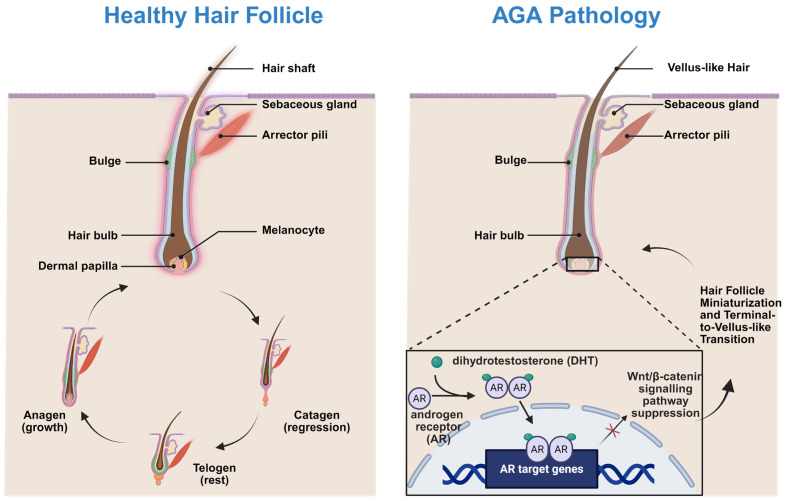 Figure 1
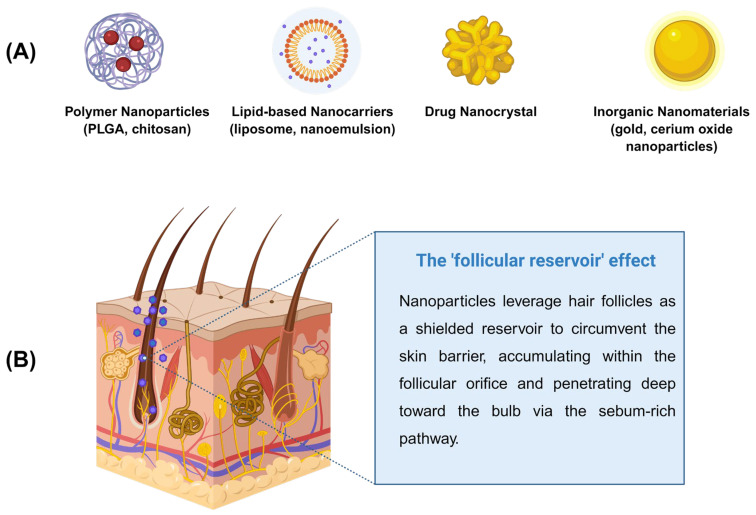 Figure 2
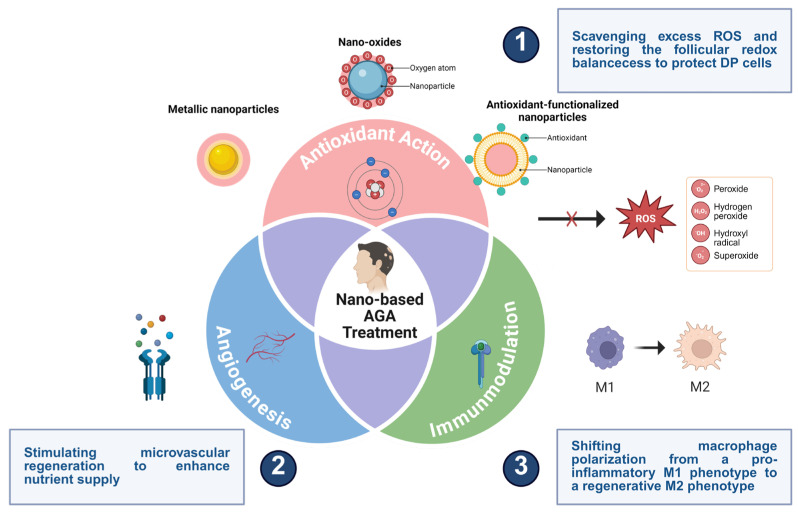 Figure 3
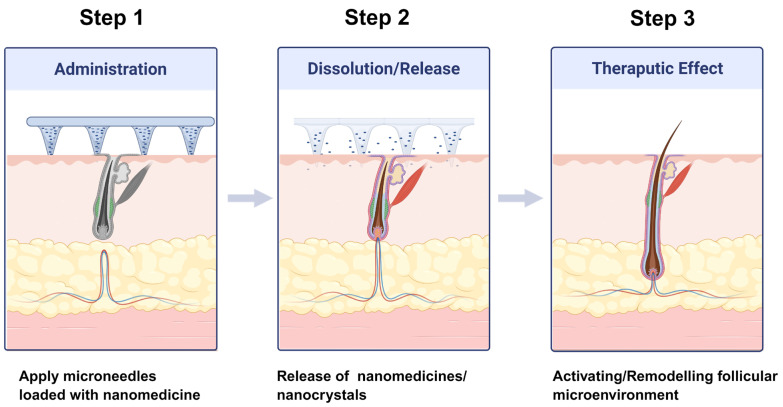 Figure 4
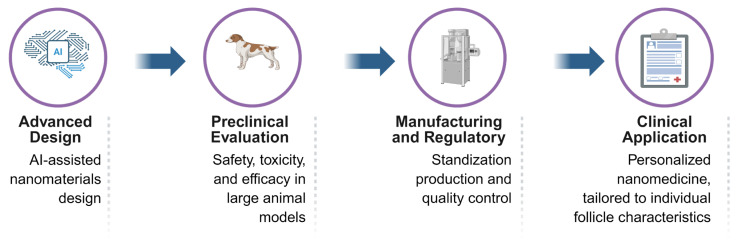 Figure 5
| Nanocarrier Class | Example Materials | Therapeutic Mechanism/Drug Delivered | Size (nm) | Zeta Potential (mV) | Application | Key Advantages for AGA | References |
|---|---|---|---|---|---|---|---|
| Polymeric Nanoparticles | Methylcellulose | MXD | 90–300 | NA | In vivo AGA-induced C57BL/6 mouse model | Enhance drug aggregation and expressions of hair-growth factors in hair bulbs | [ |
| Chitosan | MXD | 235.5 ± 99.9 | +38.6 ± 6.0 | In vitro porcine ears skin permeation test | Sustained drug release | [ | |
| PLGA | finasteride | 316.5 ± 14.4 | NA | In vitro polydimethylsiloxane membrane permeation test | Encapsulation efficiency 79.49% ± 0.47% | [ | |
| HA-PLGA | MXD | 243 ± 44.5 | NA | In vitro rat skin permeation test | Higher skin permeability | [ | |
| Poly-ε-caprolactone | Latanoprost | 97.8 ± 1.2 | −30.1 ± 1.8 | In vitro porcine ears skin permeation test | Stable storage for 90 days | [ | |
| Methyl-β-cyclodextrin | Rosuvastatin | 218 | NA | In vivo hair loss Albino rat model | Sustained drug release | [ | |
| Poly-(q-caprolactone)-block-poly(ethyleneglycol) | MXD | 40–130 | NA | In vivo skin retention test | Penetrated mainly via hair follicles routes | [ | |
| Dipalmotyl (DPPC)-PLGA | Quercetin | 339 ± 1.6 | −32.6 ± 0.51 | In vivo alopecia-induced rat models | Entrapment efficiency 78% ± 5.5% | [ | |
| Ethyl cellulose | α-Mangostin | 436.0 ± 11.5 | NA | Therapeutic effect study in 10 acne patients | Sustained release in human synthetic sebum | [ | |
| PEG5K-b-oligo (DTO-SA)-b-PEG5K | Adapalene | 64.7–81.6 | NA | In vitro human cadaver and porcine ear skin permeation test | Increased drug accumulation in hair follicles | [ | |
| Poly(amidoamine) | Adapalene | 256 ± 12 | 19.0 ± 3.1 | In vitro abdominal porcine skin permeation test | Increased drug accumulation in hair follicles and skin. | [ | |
| Eudragit® L100 | Dexamethasone | 303.1 ± 5.5 | NA | In vitro porcine skin permeation test | pH-sensitive | [ | |
| poly- ε-caprolactone | Adapalene | 107.5 ± 8.19 | −13.1 | In vitro full-thickness human skin permeation and distribution test | Preferential targeting to PSU | [ | |
| Chitosan | Clindamycin | 362 ± 19 | 27.7 ± 0.9 | In vitro skin penetration test using intact skin porcine, skin with the PSU artificially blocked, and sebaceous skin | Enhanced targeted delivery to pilosebaceous structures | [ | |
| Isotretinoin | 230 ± 10 | −67 ± 3 | In vitro pig ear skin permeation test | Significant follicular targeting | [ | ||
| Polylactic acid (PLA) | Cyclosporin A | 152.2 ± 5 | −16 ± 0.2 | In vitro porcine skin permeation test | Increased skin permeation/hair follicles accumulation | [ | |
| Poly-(ɛ-caprolactone)-lipid | Dutasteride | 199.0 ± 0.5 | − 13.6 ± 0.6 | In vitro porcine’s ear skin permeation test | Fivefold increase in hair follicles targeting | [ | |
| D-α-tocopheryl polyethylene glycol succinate diblock copolymer | Adapalene | 4–12 | NA | In vitro full-thickness porcine and human skin permeation test | Preferential accumulation in the follicular orifice | [ | |
| Pluronic® F127 | Benzoyl peroxide | 24.8–25.9 | −2 to −13 | In vitro porcine skin permeation test | Drug deposition in the follicular pathway | [ | |
| Clove oil | MXD | 10 | NA | In vitro follicular drug penetration test | Controlled drug release | [ | |
| Eucalyptol | MXD | 29.6 ± 3.1 | NA | In vitro full-thickness excised human skin permeation test | Promoted drug retention in deeper skin layers | [ | |
| Soya lecithin | FIN | 195.2 ± 9.43 | −7.61 ± 1.35 | In vivo AGA-induced Swiss albino mouse model | Increased hair diameter and length | [ | |
| Poly (ethylene oxide)-block-poly(ε-caprolactone) | Luteolin | 290 | NA | In vivo alopecia-induced C57BL/6 mouse model | Stability for long-term storage | [ | |
| Medium chain oil | Cedrol | 14.26 ± 0.16 | NA | In vivo alopecia-induced C57BL/6 mouse model | Improved drug solubility | [ | |
| Lipid-based Carriers | Stearic acid | MXD | 281.4 ± 7.4 | −32.9 ± 1.23 | In vitro rat skin permeation test | Drug entrapment efficiency 92.48% ± 0.31% | [ |
| Phospholipid Cholesterol | MXD, Tretinoin | 149.33 ± 1.4 | 7.74 ± 0.22 | In vitro rat skin permeation test | Promoted hair layers retention | [ | |
| Squalene | MXD | 236.0 ± 3.3 | −43.8 ± 0.9 | In vivo skin permeation test | Ameliorated follicular uptake | [ | |
| Squalene | Diphencyprone | 236.3 ± 3.2 | −52.8 ± 4.7 | In vivo nude mouse dorsal skin permeation test | Improved drug targeting to follicles | [ | |
| Olive oil | Spironolactone | 215.6 ± 20.4 | −18.7 ± 0.92 | In vitro skin permeation test | Entrapment efficiency 87.36% ± 3.34% | [ | |
| Stearic acid | Dutasteride | 187.6 ± 7.0 | −18 ± 0.9 | In vitro porcine skin permeation test | Entrapment efficiency 97.8% ± 0.68% | [ | |
| Lauric acid | Dutasteride | 184.2 ± 2.9 | −18 ± 2.3 | In vitro porcine skin permeation test | Physically stable for 180 days | [ | |
| Stearic acid | Cyproterone acetate | 300 | −35 ± 0.5 | In vivo hamsters skin permeation test | Enhanced accumulation in hair follicles | [ | |
| Palmitostearate | Melatonin | 683 ± 27.08 | −17. 2 ± 0.53 | Therapeutic effect study in 40 male AGA patients | Increased hair density and thickness | [ | |
| Precirol® | Arginine | 87.34 | −24.6 | In vivo hamsters skin permeation test | Increased accumulation in the hair follicles | [ | |
| Buriti oil | 17-α-estradiol | 96 ± 15 | −17 ± 6 | In vivo human skin permeation test | Encapsulation efficiency 99.6% ± 0.3% | [ | |
| Glyceryl distearate | Adapalene | 300.3 ± 1.45 | −21.3 ± 0.07 | Clinical study in 15 acne vulgaris patients | Sustained drug release | [ | |
| Stearic acid | Clindamycin phosphate | 400 ± 14 | −48.9 ± 0.7 | In vivo skin permeation on porcine skin | Increased accumulation into hair follicles openings | [ | |
| Precirol ATO-5® | Flutamide | 192 ± 13 | NA | In vivo skin permeation and hair growth test | Good stability for two months | [ | |
| Transferosome | FIN Finasteride | Phospholipon 90 G | 299.6 ± 45.6 | NA | In vivo rat skin permeation test | Enhanced drug permeation in skin layer | [ |
| MXD Caffeine | Polysorbate 20 Polysorbate 80 | NA | NA | In vivo AGA-induced rat model | Enhanced hair length | [ | |
| Ethosome | Cryptotanshinone | Soybean phosphatidycholine | 69.1 ± 1.9 | NA | In vivo anti-acne effect in rabbit model | Increased anti-acne effect | [ |
| Liquid crystal nanocarrier | MXD | Monoglycerides | 82 ± 1 | −57 ± 3 | In vivo hair regrowth efficacy test on rats | Selective delivery to pilosebaceous follicle | [ |
| Nanozyme-integrated dissolving microneedles (Ce-MNs) | Core: Ceria nanozymes (CeNZs) modified with DSPE-mPEG2000 | Dual-mode regulation of perifollicular microenvironment ROS scavenging (CAT- and SOD-mimic activities, HORAC) Angiogenesis promotion (mechanical stimulation-induced VEGF upregulation) | Hydrophobic CeNZs: ~3 nm (TEM) | NA | In vivo AGA-induced C57BL/6 mouse model | Superior treatment efficiency: Faster onset of telogen-to-anagen transition vs. MXD with lower administration frequency (5 applications vs. daily topical) | [ |
| Finasteride–peptide nanocomplexes | Peptide with hydrophobic blocks (PepWL, PepW4) coassembled with Finasteride |
Finasteride: 5α-reductase inhibitor, reduces DHT. CPPecp peptide: Skin/cell-penetrating and anti-inflammatory. Synergy: Promotes dermal papilla cell viability and hair regeneration. | NC-WL: 57.7 ± 7.0 nm | NA | In vivo C57BL/6 mouse model |
Carrier-free: Peptide is both delivery vehicle and therapeutic. Synergistic: Enhances efficacy with anti-inflammatory action. Low systemic risk: Topical; finasteride dose ~1/40 of oral standard. Effective: Hair growth comparable to 5% minoxidil; accelerates catagen-to-anagen transition. | [ |
| Hyaluronic acid liposome (HL) composite |
Soybean phosphatidylcholine (Lecithin) Cho-PEI/NONOate (NO donor) MXD (Mi) Hyaluronic acid (HA) |
Vasodilation: NO→cGMP pathway induces capillary dilation, accelerating blood flow to enhance Mi penetration Prolonged retention: Liposome structure extends Mi residence time in skin Anti-inflammation: Downregulates IL-6 and TGF-β1 in follicles Angiogenesis: Upregulates VEGF expression Stem cell activation: Upregulates β-catenin, MMP3, Ki67, and PCNA to induce follicle regeneration | Hydrated: ~350–520 nm (<500 nm) | HL@Mi: −12 mV | In vivo AGA-induced C57BL/6 mouse model | Synergistic multimodal therapy: Combines gas molecule (NO) with drug (Mi) for enhanced efficacy | [ |
| Translational Aspect | Current Status and Challenges | Proposed Future Directions | References |
|---|---|---|---|
| Safety and Toxicology | Potential for long-term accumulation of non-biodegradable NPs in the skin; limited systemic toxicity data. | Extensive chronic toxicity studies and use of biodegradable, “green” nanomaterials. | [ |
| Manufacturing Scale-up | Batch-to-batch variability; high cost of specialized equipment for complex nanostructures. | Development of microfluidic-based synthesis and standardized manufacturing protocols (GMP). | [ |
| Regulatory Hurdles | Lack of specific FDA/EMA guidelines for “nano-cosmeceuticals” and complex delivery systems. | Harmonization of international testing standards; close collaboration with regulatory agencies. | [ |
| Clinical Validation | Most data derived from rodent models; human scalp skin thickness and follicle density differ. | Use of 3D-printed human skin models and humanized mice for more accurate preclinical screening. | [ |
| Patient Compliance | High-frequency application for topical nanosystems; cost of microneedle-based therapies. | Designing long-acting (e.g., monthly) delivery platforms and low-cost MN manufacturing techniques. | [ |
Peer Reviews
No public reviews on file for this paper yet. If you reviewed it on a platform where reviews are public (OpenReview, ICLR, NeurIPS, ICML), you can paste yours below so the community can read it here.
Videos
No videos yet. Explain this paper in a talk, walkthrough, or lecture? Add one.
Taxonomy
TopicsHair Growth and Disorders · Mesenchymal stem cell research · Facial Rejuvenation and Surgery Techniques
1. Introduction
Hair follicles are highly dynamic and complex mini-organs embedded within the skin, characterized by a tightly orchestrated cyclical process consisting of growth (anagen), regression (catagen), and rest (telogen) phases [1,2,3,4,5]. This cyclic regeneration is governed by intricate interactions among epithelial cells, dermal papilla cells, surrounding mesenchymal tissues, immune components, and vascular networks. Precise temporal and spatial regulation of signaling pathways-including Wnt/β-catenin [6,7], Sonic hedgehog (Shh) [8,9], transforming growth factor-β (TGF-β) [10], and bone morphogenetic protein (BMP) [11] signaling-is essential for maintaining normal hair follicle homeostasis and sustaining hair shaft production [12].
Disruption of this finely tuned hair cycle leads to a spectrum of alopecia disorders, among which AGA represents the most prevalent and clinically significant form [13,14,15,16]. AGA is a chronic, progressive condition characterized by the gradual miniaturization of hair follicles, shortening of the anagen phase, and prolongation of telogen, ultimately resulting in thinner, shorter, and less pigmented hairs [17,18,19,20,21,22]. Epidemiological studies indicate that AGA affects more than 50% of men and a substantial proportion of women over the course of their lifetime, with incidence increasing with age and genetic predisposition [23,24,25]. Beyond its physical manifestations, AGA imposes considerable psychosocial burdens, including diminished self-esteem, increased anxiety, and reduced quality of life, underscoring the need for effective and well-tolerated therapeutic interventions.
Currently, conventional pharmacological management of AGA predominantly relies on topical MXD and oral finasteride, both of which have received regulatory approval and are widely used in clinical practice [26,27,28,29]. MXD is thought to promote hair growth primarily through vasodilation, potassium channel activation, and indirect stimulation of dermal papilla cell function, whereas finasteride exerts its effects by inhibiting type II 5α-reductase, thereby reducing dihydrotestosterone (DHT) levels in the scalp [30,31,32]. Despite their established efficacy, clinical outcomes remain highly variable, and long-term treatment is often required to maintain therapeutic benefits [33,34].
Importantly, these conventional therapies suffer from several intrinsic limitations, including insufficient follicular bioavailability, rapid clearance from the scalp, and poor patient adherence due to frequent application or systemic exposure [35]. Topically applied drugs face formidable barriers such as the stratum corneum and uneven follicular penetration, while systemic administration of antiandrogens may lead to undesirable side effects that limit widespread acceptance [36]. Consequently, there exists a substantial unmet clinical need for innovative therapeutic strategies capable of achieving efficient, localized follicular targeting, sustained drug retention, and minimal off-target effects. Addressing these challenges has catalyzed growing interest in advanced drug delivery platforms—particularly nanotechnology-based approaches—as next-generation solutions for AGA treatment.
Nanotechnology offers unprecedented opportunities to overcome the formidable anatomical and physiological barriers presented by the skin and hair follicle, which have long limited the efficacy of conventional topical and systemic therapies [37,38,39,40,41]. The stratum corneum, complex extracellular matrix, and dynamic immune surveillance collectively restrict drug penetration and retention, resulting in suboptimal exposure of therapeutics at critical follicular compartments [42]. By contrast, nanoscale delivery systems can be rationally engineered with tunable size, surface charge, and chemical functionality to enhance penetration, prolong residence time, and achieve controlled release within the pilosebaceous unit [43,44,45,46].
Notably, the unique architecture of the hair follicle provides a privileged and biologically relevant gateway for nanomaterials. The follicular infundibulum and sebaceous duct function as a natural reservoir capable of selectively accumulating nanoparticles, thereby enabling localized drug storage and sustained delivery directly to the vicinity of dermal papilla cells and hair follicle stem cell niches [47]. This follicular targeting effect allows nanotechnology-based systems to bypass the stratum corneum barrier while minimizing systemic exposure, a critical advantage for long-term management of AGA [48,49,50,51,52]. Furthermore, the physicochemical properties of nanomaterials can be tailored to exploit follicle-specific features such as sebum affinity, cyclic hair movement, and size-dependent penetration, collectively enhancing therapeutic precision.
Beyond serving as passive carriers, emerging nanotechnology-enabled platforms increasingly function as active modulators of the follicular microenvironment [53,54,55,56]. Advanced nanomaterials have been designed to regulate oxidative stress, promote angiogenesis, modulate inflammatory responses, and activate hair follicle stem cells, thereby addressing multiple pathogenic drivers of AGA simultaneously [56,57,58,59,60]. Such multifunctional capabilities distinguish nanotechnology-based approaches from traditional formulations and align with the growing recognition that effective hair regeneration requires coordinated modulation of both cellular and microenvironmental cues.
Herein, we present current knowledge and emerging trends in nanotechnology-based strategies for hair regeneration, with a particular emphasis on AGA. We critically examine nanocarrier design principles, follicular targeting mechanisms, and nanotechnology-based therapeutic modalities, while highlighting mechanistic insights and translational challenges. By integrating recent experimental advances with clinical perspectives, this review aims to provide a comprehensive framework for the rational development of next-generation nanotechnology-enabled therapies for AGA. Unlike previous reviews that primarily emphasize the delivery of FDA-approved drugs, this article focuses on the rational design of multifunctional nanomaterials (e.g., nanozymes) that actively modulate the oxidative and inflammatory niches within the hair follicle.
2. Pathophysiology of AGA
The pathogenesis of AGA is multifactorial (Figure 1), involving genetic susceptibility, androgen signaling, chronic inflammation, oxidative stress, and microvascular impairment [61,62,63,64]. Central to AGA progression is DHT, which binds androgen receptors in dermal papilla cells and induces transcriptional programs that suppress Wnt/β-catenin signaling and anagen maintenance [65].
Beyond androgen signaling, increasing evidence highlights the contribution of perifollicular inflammation, elevated reactive oxygen species (ROS), and impaired angiogenesis to follicular miniaturization [66,67,68]. Oxidative stress accelerates cellular senescence within dermal papilla cells and disrupts hair follicle stem cell niches. These insights underscore the necessity for multifunctional therapeutic approaches capable of simultaneously modulating multiple pathological pathways [69,70].
3. Nanocarrier-Based Drug Delivery Systems for AGA
Nanocarrier systems have been extensively explored to enhance the follicular delivery and therapeutic efficacy of AGA drugs [71,72]. Polymeric nanoparticles, lipid-based carriers, nanocrystals, and inorganic nanomaterials represent the major classes investigated to date (Figure 2, Table 1 and Figure 3) [73,74,75,76].
Polymeric nanoparticles fabricated from PLGA, chitosan, or hyaluronic acid (HA) improve drug stability and enable sustained release within hair follicles [77]. Lipid nanoparticles and nanoemulsions enhance skin penetration and follicular retention through sebum affinity [78]. Drug nanocrystals maximize loading capacity and dissolution rates, allowing dose reduction and improved patient compliance [79,80]. Collectively, these nanocarriers significantly outperform conventional formulations in follicular targeting efficiency [78,81,82,83,84,85].
4. Nanotechnology-Based Microneedle Systems for Transdermal Follicular Delivery
Microneedle (MN) technology provides a minimally invasive approach to bypass the stratum corneum and directly access follicular and dermal compartments (Figure 4) [76,129,130,131,132]. The integration of nanotechnology into MN systems has further expanded their functional capabilities.
Dissolving MNs loaded with drug nanocrystals or nanoparticles enable precise dosing and sustained release. Advanced designs incorporating nanozymes or growth factor-loaded nanoparticles actively regulate oxidative stress, angiogenesis, and inflammation [133,134,135]. Such multifunctional MN systems have demonstrated superior hair regrowth efficacy in preclinical AGA models compared with conventional topical therapies. For instance, Zhang et al. reported a machine learning-guided identification of a highly efficient MnPS_3_-based SOD mimic and its microneedle patch for the treatment of AGA, which alleviates oxidative stress in hair follicles and promotes superior hair regeneration compared with MXD at a reduced application frequency [133]. More recently, Xing et al. developed a near-infrared light-triggered nitric oxide (NO)-releasing HA hydrogel (Gel@L-Arg) that enables on-demand NO generation to promote angiogenesis, repair dermal papilla cells, regulate inflammation and androgens, and effectively treat AGA [135].
Recent preclinical investigations have significantly advanced the design of nano-enabled MN systems for AGA, transitioning from simple physical conduits to ‘smart’ responsive platforms. For instance, dissolvable HA microneedles have been successfully integrated with lipid-based nanocarriers to encapsulate both MXD and finasteride [136,137]. These systems demonstrate a synergistic effect, where the MNs bypass the stratum corneum and the nanocarriers ensure sustained, deep-follicle drug release, resulting in a faster telogen-to-anagen transition in murine models.
Beyond drug delivery, a novel trend involves the use of bioactive nanostructures within MN arrays. Bimetallic nanozymes (e.g., Ni-Cu) delivered via MNs have shown remarkable efficacy in scavenging ROS and remodeling the oxidative niche, thereby protecting dermal papilla cells from senescence [60]. Furthermore, exosome-integrated hydrogel microneedles represent a cutting-edge cell-free therapy; these systems allow for the localized, spatiotemporal release of growth factors and miRNAs, promoting robust angiogenesis around the hair follicle [138,139,140]. More recently, stimuli-responsive MNs, such as pH-sensitive polymeric nanoparticles [141,142] or light-triggered gold nanostructures [143,144], have been developed to achieve ‘on-demand’ therapeutic release [145,146], offering a highly precise approach to managing the fluctuating inflammatory states of the AGA scalp.
5. Nanotechnology-Based Remodeling of the Hair Follicle Microenvironment
Hair regeneration is critically dependent on the follicular microenvironment, including redox balance, vascular support, immune status, as well as stem cell activity [147,148,149,150]. Beyond acting as passive carriers, some nanomaterials also possess the capability to actively remodel the local microenvironment [60].
Previous studies have demonstrated that antioxidant nanomaterials, such as polydopamine nanoparticles and ceria nanozymes, effectively scavenge excess ROS and restore redox homeostasis [56]. Pro-angiogenic nanocarriers delivering VEGF or exhibiting intrinsic angiogenic activity enhance perifollicular blood supply. Additionally, nanomaterials modulating macrophage polarization and inflammatory signaling contribute to a regenerative follicular niche conducive to sustained hair growth. Yang et al. developed PDA@QLipo, a quercetin-encapsulated nanosystem designed to promote hair regeneration. This platform functions by remodeling the perifollicular microenvironment and effectively mitigating localized oxidative stress. PDA@QLipo exhibits dual functions of ROS scavenging and angiogenesis promotion. In vivo, roller-microneedle-assisted delivery effectively rejuvenated the compromised perifollicular niche, enhancing cell proliferation, accelerating follicle renewal, and restoring hair growth. Notably, PDA@QLipo achieved a higher hair regeneration coverage (92.5%) than MXD (87.8%) with reduced dosing frequency, highlighting its potential for clinical AGA therapy [56]. More recently, a dissolvable microneedle system co-loaded with nickel–copper nanozymes demonstrating remarkable SOD-like and CAT-like activities and MXD synergistically remodels the hair follicle microenvironment via ROS scavenging and mechanostimulation-enhanced angiogenesis, achieving superior hair regeneration and vascularization compared with MXD alone [60]. In AGA mouse models, this system enhanced hair regeneration coverage to 93.7% (vs 85.1% for MXD alone), increased Ki67+ cell proliferation by 1.9-fold, and significantly thickened regenerated hair diameter. Additionally, this system reduced ROS levels by 2.3-fold and increased CD31+ vascular density by 40%, markedly improving the microenvironment.
To elucidate how nanotechnology actively remodels the hair follicle niche, it is essential to distinguish direct material–cell interactions from conventional drug-mediated effects. Metallic nanozymes, such as Ni-Cu bimetallic nanoparticles, exhibit intrinsic SOD and CAT mimetic activity. Upon internalization by dermal papilla cells, they efficiently scavenge ROS, suppressing p38 MAPK-mediated overexpression of DKK-1, stabilizing β-catenin, and promoting transcription of hair-growth genes like AXIN2 and LEF1. Unlike MXD, which indirectly stimulates hair growth via vasodilation, these nanotechnology-based interventions directly modulate DPC signaling, maintaining the anagen state through catalytic bioactivity. This paradigm shift highlights a transition from passive drug carriers to active, signaling-modulatory bionanomaterials for AGA therapy.
Beyond manual screening of catalytic materials, the integration of artificial intelligence (AI) and machine learning has emerged as a transformative approach to predict the enzyme-mimetic activities of complex nanozymes. By optimizing atomic configurations and surface strain via AI-driven high-throughput screening, researchers can now design next-generation nanozymes with multi-enzyme activities (e.g., mimicking SOD, CAT, and POD simultaneously) to precisely counteract the multifaceted oxidative damage in the AGA follicular niche.
6. Safety, Toxicity, and Regulatory Considerations
The clinical translation of nanotechnology-based AGA therapies requires rigorous evaluation of safety, toxicity, and regulatory compliance [151,152]. Critical factors include nanoparticle size, surface chemistry, biodegradability, and cumulative scalp exposure [153]. While short-term biocompatibility is generally favorable, the long-term safety of repeated or chronic exposure—particularly regarding nanoparticle accumulation, immunogenicity, and off-target interactions—remains incompletely understood.
Although the follicular route enables targeted delivery, it may also facilitate systemic translocation, raising specific concerns for inorganic nanomaterials. Metal-based nanozymes, such as cerium oxide (CeO_2_) or gold (Au) nanoparticles, can persist in the mononuclear phagocyte system, especially the liver and spleen, posing risks of chronic organotoxicity [154]. Even seemingly biocompatible platforms, such as lipid-based nanoparticles, have encountered regulatory hurdles due to unforeseen proinflammatory responses or “pseudo-allergies” induced by surfactants or lipid oxidation products [155]. These events can exacerbate the microenvironment they aim to modulate, occasionally leading to trial suspension [156].
Variability in nanomaterial composition, manufacturing, and formulation further complicates reproducibility, quality control, and regulatory assessment [157]. These challenges underscore the need for standardized characterization protocols, comprehensive long-term toxicological studies, and well-defined regulatory pathways, implemented through systematic preclinical validation and interdisciplinary collaboration.
Emerging evidence also points to the scalp microbiome as a key factor in follicular health, where microbial dysbiosis may exacerbate perifollicular inflammation [158,159]. Current nanotechnology strategies largely target hormonal and oxidative pathways; however, developing microbiome-responsive nanosystems that selectively modulate the scalp microbial landscape represents a promising frontier for personalized AGA therapy [160].
7. Clinical Translation and Future Perspectives
While the reported preclinical efficacy—often exceeding 90% hair follicle recovery in rodent models—is highly encouraging, these metrics must be interpreted with caution. Rodent models, such as C57BL/6 mice [106,107], possess a highly synchronized hair cycle and a thinner dermis, which inherently overestimate the penetration efficiency and therapeutic impact of nanomaterials. Unlike the mosaic growth pattern and deep-seated follicular bulbs (3–5 mm) of the human scalp, rodent follicles are superficial and more accessible to topical nanosystems. Consequently, rapid regeneration in mice may reflect an accelerated telogen-to-anagen transition rather than a true reversal of androgen-driven follicular miniaturization. To bridge this gap, current research is pivoting toward human hair follicle organoids and ex vivo scalp skin models to provide more clinically relevant data (Table 2).
Despite these challenges, the clinical viability of nanotechnology in dermatology is substantiated by successful applications in related fields, such as nanocrystalline silver for wound healing and lipid nanoparticles for psoriasis. Within the specific context of AGA, the transition from experimental innovation to clinical validation is already underway. As synthesized in Table 3 and Table 4, recent patent disclosures and clinical trials reveal a convergence toward integrated platforms—including exosomes, lipid-based carriers, and microneedle systems. Notably, formulations such as liposomal finasteride (e.g., NCT04574102) and MSC-derived exosomes have successfully achieved therapeutic drug concentrations in human follicles while significantly mitigating systemic exposure. To navigate the associated regulatory landscapes, nano-formulations must be categorized by their intended use: nano-cosmetics target non-living hair fibers for esthetic enhancement; nano-cosmeceuticals are “borderline” products containing bioactive components that influence follicle physiology under less stringent cosmetic regulations; and nano-pharmaceuticals are disease-oriented systems requiring rigorous Phase I–III validation and adherence to FDA/EMA standards. Clarifying these distinctions is essential for aligning nanomaterial design with specific clinical and regulatory objectives.
However, broad clinical adoption still faces hurdles in scalable manufacturing, cost-effectiveness, and regulatory complexity [166]. Future research is expected to focus on stimuli-responsive materials, integration with wearable or light-activated devices, and AI-assisted design. Furthermore, personalized nanomedicine approaches tailored to individual follicular microenvironments and scalp microbiome profiles are poised to enhance therapeutic precision and patient satisfaction, ultimately defining the next generation of AGA management.
7.1. Patent Landscape for Nanotechnology-Based AGA Therapy
The increasing commercial interest in nanotechnology-based hair regrowth solutions is reflected in the diversifying patent landscape, as sumarized in Table 3. Current intellectual property disclosures reveal a strategic shift from simple drug encapsulation toward sophisticated, multi-functional delivery platforms. For instance, recent patents highlight the integration of dissolvable microneedles with lipid-based nanocarriers, designed to overcome the physical barrier of the stratum corneum while ensuring the sustained release of growth factors or anti-androgenic agents directly into the follicular niche.
Furthermore, the patent data underscores a rising trend in bio-inspired systems, particularly those involving exosome-mimetic vesicles and bimetallic nanozymes. These disclosures often focus on unique stabilizing formulations or specific nanoparticle-to-ligand ratios that optimize the scavenging of ROS or the modulation of the Wnt/β-catenin pathway [60]. By protecting specific physicochemical properties—such as precise particle size distributions and surface charge modifications—these patents establish the technical foundations for scaling up manufacturing [166]. Ultimately, the transition from broad-spectrum disclosures to targeted, mechanistically driven patents in Table 3 signifies the growing maturity of nanotechnology in the competitive AGA therapeutic market.
7.2. Clinical Trials Progress of Nanotechnology-Based AGA Therapies
As evidenced by the clinical trial progress summarized in Table 4, nanotechnology-based hair loss therapies are undergoing a qualitative leap from “laboratory research” to “clinical translation”. These clinical investigations not only validate the high-efficiency delivery capabilities observed in laboratory settings but also confirm the significant advantages of nanoplatforms in enhancing drug bioavailability and reducing systemic side effects within the human environment.
Currently, the focus of clinical translation has shifted from the simple nano-encapsulation of single conventional drugs (such as MXD or finasteride) toward more sophisticated advanced therapies, particularly the synergistic application of exosomes (natural nanovesicles) and microneedle systems. This trend reflects a clinical endorsement of the “microenvironment remodeling” concept: directly regulating oxidative stress, inflammatory status, and angiogenesis around the hair follicle through nano-scale bioactive substances to achieve more sustained hair growth effects than single-agent administration. However, despite the encouraging preliminary results from multiple trials in Table 4, large-scale clinical adoption still faces challenges regarding Good Manufacturing Practice (GMP) standardization, long-term safety monitoring, and the clarification of regulatory classifications. In the future, as more data from Phase III clinical trials are disclosed, nanotechnology is poised to break the deadlock of inconsistent efficacy and poor compliance associated with traditional drugs, driving AGA treatment into a new era of precision medicine and programmed delivery.
Furthermore, as summarized in the clinical trial landscape in Table 4, current investigations of nanotechnology-based therapies for AGA predominantly emphasize the optimization of localized follicular delivery. Accordingly, most trials adopt the established gold-standard topical minoxidil (5%) as the primary active comparator, rather than oral treatment regimens. This trial design reflects the fundamental clinical rationale of nanomedicine. By specifically addressing the systemic toxicity and adverse effects associated with oral therapies—such as sexual dysfunction linked to oral finasteride—nanotechnology-based platforms are primarily evaluated as safer, high-efficacy localized alternatives. Although direct head-to-head comparisons with oral regimens remain limited at current clinical stages, accumulating evidence indicates that nanocarrier systems can significantly enhance the therapeutic index, achieving improved hair density at reduced drug concentrations. Collectively, these findings provide a strong clinical justification for the integration of nanotechnology-based delivery systems into emerging frameworks of precision trichology.
Figure 5 presents a comprehensive translational roadmap for nanotechnology-enabled hair regeneration therapies, outlining the multi-stage progression from laboratory innovation to clinical application. The trajectory begins with the rational design and engineering of nanomaterials, optimizing key physicochemical properties—such as particle size, surface charge, and drug-loading efficiency—to achieve effective follicular targeting and controlled release. This is followed by rigorous preclinical evaluation using both in vitro human hair follicle organoids and in vivo rodent models to assess mechanistic bioactivity, including ROS scavenging, angiogenesis induction, and activation of hair follicle stem cells (HFSCs).
A central component of the roadmap is the critical bridge between safety and scalability. It emphasizes the need for comprehensive toxicological profiling—covering local scalp irritation and systemic bioaccumulation—alongside the development of GMP-compliant manufacturing processes, such as microfluidic-based synthesis for bimetallic nanozymes or exosomes. The pathway culminates in regulatory approval and phased human clinical trials, aimed at establishing long-term efficacy, safety, and patient compliance. By integrating these multidisciplinary milestones, the roadmap provides a strategic blueprint for navigating the “valley of death” in hair loss therapy, ultimately enabling the delivery of standardized, safe, and high-efficacy nanotechnology-based treatments to patients.
8. Conclusions
The employment of nanotechnology-based strategies has led to substantial advancements in the treatment of AGA, primarily by facilitating efficient follicular targeting, controlled drug release, and active modulation of the follicular microenvironment. Rather than serving solely as delivery vehicles, emerging nanotechnology-based platforms increasingly address key pathogenic drivers of AGA, including oxidative stress, inflammation, impaired angiogenesis, and stem cell niche dysfunction. However, the future impact of nanotechnology in AGA therapy will depend on the development of more intelligent, mechanism-oriented treatment paradigms rather than incremental improvements in delivery efficiency alone.
In the forthcoming period, it is anticipated that two priority directions will determine the subsequent phase of development in this field. Firstly, the utilization of AI in the design of multi-targeted nanozymes presents a compelling strategy for the engineering of single nanoplatforms capable of simultaneously regulating redox balance, inflammatory signaling and vascular support. This approach aims to more effectively address the multifactorial nature of follicular miniaturization. Secondly, the advent of personalized nano-therapy, predicated on scalp microbiome and niche analysis, portends the imminent realization of precision trichology. In this paradigm, responsive nanosystems are meticulously tailored to individual microbial and inflammatory profiles, thereby ensuring on-demand therapeutic release characterized by enhanced efficacy and safety.
The integration of nanotechnology, AI, and personalized biology offers a compelling framework for the future management of AGA. The translation of next-generation nanotechnology-based therapies into clinical practice will be contingent on sustained interdisciplinary collaboration, complemented by advances in scalable manufacturing and regulatory alignment.
The reference list from the paper itself. Each links out to its DOI / PubMed record.
- 1Geyfman M. Plikus M.V. Treffeisen E. Andersen B. Paus R. Resting no more: Re-defining telogen, the maintenance stage of the hair growth cycle Biol. Rev.2015901179119610.1111/brv.1215125410793 PMC 4437968 · doi ↗ · pubmed ↗
- 2Al-Nuaimi Y. Baier G. Watson R.E. Chuong C.M. Paus R. The cycling hair follicle as an ideal systems biology research model Exp. Dermatol.20101970771310.1111/j.1600-0625.2010.01114.x 20590819 PMC 4383261 · doi ↗ · pubmed ↗
- 3Houschyar K.S. Borrelli M.R. Tapking C. Popp D. Puladi B. Ooms M. Chelliah M.P. Rein S. Pförringer D. Thor D. Molecular mechanisms of hair growth and regeneration: Current understanding and novel paradigms Dermatology 202023627128010.1159/00050615532163945 · doi ↗ · pubmed ↗
- 4O’Sullivan J.D. Nicu C. Picard M. Chéret J. Bedogni B. Tobin D.J. Paus R. The biology of human hair greying Biol. Rev.20219610712810.1111/brv.1264832965076 · doi ↗ · pubmed ↗
- 5Oh J.W. Kloepper J. Langan E.A. Kim Y. Yeo J. Kim M.J. Hsi T.-C. Rose C. Yoon G.S. Lee S.-J. A guide to studying human hair follicle cycling in vivo J. Investig. Dermatol.2016136344410.1038/JID.2015.35426763421 PMC 4785090 · doi ↗ · pubmed ↗
- 6Xue C. Chu Q. Shi Q. Zeng Y. Lu J. Li L. Wnt signaling pathways in biology and disease: Mechanisms and therapeutic advances Signal Transduct. Target. Ther.20251010610.1038/s 41392-025-02142-w 40180907 PMC 11968978 · doi ↗ · pubmed ↗
- 7Hwang S.B. Park H.J. Lee B.-H. Hair-growth-promoting effects of the fish collagen peptide in human dermal papilla cells and C 57BL/6 mice modulating Wnt/β-catenin and BMP signaling pathways Int. J. Mol. Sci.2022231190410.3390/ijms 23191190436233206 PMC 9569759 · doi ↗ · pubmed ↗
- 8Abe Y. Tanaka N. Roles of the hedgehog signaling pathway in epidermal and hair follicle development, homeostasis, and cancer J. Dev. Biol.201751210.3390/jdb 504001229615568 PMC 5831796 · doi ↗ · pubmed ↗