Case Report: Optimizing wound care: tailored nutritional strategies with immune- modulating enteral nutrients
Fiji Antony, Wafaa Ayesh

TL;DR
This case series shows how personalized nutrition, including immune-modulating nutrients, can help heal pressure ulcers in hospitalized patients.
Contribution
The study demonstrates practical application of individualized nutritional strategies in complex wound care scenarios.
Findings
All patients showed improvement and eventual healing of pressure ulcers with tailored nutritional interventions.
Optimized enteral feeding and immunonutrition were associated with better nutritional status and wound healing.
The study highlights the role of dietitians in multidisciplinary care for advanced pressure injuries.
Abstract
Adequate nutrition and hydration are essential for maintaining skin integrity and supporting tissue repair in patients with pressure injuries. Current ESPEN guidelines emphasize the role of individualized nutritional therapy, including optimized energy and protein delivery and selected conditionally essential nutrients such as arginine, glutamine, and β-hydroxy-β-methylbutyrate (HMB), as part of a multidisciplinary approach to pressure ulcer management. This case series describes dietitian-led personalized nutritional interventions in critically ill, long-term hospitalized patients with advanced pressure ulcers. This descriptive case series reports four adult patients receiving long-term enteral nutrition in an acute or long-term care setting. Each case illustrates individualized nutritional assessment and intervention tailored to metabolic stress, nutritional risk, wound burden, and…
Genes, proteins, chemicals, diseases, species, mutations and cell lines named across the full text — each resolved to its canonical identifier and authoritative record.
Click any figure to enlarge with its caption.
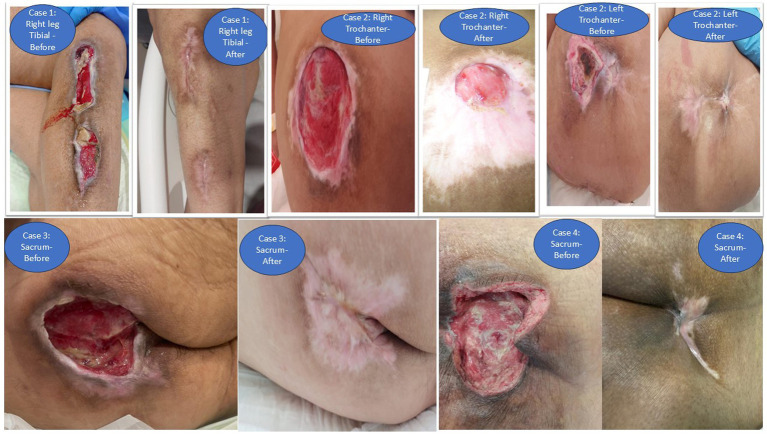 Figure 1
| Parameter | Oct 2022 | Dec 2022 | Jun 2023 | Aug 2023 | Oct 2023 | Nov 2023 |
|---|---|---|---|---|---|---|
| Case 1 | ||||||
| Body weight (kg) | 72.5 | 70 | 65.5 | 69 | 64 | 64 |
| Enteral feed volume (mL/day) | 1,100 | 1,300 | 1,300 | 1,300 | 1,200 | 1,200 |
| Total energy intake (kcal/day) | 1,320 | 1,498 | 1,498 | 1,498 | 1,378 | 1,440 |
| Total protein intake (g/day) | 66 | 95.6 | 95.6 | 95.6 | 89.6 | 72 |
| Body mass index (kg/m2) | 26.63 | 25.71 | 24.06 | 25.34 | 23.51 | 23.51 |
| HbA1c (%) | 9.7 | NA | 10 | NA | NA | NA |
| Serum albumin (g/dL) | 3.57 | 2.91 | 3.57 | 3.68 | 3.56 | NA |
| Hemoglobin (g/dL) | 14.8 | 11.1 | 10.8 | 13.2 | 13.1 | 13.7 |
| Blood urea nitrogen (mg/dL) | 132 | 36 | 43 | 51 | 47 | NA |
| Pressure ulcer/wound status | Grade 4 | Healing | Healing | Healing | Healing | Healed |
| Case 2 | ||||||
| Body weight (kg) | 38 | 38 | 39 | 40 | 43.5 | 43.5 |
| Enteral feed volume (mL/day) | 810 | 1,400 | 1,400 | 1,400 | 1,400 | 1,300 |
| Total energy intake (kcal/day) | 1,260 | 1978 | 1978 | 1978 | 1978 | 1950 |
| Total protein intake (g/day) | 53.6 | 106.16 | 106.16 | 106.16 | 106.16 | 82.94 |
| Body mass index (kg/m2) | 15.82 | 15.82 | 16.23 | 16.65 | 18.11 | 18.11 |
| HbA1c (%) | 4.7 | NA | NA | NA | NA | NA |
| Serum albumin (g/dL) | 4.38 | 3.71 | 3.63 | 4.12 | 3.72 | NA |
| Hemoglobin (g/dL) | 13.1 | 11 | 12.3 | 11.2 | 12.3 | 12.6 |
| Blood urea nitrogen (mg/dL) | 12 | 24 | 20 | 21 | 17 | NA |
| Pressure ulcer/wound status | Grade 4 | Healing | Healing | Healing | Healing | Healed |
| Case 3 | ||||||
| Body weight (kg) | 49 | 50 | 52 | 52.5 | 52.5 | 52.5 |
| Enteral feed volume (mL/day) | 1,000 | 1,400 | 1,500 | 1,500 | 1,300 | 1,300 |
| Total energy intake (kcal/day) | 1,500 | 1987 | 2,128 | 2,128 | 1950 | 1950 |
| Total protein intake (g/day) | 63.8 | 106.2 | 112.54 | 112.5 | 82.94 | 82.94 |
| Body mass index (kg/m2) | 17.57 | 17.93 | 18.65 | 18.82 | 18.82 | 18.82 |
| HbA1c (%) | NA | NA | NA | NA | NA | NA |
| Serum albumin (g/dL) | NA | 4.45 | NA | NA | NA | NA |
| Hemoglobin (g/dL) | 13.4 | 14 | 11.5 | 11 | NA | NA |
| Blood urea nitrogen (mg/dL) | NA | 22 | NA | NA | NA | NA |
| Pressure ulcer/wound status | Grade 4 | Healing | Healing | Healing | Healed | Healed |
| Case 4 | ||||||
| Body weight (kg) | 58 | 60 | 63 | 62 | 63 | 63 |
| Enteral feed volume (mL/day) | 1,100 | 1,400 | 1,400 | 1,200 | 1,200 | 1,200 |
| Total energy intake (kcal/day) | 1,650 | 1978 | 1978 | 1,678 | 1,678 | 1800 |
| Total protein intake (g/day) | 70.18 | 106.16 | 106.16 | 97.1 | 97.1 | 81 |
| Body mass index (kg/m2) | 23.83 | 24.65 | 25.89 | 25.48 | 25.89 | 25.89 |
| HbA1c (%) | 5.8 | NA | NA | 5.7 | NA | NA |
| Serum albumin (g/dL) | 4.1 | 3.24 | 3.61 | 3.66 | 3.67 | NA |
| Hemoglobin (g/dL) | 14.2 | 10.4 | 10.9 | 11.5 | 12.2 | NA |
| Blood urea nitrogen (mg/dL) | 15 | 15 | 31 | 29 | 18 | NA |
| Pressure ulcer/wound status | 0 | Grade 4 | Healing | Healing | Healing | Healed |
Peer Reviews
No public reviews on file for this paper yet. If you reviewed it on a platform where reviews are public (OpenReview, ICLR, NeurIPS, ICML), you can paste yours below so the community can read it here.
Videos
No videos yet. Explain this paper in a talk, walkthrough, or lecture? Add one.
Taxonomy
TopicsPressure Ulcer Prevention and Management · Clinical Nutrition and Gastroenterology · Wound Healing and Treatments
Introduction
Malnutrition and inadequate nutrient intake are well-established risk factors for the development and delayed healing of pressure ulcers (1). In critically ill patients, the catabolic stress response induces systemic inflammation, muscle protein breakdown, and impaired immune function, increasing the risk of infection, prolonged hospitalization, and mortality (2, 3).
Historically, nutrition support in critical care focused on providing energy to prevent starvation. Contemporary practice has shifted toward therapeutic nutrition, aiming to attenuate metabolic stress, preserve lean body mass, modulate inflammation, and support tissue repair (4–6). Accordingly, modern enteral formulations increasingly include bioactive nutrients designed to support immune function, oxidative balance, and wound healing (7).
ESPEN and ASPEN guidelines recommend early enteral nutrition when feasible, individualized energy and protein targets, careful glycemic control, and selective use of conditionally essential nutrients in patients with impaired wound healing (6, 7). Dietitians play a central role in translating these recommendations into individualized clinical practice.
The objective of this case series is to describe the implementation and outcomes of dietitian-led personalized enteral nutrition strategies in critically ill patients with advanced pressure ulcers within a multidisciplinary care framework.
Methodology
This descriptive case series included adult patients receiving long-term enteral nutrition in an acute or long-term care facility. All patients were managed by a multidisciplinary team led by an intensivist and including clinical dietitians, nurses, wound care specialists, physiotherapists, occupational therapists, and speech and language therapists.
Nutritional assessment
Nutritional risk was assessed using the Nutritional Risk Screening 2002 (NRS-2002) tool. A comprehensive nutrition-focused physical examination (NFPE) was conducted by a clinical dietitian, with documentation of muscle wasting and subcutaneous fat loss in patients identified as severely malnourished. The same dietitian team conducted assessments throughout follow-up to ensure consistency.
Body weight was measured weekly using a calibrated portable bed scale. Energy and protein requirements were estimated using weight-based equations in accordance with international guidelines (ESPEN/ASPEN), as indirect calorimetry was not routinely available.
Nutritional intervention
Enteral nutrition was initiated early when clinically feasible and advanced gradually to target energy and protein goals to minimize feeding intolerance and metabolic complications. Protein delivery was prioritized to support wound healing, immune function, and preservation of lean body mass.
Selective immunonutrition supplementation was introduced in patients with severe malnutrition or impaired wound healing, using a standardized formulation containing glutamine, arginine, and calcium β-hydroxy-β-methylbutyrate (Ca-HMB). Each 24-g sachet provided:
Glutamine: 7 g.
Arginine: 7 g.
Ca-HMB: 1.5 g.
Supplementation was individualized based on clinical condition, tolerance, and ongoing reassessment, and was reviewed regularly by the dietitian in collaboration with the medical team.
Feeding delivery and monitoring
Continuous enteral feeding was delivered using calibrated feeding pumps. Tolerance was assessed every 4–6 h, including gastric residual volumes, gastrointestinal symptoms, and abdominal examination. Feeding regimens were adjusted in response to intolerance using established protocols.
Multidisciplinary care bundle
Nutritional therapy was delivered within a standardized care bundle including:
Head-of-bed elevation >30°.
Glycemic control (140–180 mg/dL).
Pressure-relieving mattresses.
Scheduled repositioning.
Standardized wound care.
Deep venous thrombosis prophylaxis.
Case descriptions
All four cases demonstrated progressive improvement in pressure ulcer status over prolonged follow-up while receiving individualized nutritional therapy within a multidisciplinary framework. Nutritional targets were adjusted according to tolerance, metabolic stress, and evolving clinical status. Improvements in nutritional status and wound healing occurred alongside concurrent medical, nursing, and wound care interventions.
Case 1
A 73-year-old female patient with a history of a cerebral vascular accident (CVA) caused by an embolism in the left middle cerebral artery, along with comorbid conditions including diabetes mellitus (DM), hypertension (HTN), and coronary artery disease (CAD). The patient underwent a tracheostomy and was provided with a percutaneous endoscopic gastrostomy (PEG) for enteral feeding. She was transferred to this hospital with a grade 4 pressure ulcer, as assessed by the Yarkony-Kirk scale. Over a period of 7 days, the nutritional goal was met, providing 1.2 grams of protein and 20–25 kcal per kilogram of body weight from a disease- specific diabetic formula. Additionally, the nutrition was supplemented with HMB, Arginine, and Glutamine within the first week of admission. The pressure ulcer showed progressive healing over the following 11 months. Biochemical lab results revealed a slight decrease in blood urea nitrogen (BUN) over 12 months, with stable hemoglobin and serum albumin levels.
Case 2
A 30-year-old female with a complex medical history, including bipolar disorder, progressive cognitive and motor decline, hypothyroidism (currently treated), and a past case of COVID-19 pneumonia, presents with recurrent urinary tract infections (UTIs) and multiple pressure ulcers. She started enteral feeding using a silicone fine-bore nasogastric tube. Upon examination, she is found to have severe malnutrition (NRS 2002), with a BMI of 15.82, and as per nutrition focused physical finding, significant muscle wasting, and a loss of subcutaneous fat. A customized nutrition plan is developed to prevent refeeding syndrome, with a gradual increase in caloric intake over four to 8 weeks while monitoring electrolytes (phosphate, magnesium, potassium) and feed tolerance. Enteral nutrition begins with a standard formula at a low infusion rate, progressively increased to meet optimal nutritional delivery over four to 8 weeks. This targets an energy intake of 50 kcals per kg body weight and 2.8 grams of protein per kg body weight at peak tolerance, along with additional nutrients to support wound healing (HMB, Arginine, Glutamine). After 10 months, significant.
Improvements are seen, including an increase in body weight (BMI 18.11) and the healing of pressure ulcers, which are fully healed by 12 months.
Case 3
A 38-year-old male, diagnosed with hypoxic–ischemic brain damage following cardiac arrest, underwent tracheostomy and presented with recurrent pneumonia and grade 4 pressure ulcers on his sacrum and leg, requiring PEG feeding. Upon admission, the patient showed signs of malnutrition, with a BMI of 17.57 (NRS 2002), and nutrition focused physical findings with significant fat loss in the triceps and subcutaneous fat over the ribs. Muscle wasting was visible in the shoulder, scapula, thigh, and calf, but there were no signs of fluid retention. Nutritional intervention was initiated promptly, starting with a gradual increase in the rate of a standard.
polymer formula, supplemented with specialized nutrients aimed at wound healing, including HMB, Arginine, and Glutamine. The patient reached peak nutritional tolerance at 38 kcal per kg of body weight and 1.6 gm of protein per kg of body weight. Over the course of a year, there was notable improvement in the pressure ulcers, alongside a gradual increase in body weight.
Case 4
A total of 85-year-old female with a history of CVA (right hemiplegia), COVID-19, Alzheimer’s, and recurrent UTIs. She was tracheostomized and receiving PEG tube feeding. Upon admission, her BMI was 23.83, and she had a grade 4 pressure ulcer on her left gluteus. A standard polymer formula and specialized nutrition (including HMB, Arginine, and Glutamine) were used to meet her nutritional goals. The target nutrition plan aimed for 33 kcal per kg of body weight and 1.8 g of protein per kg of body weight. However, after 8 months, the patient began experiencing recurring intolerance to the formula, with vomiting and diarrhea. Consequently, the formula was switched to a hydrolyzed one. The new plan adjusted her energy intake to 27 kcal per kg of body weight and protein to 1.6 g per kg of body weight. After 10 months, the pressure ulcers healed, and her nutrition plan was updated to 29 kcal per kg of body weight and 1.3 g of protein per kg of body weight (Figure 1).
Proposed framework for tailored nutritional strategies in wound care, highlighting the role of immune-modulating enteral nutrients in supporting inflammation control, tissue repair, collagen synthesis, and overall wound healing outcomes.
Discussion
Adequate energy, protein, and micronutrient intake is fundamental for tissue repair, particularly in patients with advanced pressure injuries and prolonged critical illness. Nutritional prescriptions should be individualized according to illness severity, metabolic stress, organ function, and wound burden rather than applying uniform targets.
In this case series, dietitian-led nutritional strategies focused on early enteral nutrition, progressive achievement of energy and protein goals, and selective immunonutrition supplementation within a multidisciplinary care bundle. Enteral nutrition was preferred whenever feasible, consistent with current guidelines supporting gut integrity and reduced infectious risk compared with parenteral nutrition.
Importantly, pressure ulcer healing observed in this series reflects multimodal management, including optimized nutrition, pressure off-loading, glycemic control, infection management, and standardized wound care. While improved nutritional delivery was temporally associated with wound healing progression, causal inference cannot be established due to the observational design and concurrent interventions.
The use of arginine, glutamine, and HMB was guided by evidence suggesting potential benefits in collagen synthesis, immune modulation, and muscle protein metabolism. However, ongoing debate remains regarding the role of glutamine in critically ill populations, underscoring the need for careful patient selection and monitoring.
Limitations include the small sample size, lack of standardized quantitative wound measurements, and absence of a comparator group. Nevertheless, this series provides real-world insight into the practical implementation of personalized nutrition in complex patients and highlights the central role of dietitians within multidisciplinary teams (Table 1).
Clinical significance
This case series highlights the essential role of nutritional care in wound healing, especially for bedridden patients with multiple health conditions (8, 9). The study shows that personalized enteral feeding can enhance nutritional status and support wound recovery (10, 11). Additionally, the use of specialized supplements like Arginine, glutamine, and HMB highlights the significance of focused nutritional interventions in promoting healing and overall patient health (12, 13). In conclusion, the findings stress the importance of a holistic, patient-focused approach to nutritional care in managing complex wounds and improving clinical results (14–16).
Conclusion
This case series illustrates the application of individualized, dietitian-led enteral nutrition strategies within multidisciplinary care for patients with advanced pressure injuries. Optimized energy and protein delivery, combined with selective immunonutrition and close monitoring, was associated with improvements in nutritional status and wound healing over time. Given the observational nature of the study, future prospective research using standardized wound assessment tools and controlled nutritional protocols is needed to clarify the independent effects of targeted nutritional interventions.
The reference list from the paper itself. Each links out to its DOI / PubMed record.
- 1Singer P Blaser AR Berger MM Alhazzani W Calder PC Casaer MP . ESPEN guideline on clinical nutrition in the intensive care unit. Clin Nutr. (2019) 38:48–79. doi: 10.1016/j.clnu.2018.08.03730348463 · doi ↗ · pubmed ↗
- 2Berger MM Amrein K Barazzoni R Bindels L Bretón I Calder PC. The science of micronutrients in clinical practice – report on the ESPEN symposium. Clin Nutr. (2024) 43:268–83. doi: 10.1016/j.clnu.2023.12.00638104489 · doi ↗ · pubmed ↗
- 3Wu JY Liu MY Liu TH Kuo CY Hung KC Tsai YW . Clinical efficacy of enteral nutrition feeding modalities in critically ill patients: a systematic review and meta-analysis of randomized controlled trials. Eur J Clin Nutr. (2023) 77:1026–33. doi: 10.1038/s 41430-023-01313-8, 37479805 · doi ↗ · pubmed ↗
- 4Early EN vs early PN in critically ill (systematic review/meta-analysis, 2024; Nutrients 2025) – EEN lowers bloodstream infections and LOS vs EPN; no mortality difference; GI intolerance higher with EN. Supports your EN-first statement with 2025 data. (2024).
- 5Mc Clave SA Martindale RG Vanek VW Mc Carthy M Roberts P Taylor B . Guidelines for the provision and assessment of nutrition support therapy in the adult critically ill patient: Society of Critical Care Medicine (SCCM) and American Society for Parenteral and Enteral Nutrition (a.S.P.E.N.). JPEN J Parenter Enteral Nutr. (2009) 33:277–316. doi: 10.1177/0148607109335234, 19398613 · doi ↗ · pubmed ↗
- 6Singer P Blaser AR Berger MM Calder PC Casaer M Hiesmayr M. ESPEN practical and partially revised guideline: clinical nutrition in the intensive care unit. Clin Nutr. (2023) 42:1671–89. doi: 10.1016/j.clnu.2023.07.01137517372 · doi ↗ · pubmed ↗
- 7ESPEN ICU nutrition guideline (partially revised, 2023; guideline summary page updated Dec 10, 2025) – Up-to-date ICU nutrition recommendations supporting EN preference and individualized targets. (2025).
- 8Nakamura K Yamamoto R Higashibeppu N Yoshida M Tatsumi H Shimizu Y. The Japanese critical care nutrition guideline 2024. J Intensive Care. (2025) 13:18. doi: 10.1186/s 40560-025-00785-z 40119480 PMC 11927338 · doi ↗ · pubmed ↗