The Milpa diet: a functional, sustainable pattern for human and planetary health
Rafael Fernández-Demeneghi, Martha Alicia Sánchez-Jiménez, César Huerta-Canseco, Isidro Vargas-Moreno, Gilberto Uriel Rosas-Sánchez, Rodrigo Ramirez-Rodriguez, Gabriela Páez-Huerta, María Magdalena Álvarez-Ramírez

Abstract
Genes, proteins, chemicals, diseases, species, mutations and cell lines named across the full text — each resolved to its canonical identifier and authoritative record.
Click any figure to enlarge with its caption.
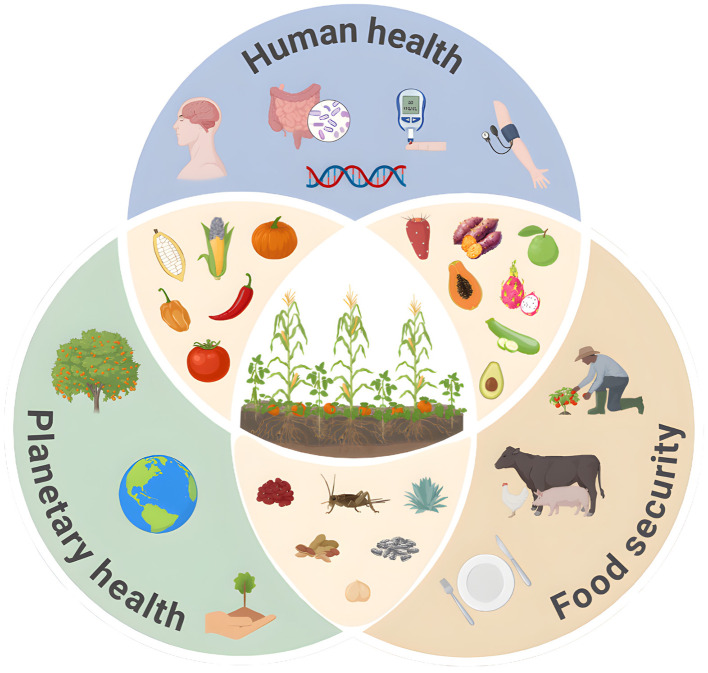 Figure 1
|
|
|
|
|
|---|---|---|---|
| Maize ( | Polyphenols (ferulic acid), anthocyanins, carotenoids, dietary fiber, phytosterols, linoleic acid (ω-6), oleic acid (ω-9). | Antioxidant, hypocholesterolemic, glycemic control. | ( |
| Pumpkin ( | Phytosterols, cucurbitacins, tocopherols, linoleic acid (ω-6), oleic acid (ω-9), palmitic acid. | Hypocholesterolemic, antioxidant. | ( |
| Common bean ( | Polyphenols, flavonoids, saponins, lectins, resistant starch, linoleic acid, α-linolenic acid (ω-3). | Glycemic control, hypocholesterolemic, intestinal health. | ( |
|
| |||
| Epazote ( | Flavonoids, terpenes, polyphenols, fatty acids. | Antiparasitic, antioxidant, anti-inflammatory, immunomodulatory, glycemic control, anticancer | ( |
| Habanero pepper ( | Capsaicinoids, carotenoids, polyphenols. | Anti-inflammatory, antioxidant. | ( |
| Huanzontle ( | Polyphenols, flavonoids, carotenoids. | Anti-inflammatory, antioxidant, hypocholesterolemic. | ( |
| Nopal ( | Flavonoids, mucilages, soluble fiber, linoleic acid (ω-6), α-linolenic acid (ω-3). | Anti-inflammatory, antioxidant, glycemic control, antimicrobial, neuroprotective. | ( |
| Huitlacoche ( | β-glucans, polyphenols, linoleic acid (ω-6), oleic acid (ω-9). | Immunomodulatory, antioxidant. | ( |
| Tomato ( | β-carotene, lycopene, tocopherol, phenolic acids, flavonoids, anthocyanin. | Antioxidant, hypocholesterolemic, antiplatelet aggregation, antithrombotic, antihypertensive, hypoglycemic, anticancer. | ( |
| Tomatillo ( | Flavonoids, polyphenols, carotenoids, phytosterols. | Antitumoral, anti-inflammatory. | ( |
| Zucchini flower ( | Flavonoids, carotenoids, polyphenols. | Antioxidant. | ( |
| Chayote ( | Carotenoids, polyphenols, flavonoids. | Antioxidant, hypocholesterolemic. | ( |
| Pepper ( | Capsaicinoids, carotenoids, polyphenols, flavonoids. | Anticancer, anti-inflammatory, antidiabetic, antihypertensive. | ( |
| Romeritos ( | Polyphenols, carotenoids, fiber, linoleic acid (ω-6). | Antioxidant, hypocholesterolemic. | ( |
| Purslane ( | Flavonoids, alkaloids, terpenoids, α-linolenic acid (ω-3). | Anti-inflammatory, antioxidant, immunomodulatory. | ( |
|
| |||
| Black sapote ( | Polyphenols, proanthocyanidins, flavonoids. | Antioxidant. | ( |
| Cactus Berry ( | Betalains, polyphenols, anthocyanins. | Antioxidant, hypocholesterolemic. | ( |
| Canistel ( | Carotenoids, polyphenols, flavonoids. | Antioxidant, anti-inflammatory, hypolipidemic, anticancer, glycemic control. | ( |
| Cherimoya ( | Polyphenols, flavanols, procyanidins. | Antioxidant, anticancer, antiallergy. | ( |
| Dragon fruit ( | Betalains, polyphenols, fiber, anthocyanins, Linoleic acid (ω-6), α-linolenic acid (ω-3). | Antioxidant, hypocholesterolemic, glycemic control, cardioprotective, anti-inflammatory. | ( |
| Mamey ( | Carotenoids, polyphenols. | Antioxidant, cardioprotective, anti-inflammatory, anticancer. | ( |
| Mexican hawthorn ( | Polyphenols, proanthocyanidins, vitamin C, flavonoids, triterpenic glycosides. | Antioxidant, cardioprotective. | ( |
| Papaya ( | Carotenoids, papain, polyphenols, saponins. | Antioxidant, digestive, anti-inflammatory, antimicrobial, anticancer, glycemic control. | ( |
| Pitaya ( | Betalains, polyphenols, flavonoids, fiber. | Antioxidant, hypocholesterolemic, intestinal health, antihypertensive, anti-inflammatory. | ( |
| Red mombin ( | Polyphenols, carotenoids, saponins, polysaccharides. | Antioxidant, anti-inflammatory, glycemic control, hypocholesterolemic, ulcer protective, hepatoprotective, antiarthritic, antihypertensive, antiepileptic. | ( |
| Sapodilla ( | Carotenoids, polyphenols. | Antioxidant, anticancer, antimicrobial, anti-inflammatory, antispasmodic, anti-aging, hepatoprotective. | ( |
| Xoconostle ( | Betalains, flavonoids, polyphenols, fiber, linoleic acid (ω-6), oleic acid (ω-9), tocopherols. | Glycemic control, hypocholesterolemic, antioxidant, anti-inflammatory. | ( |
| Soursop ( | Acetogenins, flavonoids, alkaloids, polyphenols. | Antioxidant, antimicrobial, antinociceptive, antihypertensive, glycemic control, anticancer. | ( |
| Yellow mombin ( | Polyphenols, flavonoids. | Antioxidant, anti-inflammatory. | ( |
|
| |||
| Amaranth ( | Squalene, bioactive peptides, polyphenols, oleic acid, linoleic acid, anthocyanins, betalain, carotenoids, flavonoids. | Hypocholesterolemic, gastroprotective, anti-inflammatory, anticancer. | ( |
|
| |||
| Chia ( | α-Linolenic acid (ω-3), linoleic acid (ω-6), soluble fiber, polyphenols, flavonoids, carotenoids. | Antioxidant, hypotriglyceridemic, | ( |
| Sunflower seed ( | Polyphenols, phytosterols, flavonoids, carotenoids, linoleic acid (ω-6), oleic acid (ω-9). | Antioxidant, anti-inflammatory, glycemic control, antimicrobial, antihypertensive. | ( |
| Pumpkin seed ( | Phytosterols, cucurbitacins, tocotrienols, oleic acid (ω-9). | Hypocholesterolemic, antioxidant. | ( |
| Cocoa ( | Flavonoids, epicatechin, proanthocyanidins, saponins, oleic acid (ω-9). | Antioxidant, glycemic control, antihypertensive, anticancer, hypocholesterolemic, neuroprotector. | ( |
| Peanut ( | Dietary fiber, phytosterols, polyphenols, oleic acid (ω-9), linoleic acid (ω-6), resveratrol, flavonoids. | Hypocholesterolemic, glycemic control, intestinal health, antihypertensive, anticancer, neuroprotector. | ( |
| Haba ( | Polyphenols, flavonoids, fiber, linoleic acid (ω-6), carotenoids. | Glycemic control, antioxidant, intestinal health, antihypertensive, anticancer. | ( |
| Lentil ( | Polyphenols, flavonoids, tannins, bioactive peptides, linoleic acid (ω-6). | Glycemic control, antioxidant, hypocholesterolemic, anticancer. | ( |
|
| |||
| Avocado ( | Oleic acid, linoleic acid, polyphenol, phytosterols, carotenoids, tocopherols. | Hypocholesterolemic, antioxidant, cardioprotective. | ( |
|
| |||
| Grasshopper ( | Bioactive peptides, linoleic acid (ω-6), α-linolenic acid (ω-3). | Antioxidant, hypocholesterolemic, intestinal health. | ( |
| Egg | Lutein, zeaxanthin, monounsaturated, polyunsaturated fatty acids, carotenoids. | Hypocholesterolemic, antioxidant, cardioprotective. | ( |
| Chicken | Bioactive peptides, oleic acid (ω-9). | Cardioprotective, glycemic control. | ( |
| Fish | α-Linolenic acid (EPA, DHA). | Antioxidant, anti-inflammatory, neuroprotective, cardioprotective, antimicrobial, hepatoprotective. | ( |
|
| |||
| Yucca ( | Resistant starch, polyphenols, saponins, flavonoids, tanins, terpenoids. | Antibacterial, antioxidant, glycemic control, anti-inflammatory. anticancer, anti-diarrheal, hypocholesterolemic. | ( |
| Sweet potato ( | Carotenoids, fiber, polyphenols, anthocyanins, linoleic acid (ω-6). | Antioxidant, glycemic control, cardioprotective, anti-inflammatory, anticancer, antimicrobial. | ( |
|
| |||
| Honey ( | Flavonoids, polyphenols, carotenoids, enzymes. | Antioxidant, anti-inflammatory, glycemic control, antimicrobial, antiparasitic, antiviral, anticancer. | ( |
Peer Reviews
No public reviews on file for this paper yet. If you reviewed it on a platform where reviews are public (OpenReview, ICLR, NeurIPS, ICML), you can paste yours below so the community can read it here.
Videos
No videos yet. Explain this paper in a talk, walkthrough, or lecture? Add one.
Taxonomy
TopicsAgriculture Sustainability and Environmental Impact · Nutritional Studies and Diet · Diet and metabolism studies
Introduction: the Milpa diet concept and definition
The synchronization of metabolic dysfunction and planetary degradation constitutes the defining challenge of the Anthropocene. We face a global syndemic—comprising obesity, undernutrition, and climate change—where unhealthy dietary transitions and unsustainable food systems act not merely as consequences, but as a mutually reinforcing feedback loop (1–3). This triple crisis creates a synergistic burden that undermines the viability of sustainable food systems. As environmental and public health degrade, it triggers a regressive cycle where individuals are increasingly subjected to unhealthy food environments, further exacerbating the initial drivers of the syndemic. The magnitude of this crisis is evident: currently, over 2 billion adults present with overweight or obesity (4), while a staggering proportion of mortality attributable to cardiovascular diseases (30%), type 2 diabetes (23%), and chronic kidney disease (20.7%) is directly underpinned by dietary risks (1, 5, 6).
This public health emergency is inextricably linked to an agri-food model dependent on high-yield monocultures. While this industrial paradigm has maximized caloric availability, it has compromised nutritional diversity and ecosystem integrity (7, 8). The expansion of simplified agricultural systems now drives 80% of deforestation and consumes 70% of freshwater (9), generating a “hidden hunger” where caloric abundance coexists with micronutrient deficiencies (10). Consequently, nutrition cannot be approached through a reductionist lens of isolated nutrients; it must be understood as a multidimensional phenomenon shaped by environmental, social, and economic determinants (11, 12).
In this context, the Milpa Diet—rooted in Mesoamerican agricultural traditions—transcends mere cultural grounding to become a robust biocultural system and a complex nutritional ecosystem. Far from being a relic of the past, the Milpa represents a sophisticated, nutrient-dense, and bioactive-rich pattern that aligns with the modern principles of integrative and precision nutrition (13, 14). Historically, dietary interventions have been framed through a reactive, pathogenic lens focused strictly on risk-factor reduction and disease prevention. The Milpa bridges this theoretical gap. Based on the polyculture of maize, beans, squash, and chili, this system certainly supports metabolic health and prevents non-communicable diseases (NCDs) through synergistic biochemical mechanisms rather than isolated compounds (15–17); however, its theoretical grounding goes much further.
Moving beyond the concept of a mere “meal plan,” the Milpa paradigm embodies a true salutogenic model—focused proactively on the origins of health and the holistic development of wellbeing rather than merely reacting to disease. Its structure fosters food sovereignty, biodiversity preservation, and climate adaptation through efficient resource cycling and agroecological practices (18). This opinion article explores the relevance of the Milpa system not only as a cultural heritage but as a scalable, evidence-based blueprint for sustainable diets (Figure 1). We posit that integrating this indigenous knowledge system offers a strategic, viable opportunity to address the dual burden of chronic disease and environmental degradation, advancing the transition toward resilient, equitable, and sustainable food systems.
The Milpa paradigm as a synergistic framework for human health, planetary health, and food security. The central intersection represents the core Mesoamerican triad (maize, beans, and squash) cultivated as an agroecological polyculture. The overlapping spheres illustrate the multidimensional impacts of this biocultural system. Human health is supported by diverse, nutrient-dense foods that positively modulate the gut microbiome, metabolic markers, and genomic expression. Planetary health is promoted through biodiversity conservation, sustainable land use, and climate adaptation. Food security is achieved via resilient local agriculture, culturally relevant protein sources (including backyard livestock and edible insects), and food sovereignty. Together, these elements form a holistic, salutogenic nutritional model.
The Milpa system: concept, definition, and nutritional structure
The term Milpa derives from the Nahuatl words milli (“sown plot”) and pan (“on top of”), designating an ancestral Mesoamerican agricultural system that originated between 4,500- and 3,500-years BP (18, 19). However, functionally, it represents more than a cultivation technique; it is a dynamic biocultural complex adapted to diverse edaphoclimatic conditions. Its nutritional core consists of the “Mesoamerican Triad”: maize (Zea mays L.), common bean (Phaseolus vulgaris L.), and squash (Cucurbita pepo L.), which form a symbiotic structural and nutritional base (20). Depending on regional ecosystems, this polyculture integrates a diverse array of endemic species, functioning as an in-situ germplasm bank. These include chili peppers (Capsicum annuum L.), tomatoes (Lycopersicon esculentum), tomatillo (Physalis spp.), and chilacayote (Cucurbita ficifolia). The system also incorporates amaranth (Amaranthus spp.), nopal cactus (Opuntia ficus-indica), and nutrient-dense wild greens known as quelites—such as chipilín (Crotalaria longirostrata), Amaranthus hybridus, Portulaca oleracea, and Dysphania ambrosioides. This biodiversity is complemented by tubers like sweet potato (Ipomoea batatas) and cassava (Manihot esculenta) (15, 18–21).
Agroecological synergy and bio-efficiency
1
From an agroecological perspective, the Milpa thrives as a mixed polyculture within a space of synergistic interactions, optimizing the capture of solar radiation, water, and soil nutrients. The vertical architecture of maize provides support for climbing beans, while the broad leaves of squash cover the soil, retaining moisture and suppressing competitive weeds (15, 19). This structure optimizes the “Land Equivalent Ratio” (LER), resulting in a food system rich in proteins, fiber, vitamins, and bioactive compounds, produced with high resource efficiency (17).
The technological component: nixtamalization
2
Crucially, the nutritional architecture of the Milpa diet cannot be understood solely from its raw agricultural products; it relies fundamentally on ancestral food-processing technologies, specifically nixtamalization. This alkaline thermal treatment of maize (cooking with calcium hydroxide) breaks down the hemicellulose of the pericarp, significantly enhancing the bioavailability of niacin (vitamin B3) and calcium, while modifying the protein matrix to improve digestibility (22). Thus, the Milpa system fuses agricultural biodiversity with culinary biotechnology to deliver a complete protein profile and a micronutrient-dense diet.
The Milpa diet: a functional nutritional matrix
3
Derived from this agricultural model, the Milpa Diet is proposed not merely as a set of ingredients but as a healthy, sustainable, and culturally relevant dietary pattern. Its nutritional axis relies on the synergistic consumption of maize, beans, squash, and chili (13, 16). These components create a complementary nutritional matrix characterized by a high density of micronutrients, diverse fiber types, and a complex profile of bioactive compounds:
Maize (Zea mays): providing an energy foundation, it provides complex carbohydrates and resistant starch. Enriched by nixtamalization, it becomes a key source of bioavailable calcium. Furthermore, pigmented varieties (blue/red) function as potent reservoirs of anthocyanins—particularly cyanidin-3-glucoside—and phenolic acids (ferulic acid), which are linked to antioxidant and anti-inflammatory pathways (17, 22).Common beans (Phaseolus vulgaris): these legumes are critical for the protein architecture of the diet. They act as the biochemical complement to maize. In contrast, maize is low in lysine and tryptophan; beans are rich in these essential amino acids, providing protein quality comparable to animal sources. Additionally, they are rich in iron, zinc, folate, and non-digestible fermentable carbohydrates (prebiotics), as well as flavonoids such as quercetin and kaempferol (23, 24).Squash (Cucurbita spp.): this crop offers a dual nutritional contribution. The seeds (pepitas) provide a dense source of plant-based proteins, zinc, magnesium, and healthy lipids (mono- and polyunsaturated fatty acids), including phytosterols. Conversely, the pulp serves as a primary source of carotenoids (β-carotene, lutein, zeaxanthin), vital for ocular and immune health (25, 26).Chili peppers (Capsicum spp.): far from being a mere condiment, chili peppers act as metabolic modulators. They are exceptionally rich in Vitamins A, C, and E. Their pungency derives from capsaicinoids, compounds with recognized thermogenic and metabolic-regulating properties, which work in tandem with their high flavonoid content (27).
Dietary structure and composition
4
This core triad is dynamically complemented by eight peripheral food groups: vegetables, fruits, whole grains, oilseeds, unsaturated fats, tubers, natural sweeteners, and animal protein in moderation. The regimen prioritizes water consumption while strictly limiting ultra-processed products (16, 17). Collectively, the Milpa Diet constitutes a predominantly plant-based yet fundamentally omnivorous framework. It is defined by a sophisticated macronutrient architecture—rich in plant proteins, complex carbohydrates, and healthy fats—and reinforced by a high fiber content and a diverse phytochemical spectrum.
This combination generates a distinctive nutritional phenotype that modulates metabolic health via multiple bioactive pathways. To illustrate the specific functional contribution of this biodiversity, Table 1 provides a detailed summary of the bioactive compounds and physiological effects associated with the key Mesoamerican species constituting the Milpa Diet.
The Milpa diet and health: mechanisms and bioactive architecture
Contemporary nutritional science effectively validates the therapeutic potential of traditional dietary patterns rooted in whole, minimally processed foods. The Milpa diet aligns rigorously with this paradigm, offering a functional food matrix characterized by a low glycemic load, high fiber density, and a diverse spectrum of bioactive compounds. Unlike reductionist approaches, the therapeutic potency of this diet relies on the biochemical synergy of its components—a “natural polypharmacy” effect that targets metabolic dysregulation through multiple signaling pathways (17, 23).
Mechanisms of action: the matrix effect
1
Specific food-processing interactions and enzymatic inhibitions drive the physiological impact of the Milpa. For instance, the nixtamalization of maize not only enhances calcium bioavailability but modifies the anthocyanin profile, increasing the concentration of cyanidin-3-glucoside (C3G), a flavonoid with proven insulin-sensitizing properties (28, 29). Concurrently, the consumption of common beans provides specific inhibitors of α-amylase and α-glucosidase. These bioactive peptides blunt postprandial glycemic excursions by delaying carbohydrate hydrolysis (30, 31). When combined with the lipid profile of pumpkin seeds (rich in PUFAs and phytosterols), this triad creates a metabolic buffer that optimizes glucose homeostasis and lipid metabolism.
Bioactive architecture
2
The health benefits are mechanistically attributable to a distinct phytochemical profile that exerts pleiotropic effects (23, 32). Key bioactive groups include:
Phenolic compounds: specifically, flavonoids, tannins, and phenolic acids. These act as potent antioxidants and modulators of inflammatory pathways (e.g., NF-κB inhibition) (23).Phytosterols: including β-sitosterol, campesterol, and stigmasterol. These compounds compete with cholesterol for micellar absorption in the gut, effectively improving lipid profiles (23, 33).Carotenoids: such as zeaxanthin, lutein, and β-carotene. Beyond their role in ocular health, they function as signaling molecules in adipose tissue regulation (17).Bioactive peptides: derived from plant proteins (beans and amaranth), exhibiting antihypertensive (ACE-inhibitory) and antithrombotic activities (34).Dietary fiber and fatty acids: the synergy between soluble fiber and oleic/linoleic acids supports satiety signaling and improved insulin receptor sensitivity (35, 36).
Clinical evidence: from prevention to management
3
Accumulating evidence demonstrates that adherence to the Milpa diet—and the broader Traditional Mexican Diet (TMD)—confers protection against the spectrum of chronic non-communicable diseases (NCDs). Clinical and epidemiological studies have documented significant risk reductions in:
Cardiometabolic conditions: including Type 2 Diabetes (T2D), dyslipidemias, Metabolic dysfunction-associated steatotic liver disease (MASLD), and obesity (13, 16, 37–39).Systemic pathologies: such as cardiovascular disease (CVD), chronic kidney disease (CKD), and specific cancers, as well as autoimmune conditions like celiac disease (5, 17, 40).
Precision nutrition and the gut-brain axis
4
Finally, the Milpa diet represents a frontier for Precision Nutrition. Its plant-forward composition serves as a high-quality substrate for the gut microbiota, promoting the production of Short-Chain Fatty Acids (SCFAs), such as butyrate. This mechanism not only reinforces gut barrier integrity but also modulates the gut-brain axis (41, 42). Crucially, these benefits are amplified by the synergy of functional foods inherent to the system. Beyond providing essential nutrients, the diversity of Milpa crops delivers a complex matrix of bioactive compounds with antioxidant and anti-inflammatory properties that play a key role in mental health (23, 43). As research advances in nutrigenomics, the Milpa stands as a scalable model to address genetic susceptibilities (e.g., MTHFR or ABCA1 variants) through these culturally relevant dietary interventions (13, 44).
Clinical and epidemiological evidence: moving beyond the western diet
The Western Diet (WD)—characterized by excessive caloric density, nutrient deficiency, and a reliance on ultra-processed foods (UPFs)—acts as a primary driver of metabolic inflexibility and systemic chronic inflammation (2). The public health ramifications of this dietary transition are catastrophic, reflected in the escalating global mortality burden linked to poor nutritional quality (1, 5).
Current epidemiological estimates paint a stark picture of this “metabolic collision.” Approximately 6.58 million deaths from cardiovascular disease (CVD) are attributable to dietary risks, specifically the excessive intake of sodium, trans fats, and processed meats (6). Furthermore, nutritional imbalances—such as low whole-grain and fruit consumption—are directly linked to 381,000 deaths from Type 2 Diabetes (T2D) (1) and 317,000 deaths among patients with chronic kidney disease (CKD) (5). Moreover, the obesity epidemic, fueled by the WD, now accounts for nearly 357,000 cancer deaths annually (45, 46). Extending beyond somatic pathology, this dietary pattern drives neuronal alterations that have opened a critical debate regarding the addictive potential of ultra-processed foods, further underscoring the emerging intersection between nutrition and mental health (47).
Against this backdrop, the Milpa diet emerges not merely as a cultural alternative but as a potent physiological corrective. While clinical literature often categorizes these interventions as “Traditional Mexican Diet” (TMD) or “Genome-Based Diets,” they are fundamentally rooted in the Milpa triad and its associated agrobiodiversity. To systematically validate this, existing studies provide robust evidence across various methodological designs and sample populations:
Cross-sectional epidemiological evidence demonstrates that reintroducing these pre-Hispanic staples generates a favorable lipidomic profile among adult populations, significantly reducing total cholesterol, LDL-c, VLDL-c, and triglycerides—key drivers of atherogenic risk (37, 44). Furthermore, randomized crossover feeding trials in women of Mexican descent reveal that the diet exerts a regulatory effect on glucose homeostasis, reducing insulin levels and HOMA-IR (44). Significantly, these controlled trials show it lowers serum concentrations of high-sensitivity C-reactive protein (hsCRP), thereby dampening the systemic low-grade inflammation characteristic of the WD (48).
Crucially, the Milpa diet exhibits potential as a tool for population-specific precision nutrition. Clinical intervention studies indicate that its metabolic benefits are particularly pronounced in individuals carrying risk polymorphisms common in Amerindian and Mestizo populations (e.g., MTHFR 677 CT, ABCA1 R230C, and APOE ε4). This suggests that the Milpa pattern may mitigate the deleterious phenotypic expression of these high-risk genotypes (44, 48).
Mechanistically, in vivo animal models utilizing rats fed a “Pre-Hispanic Diet” formulation confirm these observations at the molecular level. Consumption of this pattern is linked to the upregulation of key metabolic regulators, including PPAR-α (fatty acid oxidation), UCP-1 (thermogenesis), and the mitochondrial biogenesis coactivator PGC-1α.
This molecular cascade results in reduced adipocyte hypertrophy and lower hepatic triglyceride accumulation (49). Concomitantly, the diet improves the cellular redox state by decreasing Reactive Oxygen Species (ROS) and oxidized proteins while optimizing the GSSG/GSH ratio. Notably, these neuroprotective and antioxidant mechanisms promote systemic conditions associated with cognitive health (43, 49, 50).
The Milpa diet for planetary health
The current anthropogenic crisis reveals a dangerous paradox: while approximately 82% of the human caloric intake comes from plants (51), global dietary diversity has collapsed. Despite the existence of over 6,000 edible plant species, 60% of agricultural production is effectively monopolized by just nine crops (e.g., maize, wheat, rice, soy). These are produced almost exclusively via high-input monocultures intended not for direct human nutrition but for the manufacture of ultra-processed food ingredients (3, 7). This industrial model drives soil depletion, biodiversity loss, and creates a critical rift between human consumption and environmental sustainability.
In stark contrast, the Milpa system functions as a model of ecological intensification, capable of sustaining productivity even under adverse climatic conditions (20). Unlike monocultures that act as biological vacuums, the Milpa thrives on the specific niche complementarity of the Mesoamerican triad:
Maize (C4 architecture): acts as the vertical axis, optimizing solar radiation capture via C4 photosynthesis while providing physical support for climbing legumes.Beans (nitrogen fixation): establishes a symbiotic relationship with Rhizobium bacteria to fix atmospheric nitrogen, naturally refertilizing the soil and enriching the system for associated crops.Squash (microclimate regulation): its broad leaves function as a living mulch, intercepting sunlight to suppress competitive weeds, maintaining soil moisture, and secreting cucurbitacins—biochemical compounds that provide allelopathic protection against pests (19, 20, 52).
This biological synergy generates a robust microclimate that optimizes the “Land Equivalent Ratio” (LER). The diverse aerial architecture and complex root stratification enable efficient resource partitioning, significantly enhancing resilience against droughts and pest outbreaks compared with simplified systems (18, 19).
Consequently, the Milpa stands as an agroecological system that embodies the principles of Planetary Health, effectively linking sustainable food production with ecosystem conservation and human wellbeing (15, 53). Its historical persistence serves as a rigorous proof of concept: it demonstrates that it is possible to harmonize nutritional needs with planetary boundaries, offering a sustainability model rooted in traditional knowledge and respectful coexistence with nature.
Beyond its response to routine anthropogenic impacts, the systemic stability of the Milpa positions it as a critical nutritional solution during climate-induced emergencies and natural disasters. As global, highly centralized supply chains become increasingly vulnerable to severe climate shocks, the reliance on imported ultra-processed foods poses a severe threat to regional food security. Developing and safeguarding culture-specific dietary profiles like the Milpa serves as a vital contingency strategy. By maintaining local agricultural knowledge and utilizing indigenous, drought-resistant crops, communities establish a reliable, nutrient-dense safety net when industrial food systems fail. In this light, the preservation of local culinary heritage transcends cultural identity; it becomes a tangible, life-saving strategy for food security and disaster resilience in an era of climate unpredictability.
Discussion: challenges, opportunities, and the strategic revaluation of the Milpa
While the physiological and ecological evidence supporting the Milpa diet is compelling, its effective reimplementation faces systemic barriers rooted in the “industrial lock-in” of current food systems. The globalization of agriculture has homogenized dietary landscapes, creating environments where ultra-processed foods are ubiquitous and often cheaper than fresh staples (7, 8). However, this transition has created a critical dissonance: while globalization offers dietary diversity, nutrition must not be governed by transient trends. The definition of a “correct diet” remains immutable in its biological principles—complete, varied, sufficient, safe, and adequate—but in the Anthropocene, it must imperatively include two new dimensions: sustainability and cultural pertinence.
In this context, the Milpa diet represents the closest approximation to population-based precision nutrition. While global frameworks like the EAT-Lancet planetary health diet provide vital universal targets for sustainable eating, and the Mediterranean diet serves as a recognized gold standard for cardiometabolic health, the Milpa diet offers a critical localized counterpart. Universal models, while highly valuable, often lack the cultural resonance and specific genomic synchronization required for diverse populations. For instance, while the Mediterranean diet achieves cardiovascular protection largely through olive oil and wine, the Milpa achieves comparable functional synergy through the lipid profiles of pumpkin seeds, avocados, and the bioactive peptides of diverse legumes.
For Mesoamerican and Mestizo populations, adopting the Milpa pattern is not merely a cultural choice but a biological imperative; it respects the genetic architecture of native peoples, offering a metabolic substrate to which they are historically and evolutionarily adapted (44, 54). Unlike imported dietary models that may exacerbate metabolic discordance, the Milpa offers a “genomic synchronization” that valorizes ancestral wisdom not just as folklore, but as empirically valid preventive medicine.
It is important to note the contextual boundaries of this system. The exact crop matrix of the Milpa is highly scalable and therapeutically optimal within Mesoamerica and for Hispanic/Latine populations globally. However, its direct agricultural implementation may not be ecologically applicable or culturally resonant in fundamentally different edaphoclimatic zones (e.g., Northern Europe or Arid Asia). In such contexts, the Milpa serves not as a literal dietary export, but as a conceptual paradigm. It demonstrates how reclaiming any region's native, agroecological polycultures (e.g., the Nordic diet or traditional Asian intercropping systems) can simultaneously resolve local health and environmental crises.
Adopting this pattern generates a virtuous cycle of nutritional and agroecological synergy. By consuming local polycultures, we amplify functionality: the diet becomes more bioactive, while the land becomes more resilient. This approach transcends the reductionist view of nutrition as mere “food intake,” repositioning it as a multidimensional phenomenon encompassing culture, society, the economy, health, and prevention. It fosters local economies, strengthens food sovereignty, and dignifies the rural sector, countering the stigmatization that has marginalized indigenous foodways (14, 18, 55).
To operationalize this salutogenic vision—focused on generating health rather than managing disease—scientific knowledge must transcend the laboratory. Effective science communication serves as the critical bridge to translate these findings into robust public policies. We propose a systemic intervention framework:
Agroecological policy reorientation: shift subsidies toward polycultural, small-scale farming to conserve native germplasm in-situ and ensure the resilience of the diet's genetic base (51).From superfoods to biocultural heritage: educational strategies must dismantle the “superfood” narrative (which leads to commodification and elitism) and replace it with a “Biocultural Heritage” model. This validates indigenous food systems as scientifically superior strategies for community health (15).Sustainable public procurement: incorporating Milpa foods into school feeding programs and public institutions is a potent tool for normalizing these nutrient-dense foods, ensuring that the “correct diet” is accessible to the most vulnerable.Mindful eating as a promotion strategy: since “real food” lacks the massive advertising machinery of ultra-processed products, we must actively cultivate Mindful Eating not merely as a clinical tool, but as a holistic public health necessity. This approach reawakens the conscious connection between the eater, the origin of the food, and the act of nourishment (56). By emphasizing the sensory and cultural richness of the Milpa, we can counter the industrial marketing narrative and empower individuals to intentionally choose health and sustainability over convenience.
Ultimately, the revitalization of the Milpa diet demands treating individual health, community well-being, and planetary sustainability as indivisible outcomes.
Conclusion: a path toward sustainable health and resilience
The Milpa diet transcends the traditional meal concept to become a sophisticated, scalable strategy for planetary health. By synchronizing human metabolic needs—specifically adhering to the genetic adaptations of Mesoamerican populations—with agroecological resilience, it effectively resolves the dichotomy between nutrition and sustainability. Revitalizing this system is not an exercise in nostalgia, but a critical innovation for the Anthropocene. Ultimately, the Milpa offers a proven, salutogenic blueprint to navigate the global syndemic, demonstrating that the most resilient future for nutrition lies in the scientific revalorization of our ancestral roots.
The reference list from the paper itself. Each links out to its DOI / PubMed record.
- 1Ma H Wang M Qin C Shi Y Mandizadza OO Ni H . Trends in the burden of chronic diseases attributable to diet-related risk factors from 1990 to 2021 and the global projections through 2030: a population-based study. Front Nutr. (2025) 12:1570321. doi: 10.3389/fnut.2025.157032140416367 PMC 12098078 · doi ↗ · pubmed ↗
- 2Clemente-Suárez VJ Beltrán-Velasco AI Redondo-Flórez L Martín-Rodríguez A Tornero-Aguilera JF. Global impacts of western diet and its effects on metabolism and health: a narrative review. Nutrients. (2023) 15:2749. doi: 10.3390/nu 1512274937375654 PMC 10302286 · doi ↗ · pubmed ↗
- 3Vega-Mejía N Ponce-Reyes R Martinez Y Carrasco O Cerritos R. Implications of the western diet for agricultural production, health and climate Change. Front Sustain Food Syst. (2018) 2:88. doi: 10.3389/fsufs.2018.00088 · doi ↗
- 4GBD 2021 Adolescent BMI Collaborators. Global, regional, and national prevalence of child and adolescent overweight and obesity, 1990–2021, with forecasts to 2050: a forecasting study for the Global Burden of Disease Study 2021. Lancet. (2025) 405:785–812. doi: 10.1016/S 0140-6736(25)00397-640049185 PMC 11920006 · doi ↗ · pubmed ↗
- 5Wei N Yang M Zheng P Xu J. Burden and inequalities of chronic kidney disease attributable to diet globally, regionally and temporally, 1990-2021. Front Nutr. (2025) 12:1592389. doi: 10.3389/fnut.2025.159238940607040 PMC 12213357 · doi ↗ · pubmed ↗
- 6Vaduganathan M Mensah GA Turco JV Fuster V Roth GA. The global burden of cardiovascular diseases and risk: a compass for future health. J Am Coll Cardiol. (2022) 80:2361–71. doi: 10.1016/j.jacc.2022.11.00536368511 · doi ↗ · pubmed ↗
- 7Leite FHM Khandpur N Andrade GC Anastasiou K Baker P Lawrence M . Ultra-processed foods should be central to global food systems dialogue and action on biodiversity. BMJ Glob Health. (2022) 7:e 008269. doi: 10.1136/bmjgh-2021-0082691235346976 PMC 8895941 · doi ↗ · pubmed ↗
- 8Fardet A Rock E. Ultra-processed foods and food system sustainability: what are the links? Sustainability. (2020) 12:6280. doi: 10.3390/su 12156280 · doi ↗