Photoinduced Spin Polarization of a Gadolinium Complex
Jonathon I. Clark, Kevin Henbest, Damyan Frantzov, Ana Štuhec, Daniel Kovacs, Ashley J. Redman, Christiane R. Timmel, Stephen Faulkner

TL;DR
This paper shows how light can change the magnetic properties of a gadolinium complex through a neighboring organic molecule.
Contribution
A new method to manipulate lanthanide ion polarization via photoexcitation of a chromophore is proposed.
Findings
Photoexcitation of an organic chromophore alters the spin polarization of a gadolinium(III) ion.
The EPR signal of the lanthanide ion inverts due to this photochemical interaction.
The mechanism is elucidated using a combination of spectroscopic and theoretical methods.
Abstract
This paper explores the interaction between a photoexcited organic chromophore and a gadolinium(III) ion in a complex, which exhibits an intriguing time evolution of the spin polarization in its electron paramagnetic resonance (EPR) signature. Time-resolved EPR, transient absorption, and photoluminescence spectroscopies combine with results from density functional theory and spectral simulations to allow elucidation of the photochemical mechanism and its impact on the complex’s magnetic properties. We show that perturbation of the polarization of a gadolinium(III) ion is possible via photoexcitation of a neighboring, organic chromophore, reflected in the inversion of the lanthanide ion’s EPR signal. We, therefore, suggest a new avenue to initialize and manipulate lanthanide-based qudits with potential applications in quantum information science.
Genes, proteins, chemicals, diseases, species, mutations and cell lines named across the full text — each resolved to its canonical identifier and authoritative record.
Click any figure to enlarge with its caption.
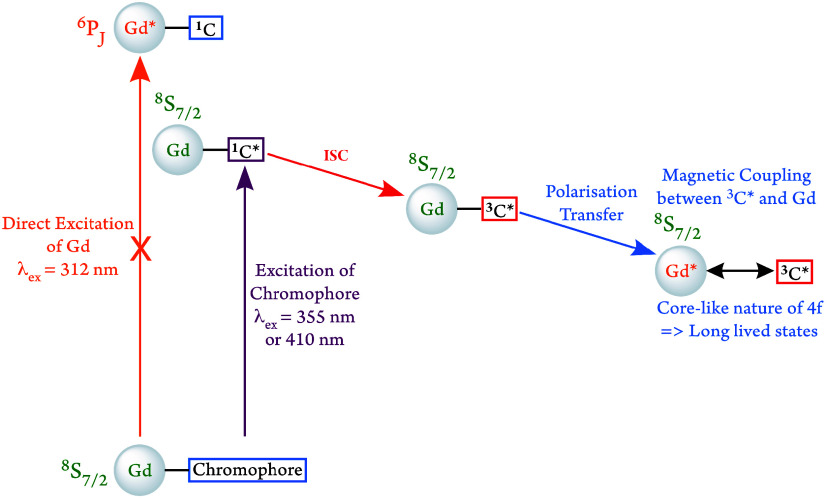 Figure 1
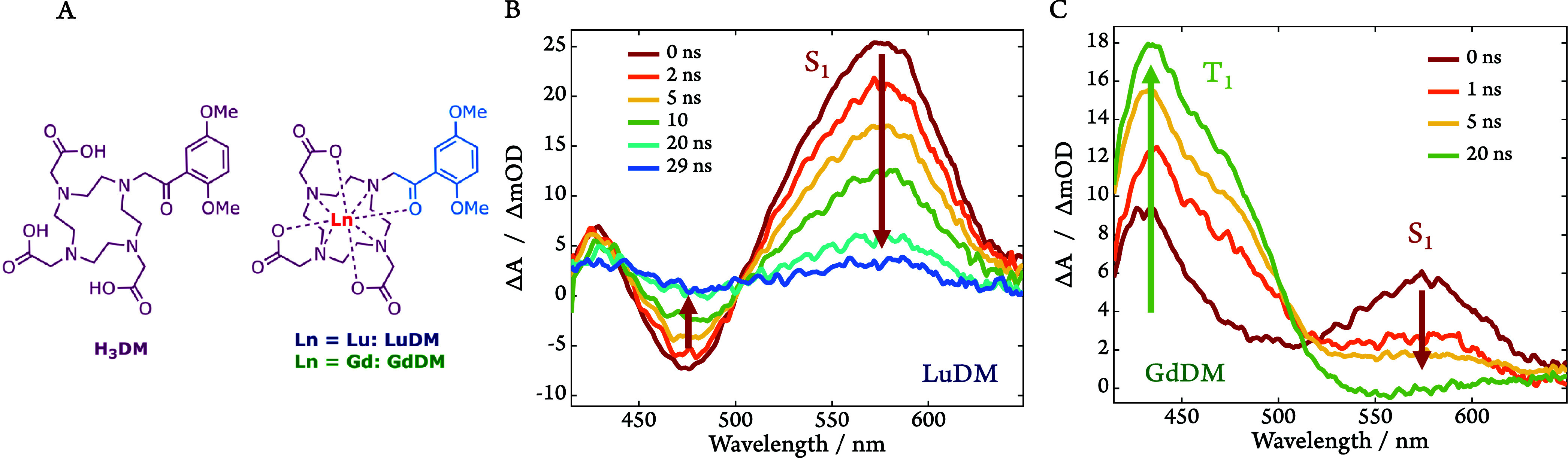 Figure 2
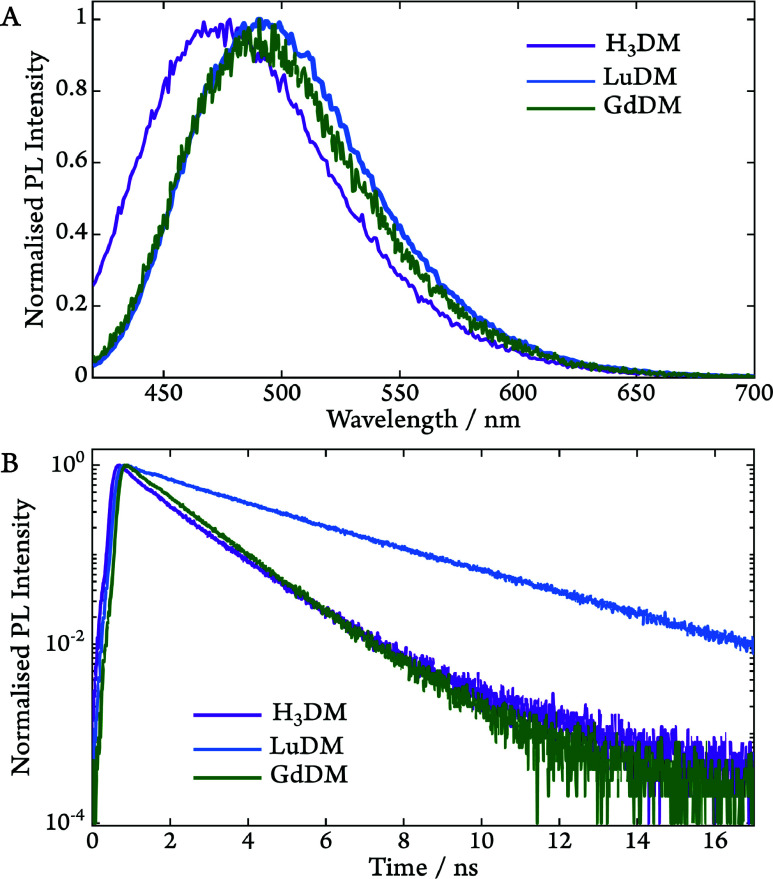 Figure 3
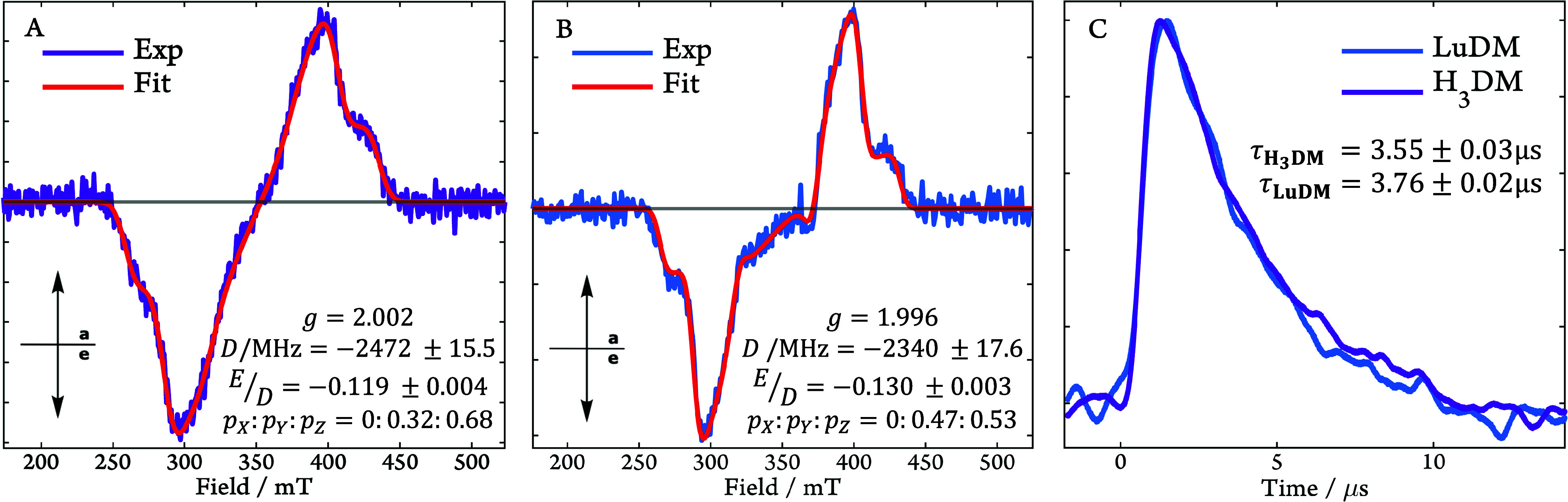 Figure 4
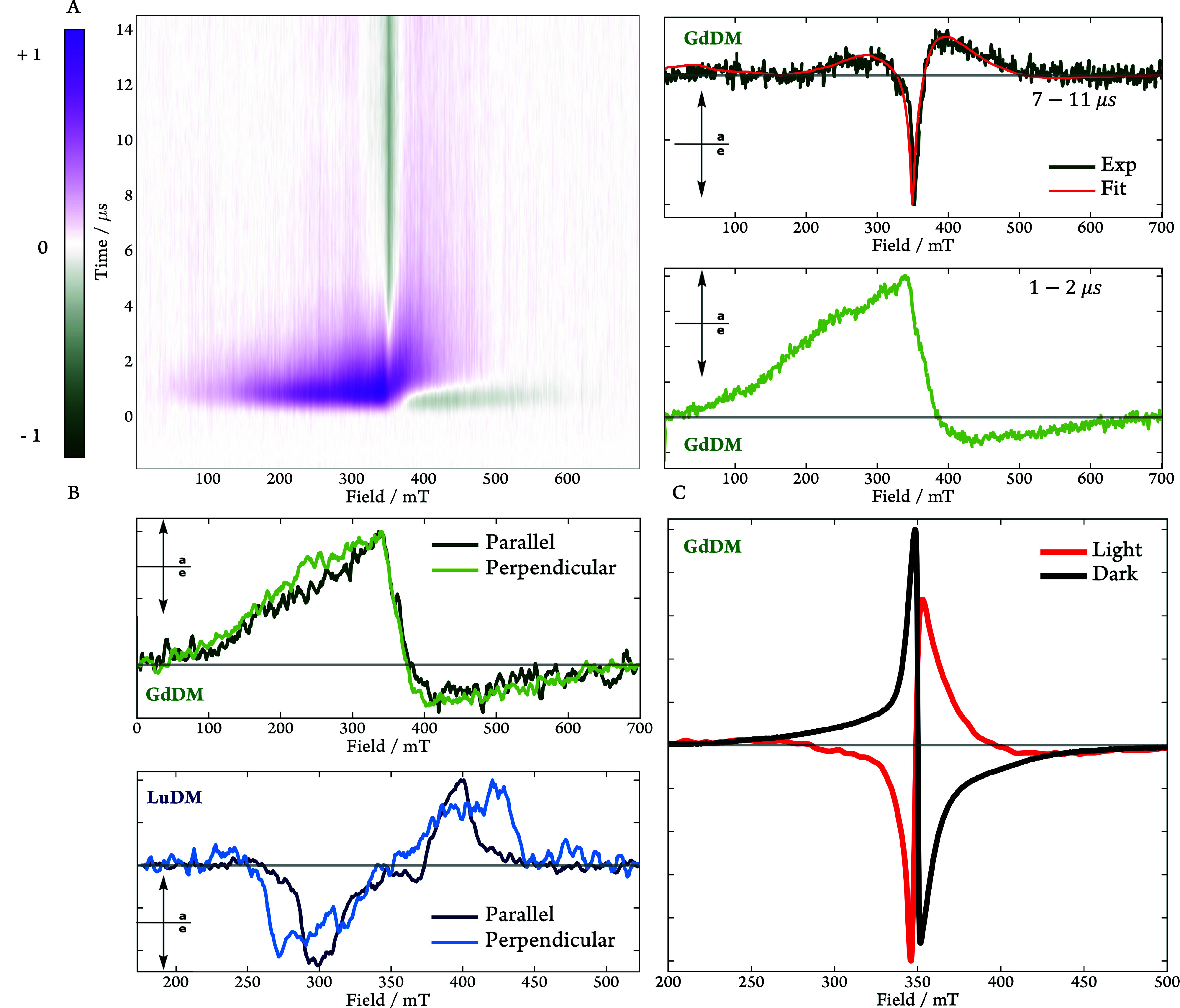 Figure 5
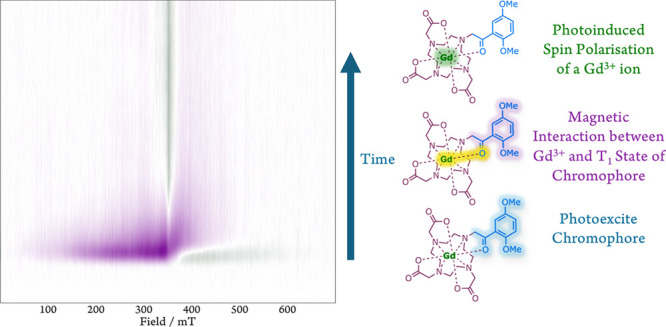 Figure 6
 Figure 7
- —Oriel College, University of Oxford10.13039/100010354
- —Oxford University Press10.13039/501100007723
- —Horizon 2020 European Commission (EC)NA
- —Engineering and Physical Sciences Research Council (EPSRC)NA
- —Christ Church, University of OxfordNA
Peer Reviews
No public reviews on file for this paper yet. If you reviewed it on a platform where reviews are public (OpenReview, ICLR, NeurIPS, ICML), you can paste yours below so the community can read it here.
Videos
No videos yet. Explain this paper in a talk, walkthrough, or lecture? Add one.
Taxonomy
TopicsLanthanide and Transition Metal Complexes · Magnetism in coordination complexes · Electron Spin Resonance Studies
The electronic and magnetic properties of lanthanide (Ln) elements have been widely exploited in both medicine and industry, especially in the development of superconductors, laser crystals, and magnetic resonance imaging contrast agents. ?−? ? The contracted nature of the 4f orbitals and the Laporte forbidden nature of 4f–4f transitions allow Ln^3+^ ions to form non-reactive, high-spin excited states exhibiting long lifetimes. ?−? ?
Higher dimension qubits, known as qudits, have become key targets in quantum information science (QIS), due to their ability to reduce the complexity of quantum algorithms and handle error correction protocols, key issues in the development of scalable quantum computing technologies. ?−? ? ? ? Molecular spin centers with S > 1/2 offer a versatile platform for qudit implementation, combining access to multiple quantum states with the synthetic tunability of molecular systems. ?−? ? ? ? Here, molecular lanthanide systems have gained attention, benefiting from environmental robustness due to the core-like nature of the 4f-electrons, and often relatively long coherence times, enabling coherent spin control even at relatively high temperatures. ?,?−? ? ? ? ? ?
One of the key challenges of employing molecular qubits based on electron (or indeed nuclear) spins is initialization of the system into a well-defined quantum state.? Boltzmann statistics for these systems typically dictate the use of both extremely low temperatures and very high magnetic fields to achieve the necessary spin polarization. An attractive strategy to form electron spin states, with up to 100% polarization, is to employ photogenerated/photoexcited molecular spin systems. ?,? This concept has been successfully employed across a variety of different molecules, including both organic and transition-metal complexes. ?−? ? ? ? ? ? ? However, because of a number of technical and conceptual challenges, this powerful approach has not yet been applied to lanthanide complexes.
Gadolinium(III), in particular, shows exciting potential for applications in QIS, as it has the highest ground spin state, S = ^7^/2, for a single ion and no net orbital angular momentum.? However, unlike for other lanthanides, direct photoexcitation is difficult due the lack of crystal field splitting of the 4f orbitals and the spin forbidden nature of the transition. ?,? Indirect photoexcitation, via the antenna effect, is also technically challenging due to the large energy gap (around 32000 cm^–1^) to the next excited state. ?,? Hence, new ways of generating excited states and manipulating the polarization of spin states of gadolinium, without using high energy excitation, could prove useful for developments in quantum information applications.
In this article, we introduce an attractive new approach to tackle this challenge by exploiting the interactions between gadolinium and a transient, excited state of a ligand chromophore.
Figure introduces the core features of our approach, which allows us to manipulate the magnetic properties of a gadolinium ion, bypassing the challenge of the spin and Laporte forbidden nature of the 4f–4f transitions: instead of photoexciting a Gd^3+^ ion directly, an adjacent chromophore, C, is photoexcited which subsequently undergoes fast intersystem crossing (ISC) to a spin-polarized triplet state (^ 3 ^ C). We set out to investigate what effect, if any, the magnetic interaction of the ^ 3 ^ C state and the Gd^3+^ ion would have on the Gd^3+^ sublevel polarizations.
As such, our approach circumvents the inefficient photoexcitation of the Gd^3+^ ion, but instead centers around covalently attaching a suitable chromophore, with a high triplet yield, to a kinetically robust gadolinium(III) complex of well-defined structure. The 2,5-dimethoxyphenacyl (DM) chromophore (FigureA), was chosen for this study due to (1) its resistance to photobleaching and (2) its high triplet yield, generated by efficient ISC in keeping with El Sayed’s rule typically applicable for aryl ketones. ?,? The ketone group also fills the eighth coordination site of the lanthanide ion, allowing for a relatively symmetric coordination environment.
DM was incorporated into H _ 3 _ DM, which utilizes a 1,4,7,10-tetraazacyclododecane-1,4,7-triacetic acid, DO3A, derived lanthanide binding site. This ensured that the chromophore was in close proximity to the lanthanide ion and allowed for the possibility of strong interaction between the metal and the chromophore excited state manifold. H _ 3 _ DM was synthesized following a literature procedure, and the gadolinium complex, GdDM, was prepared by reaction with gadolinium(III) trifluoromethylsulfonate in a 1:1 solution of water:ethanol.? The analogous lutetium complex LuDM was prepared in the same manner to allow direct comparison with a diamagnetic analogue. The structures of H _ 3 _ DM, LuDM, and GdDM are shown in FigureA.
To fully characterize the photochemistry and spin polarization of the complex, we employed a combination of electron paramagnetic resonance (EPR), picosecond transient absorption (psTA), and photoluminescence (PL) spectroscopies to investigate the interaction between the excited state of the DM chromophore and a Gd^3+^ ion. All measurements were recorded in 7:3 glycerol:water mixtures, which form optical glasses at low temperatures.
In order to gain detailed insights into the photomechanisms of the complexes, we first conducted psTA spectroscopy on LuDM at 200 K to characterize the DM chromophore in the absence of a paramagnetic metal (see FigureB). Photoexcitation at 410 nm results in a broad excited state species with an absorptive maximum at 575 nm and an emissive minimum at 475 nm. As both features exhibit the same relatively short lifetime, τ = 13.0 ± 0.2 ns, we assigned this optical signature to a singlet state (S_1_)? ascribing the negative signal around 475 nm to stimulated emission from the S_1_ state (cf. FigureA).
FigureC displays the psTA spectra for the corresponding gadolinium(III) complex, GdDM. While the S_1_ band at 575 nm is still present, its intensity and lifetime, τ = 2.7 ± 0.2 ns for GdDM compared to 13 ns for LuDM, are much decreased. There is also another excited state species present with a maximum at 432 nm with a lifetime of τ = 487 ± 8 μs. The rate of formation for the species at 432 nm, τ = 2.3 ± 0.1 ns, matches closely the rate of decay for the species at 575 nm (cf. Figures S5 and S6 in the Supporting Information (SI)). This, along with a clear isosbestic point at 515 nm, suggests that the species at 432 nm may reasonably be assigned to the triplet state (T_1_). Both the decreased lifetime of the S_1_ state and increased quantum yield of the triplet state indicate that the presence of the paramagnetic Gd^3+^ cation accelerates the rate of intersystem crossing from S_1_ to T_1_.
To further investigate any differences in the photophysics of the molecules, PL spectroscopy was used to characterize any emissive radiative processes (FigureA). Under continuous excitation at 405 nm, all three complexes exhibit a single emissive band centered at 475 nm (H _ 3 _ DM) and 495 nm (GdDM and LuDM), respectively. The red shifting of the emission band for the metal complexes is ascribed to the effect of coordinating a highly Lewis-acidic Ln^3+^ ion to the chromophore (also see their UV/vis absorption spectra in Figure S4 in the SI).
To extract the lifetimes of the radiative processes, time-correlated single-photon counting (TCSPC) was employed, as shown in FigureB. The lifetimes of all three complexes in Table suggest the observed emission bands are likely due to fluorescence from the S_1_ state. A couple of observations can be made. First, in keeping with the psTA data above, inserting the Gd^3+^ ion into the structure results in a shortening of excited singlet state lifetime. Second, the lifetime of LuDM exceeds that of H _ 3 _ DM, likely due to a subtle change in geometries of the ground and excited states of the chromophore upon coordinating the Ln^3+^ ion. Crucially, this proves that a heavy atom effect can be dismissed as the origin of the decrease in the lifetime of the S_1_ state for GdDM. Hence, to further investigate the intersystem crossing and the nature of the T_1_ state, time-resolved EPR (trEPR) spectroscopy was performed.
FiguresA and ?B report the trEPR spectra of H _ 3 _ DM and LuDM, obtained following a 410 nm, 5 ns laser pulse. The close resemblance of the data on inspection, including their similar polarisation pattern and spectral width, is due to the shared origin of the complexes’ triplet states on the DM chromophore, resulting in similar zero-field splitting (ZFS) parameters, D and E, and relative [p _ x _:p _ y _:p _ z _] sublevel populations. This conclusion is supported by density functional theory (DFT), which is used to provide initial estimations of the spin Hamiltonian parameters, from which the experimental spectra could be fitted via the esfit function of EasySpin. ?−? ? ? The small differences in the parameters, provided in Figure, are due to the slight difference in geometries of the chromophore in the two complexes. Crucially, however, the EPR signature of both complexes maintains its spin polarization pattern throughout the lifetime of the EPR signal (see Figures S10, S11, S13, and S14 in the SI), which is identical for LuDM and H _ 3 _ DM (FigureC). The triplet state’s trEPR signal is much shorter lived than observed for GdDM (432 nm) in psTA. This is not surprising as any relaxation of the triplet sublevels to Boltzmann populations results in a loss of trEPR but not psTA signal. Finally, the data demonstrate that delocalization of spin density onto the Lu^3+^ ion is negligible, as only a minimal heavy atom effect is observed.
Having explored the ground-state diamagnetic complexes, we turned our attention to the trEPR spectrum of GdDM. FigureA reports the time- and field-resolved EPR spectra (left) highlighting time slices obtained at early times (1–2 μs, bottom, right) and late times (7–11 μs, top, right) after the laser flash. Upon inspection, it is obvious that the EPR spectra exhibit an interesting time evolution. Roughly, there appear to be two regimes: the decay of an initial, largely absorptive, broad peak concomitant with the rise of a sharp emissive signal centered around g = 1.992 showing no visible decay over our measurement (16 μs).
Following the results from the diamagnetic analogues as well as the optical spectroscopy above, the chromophore T_1_ state seems, at first, an obvious suggestion for the short-lived component but the GdDM trEPR spectrum bears no resemblance at all to either that of H _ 3 _ DM or LuDM. Instead, its spectral width, exceeding some 600 mT, is reminiscent of a Gd^3+^ signature but its unusual polarization suggests that its origin lies in the direct communication between the chromophore triplet and Gd^3+^ ^8^S_7/2_ states. ?−? ?
The loss of pure triplet character is further confirmed by the absence of a clear magnetophotoselection effect on the spectral shape of the initial GdDM trEPR spectrum (FigureB), typically expected for a triplet state formed via vibronic coupling, as shown by its LuDM counterpart. Given the complexity of the spectrum, it is, hence, not surprising that simulations have not, as of yet, returned a unique set of ZFS parameters/populations/coupling regimes. We can, however, state safely that the initially observed signal follows formation of the spin polarized chromophore T_1_ state and exhibits features arising from the complex interplay of the T_1_ and ^8^S_7/2_ states. The theoretical investigation of this complex system forms part of a much larger study in our group to be reported elsewhere.
Returning to an inspection of FigureA, the most striking feature is the evolution of the EPR signature from a broad featureless signal to a sharp, long-lived emissive spectrum, whose appearance is reminiscent of an “inverted” Gd^3+^ cwEPR spectrum (FigureA, top right). The broad trEPR signals resulting from the triplet states of H _ 3 _ DM and LuDM both decay significantly over 16 μs, whereas this sharp, emissive signal exhibits no observable decay in signal intensity over this time window. (See Figures S13–S15 in the SI for full details.) As the first electronic excited state of Gd^3+^ lies some 4000 cm^–1^ above the employed photoexcitation energies, it can be concluded that the observed signal is due to a spin polarized Gd^3+^ ion, following polarization transfer from the T_1_ state of the chromophore. ?,?
To shed light on the nature of the polarization, we recorded the ground-state cwEPR spectrum (FigureC, black), dominated by the central feature (in high fields assigned to the transition).? We undertook the simulations of both the long-lived trEPR and the ground-state cwEPR spectra (Figure S21 in the SI) adapting the approach of Clayton et al.?: the large anisotropic broadening, due to the strain of the ZFS parameter, D, was addressed through explicit sampling of a bi-modal Gaussian distribution for D, centered at ±D 0 with full width at half-maximum, D fwhm. This method accounts for deviations from axial electronic structures by explicitly sampling the other ZFS parameter, E, between 0 < E < D/3 for each value of D. The g-value was set to 1.992 and values for D 0 = 1008 MHz and D fwhm = 851 MHz could be obtained from the cwEPR spectrum.
The long-lived trEPR signal, which maintains its spin polarization beyond 16 μs, was then simulated (red, FigureA, top right), using the same values for D 0 and D fwhm as the ground state cwEPR spectrum, by only adjusting the polarization of the Gd^3+^ sublevels in the eigenbasis and the asymmetry parameter, ASP, which is the intensity ratio between the distributions centered at +D 0:–D 0. Additionally, its corresponding field-modulated derivative spectrum was subsequently generated to compare photogenerated (red) and ground state (black) (see FigureC). As shown in detail in the SI, this approach demonstrates that the polarization of the Gd^3+^ sublevels is altered upon photoexcitation such that the central transition is inverted. While quantitative analysis of the origin of the polarization and its evolution in this complex goes far beyond the scope of this letter, this study provides, to our knowledge, the first evidence of photogenerated spin polarization of a lanthanide ion.
In conclusion, Gd(III) and Lu(III) complexes containing the 2,5-dimethoxyacetphenone chromophore were synthesized and photophysically characterized. Photoexcited states of the lanthanide complexes were explored by trEPR demonstrating a photogenerated inversion of the Gd^3+^ ion EPR signal, the first evidence of photoinduced spin polarization of a lanthanide ion. With further extensive studies elucidating the mechanisms of spin–spin interaction, energy and spin polarization transfer underway in our group, this work provides an exciting new avenue of initializing lanthanide complexes-based, molecular spin qudits.
Supplementary Material
The reference list from the paper itself. Each links out to its DOI / PubMed record.
- 1Caravan P.Strategies for increasing the sensitivity of gadolinium based MRI contrast agents Chem. Soc. Rev.200635651252310.1039/b 510982 p 16729145 · doi ↗ · pubmed ↗
- 2Bednorz J. G.Müller K. A.Possible High Tc Superconductivity in the Ba–La–Cu–O system Z. Phys. B - Condensed Matter 19866418919310.1007/BF 01303701 · doi ↗
- 3Geusic J. E.Marcos H. M.Van Uitert L. G.Laser oscillations in Nd-Doped Yttrium Aluminium, Yttrium Gallium and Gadolinium Garnets Appl. Phys. Lett.196441018218410.1063/1.1753928 · doi ↗
- 4Bünzli J. C. G.On the design of highly luminescent lanthanide complexes Coord. Chem. Rev.2015293194710.1016/j.ccr.2014.10.013 · doi ↗
- 5Hänninen, P. ; Härmä, H. Lanthanide Luminescence: Photophysical, Analytical and Biological Aspects; Springer: Berlin, Heidelberg, 2011, 10.1007/978-3-642-21023-5. · doi ↗
- 6de Bettencourt-Dias, A. Luminescence of Lanthanide Ions in Coordination Compounds and Nanomaterials; John Wiley & Sons, Ltd., 2014, 10.1002/9781118682760. · doi ↗
- 7Di Vincenzo D. P.The Physical Implementation of Quantum Computation Fortschritte der Physik 2000489–1177178310.1002/1521-3978(200009)48:9/11<771::AID-PROP 771>3.0.CO;2-E · doi ↗
- 8Di Vincenzo D. P.Shor P. W.Fault-Tolerant Error Correction with Efficient Quantum Codes Phys. Rev. Lett.199677326010.1103/Phys Rev Lett.77.326010062174 · doi ↗ · pubmed ↗