Correction to “Shaping the Glycan Landscape: Hidden Relationships between Linkage and Ring Distortions Induced by Carbohydrate-Active Enzymes”
Isabell Louise Grothaus, Paul Spellerberg, Carme Rovira, Lucio Colombi Ciacchi

Abstract
Genes, proteins, chemicals, diseases, species, mutations and cell lines named across the full text — each resolved to its canonical identifier and authoritative record.
Click any figure to enlarge with its caption.
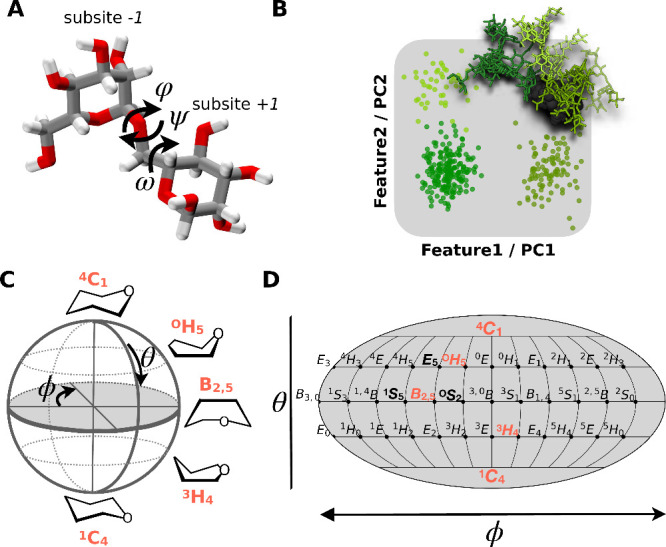 Figure 1
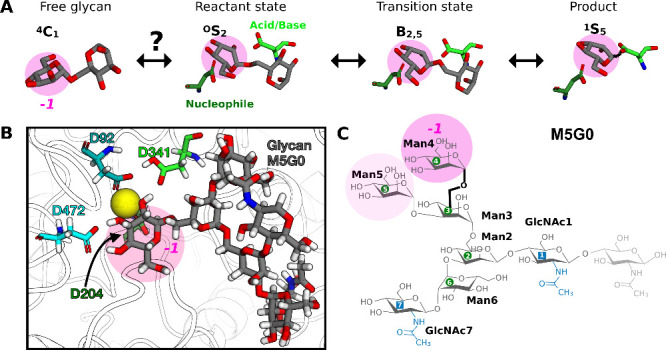 Figure 2
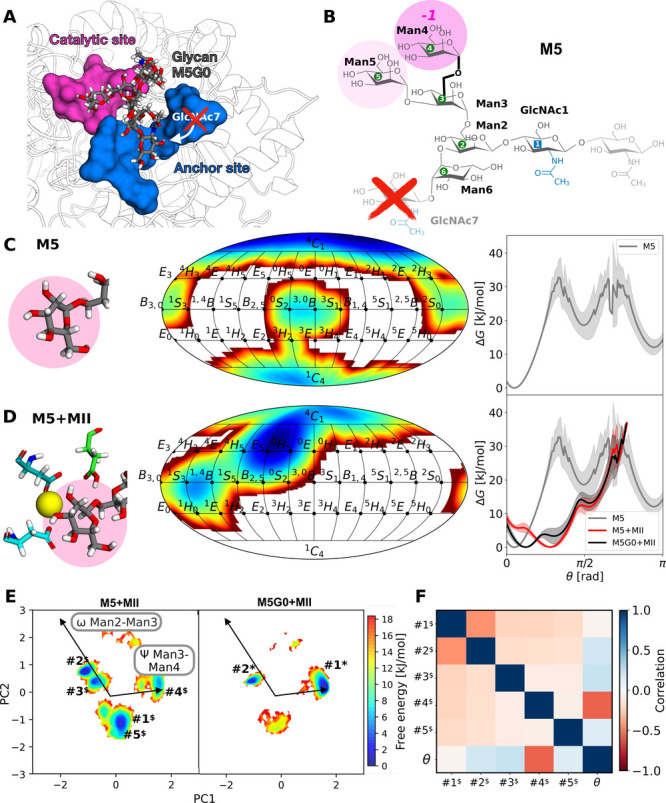 Figure 3
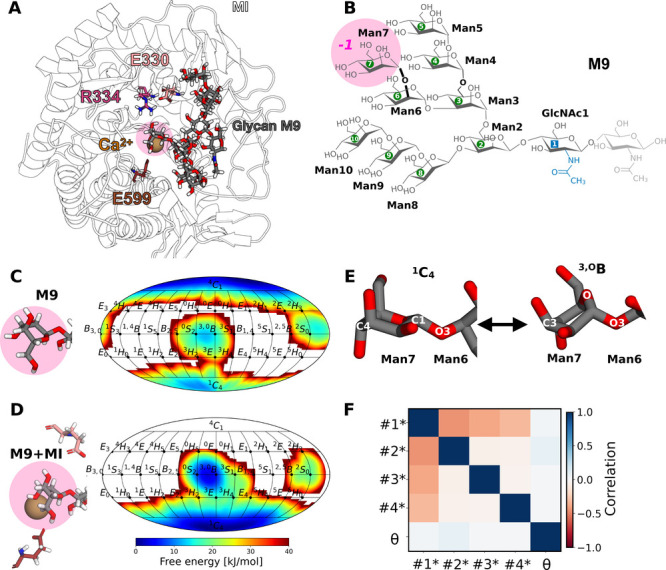 Figure 4
- —Friedrich-Alexander-Universit?t Erlangen-N?rnberg10.13039/501100001652
- —Deutsche Forschungsgemeinschaft10.13039/501100001659
- —National High Performance Computing Center Zuse-Institute BerlinNA
Peer Reviews
No public reviews on file for this paper yet. If you reviewed it on a platform where reviews are public (OpenReview, ICLR, NeurIPS, ICML), you can paste yours below so the community can read it here.
Videos
No videos yet. Explain this paper in a talk, walkthrough, or lecture? Add one.
Taxonomy
TopicsGlycosylation and Glycoproteins Research · Carbohydrate Chemistry and Synthesis · Polysaccharides and Plant Cell Walls
There are errors in the graphical representation of several mannose units in a number of figures. Specifically, some carbohydrate structures were inadvertently drawn as the l-enantiomer instead of the naturally occurring d-mannose, and in one case an anomeric bond was not depicted with the correct orientation. In FigureA, both mannose units were the l-enantiomer mirror image of the natural D-mannose. In FiguresC and ?B, Man3, Man4 and Man5 were all l-enantiomers. Man4 was depicted in an equatorial bond, but required an axial bond for the alpha anomer. In FigureB, Man3, Man4, Man5, Man6, Man9 and Man10 were all depicted in the wrong enantiomer. These errors are limited exclusively to the drawings of the structures, and no simulations and corresponding results and conclusions are affected by the following corrected figures. We would like to thank Dr. Sebastien Vidal for spotting these errors.