Correction: RARS1 inhibits ENO1 ubiquitination and degradation to protect against ferroptosis in hepatocellular carcinoma
Shouge Zang, Jvlong Ma, Lichang Chen, Di Cui, Jiangtao Yu

Abstract
Genes, proteins, chemicals, diseases, species, mutations and cell lines named across the full text — each resolved to its canonical identifier and authoritative record.
Click any figure to enlarge with its caption.
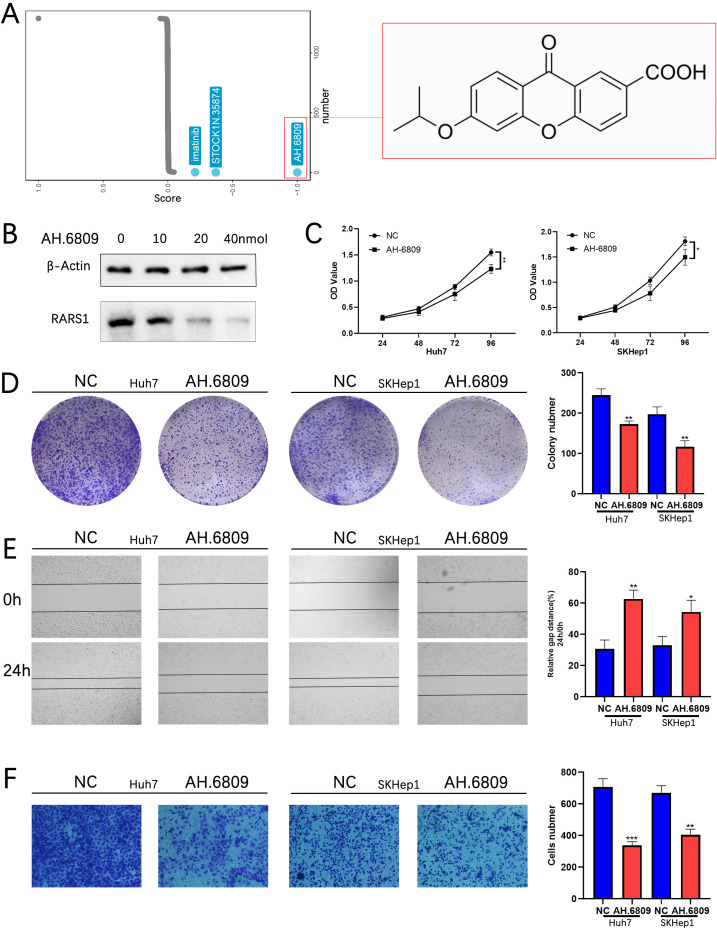 Figure 1
Peer Reviews
No public reviews on file for this paper yet. If you reviewed it on a platform where reviews are public (OpenReview, ICLR, NeurIPS, ICML), you can paste yours below so the community can read it here.
Videos
No videos yet. Explain this paper in a talk, walkthrough, or lecture? Add one.
Taxonomy
TopicsFerroptosis and cancer prognosis · Cancer-related molecular mechanisms research · Cancer-related gene regulation
There was a mistake in Figure 9B as published: the β-Actin band was incorrectly used during figure preparation. The corrected Figure 9B appears below:
There was a mistake in the caption of Supplementary Figure 3 as published. During the second round of review and revision, the authors forgot to remove the caption for Supplementary Figure 3D. The corrected caption of Supplementary Figure 3 appears below:
Drug sensitivity analysis and potential small molecule targeting RARS1. (A) Drug sensitivity analysis conducted using the GSCA database revealed a strong association between RARS1 expression and resistance to various chemotherapy agents. The correlation between RARS1 and drug sensitivity is visualized through a correlation matrix showing the relationship between gene expression and chemotherapy efficacy. (B) Molecular docking analysis of AH.6809 binding to RARS1 revealed multiple binding sites, including hydrogen bonding and hydrophobic interactions. The 3D structure of RARS1 is shown with AH.6809 binding in the active site, and the detailed molecular interactions between AH.6809 and RARS1 are illustrated.
The original version of this article has been updated.