Best Practices in the Conduct of Community Engagement Studios at MaineHealth Institute for Research
Francesca Piccolo, Emma DayBranch, Carolyn Sullivan, Elizabeth Woods, Neil Korsen, Jan Carney, Jenna Schiffelbein, Kathleen Fairfield

TL;DR
This paper outlines best practices for running Community Engagement Studios to involve community members in research projects at MaineHealth Institute for Research.
Contribution
The paper introduces a structured model for integrating lived-experience expertise into research through CE Studios.
Findings
CE Studios help researchers incorporate community input at various stages of a project.
The model has been successfully implemented with support from a dedicated team and infrastructure grant.
The program has supported multiple projects and collaborations across institutions.
Abstract
Community engagement (CE) Studios are an established method for integrating lived-experience expertise into research at 1 or more specific points within a project. Although many researchers understand the value of incorporating community input, they often lack the tools, skills, or infrastructure to do so effectively. CE Studios address this challenge by offering a structured, consultative approach to engagement. CE Studios occur at any point across the research lifecycle and are used to inform research design, feasibility, relevance, recruitment, implementation, and translation. In a 1-time, 2-hour consultation, CE Studios bring lived-experience expertise into the research process, helping projects center patients’ perspectives and inform research direction. Rooted in prior work by the Vanderbilt Institute for Clinical and Translational Research, this model builds rapport with…
Genes, proteins, chemicals, diseases, species, mutations and cell lines named across the full text — each resolved to its canonical identifier and authoritative record.
Click any figure to enlarge with its caption.
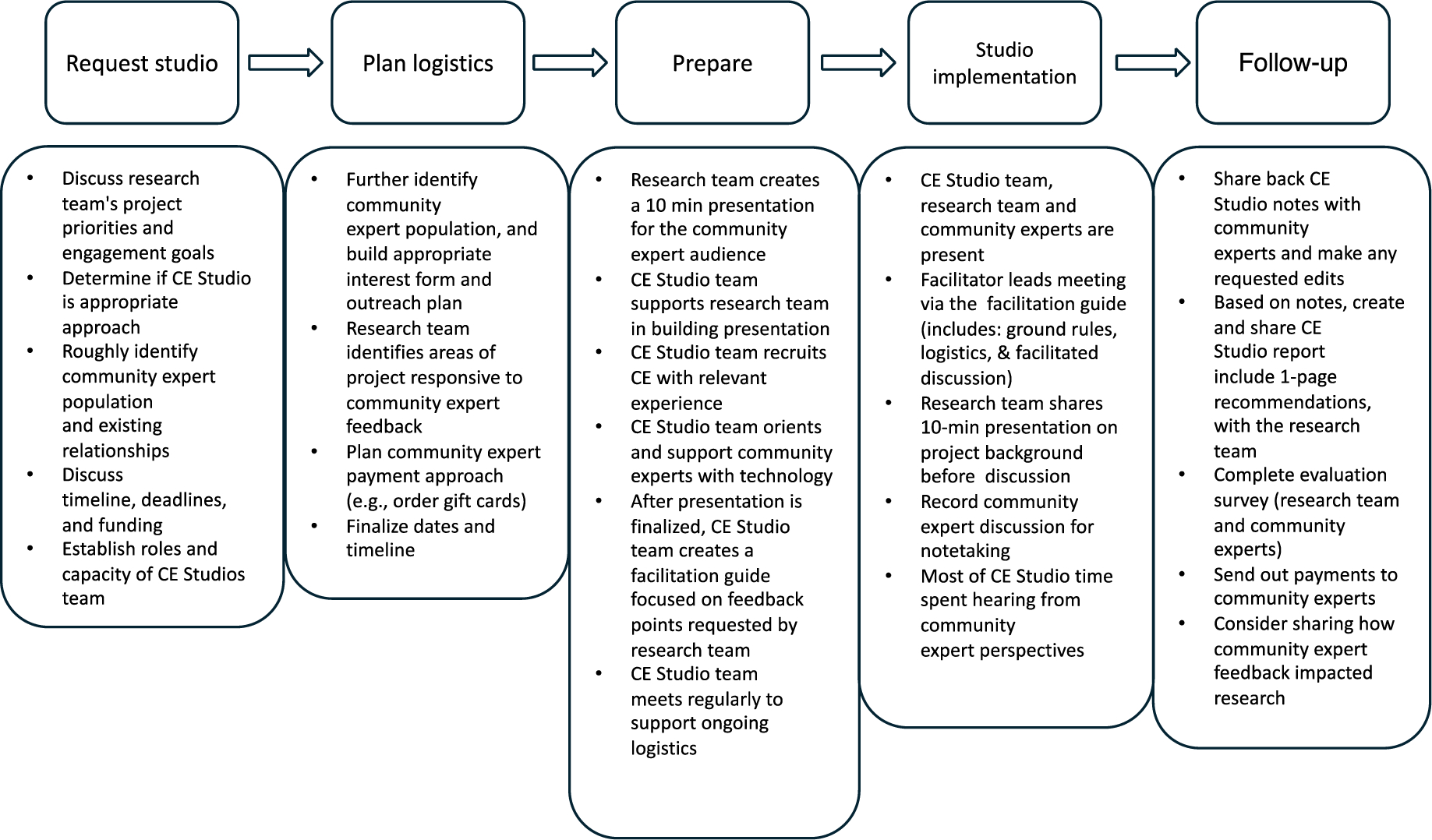 Figure 1
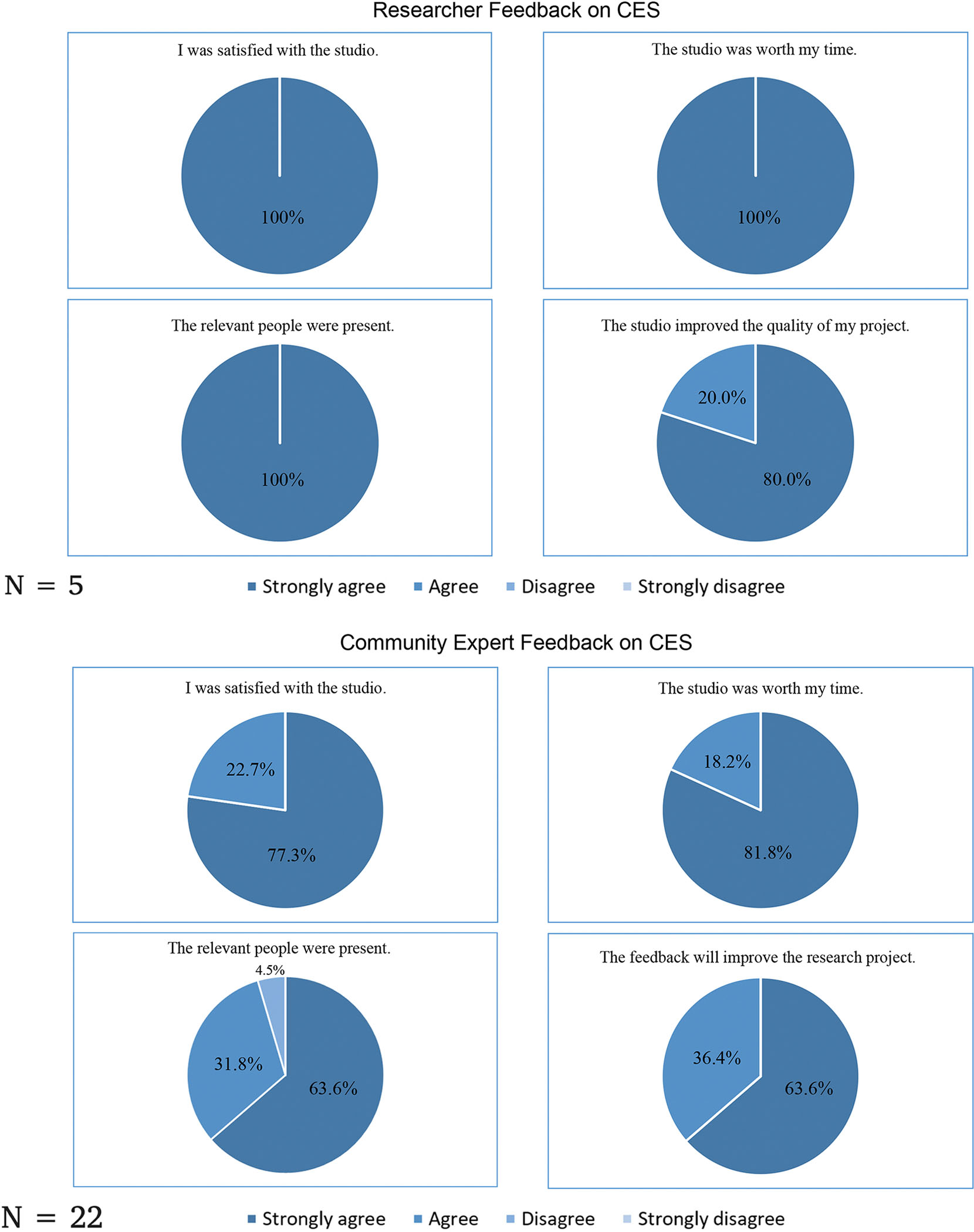 Figure 2
Peer Reviews
No public reviews on file for this paper yet. If you reviewed it on a platform where reviews are public (OpenReview, ICLR, NeurIPS, ICML), you can paste yours below so the community can read it here.
Videos
No videos yet. Explain this paper in a talk, walkthrough, or lecture? Add one.
Taxonomy
TopicsMental Health and Patient Involvement · Health Policy Implementation Science · Participatory Visual Research Methods
Problem statement
Incorporating patient and community voices into research may help shorten the gap between research and its translation into practice.^1^ Engaging with community can improve research relevance and feasibility, as well as increase understanding, trust, and traction in disseminating research.^2^ Rural communities face additional challenges in research translation that stem from geographic isolation, values of independence, limited social connectivity, and mistrust toward research—which make meaningful engagement particularly difficult.^3^ Maintaining strong partnerships between academic centers and communities, especially rural ones, can help facilitate engagement, improve research translation, and inform future directions.
Although many researchers recognize the value of including patient and community perspectives in research development, operationalizing this notion can be challenging.^4^ Few researchers are equipped to identify, recruit, convene, or appropriately onboard community members with lived experience as advisers. The Community Engagement (CE) Studio model was developed to address these common engagement barriers.^4^
CE Studios are a method best positioned to support engagement as consultation. CE Studios are not designed for higher amounts of engagement, such as collaboration or shared leadership, because the activity is a 1-time meeting in which decision-making power and resources (beyond stipends) remain with the research team.^5^ However, they can be used within broader community-engaged research (CER) or community-based participatory research frameworks in which other mechanisms support community engagement or partnership with higher involvement.^6^
Background
CE Studios are designed to bring together the perspectives of community members (referred to as “community experts”) to research projects. This approach allows researchers to engage with interest holders throughout the research process and gain critical feedback from communities of interest at 1 or more specific point(s) across the research lifecycle. CE Studios can be conducted in-person or virtually. For the purposes of this paper and our application in a rural population, we describe CE Studios in a virtual format and highlight the support person in a tech-support role.^7^
Origin
2.1.
The Meharry-Vanderbilt Community Engaged Research Core (a shared resource developed by the Vanderbilt Institute for Clinical and Translational Research) developed the CE Studios framework to help non-research interest holders provide feedback to the research team before project implementation.^8^ Since their development in 2009, CE Studios have been adopted, adapted, and applied by numerous teams and institutions across the country.^9–12^ This method depends on the development of a neutral CE Studios team and requires institutional support. Though CE Studios have some similarities to both focus groups and research studios, these models are unique and serve different purposes.
CE studios process and roles
2.2.
Overall process
2.2.1.
The CE Studios activity is a 1-time, highly structured meeting that typically lasts 2 hours and is meant to inform a research project by collecting input from community members who represent the research population of interest. Each meeting is supported and facilitated by a CE Studios team that consists of a facilitator, support person, and notetaker. CE Studios are started when the research team submits a request.
Once a CE Studio has been requested, the CE Studios team meets with the research team to assess project priorities and factors, and to determine whether a CE Studio is an appropriate engagement tool. Relevant lived experience is defined by the research team often during the initial meeting. The CE Studios team recruits 8 to 10 community members with relevant lived experience to serve as community experts and orients them to the activity. Collaborations with community-based organizations (CBOs) can help recruit the target audience for the CE Studio. In parallel, the CE Studios team supports the researcher in developing a lay-friendly presentation about their research and a CE Studios facilitation guide designed to solicit input on 2 to 3 areas of the project.
The CE Studio is then conducted with distinct roles for all involved (Table 1). Each CE Studio starts with an initial brief orientation, a review of ground rules, and introductions. Then, the research team presents necessary background information. The remaining time is spent in a facilitated discussion of feedback and insights from the community experts. After the meeting, the CE Studios team ensures community experts receive payment, a copy of the notes, and opportunities to provide any additional feedback. The CE Studios team then synthesizes the findings, delivers a recommendations report to the research team, and assists in considerations for further engagement. Evaluation surveys are sent to community experts and research teams. The entire process usually takes 12 to 14 weeks, with most of the time spent on recruitment (Fig. 1).
Primary research team
2.2.2.
This team can include the principal investigator, co-principal investigator, and research coordinator or assistant. The CE Studios usually limits the research team to 2 members during the CE Studios meeting to ensure most participants are community experts.
CE Studios team
2.2.3.
At MHIR, the CE Studios activity is supported through 3 key roles: a facilitator, a notetaker, and a support person. In the Vanderbilt model, these roles are defined as facilitator, community navigator, and faculty.^8^
Facilitator
2.2.4.
The facilitator has a neutral role and guides the CE Studios for the research team and community experts. They hold a welcoming space for the community experts’ perspectives, support inclusive discussion, and maintain structure. Facilitators are trained in facilitation techniques and may also have experience with the population of interest.
Notetaker
2.2.5.
The notetaker documents key recommendations, consensus, and feedback. Notes are reviewed by community experts before being used to form a 1-page report of highlights and recommendations. Both recommendations and notes (once reviewed by community experts) are shared with the research team. With community expert permission, we have used recordings to enhance notetaking.
Support person
2.2.6.
The support person is responsible for ensuring that all technical issues are resolved.^7^ They ensure that the video-conferencing method runs smoothly, community experts can access the call, and support features (eg, chat, raised hands, muting/unmuting) are actively monitored. One-on-one meetings with tech support and a contact number are also provided in advance in case community experts need assistance.
Community experts
2.2.7.
Once the relevant lived experience is identified, flyers linked to an interest form are used to recruit for the activity. Regional CBOs, partners, and networks often help with this recruitment. The interest form helps to ensure community experts have the relevant lived experience, technology, and availability to participate. CE Studio teams reach out to interested and eligible individuals, orient them to the activity, answer any questions, and support them with any technology or logistic needs before the meeting. All lived-experience experts are compensated for their time and expertise.
CE studios vs focus groups and research studios
2.3.
It is important to distinguish CE Studios from other common research activities, such as focus groups or research studios, to ensure appropriate application and understanding.
CE Studios vs focus groups
2.3.1.
The primary difference between a CE Studio and focus group is that a CE Studio is not an avenue for data collection or research with human participants. Rather than collecting qualitative data, the purpose a CE Studio is to support, improve, or enhance research design, implementation, translation, or dissemination.^1,13,14^ CE Studio community experts are not research participants; they are experts in their lived experience who are being consulted with the purpose of improving research and its translation. As such, CE Studios do not require institutional review board approval or informed consent. At MHIR, the institutional review board has a standing “not research” determination for this activity. Mechanisms throughout the activity ensure this distinction is maintained (Table 2). Another key difference between CE Studios and focus groups is that CE Studios are bidirectional discussions, whereas focus groups are meant to gather data and are, therefore, unidirectional.^2,4^
CE studios vs research studios
2.3.2.
Although both CE Studios and Research Studios are structured activities designed to strengthen research projects, they differ in purpose and type of expertise. Research Studios typically involve members of the broader research community and methodological experts who provide technical feedback on study design, implementation plans, and analytic approaches. These sessions focus on improving scientific rigor and feasibility. In contrast, CE Studios center on the perspectives of community experts with lived experience relevant to the topic. CE Studios and Research Studios can complement each other by offering distinct types of expertise. At MHIR, both CE Studios and Research Studios are available to investigators through the Northern New England Clinical and Translational Research Network (NNE-CTR) infrastructure grant (Table 2).
Application
Our CE Studios team was established in fall 2022. The team contracted with an independent consultant to train MHIR community navigators and staff on the CE Studios model and provide ongoing mentorship as the team built proficiency.
The MHIR CE Studios team comprises community engagement and outreach (CEO) navigators and staff. The CE Studios program is supported by the NNE-CTR infrastructure grant and nested within a larger CER effort. This approach ensures CE Studios occur within the context of building and sustaining community-academic partnerships across the rural region. The NNE-CTR team has 3 place-based CEO navigators living and working in 2 rural Maine communities and 1 Vermont community. The CEO navigator grows and sustains relationships with various CBOs and rural networks, often crucial partners in recruiting for CE Studios. In our approach to CE Studios staffing, 1 or more of the 3 roles (facilitator, notetaker, or support person) is also a CEO navigator.
Since the CE Studios launch, 14 CE Studios for 11 different project teams have been conducted (Table 3). Over the past 3 years, 112 community experts participated in a CE Studio. One notable CE Studio took place on research examining safe firearm storage. Seven firearm owners of various ages, genders, and backgrounds (eg, law enforcement, hunter education, self-defense, gun clubs, 4-H) across Maine gathered to review and provide feedback on a survey being disseminated to firearm owners across NNE. Feedback from the CE Studios impacted language, definitions, and survey scope. Another CE Studio supported a clinical trial focusing on a social psychological intervention for patients with diabetes and occurred during grant preparation and before protocol finalization. The timing of this CE Studio allowed recommendations to influence many decision points, including the project’s name and overall language, eligibility criteria, and timeline and location of the intervention. In this instance, CE Studio participants were then invited to become part of the project’s longer-term community advisory board.
CE studios evaluation
3.1.
As part of the CE Studios program evaluation at MHIR, community experts and researchers were asked to complete a follow-up survey about their experience. These surveys were adapted from the original team at Vanderbilt.^4^ At the time of writing this manuscript, 5 researchers and 22 community experts completed their respective surveys.
All researchers “strongly agreed” they were satisfied with the CE Studios, believed it was worth their time, and that the relevant community experts were present. Community experts also reported satisfaction with the CE Studios and that their time was well spent, although a notable portion “agreed” rather than “strongly agreed.” Most community experts agreed that the right people were in the room, except for 1 respondent who disagreed on this item. Feedback on whether the CE Studios would improve the research project was positive across both groups; however, “strong agreement” was less than prior items (Fig. 2).
CE studios lessons learned
3.2.
As the CE Studios program at MHIR has grown, several lessons have emerged (Table 4). One lesson is the need to provide the research team with early clarity on (1) what a CE Studio is and is not, (2) when it is appropriate to apply, (3) and what are the roles and responsibilities. Without this clarity, misunderstandings on expectations (eg, timeline, publish-ability, amount of engagement) and misapplication (eg, use in place of a focus group or community advisory board) are apt to occur. The CE Studios team has also found that the CE Studios method can be overly rigid and, when used outside of broader CER frameworks, do not necessarily grow longer-term partnerships. The strong interest from MHIR research teams to date has highlighted the need to clarify (1) how this approach fits within a broader set of community engagement strategies, (2) what sustainable funding and staffing look like, and (3) how CE Studios can be most effectively integrated into the larger ecosystem of CER services and resources. Although NNE-CTR funds have supported implementation and some of the initial CE Studios, investigators are being encouraged to write CE Studios into grants to ensure funding and capacity for the work going forward.
Many logistical and administrative lessons have been learned during implementation. For example, during 1 CE Studio, a much higher number of participants than the team anticipated from the interest forms joined the activity. Although they were enthusiastic to have double the expected number of voices, this higher number led to challenges in ensuring participants received payment, providing technology support without contact information, and managing facilitation. Now the CE Studios team only shares the Zoom link just before the event, requests that participants not forward or share the link, ensures contact with all participants before the activity, and has extra gift cards available.
Another challenge is that recruitment timelines were extremely variable, with some CE Studios taking a few weeks and others months. With certain communities (eg, youth, new Mainer’s, firearm owners), having an in-person recruitment and/or warm hand-off from a CBO/trusted partner was crucial. In other instances, using strategic social media or other platform posts was an effective recruitment strategy (although necessary to screen for bots). To address this challenge, early communication about expectations with research teams started to occur, and the CE Studios team got more creative, reflexive, and responsive during recruitment. Retention and technology setup was also occasionally a challenge. With guidance from other regional institutions, the team adopted the compensation amount of $50 per hour, which seemed to help with recruitment and retention. Other strategies the team developed were regular and early communication with participants and highly personalized, flexible, and responsive tech support. In 1 CE Studio involving community members who had experienced financial distress due to cancer care, many participants were older adults living rurally in particularly vulnerable situations. To support participation, a staff member arranged to meet with participants to help them download and set up Zoom on their respective devices.
Limitations
3.3.
Although there has been positive feedback on CE Studios from both researchers and community experts, we acknowledge that there were several limitations. For example, we had a relatively low response rate from community experts and a small pool of investigators eligible to complete the feedback survey. Another limitation was a lack of a 1-year or 2-year follow-up evaluation. Without these data, we are missing an understanding of lasting impacts of the CE Studios on projects and whether this activity builds capacity for future research engagement among community experts and community engagement among research partners.
Conclusions and future directions
3.4.
Since their introduction at MHIR, CE Studios have been favorably experienced by both researchers and community experts. There has been growing interest in CE Studios by investigators and project leads across the institution and the region, particularly as a tool to engage rural voices. The high demand has shed light on the need to further develop the CE Studios infrastructure as it relates to staff time, training, mechanisms for community expert payment, and equitable access to the service across MHIR.
As part of growing this program and folding this work into a larger CER infrastructure, the CE Studios team at MHIR is exploring how CE Studios can be adapted to build capacity for future CER among researchers and community experts. They are also putting together a longer-term follow-up evaluation and outreach. Furthermore, they are working to clearly delineate community engagement mechanisms across the engagement continuum so that research teams can more easily select methods aligned with their project goals and scope.
The reference list from the paper itself. Each links out to its DOI / PubMed record.
- 1Joosten YA, Israel TL, Head A, Enhancing translational researchers’ ability to collaborate with community stakeholders: lessons from the Community Engagement Studio. J Clin Transl Sci. 2018;2(4):201–207. doi:10.1017/cts.2018.323.30820357 PMC 6382358 · doi ↗ · pubmed ↗
- 2Alvarado J, Strong LL, Buzcu-Guven B, Community scientist program provides bi-directional communication and co-learning between researchers and community members. J Clin Transl Sci. 2023;8(1):e 18. doi:10.1017/cts.2023.703.38384927 PMC 10879996 · doi ↗ · pubmed ↗
- 3Cheesmond NE, Davies K, Inder KJ. Exploring the role of rurality and rural identity in mental health help-seeking behavior: a systematic qualitative review. J Rural Ment Health. 2019;43(1):45–59. doi:10.1037/rmh 0000109. · doi ↗
- 4Joosten YA, Israel TL, Williams NA, Community Engagement Studios: a structured approach to obtaining meaningful input from stakeholders to inform research. Acad Med. 2015;90(12):1646–1650. doi:10.1097/ACM.0000000000000794.26107879 PMC 4654264 · doi ↗ · pubmed ↗
- 5Principles of Community Engagement. Clinical and Translational Science Awards Consortium Community Engagement Key Function Committee Task Force on the Principles of Community Engagement; 2011. Accessed August 6, 2025. https://stacks.cdc.gov/view/cdc/11699/cdc_11699_DS 1.pdf.
- 6Valdez CR, Garay R, Vasquez M, Expansion of the Community Engagement Studio method: deepening community participation in health care innovation. Prog Community Health Partnersh. 2023;17(3):515–522. Accessed July 23, 2025. https://muse.jhu.edu/article/907981.37934449 · pubmed ↗
- 7Killough CM, Martinez J, Mata H, New horizons in community engagement: virtual community engagement studios amplifying community voices about health research in New Mexico. J Clin Transl Sci. 2024;8(1):e 140. doi:10.1017/cts.2024.608.39478786 PMC 11523007 · doi ↗ · pubmed ↗
- 8Israel T Community Engagement Studio Toolkit 2.0. Meharry-Vanderbilt Community Engaged Research Core, Vanderbilt Institute for Clinical and Translational Research; 2019. Accessed August 6, 2025. https://www.nia.nih.gov/research/alzheimers-dementia-outreach-recruitment-engagement-resources/community-engagement-studio.