When healthy classrooms hurt: how reduced bullying isolates victimized youth through altered friendship and status dynamics
Tamás Hoffmann, Bence Basa, Katalin N. Kollár

TL;DR
In classrooms with less bullying, victimized students often face worse social outcomes like fewer friendships and more rejection.
Contribution
This study reveals how classroom-level bullying norms affect the social dynamics of victimized youth.
Findings
Victimized students in low-bullying classrooms reported fewer mutual friendships.
These students also experienced lower acceptance and higher rejection from peers.
Classroom norms significantly influence the social outcomes of victimized youth.
Abstract
The healthy context paradox—the phenomenon that victimized youths show poorer adjustment in classrooms with lower levels of bullying—has been documented primarily for psychological outcomes but remains less explored with respect to peer social dynamics. The present study examined whether this pattern is also observable in victims’ peer acceptance, and rejection beyond their friendship network. Using sociometric data from 915 Hungarian students (aged 11–18) across 40 classrooms, we estimated multilevel models to test whether classroom-level victimization norms were associated with variation in the relationship between individual victimization and social outcomes. Results indicated that victimized students in classrooms characterized by lower victimization norms reported fewer mutual friendships, lower acceptance, and higher rejection compared to victimized students in classrooms with…
Genes, proteins, chemicals, diseases, species, mutations and cell lines named across the full text — each resolved to its canonical identifier and authoritative record.
Click any figure to enlarge with its caption.
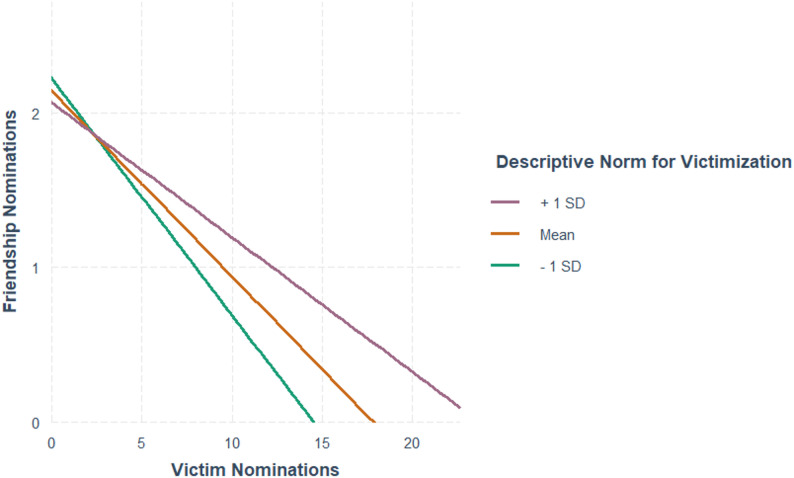 Figure 1
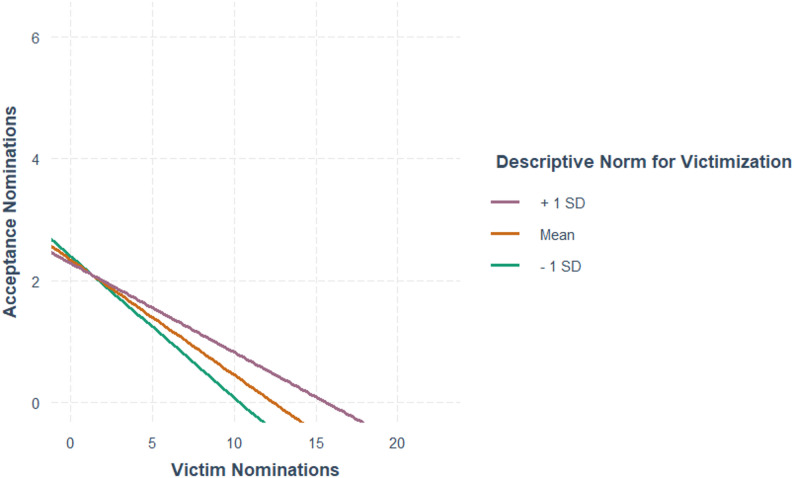 Figure 2
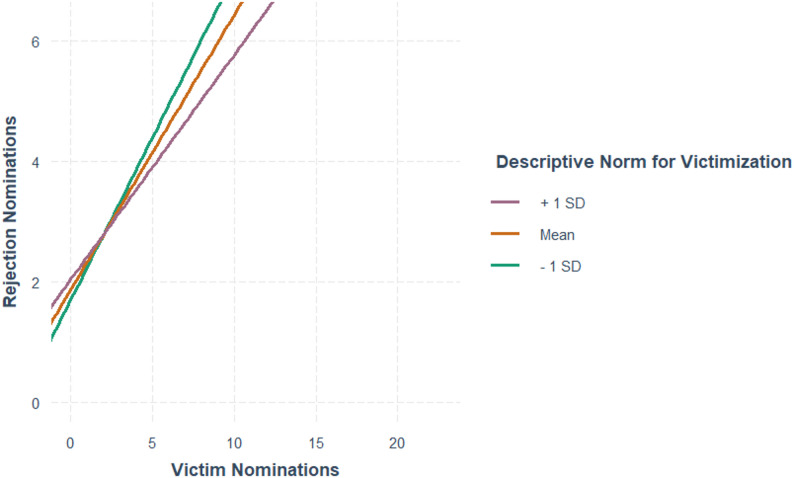 Figure 3
- —Eötvös Loránd University
Peer Reviews
No public reviews on file for this paper yet. If you reviewed it on a platform where reviews are public (OpenReview, ICLR, NeurIPS, ICML), you can paste yours below so the community can read it here.
Videos
No videos yet. Explain this paper in a talk, walkthrough, or lecture? Add one.
Taxonomy
TopicsBullying, Victimization, and Aggression · Youth Development and Social Support · Workplace Violence and Bullying
Introduction
Bullying is a pervasive negative phenomenon that has been extensively studied in the literature, with research examining bullying and defending behaviors as well as consequences for victims [1–3]. Victimized youth exhibit poorer overall adjustment [4] and face detrimental psychological outcomes, including heightened depressive symptoms [5, 6], anxiety [7], and an increased risk of self-injury [8]. Consequently, intervention efforts have sought to reduce bullying prevalence. Given its group-based nature, these interventions typically adopt a whole-classroom or whole-school approach, fostering a sense of belonging and promoting an anti-bullying mindset. Such efforts encourage children to engage in bully- or victim focused defending behaviors toward victims [9] and, crucially, reduce the likelihood of reinforcing bullies by enhancing their social status which is a key motivator for aggressors [10–12].
Recent studies have identified a counterintuitive phenomenon: although successful interventions generally enhance overall well-being in classrooms [13], students who experience bullying in these more favorable environments may exhibit stronger symptoms, poorer adjustment and be less accepted by their peers compared to those in less supportive settings [14–16]. This process, termed the healthy context paradox, has become a key focus for recent research and may have important implications for intervention efforts [15, 17, 18]. The phenomenon is typically examined by relating individual-level adjustment outcomes to classroom-level bullying norms. These norms are most often operationalized as descriptive norms, defined as the average level of bullying or victimization within a classroom, but can also be conceptualized as popularity norms, reflecting the association between bullying and peer popularity at the classroom level [15, 19].
Several theoretical explanations for this paradox have been proposed drawing on social comparison theory, social misfit theory, defending inflation theory, and—most importantly for the present study—relational dynamics between victims and non-victims [17].
Social comparison theory [20] posits that individuals evaluate their social standing by comparing themselves to others. In healthier contexts (i.e. where bullying is less prevalent), victims may fare worse because they encounter fewer maladjusted peers and more well-adjusted non-victims, amplifying upward social comparisons. These comparisons can inflate self-perceptions, exacerbating feelings of inadequacy [5]. Similarly, social misfit theory suggests that children who deviate from peer-group norms struggle with adjustment and friendship formation [21]. If the victim is the only or one of the few victims in an otherwise well-adjusted classroom, the student’s situation may be viewed more negatively by peers, and this may lead to fewer opportunities for them to form friendships and a general sense of belonging to the group which may foster feelings of isolation [22]. Both theories further imply an internalized locus of control. In predominantly healthy environments, the scarcity of other victims may lead bullied children to attribute victimization to personal flaw instead of correctly identifying it as a group-process which can foster self-blame [23, 24]. Defending inflation theory offers an alternative perspective, proposing that in positive environments, many children attempt defending behaviors to conform to group norms. However, effective defending typically requires stable social status and strong interpersonal skills [25]. When less socially adept peers intervene, their efforts may be ineffective, inadvertently worsening victims’ problems [17]. Together, these perspectives highlight important individual-level processes that affect adjustment but offer limited insight into how victims’ positions within peer networks and status hierarchies may differ across classroom contexts.
Several studies suggest that the negative effects associated with the healthy context paradox are linked to victims’ peer relationships, particularly their friendships in classrooms with different norm structures [15, 26]. This line of work suggests that the healthy context paradox may be expressed not only in psychological adjustment, but also in victims’ social integration within the peer group which may be a key factor in the process that leads to poorer adjustment. Beyond individual-level theories outlined above, network and sociometric perspectives highlight structural barriers to friendship formation. They posit that selection and influence, two important processes for friendship formation and maintenance may underlie the healthy context paradox [26]. Selection is the process by which peers with similar interests and social standing are more likely to form friendships, while influence describes the convergence of friends’ behaviors and attitudes over time [26–28]. Recent studies suggest that victims in positive peer environments may be at a greater disadvantage in finding friends [5]. While shared victimization can facilitate friendship formation among bullied youth in less supportive environments [15], this mechanism is disrupted in healthier contexts due to the relative scarcity of similarly affected peers. Additionally, non-victimized children may be less likely to befriend victims due to concerns about status contagion—the perceived risk of being targeted themselves [28]. Although victim-victim friendships tend to be of lower quality [29], friendships have been consistently shown to mitigate the detrimental effects of victimization [6]. Paradoxically, students in healthier environments face greater risks because friendship opportunities diminish. Pan et al. [5] found that victimized children in low-bullying classrooms receive fewer friendship nominations, and that the lack of friendships longitudinally predicts poorer psychological adjustment.
While another field of research of children’s relationships, sociometric studies, have established robust links between victimization and peer status generally [6, 30], these methods remain less studied in research on the healthy context paradox. Prior work primarily focused on adjustment variables (e.g., depression, self-esteem) to identify the paradox [5, 15], leaving its social mechanisms underexplored. Though sociometry has been applied to bullying research broadly (e.g., 6), its potential to validate the paradox through classroom-level acceptance/rejection patterns and clarify how victimized youth’s social position deteriorates in ‘healthier’ contexts remains untapped. As a result, it remains unclear whether the healthy context paradox is also evident in sociometric indicators of peer relationships.
The current study
Growing evidence for the healthy context paradox highlights its importance for school-based anti-bullying interventions and a more nuanced understanding of bullying. This study addresses a research gap by examining associations between victimization and peer status, extending prior work on friendships to include peer acceptance and rejection across classrooms differing in victimization norms.
Building on existing findings, we hypothesized that the association between individual victimization and peer status would differ across classrooms with lower versus higher levels of victimization. Specifically, given evidence that the friendship patterns of victimized youth are negatively affected in low-victimization contexts, we expected higher rejection and lower acceptance among victimized students in classrooms characterized by lower overall victimization.
Method
Procedure
Data were collected in 2024 using eSzocMet, a free online sociometric tool designed by the study authors to measure classroom peer dynamics. The software streamlines sociometric assessments, an approach that is widely used by Hungarian school psychologists, greatly enhancing time efficiency in regular screenings. The peer-nomination questionnaire was disseminated via eSzocMet’s social media platform to school psychologists conducting sociometric testing.Due to the recruitment method, most participating practitioners were already familiar with the tool. Although step-by-step guides and e-mail support were provided, no issues were reported during data collection. Practitioners accessed the full dataset, while the software generated anonymized research data for this study. Data were screened for errors (e.g., omitted questions) and missing responses; only classrooms with 100% participation and complete questionnaires were retained.1
The anonymization process, the legal and ethical handling of the data and the procedure of testing are in accordance with the General Data Protection Regulation of the European Union, has been developed under the supervision of technical and legal experts and is based on the guidelines given by the Hungarian National Authority for Data Protection and Freedom of Information specifically for this software. The entire process was reviewed and approved by the Ethical Board of Lorand Eötvös University in ethical permission no. 2023/1.
Sample
The study included 915 students (43% girls) across 40 classrooms (M = 24.5; Min = 8, Max = 36; SD = 5.81). To ensure adequate statistical power and examine potential age-related variations in the healthy context paradox, we intentionally sampled from both upper elementary (age 11–14) and secondary school (age 15–18) populations (see Table 1 for distribution).
Table 1. Distribution of grade levelsGrade levelNumber of classrooms in the dataset6th grade87th grade58th grade79th grade910th grade311th grade212th grade2
Measures
Acceptance and rejection
Acceptance and rejection were assessed through two unlimited peer-nomination items; ‘Who do you like most?’ and ‘Who do you like least?’ [31]. Consistent with Gommans and Cillessen’s [32] suggestions, the software capped processed nominations at 10 per item to mitigate indiscriminate responding while preserving natural nomination patterns.
Friendship patterns
Friendships were evaluated using Mérei’s tripartite peer-nomination system, the standard tool among Hungarian school psychologists. This method combines one ‘best friend’ question with two contextual scenario-based items (in the case of this study: ’a peer you can turn to’ and ’those you wish to keep in touch with after finishing school’), each limited to 3 peer-nomination choices. Mutual nominations were recorded across all three items, allowing for multiple reciprocal ties. Mérei’s method was selected instead of a single unlimited nomination friendship question because it reflects the established sociometric practice in Hungarian schools and aligns with the training and assessment routines of the professionals who administered the study [33].
Victimization
Bullying roles (victim, bully, defender) were assessed via three peer-nomination items, each prefaced by a definition of bullying and limited to three nominations. Self-nominations were allowed in these questions to capture both peer-perceived and self-identified victimization—a dual-method approach addressing known divergence between these measures [34] and an important tool for practitioners (an English translation of the questions used are available in Appendix 1).
Peer-context
Following Laninga Wijnen et al. [15] and other researchers, we operationalized classroom-level victimization norms using the mean victimization score within each classroom. This classroom-level mean reflects the overall salience of victimization nominations within the classroom rather than the number of distinct victims.
Analytic plan
We tested our hypotheses using multilevel linear modeling in R (v4.4.0) to account for nested student-classroom data structures. Three parallel models examined friendship, acceptance, and rejection as dependent variables, with predictors including individual victimization, gender, classroom grade level, descriptive norm for victimization within each classroom, and, as the main focus of this study, an interaction term between individual victimization and classroom norms. All models were planned to include random intercepts and random slopes allowing the assessment of whether the strength of the association between individual victimization and social outcomes varies across classroom contexts, while controlling for individual-level characteristics.
To enable cross-classroom comparability, raw nomination counts were first converted to proportion scores by dividing by classroom size and then rescaled by multiplying by 25 to reflect scores for the median class size of the dataset. While mathematically equivalent to proportion-based approaches, this scaling facilitates more intuitive interpretation of regression coefficients in the estimated models.
Nomination limits constrain absolute counts in the friendship questions and empirical evidence suggests that network size only weakly affects mean friendship formation [35] which was also true in this dataset (correlation between class size and average number of friendships was r=.16, p=.32) therefore raw mutual friendship counts were used for the analyses. Further, victimization, acceptance and rejection scores were classroom-mean-centered to optimize model convergence and interaction testing.
Results
Table 2 presents correlations among the study variables at the individual level, whereas Table 3 presents correlations aggregated at the classroom level. At the individual level, victimization was negatively associated with mutual friendships and acceptance and positively associated with rejection. Acceptance and rejection were negatively correlated, while acceptance was positively correlated with mutual friendships.
At the classroom level, strong associations emerged between victimization, acceptance, and rejection, whereas these variables showed no association with the number of mutual friendships. This pattern was examined further in the model assumptions section.
Table 2. Correlations between the investigated variables (individual level)VariableMSD1231. Victimization1.102.472. Number of mutual friendships2.151.19− 0.23**[-0.29, − 0.16]3. Acceptance2.151.67− 0.240.57[-0.30, − 0.17][0.52, 0.61]4. Rejection2.631.710.38**− 0.24**− 0.30**[0.32, 0.43][-0.30, − 0.17][-0.36, − 0.24]* indicates p < .05. ** indicates p < .01
Model assumptions
Prior to hypothesis testing, we rigorously evaluated model assumptions. Variance inflation factors (all < 5.5) and tolerance statistics (all > 1.5) confirmed the absence of problematic multicollinearity. However, visual inspection of residual plots and Shapiro-Wilk tests indicated moderate violations of normality and homoscedasticity for the acceptance and rejection models, likely attributable to the right-skewed distribution of nominations (acceptance: M = 2.2, SD = 1.6; rejection: M = 2.6, SD = 1.7). These variables also showed lower nomination frequencies than typically reported in sociometric literature (i.e.: Lafontana & Cillessen, 2015). To verify result stability, we re-estimated models using robust standard errors; all significant effects persisted or strengthened, confirming their reliability despite assumption violations.
Likely due also to the skewed distribution of nomination data for the acceptance and rejection models, convergence issues prevented estimation of random effects. Consequently, these analyses employed multiple linear regressions without random effects, while retaining all other model specifications (predictors, controls, and interaction terms). For the friendship outcome, the intraclass correlation coefficient (ICC) from the null model was 0.07, indicating modest but non-negligible classroom-level clustering. For the acceptance and rejection models, ICC values were below 0.03, indicating minimal between-classroom variance and supporting the use of single-level regression models.
Further, initial models revealed unexpected positive associations between classroom-level victimization norms and rejection and acceptance scores (as evidenced in Table 3). Investigation showed that descriptive norms for victimization were highly correlated with the general tendency to nominate across all items within classrooms (r > .7), suggesting a potential confounding effect; classrooms with higher overall nomination activity might artifactually appear to have stronger victimization norms. To account for this, we introduced a classroom-level control for general nomination tendency—calculated as the average of all proportion-scaled peer nomination variables, including behavioral descriptors that were not directly analyzed in the present study (i.e.: scaled bullying and defender nominations). This adjustment ensured that observed effects of victimization norms reflected specific social processes rather than generalized response tendencies.Table 3. Correlations between the investigated variables (classroom level)VariableMSD1231. Victimization1.360.82. Number of mutual friendships2.140.35− 0.02[-0.38, − 0.25]3. Acceptance2.571.070.82**− 0.01[0.68, 0.90][-0.32, 0.30]4. Rejection2.030.790.840.070.86[0.71, − 0.91][-0.24, 0.38][0.75, 0.92]* indicates p < .05. ** indicates p < .01
Hypothesis testing
Friendships
The multilevel model for mutual friendships yielded three key findings (Table 4). First, individual victimization significantly predicted fewer mutual friendships corresponding to approximately one fewer friendship per five victimization nominations. Second, the interaction between individual victimization and classroom victimization norms was significant. As illustrated in Fig. 1, simple slope analyses indicated that the strength of the association between victimization and friendships differed across levels of classroom victimization norms, with pairwise comparisons indicating a smaller negative association at higher levels of classroom victimization norms (Δb = − 0.10, SE = 0.04, p < .05).
Third, gender, class level, and the main effect of classroom victimization norms were not statistically significant. Marginal R² indicated that fixed effects explained approximately 6% of the variance, while conditional R² showed that including random effects increased explained variance to 10%.
Fig. 1. Friendships regressed on victimization nominations by descriptive norms
Acceptance
The multiple linear regression model for peer acceptance (Table 5) indicated that individual victimization significantly predicted lower acceptance, corresponding to an approximately one-point decrease in acceptance scores for each four-unit increase in victimization. Second, the interaction between individual victimization and classroom victimization norms was significant. As shown in Fig. 2, simple slope analyses indicated that the strength of the negative association between victimization and acceptance differed across levels of classroom victimization norms, with pairwise comparisons showing a smaller negative association at higher levels of classroom victimization norms (Δb = 0.13, SE = 0.06, p < .05).
Table 4. Regression model for friendship nominationsPredictors (level 1 then level 2)EstimatesCI p (Intercept)2.071.29–2.85 < 0.001 Victimization-0.18-0.25 – -0.11 < 0.001 Gender (Boys = 0)0.11-0.05–0.270.166Descriptive norm (victimization)-0.12-0.40–0.160.416Grade level-0.02-0.09–0.040.460Global nomination rate0.11-0.14–0.360.395Victimization× Descriptive norm (victimization)0.050.01–0.09 0.013
Random Effects σ^2^ = 1.28τ_00_ = 0.06ICC = 0.06Marginal R^2^ / Conditional R^2^ = 0.063 / 0.106
The classroom-level global nomination rate was positively associated with acceptance scores, indicating that classrooms with higher overall nomination activity tended to yield higher acceptance scores. Gender, class level, and the main effect of classroom victimization norms were not statistically significant when included alongside other predictors. The model explained approximately 20% of the total variance.
Fig. 2. Scaled acceptance nominations regressed on victimization nominations by descriptive norms
Rejection
The multiple linear regression model for peer rejection (Table 6) showed that individual victimization significantly predicted higher rejection scores, corresponding to an increase of more than half a point in rejection for each unit increase in victimization. The interaction between individual victimization and classroom victimization norms was also significant. As illustrated in Fig. 3, simple slope analyses indicated that the strength of the positive association between victimization and rejection differed across levels of classroom victimization norms, with pairwise comparisons showing a smaller positive association at higher levels of classroom victimization norms (Δb = 0.25, SE = 0.09, p < .01).
Rejection was positively associated with the classroom-level global nomination rate. Gender, class level, and the main effect of classroom victimization norms were not statistically significant when included alongside other predictors. The model explained approximately 18% of variance.
Table 5. Acceptance regressed on victimization nominations by descriptive normsPredictors (level 1 then level 2)EstimatesCI p (Intercept)0.09-0.82–1.000.845Victimization-0.27-0.37 – -0.16 < 0.001Gender (Boys = 0)0.02-0.22–0.270.847Descriptive norm (victimization)-0.09-0.41–0.240.595Grade level-0.02-0.09–0.050.554Global nomination rate1.110.82–1.40 < 0.001Victimization×Descriptive norm (victimization)0.060.00–0.13 0.044R^2^ / adjusted R^2^0.208 / 0.202
Fig. 3. Scaled rejection nominations regressed on victimization nominations by descriptive norms
Discussion
This study examined whether patterns consistent with the healthy context paradox—previously observed for adjustment outcomes [15]—are also observable in aspects of social standing. Drawing from theories of social comparison and locus of control, we hypothesized that victimization would be associated with increased rejection, decreased acceptance and number of mutual friendships in classrooms with lower descriptive norms for victimization.
Table 6. Rejection regressed on victimization nominations by descriptive normsPredictors (level 1 then level 2)EstimatesCI p (Intercept)-0.10-1.59–1.380.892Victimization0.610.45–0.76 < 0.001 Gender (Boys = 0)0.16-0.19–0.510.374Descriptive norm (victimization)0.26-0.25–0.770.323Grade level0.00-0.10–0.110.942Global nomination rate0.670.13–1.22 0.015 Victimization×Descriptive norm(victimization)-0.13-0.22 – -0.04 0.007 Observations915R^2^ / R^2^ adjusted0.183 / 0.178
The results were consistent with these hypotheses, with all three interaction terms reaching statistical significance. These findings align with the healthy context paradox framework, indicating that associations between victimization and social standing are more negative in classrooms with lower levels of victimization. While previous research has established this pattern for depressive symptoms [5, 18], friendships [28] and adjustment [15], the present study extends these findings to sociometric indicators of peer status, specifically peer acceptance and rejection beyond friendship ties. In doing so, the study provides additional support for the healthy context paradox and suggests that its implications extend beyond individual well-being to victims’ social positioning within the peer group. However, the extent to which lower sociometric status is associated with poorer adjustment in healthier classroom contexts remains an open question.
One possible interpretation of these findings is that victims’ social marginalization in classrooms with lower victimization norms may reflect multiple interrelated relational processes. From a similarity perspective [26], friendship formation among victimized youth may be more constrained in such environments because fewer peers share similar victimization experiences. In addition, social misfit theory suggests that children who deviate from prevailing peer norms may be more vulnerable to rejection and less likely to receive acceptance [21]. Together, these perspectives suggest that differences in victims’ social standing across classroom contexts may be linked to broader relational dynamics. An alternative interpretation is also plausible. For example, prior research suggests that upward social comparisons in classrooms with lower levels of victimization may be associated with poorer psychological adjustment among victims [5]. Such psychological distress could, in turn, be related to differences in victims’ social positioning, including friendship formation and peer status. While the present study cannot address the temporal ordering of these processes due to its cross-sectional design, the observed patterns highlight the need for longitudinal research to clarify the directionality of these associations.
The analyses also highlighted classroom-level variation in general nomination tendency (range = 2–6 nominations), which was associated with both sociometric outcome variables and key predictors in the models. This observation speaks to ongoing methodological discussions regarding sociometric standardization [36, 37]. Whereas traditional approaches such as grand-mean-centering or standardization remove between-classroom variation, the present results suggest that classroom-specific nomination tendencies may meaningfully shape sociometric indicators and therefore warrant explicit consideration in studies using descriptive norms. By controlling for classroom nomination rates, we preserved natural between-class variation while isolating within-classroom effects. This approach parallels Terry’s [38] individual-level method at the group level, who argued that nominator specific factors (i.e. selectivity) should be included in the analysis of sociometric data. Though further research must validate this, our results preliminarily suggest that nomination tendencies may confound studies using descriptive norms unless explicitly modeled.
Strengths and limitations
Strengths
The study has notable strengths. First, it is the first to simultaneously examine friendship networks and sociometric status in the context of the healthy context paradox. By demonstrating that victims in low-victimization classrooms face compounded social risks; fewer friends, lower acceptance, and higher rejection, we extend the paradox beyond psychological outcomes to interpersonal dynamics.
Second, the integration of friendship, bullying and sociometric data addresses a gap. Most studies analyze these domains separately, however the interplay between these dimensions reveals may have important research and practical implications that can only be studied with the simultaneous use of these variables [39, 40].
Third, our handling of nomination tendency may draw attention to an important factor in sociometric research. By identifying and controlling for classroom-level variation in nomination rates we can isolate more robust estimates, especially in studies using descriptive norms. This finding adds to the literature of standardizing sociometric results which have been an ongoing debate since the introduction of the currently used methods [31, 36, 38].
Fourth, the study expands sociometric research’s cultural scope. Most literature derives from Western European/North American contexts; our Hungarian sample provides needed diversity.
Limitations
The study has several limitations to consider.
First, the nomination rates observed in this study and other studies done on a Hungarian sample [41] is considerably lower than observed in other samples. The use of several nomination formats (limited and unlimited items) could have inadvertently introduced anchoring effects for unlimited nomination questions, making responders calibrate their nominations to the limit of three even if the limit did not apply to most of the questions which was clearly displayed in the software.
Additionally, the similarity between friendship and sociometric items may have confused some respondents, further suppressing nomination rates by the above procedures. These factors may limit generalizability to different contexts and may be an important area for future research as peer-nominated items on different yet intertwined aspects on children’s social lives (i.e.: friendships and acceptance) may require such questions to be included in the questionnaires which may interfere with each other.
Second, the cross-sectional design prevents causal interpretations regarding directionality. Although longitudinal studies have shown that victims in low-victimization classrooms experience declining adjustment [14, 17], our data cannot determine whether weakened social ties drive or result from this process; it only captures a pattern that aligns with the expectations of the healthy context paradox framework.
Third, the low nomination rates likely contributed to the multilevel models’ convergence issues for acceptance/rejection outcomes. Though mitigated in part by including classroom nomination tendency as a covariate, this prevented exploration of random effects of cross-classroom variance in victimization’s social consequences which was an original aim of the study.
Fourth Mérei’s method for friendship nomination is a long-standing tradition in Hungarian school psychology and was useful for building a larger database as professionals could use the results in their practice and were thereby more likely to participate. The methodology, however, does not align with established modern best practices in friendship-network research and likely inflated the number of mutual friendships detected [42].
Conclusion
Consistent with the healthy context paradox, this study identified more negative associations between victimization and social standing in classrooms characterized by lower levels of victimization. While we cannot determine the direction of these effects, the findings open new questions for future research to explore.
Practical implications
These findings may offer tentative insights for anti-bullying interventions. Although reducing classroom victimization appears to benefit the peer group as a whole, the present results suggest that some victims in such environments might experience increased social marginalization (fewer friendships, lower acceptance, higher rejection) compared to victims in classrooms with higher levels of victimization. Accordingly, it may be advisable for schools, educators, and school psychologists to monitor victims’ social relationships following the implementation of anti-bullying programs to ensure that the social well-being of these students is not inadvertently overlooked.
Supplementary Information
Supplementary Material 1.
The reference list from the paper itself. Each links out to its DOI / PubMed record.
- 1Veenstra R, Huitsing G. (2021). Social network approaches to bullying and victimization. In P. K. Smith & J. O. Norman, editors, The Wiley Blackwell handbook of bullying (pp. 127–143). Wiley. 10.1002/9781118482650.ch 11
- 2Kulawiak PR, Wilbert J, Schlack R, Börnert-Ringleb M. Prediction of child and adolescent outcomes with broadband and narrowband dimensions of internalizing and externalizing behavior using the strengths and difficulties questionnaire. P Lo S ONE. 2020;15(10). 10.1371/journal.pone.0240312. Article e 0240312.10.1371/journal.pone.0240312 PMC 754649233035264 · doi ↗ · pubmed ↗
- 3Terry R. Recent advances in measurement theory and the use of sociometric techniques. In: Cillessen AHN, Bukowski WM, editors. Recent advances in the measurement of acceptance and rejection in the peer system. Jossey-Bass; 2000. pp. 27–53.10.1002/cd.2322000880510900969 · doi ↗ · pubmed ↗
- 4Hoffmann T, Basa B, Bernáth L, Kollár KN. The Role of Reciprocated Friendships in the Behavioral Correlates of Sociometric Categories. Canadian Journal of School Psychology. 2024;40(1):21–39. https://journals.sagepub.com/doi/abs/10.1177/08295735241263807.