Enhanced multi step solvent extraction for fractionated bio oil production from sugarcane bagasse via hydrothermal liquefaction
E. Abdel Kader, Randa M. Osman, R. El-Araby, S. I. Hawash

TL;DR
This study improves bio-oil production from sugarcane bagasse using a multi-step solvent extraction method after hydrothermal liquefaction, resulting in higher separation efficiency and targeted recovery of useful compounds.
Contribution
The study introduces a novel sequential solvent extraction method for hydrothermal liquefaction bio-oil, enabling efficient and selective recovery of compounds based on polarity.
Findings
Sequential extraction using THF, EAC, and n-hexane achieved yields of 74.6%, 44.6%, and 17.5%, respectively, under optimal conditions.
The method improved separation efficiency by 25% compared to traditional single-solvent extraction.
Fractionated bio-oils contained alkanes, ketones, and phenolic compounds suitable for various applications.
Abstract
Hydrothermal liquefaction (HTL) is a promising thermochemical conversion process for lignocellulosic biomass, which is a sustainable feedstock for the production of renewable fuels. For agricultural residues, systematic multi-step solvent fractionation is still understudied, despite the fact that traditional single-solvent extraction after HTL produces mixed bio-oil fractions with heterogeneous properties. Tetrahydrofuran (THF), ethyl acetate (EAC), and n-hexane are used in this study’s sequential extraction methodology to separate HTL bio-oil from sugarcane bagasse according to polarity. The method overcomes the drawbacks of single-solvent systems for the selective recovery of organic compounds with low and mid-polarity. Sequential extraction produced differential yields of 74.6 ± 2.4% (THF), 44.6 ± 1.9% (EAC), and 17.5 ± 1.2% (n-hexane) under optimal conditions (280–340 °C, 72–175…
Genes, proteins, chemicals, diseases, species, mutations and cell lines named across the full text — each resolved to its canonical identifier and authoritative record.
Click any figure to enlarge with its caption.
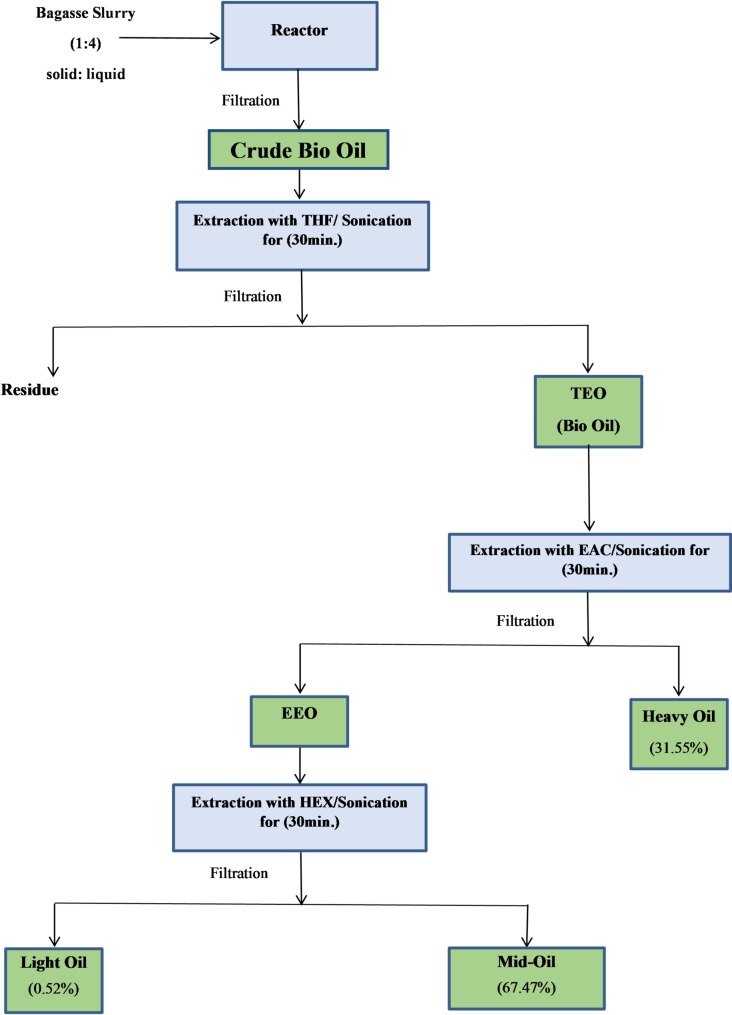 Figure 1
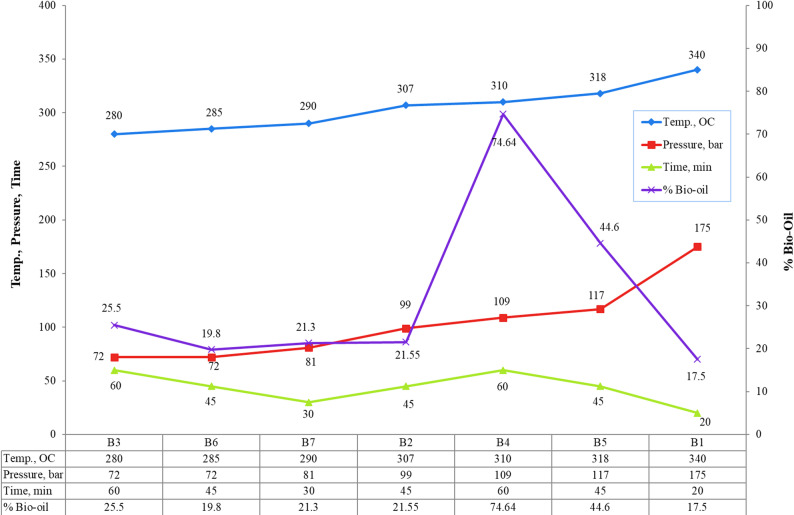 Figure 2
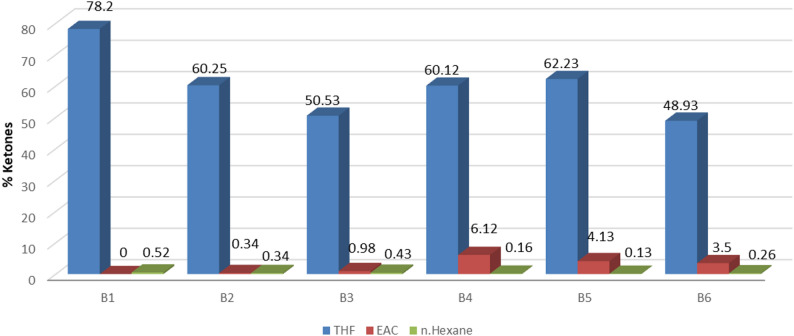 Figure 3
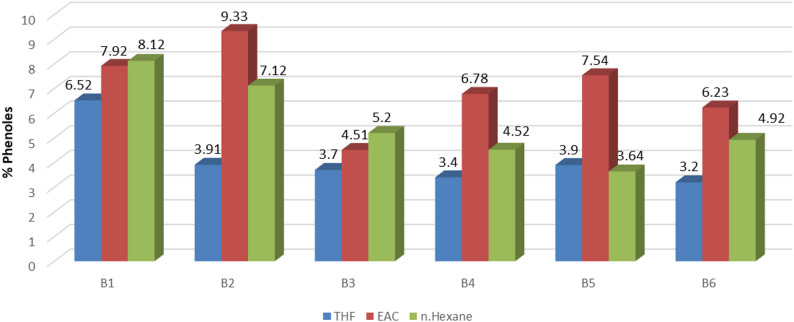 Figure 4
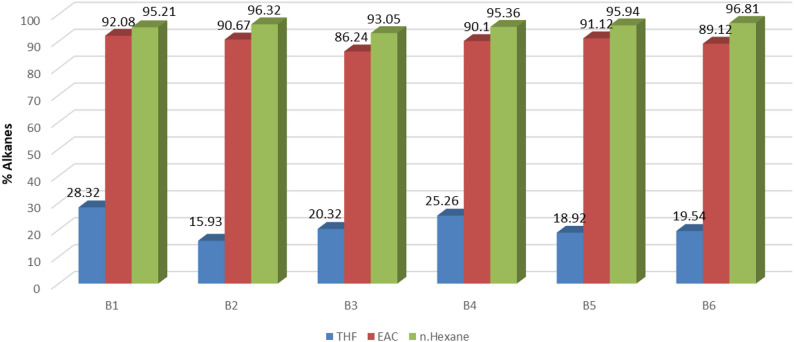 Figure 5
Peer Reviews
No public reviews on file for this paper yet. If you reviewed it on a platform where reviews are public (OpenReview, ICLR, NeurIPS, ICML), you can paste yours below so the community can read it here.
Videos
No videos yet. Explain this paper in a talk, walkthrough, or lecture? Add one.
Taxonomy
TopicsThermochemical Biomass Conversion Processes · Lignin and Wood Chemistry · Subcritical and Supercritical Water Processes