Performance of Artificial Intelligence–Powered ECG Analysis in Suspected ST-Segment Elevation Myocardial Infarction
Scott W. Sharkey, Robert Herman, Dawn R. Witt, Frank Aguirre, Mehmet Yildiz, David M. Larson, Avinash Murthy, Heather S. Rohm, Stephen W. Smith, Will Belzer, Jenny Chambers, Ellen Cravero, Seth Bergstedt, Greg Kerola, David Farmer, Andrew Willett, H. Pendell Meyers, Julia Harris

TL;DR
An AI model analyzing ECGs accurately detects acute coronary blockages in suspected heart attack patients, potentially improving emergency care.
Contribution
A novel AI-ECG model demonstrated high accuracy in identifying acute coronary occlusion in suspected STEMI cases.
Findings
The AI model correctly identified 93.8% of AMI with culprit patients as OMI(+).
The model correctly identified 79.7% of no-AMI patients as OMI(−) with an AUCROC of 0.952.
Sensitivity for TIMI flow 0/1, 2, and 3 was 96.3%, 93.1%, and 86.9%, respectively.
Abstract
Artificial intelligence (AI)–based electrocardiogram (ECG) analysis has emerged as a promising adjunct to human ECG interpretation in suspected ST-segment elevation myocardial infarction (STEMI). To expand knowledge in this evolving field, the authors retrospectively analyzed the performance of a novel AI-ECG model in patients with cardiac catheterization laboratory activation for suspected STEMI. Consecutive patients were gathered from a multicenter U.S. STEMI registry (2018-2022) and categorized into 3 clinical cohorts based on the presence or absence of angiographic culprit and troponin elevation: acute myocardial infarction (AMI) with culprit, AMI without culprit, and no-AMI. Cardiac catheterization laboratory-activating ECGs were analyzed using an AI-ECG model trained to identify acute coronary occlusion and classified as occlusion myocardial infarction, OMI(+) or not, OMI(−).…
Genes, proteins, chemicals, diseases, species, mutations and cell lines named across the full text — each resolved to its canonical identifier and authoritative record.
Click any figure to enlarge with its caption.
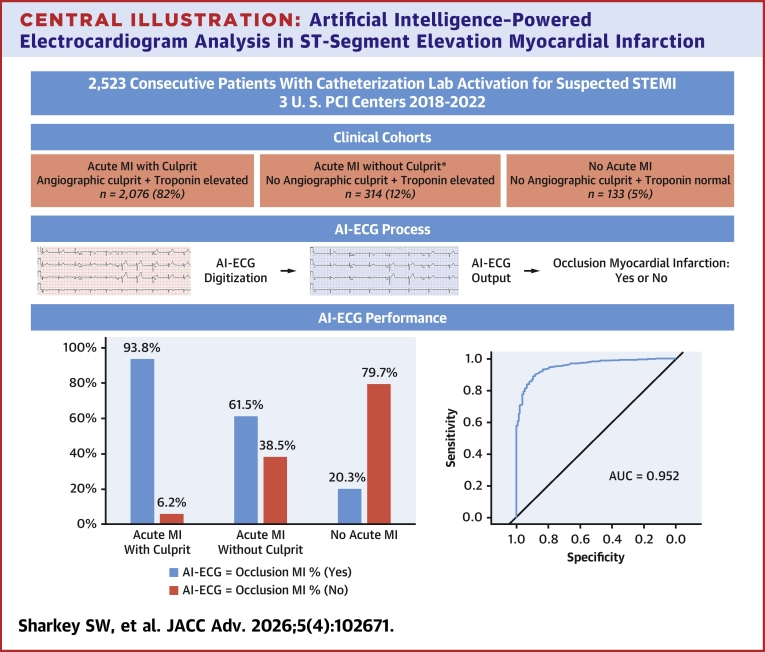 Figure 1
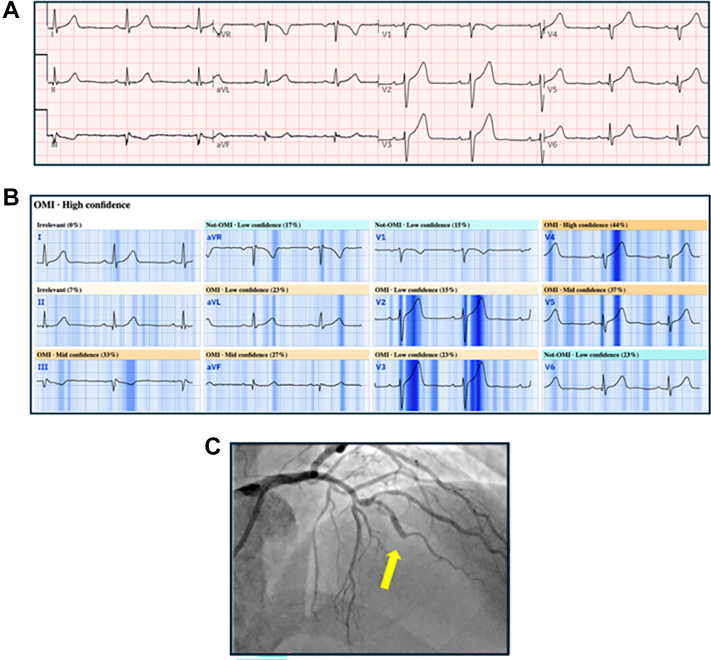 Figure 2
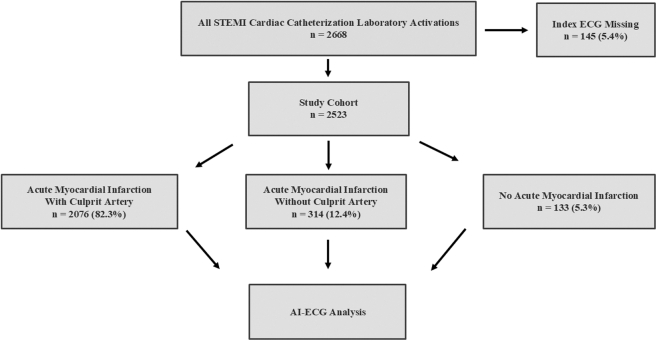 Figure 3
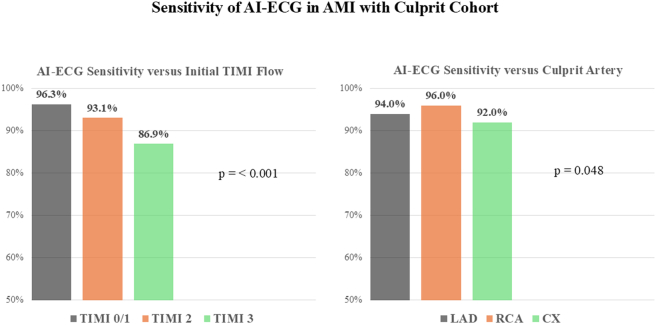 Figure 4
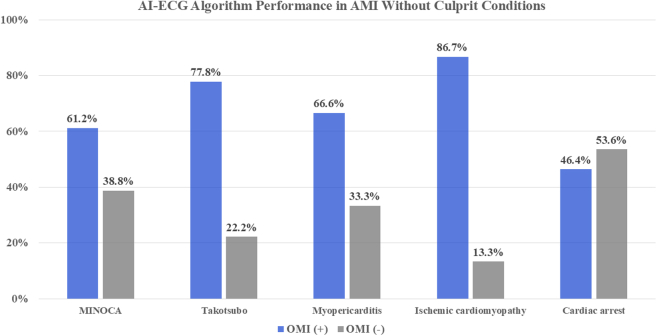 Figure 5
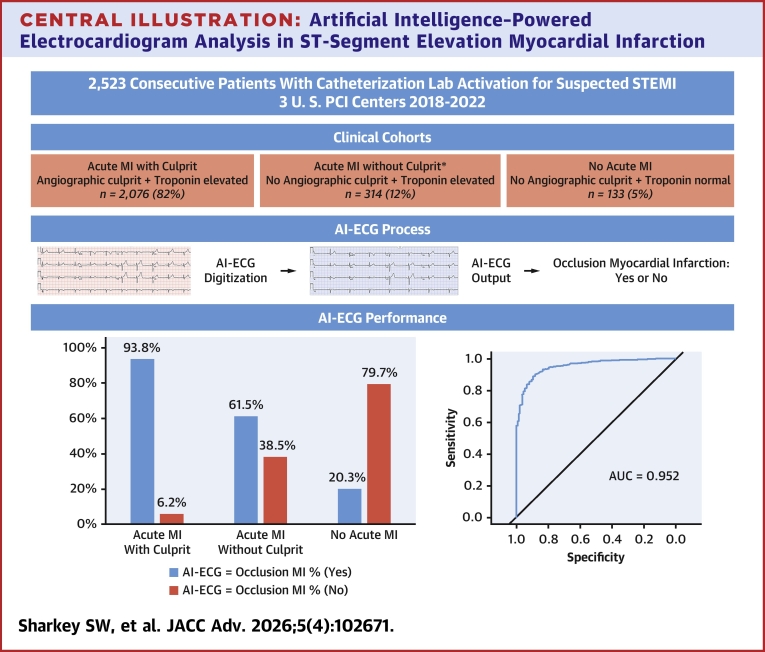 Figure 6
Peer Reviews
No public reviews on file for this paper yet. If you reviewed it on a platform where reviews are public (OpenReview, ICLR, NeurIPS, ICML), you can paste yours below so the community can read it here.
Videos
No videos yet. Explain this paper in a talk, walkthrough, or lecture? Add one.
Taxonomy
TopicsECG Monitoring and Analysis · Cardiac electrophysiology and arrhythmias · Atrial Fibrillation Management and Outcomes