Molecular Origins of Nonfrozen Water in Polyelectrolyte Brushes
George Mallinos, Md. Golam Kibria, Saveen Jayaweera, Ali Dhinojwala

TL;DR
This study explores how polyelectrolyte brushes retain water at very low temperatures, offering insights for creating better anti-icing and lubricating coatings.
Contribution
The paper provides direct measurements of nonfrozen water in polyelectrolyte brushes at subzero temperatures using infrared spectroscopy.
Findings
PMETA brushes retain 25–35 vol. % water even at −60 °C.
The study quantifies changes in polymer volume fraction with temperature.
Spectroscopic analysis reveals substantial water confinement in charged polymer networks.
Abstract
Polyelectrolyte brushes (PEBs) are promising coatings for reducing ice adhesion and regulating water freezing at interfaces, yet direct measurements of nonfrozen water retention at subzero temperatures remain scarce. Here, we investigate the freezing behavior of water confined in poly([2-(methacryloyloxy)ethyl]trimethylammonium) (PMETA) brushes with chloride, iodide, and sulfate counterions using a custom-built low-temperature attenuated total reflectance infrared spectroscopy system. Furthermore, we quantify the fraction of water that was present within the brush that does not freeze as well as the changes in polymer volume fraction within the brush as a function of temperature. Spectroscopic analysis of water vibrational modes reveals that PMETA brushes retain 25–35 vol. % water even at −60 °C, providing direct evidence of substantial water confinement in charged polymer networks.…
Genes, proteins, chemicals, diseases, species, mutations and cell lines named across the full text — each resolved to its canonical identifier and authoritative record.
Click any figure to enlarge with its caption.
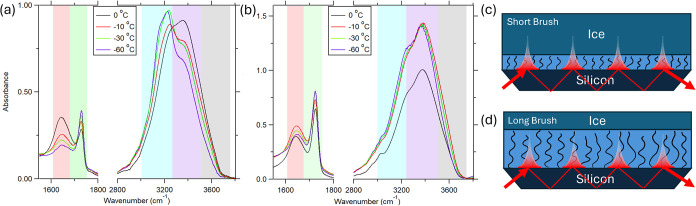 Figure 1
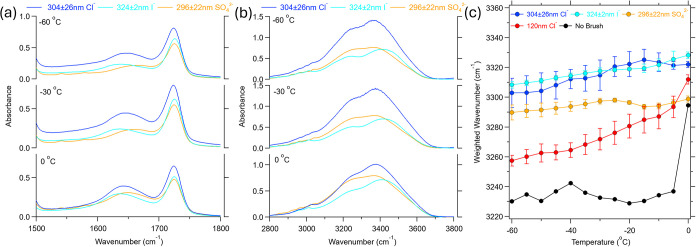 Figure 2
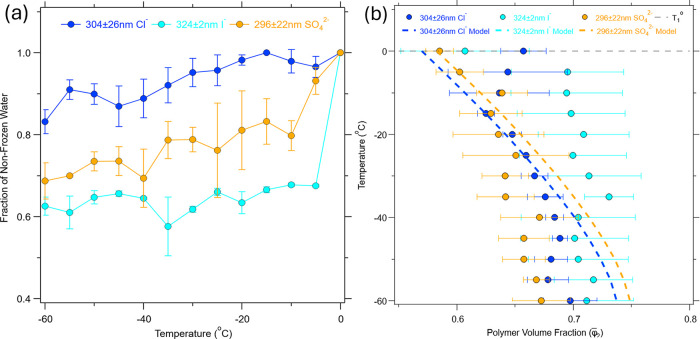 Figure 3
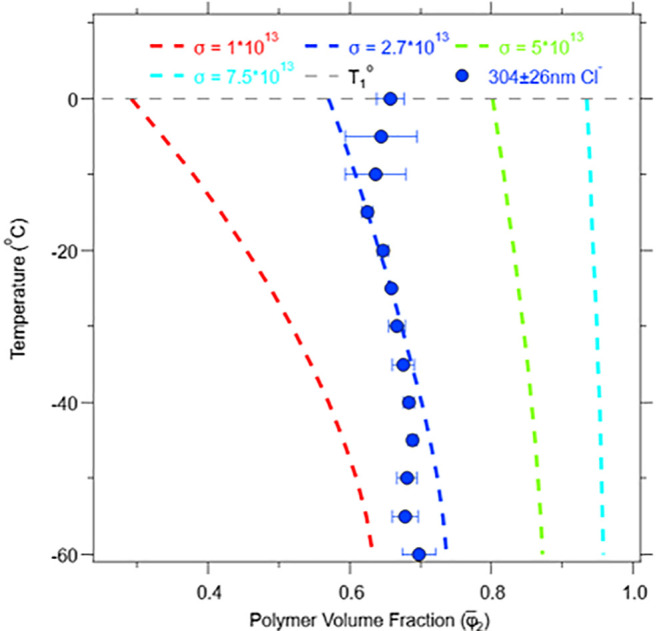 Figure 4
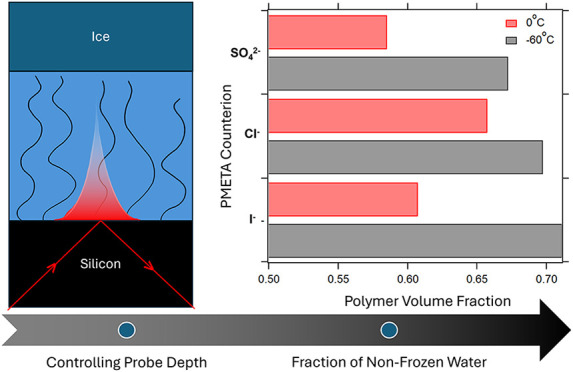 Figure 5
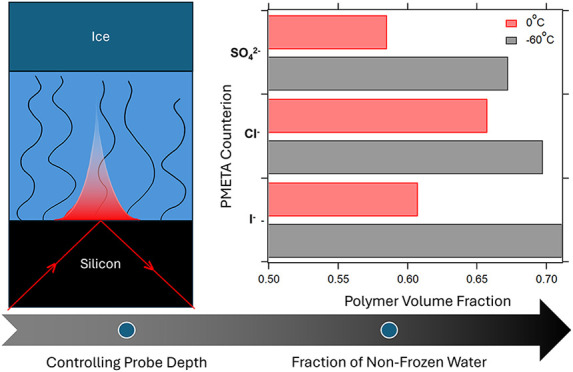 Figure 6
 Figure 7
 Figure 8
 Figure 9
 Figure 10
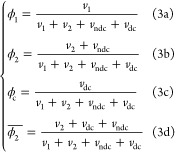 Figure 11
 Figure 12
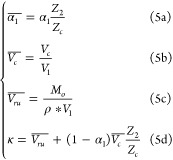 Figure 13
 Figure 14
 Figure 15
 Figure 16
 Figure 17
 Figure 18
 Figure 19
 Figure 20
 Figure 21
 Figure 22
 Figure 23
 Figure 24
 Figure 25
 Figure 26
 Figure 27
 Figure 28
Peer Reviews
No public reviews on file for this paper yet. If you reviewed it on a platform where reviews are public (OpenReview, ICLR, NeurIPS, ICML), you can paste yours below so the community can read it here.
Videos
No videos yet. Explain this paper in a talk, walkthrough, or lecture? Add one.
Taxonomy
TopicsPolymer Surface Interaction Studies · Surface Modification and Superhydrophobicity · Nanopore and Nanochannel Transport Studies