Flow-Induced Dynamic Dispersion in Dispersant-Free Mixed-Oxide Slurry Systems
Yu-An Lin, Feng-Ming Yeh, Bin Hu, Ting-Kai Huang, Hsin-Hsien Lu, Hong Zhong, Chia-Chen Li

TL;DR
This study shows that mixing different-sized silica particles improves slurry performance in planarization better than chemical dispersants.
Contribution
A particle-mixing strategy outperforms chemical dispersants in dynamic dispersion and CMP performance.
Findings
Bimodal suspensions show nearly Newtonian flow behavior and suppress agglomeration.
CMP tests show higher material removal rates and lower surface roughness with bimodal suspensions.
Simulations reveal denser particle contacts and higher stresses in bimodal systems.
Abstract
This study demonstrates that a particle-mixing strategy in aqueous suspension is more effective than chemical dispersants in enhancing the dynamic dispersion and performance of SiO2-based slurries for planarization applications. By preparing particle-mixed suspensions containing 25 and 55 nm SiO2 particles at chemical-mechanical planarization (CMP)-relevant solid loadings (1–10 wt %), we show that combining these two particle sizes suppresses agglomeration and transforms the suspension rheology from shear-thinning to a nearly Newtonian response under flow, indicating improved dynamic dispersion after yielding. Small-angle X-ray scattering and effective volume packing analyses confirm that cooperative size effects drive the improved structural organization, thereby enhancing flow behavior. In contrast, the commonly used ammonium polyacrylate dispersant enhances static dispersion but…
Genes, proteins, chemicals, diseases, species, mutations and cell lines named across the full text — each resolved to its canonical identifier and authoritative record.
Click any figure to enlarge with its caption.
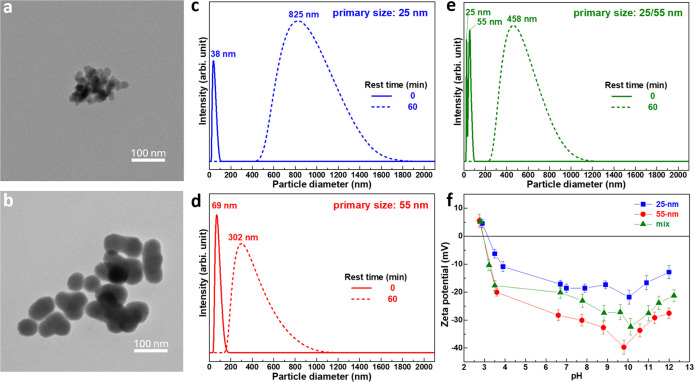 Figure 1
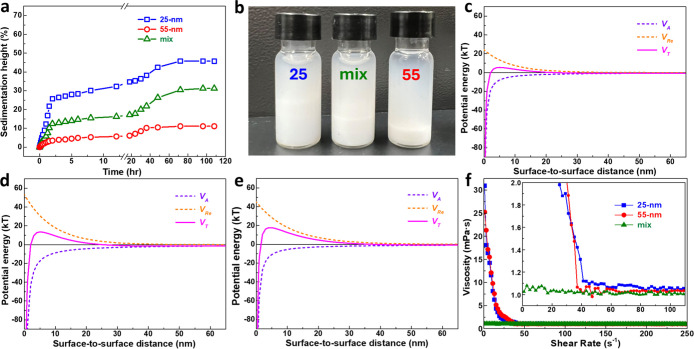 Figure 2
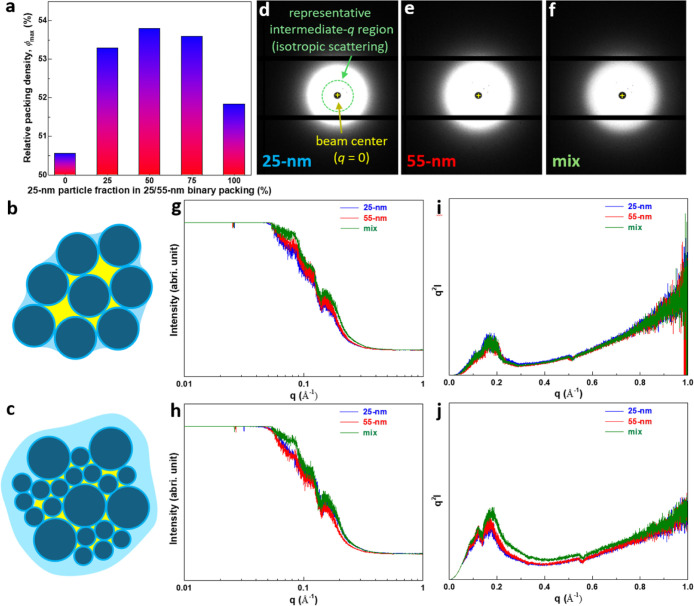 Figure 3
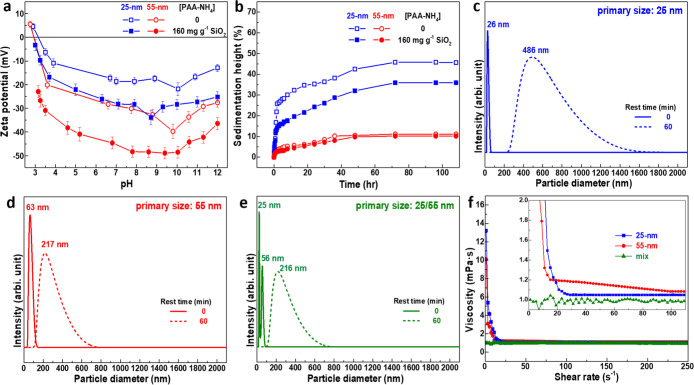 Figure 4
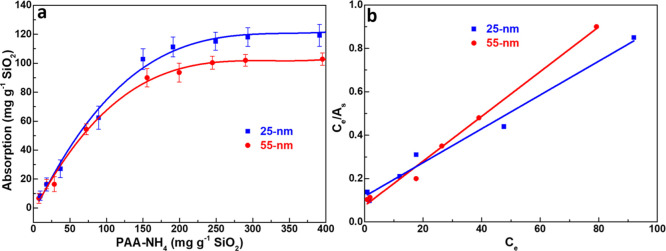 Figure 5
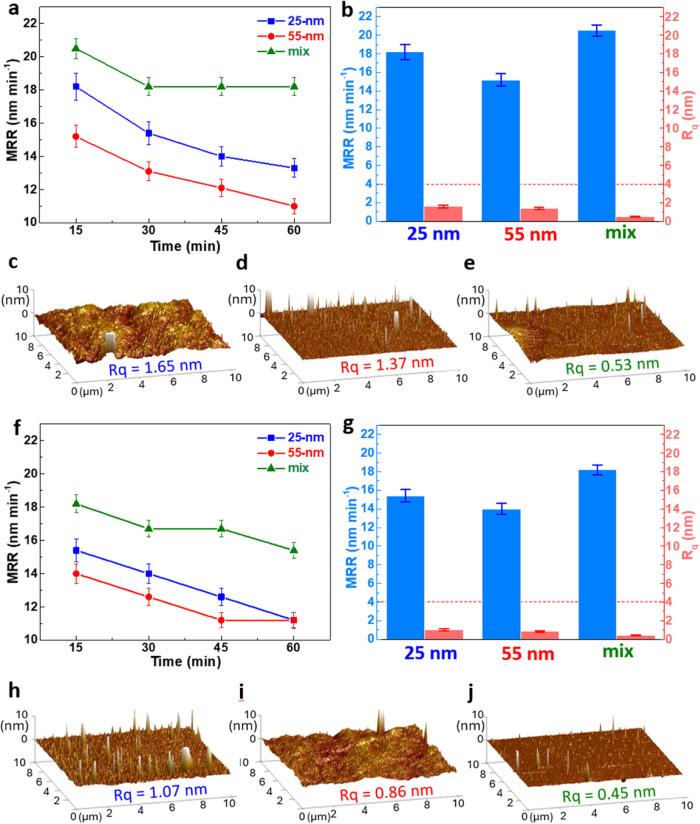 Figure 6
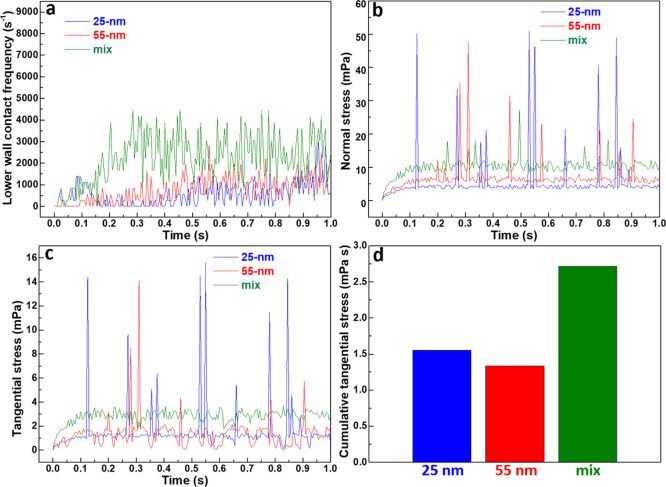 Figure 7
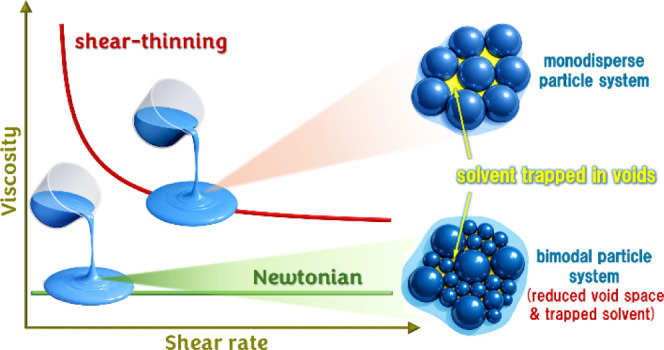 Figure 8
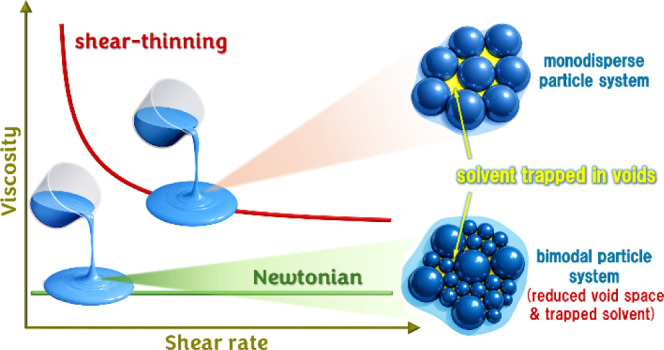 Figure 9
 Figure 10
 Figure 11
 Figure 12
 Figure 13
 Figure 14
 Figure 15
 Figure 16
 Figure 17
 Figure 18
 Figure 19
Peer Reviews
No public reviews on file for this paper yet. If you reviewed it on a platform where reviews are public (OpenReview, ICLR, NeurIPS, ICML), you can paste yours below so the community can read it here.
Videos
No videos yet. Explain this paper in a talk, walkthrough, or lecture? Add one.
Taxonomy
TopicsSurface Modification and Superhydrophobicity · Granular flow and fluidized beds · Advanced Surface Polishing Techniques