Structure–Function Coupling in Pyridyl Triazole Copolymers for Neuromorphic Synaptic Transistors
Arash Ghobadi, Salahuddin Attar, Abhijeet Abhi, Thomas B. Kallaos, Dilan M. Gamachchi, Indeewari M. Karunarathne, Andrew C. Meng, Joseph C. Mathai, Shubhra Gangopadhyay, Steven P. Kelley, Mohammed Al-Hashimi, Suchismita Guha

TL;DR
This paper explores how different chemical structures in copolymers affect the performance of neuromorphic synaptic transistors for image recognition.
Contribution
The study introduces new pyridyl triazole copolymers and shows how their structure influences synaptic behavior and neural network performance.
Findings
The copolymer with a benzothiadiazole linker achieved nearly 80% image recognition accuracy.
The fluorine-substituted thiophene linker showed no synaptic behavior.
Interface trap density and morphology directly impact synaptic device performance.
Abstract
Organic ferroelectric transistors are excellent candidates as low-cost alternatives for synaptic devices. Specifically, interfaces with donor–acceptor semiconducting polymers and copolymers of poly(vinylidene fluoride) (PVDF) are attractive for mimicking synaptic responses. By tailoring the linking unit between the pyridyl triazole (PyTr) acceptors and thiophene donors, three copolymers are synthesized incorporating selenium-substituted thiophene, benzothiadiazole, and fluorine-substituted thiophene linkers. Using the hexafluoropropylene copolymer of PVDF (PVDF-HFP) as the dielectric layer, the three PyTr semiconductors show p-type transport in transistor architectures with carrier mobilities between 0.1 and 0.2 cm2 V–1 s–1. The synaptic plasticity is investigated by applying long-term pulsed voltages at the gate electrode to emulate potentiation and depression processes. To assess…
Genes, proteins, chemicals, diseases, species, mutations and cell lines named across the full text — each resolved to its canonical identifier and authoritative record.
Click any figure to enlarge with its caption.
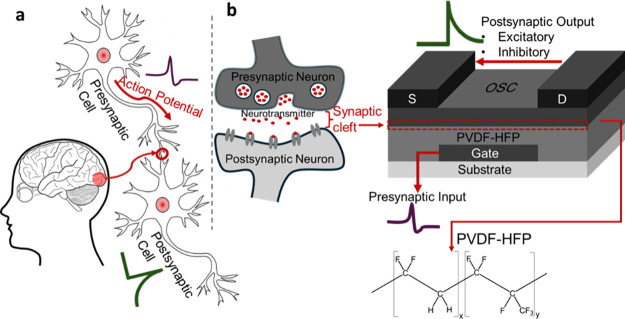 Figure 1
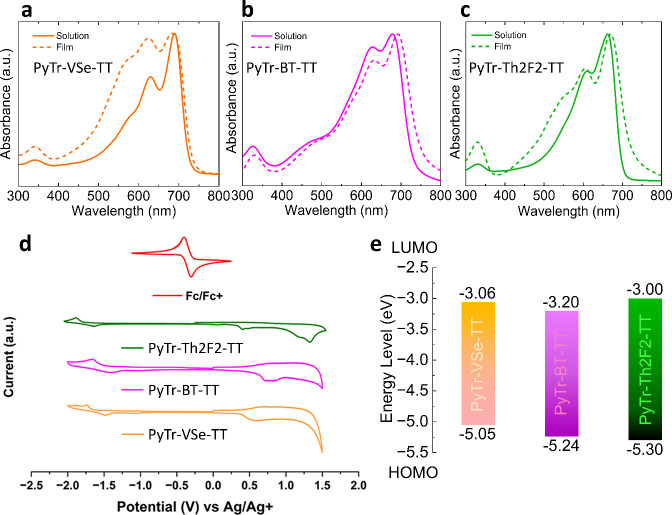 Figure 2
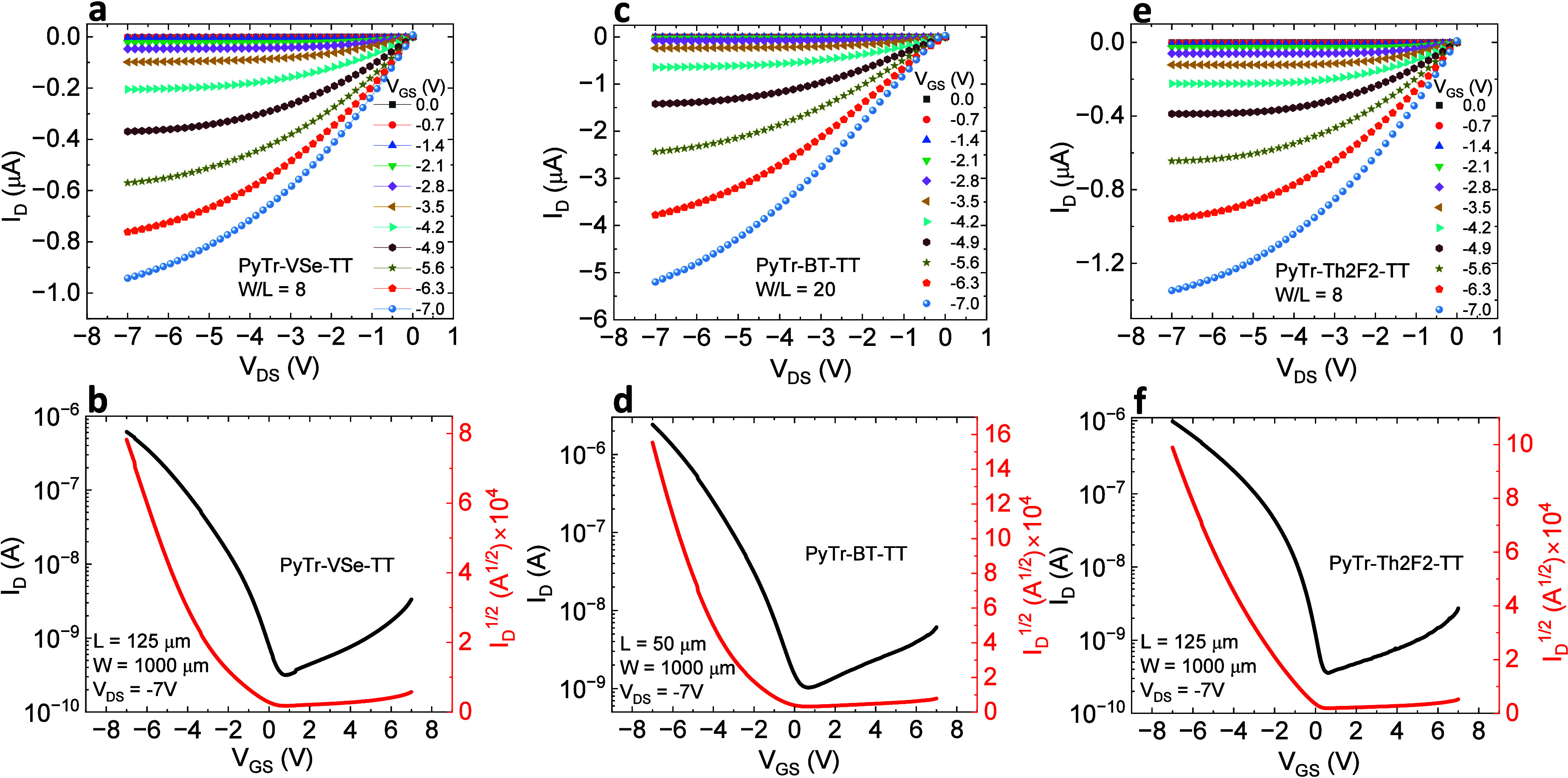 Figure 3
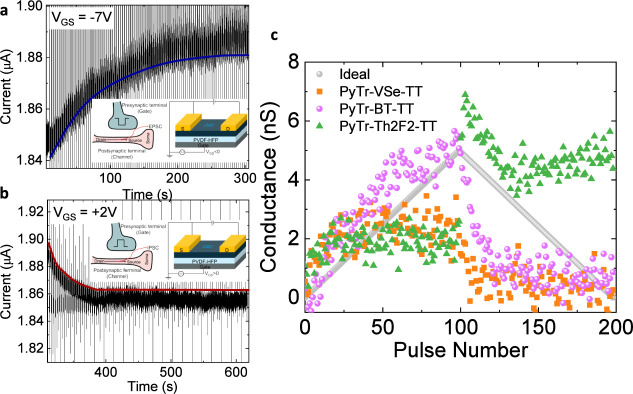 Figure 4
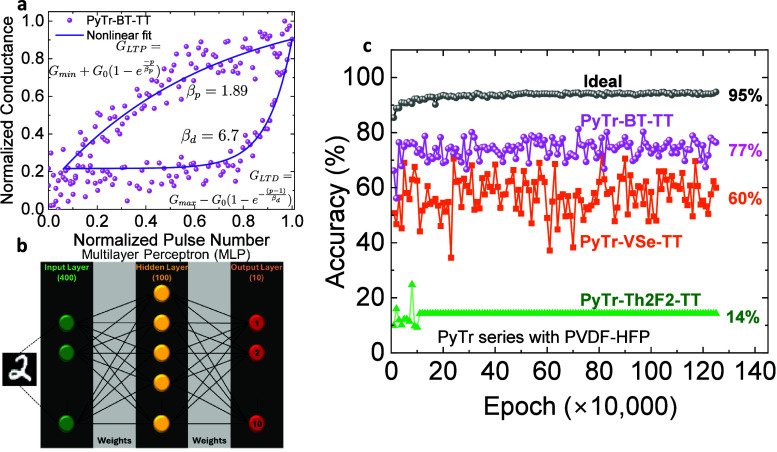 Figure 5
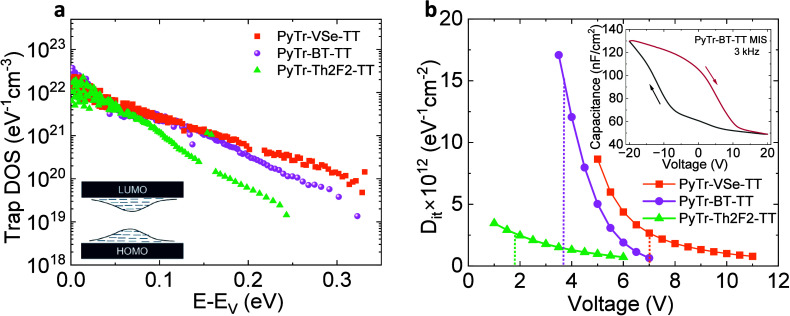 Figure 6
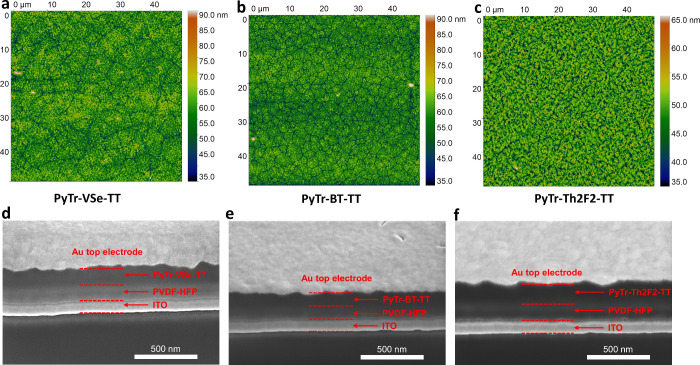 Figure 7
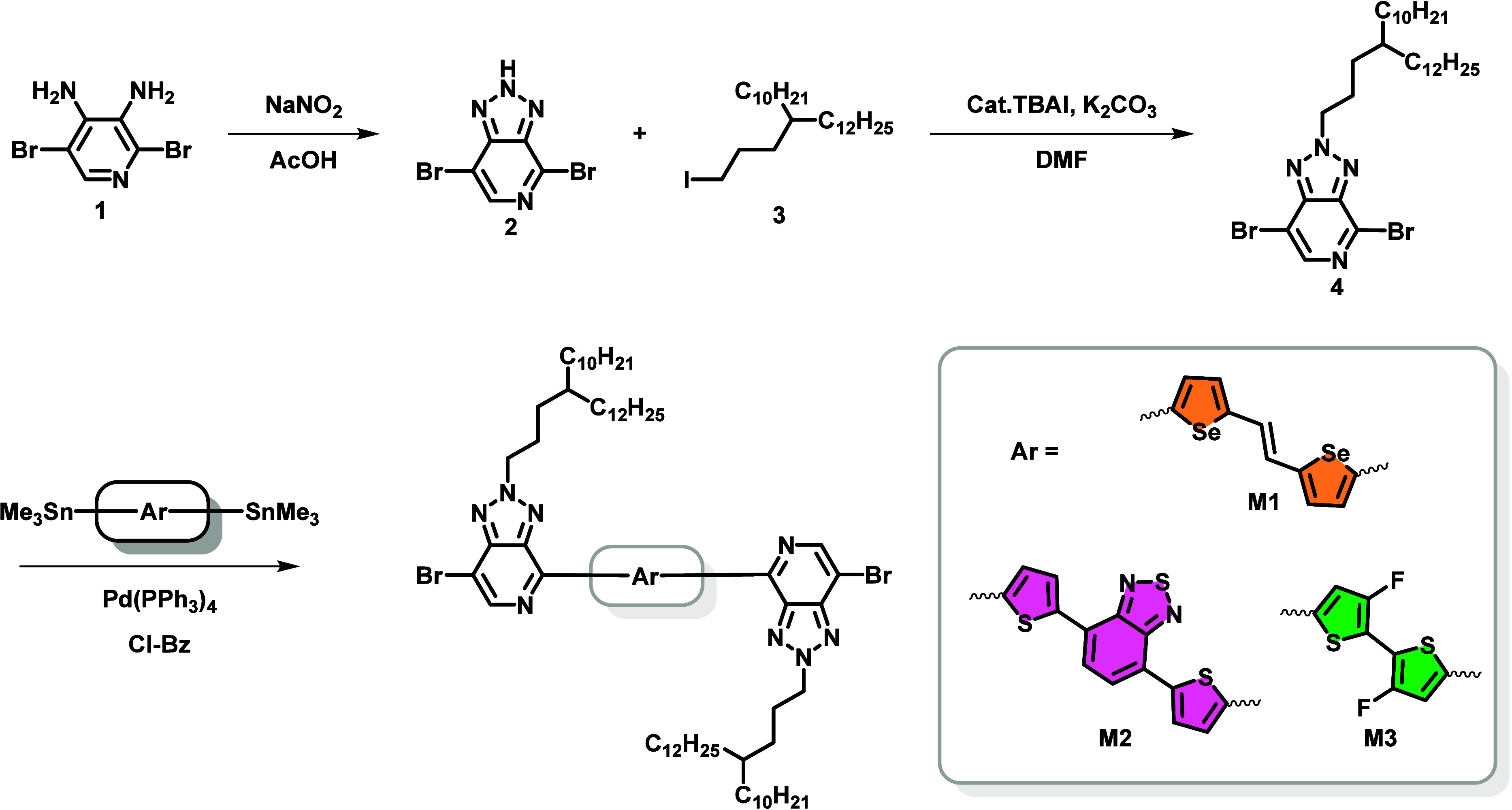 Figure 8
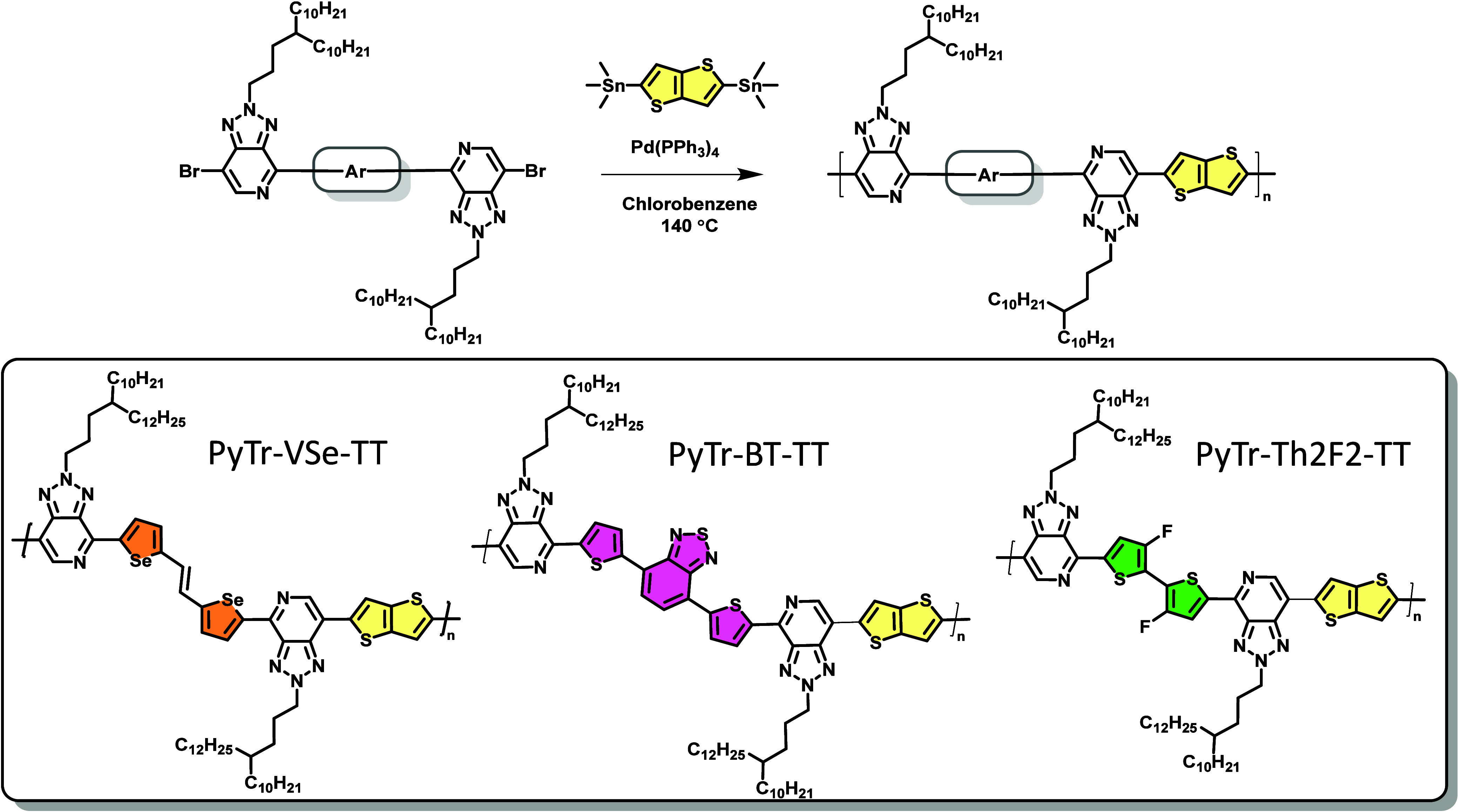 Figure 9
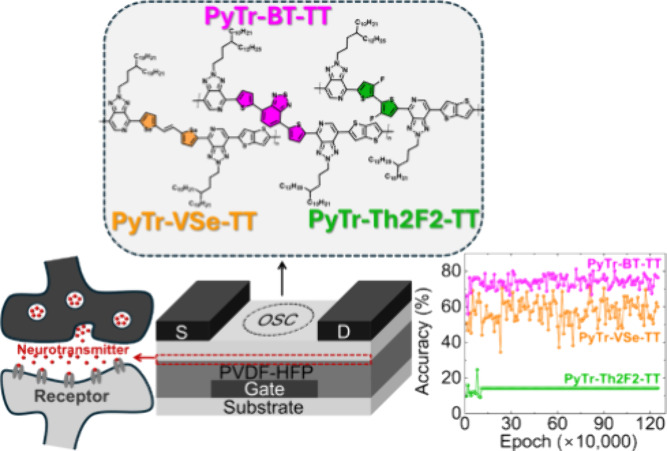 Figure 10
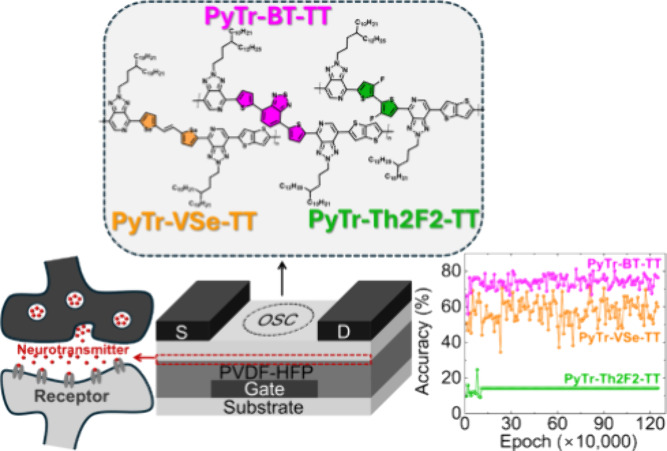 Figure 11
 Figure 12
Peer Reviews
No public reviews on file for this paper yet. If you reviewed it on a platform where reviews are public (OpenReview, ICLR, NeurIPS, ICML), you can paste yours below so the community can read it here.
Videos
No videos yet. Explain this paper in a talk, walkthrough, or lecture? Add one.
Taxonomy
TopicsAdvanced Memory and Neural Computing · Ferroelectric and Negative Capacitance Devices · Advanced Sensor and Energy Harvesting Materials