Membrane Pore Formation Unveiled by ∞RETIS Path Sampling: From Thinning to Flip-Flop
Daniel Tianhou Zhang, Lukas Baldauf, Grzegorz Lazarski, Titus S. van Erp, Wataru Shinoda

TL;DR
This paper uses a new simulation method to reveal how pores form in cell membranes, showing that thinning and lipid flip-flop are key steps.
Contribution
The paper introduces ∞RETIS path sampling to study pore formation, revealing new mechanistic insights previously unattainable with conventional methods.
Findings
Pore nucleation is driven by early-stage membrane thinning.
Lipid flip-flop occurs exclusively via local membrane thinning.
Pore closure often leads to asymmetric lipid distributions.
Abstract
Pore formation in lipid bilayers plays a vital role in membrane fusion, transport, and signaling. Yet, its detailed mechanism remains elusive due to the limitations of conventional simulation methods. To overcome this, we apply a newly developed path sampling technique, the asynchronous and infinite swap version of Replica Exchange Transition Interface Sampling (∞RETIS), to study pore formation in a dimyristoylphosphatidylcholine (DMPC) bilayer modeled with the CHARMM36m force field. Our results reveal a sequence of tightly coupled events: pore nucleation sites are determined by early-stage thinning, and the progress into a metastable pore requires a combination of polar defects and close proximity between lipids across opposite leaflets. Using Inf-init, an initiation protocol based on ∞RETIS, rare trajectories can be generated starting directly from equilibrium simulations. Inf-init…
Genes, proteins, chemicals, diseases, species, mutations and cell lines named across the full text — each resolved to its canonical identifier and authoritative record.
Click any figure to enlarge with its caption.
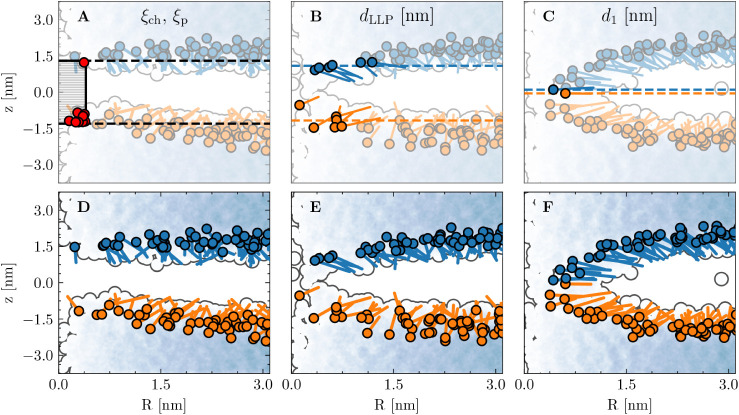 Figure 1
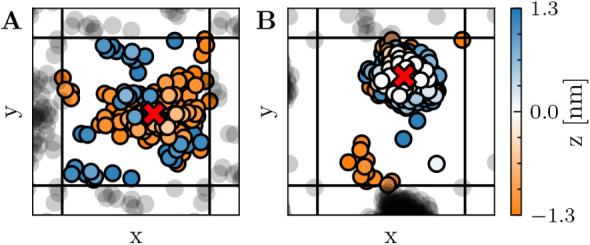 Figure 2
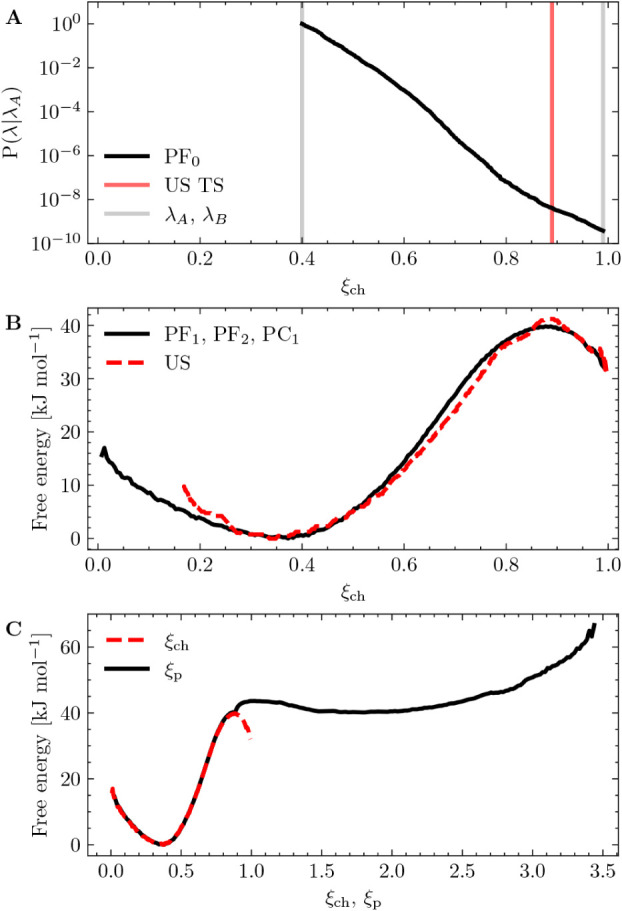 Figure 3
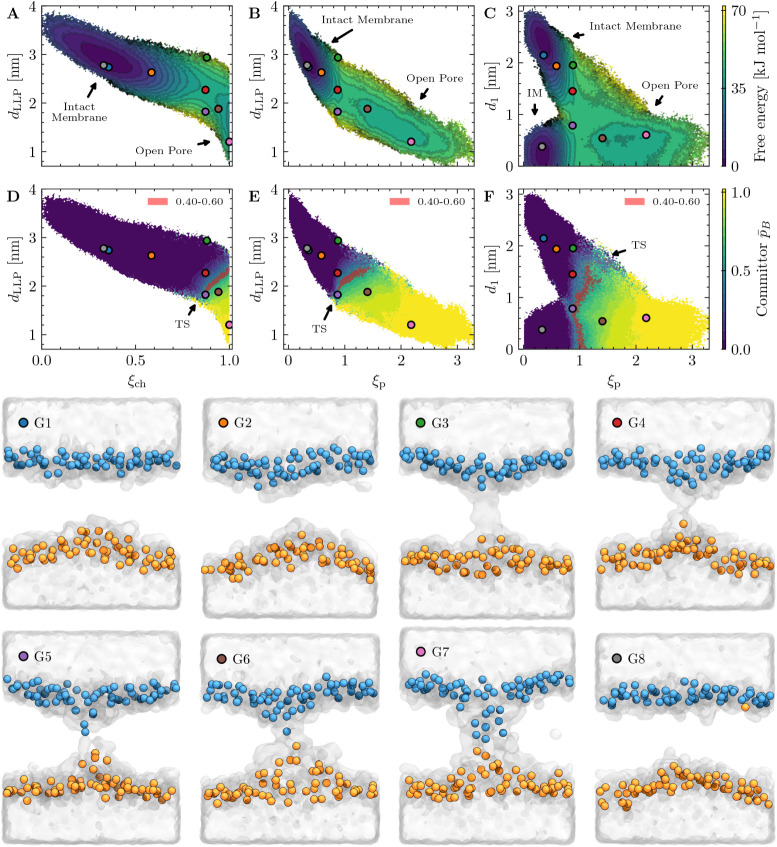 Figure 4
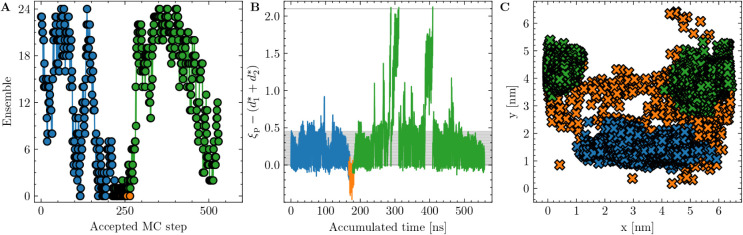 Figure 5
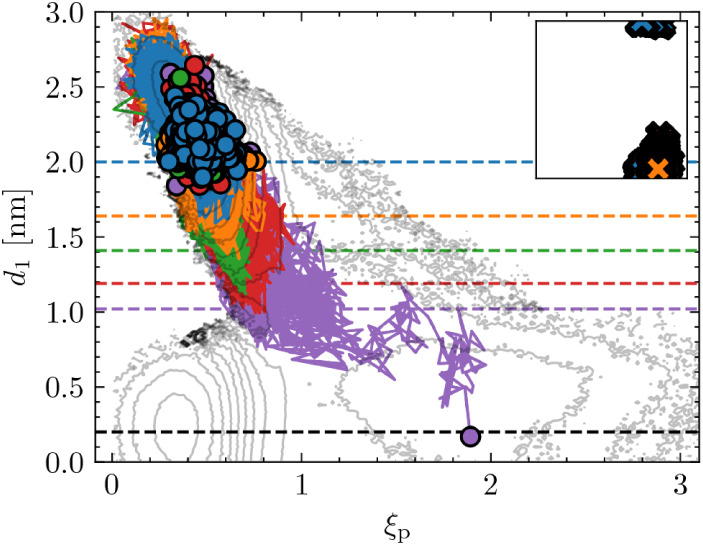 Figure 6
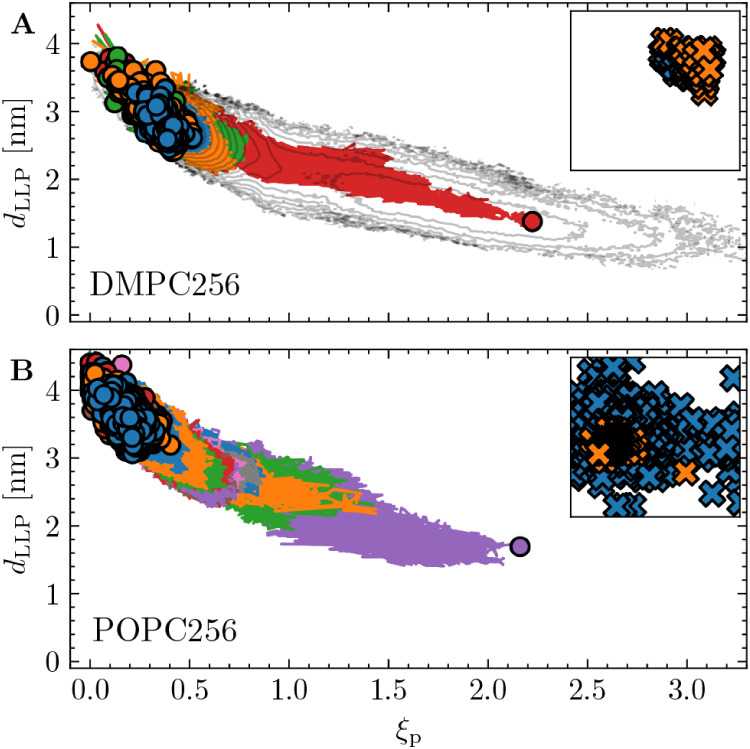 Figure 7
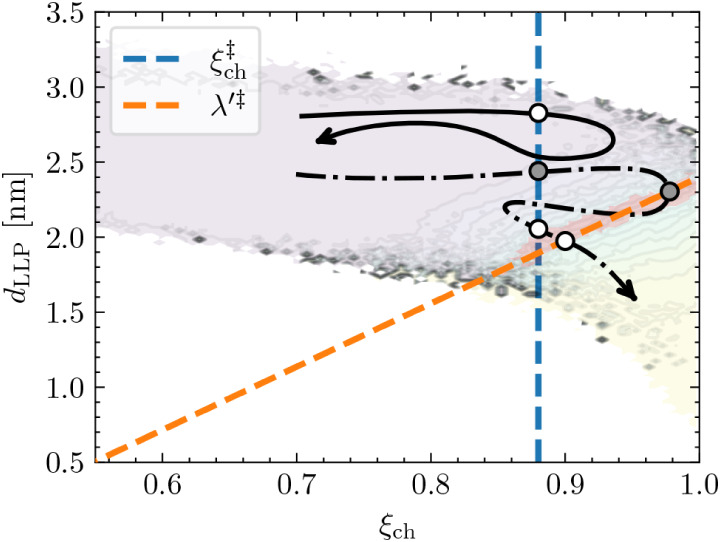 Figure 8
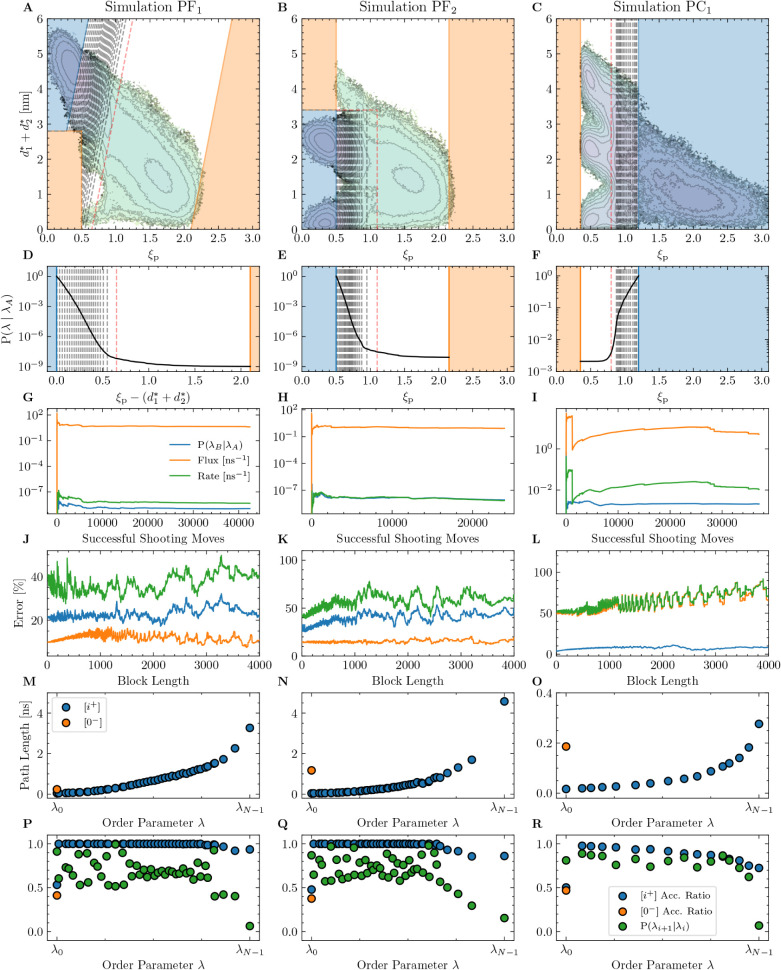 Figure 9
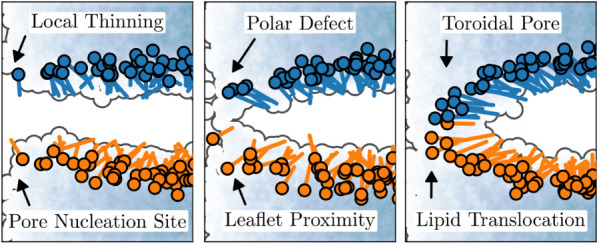 Figure 10
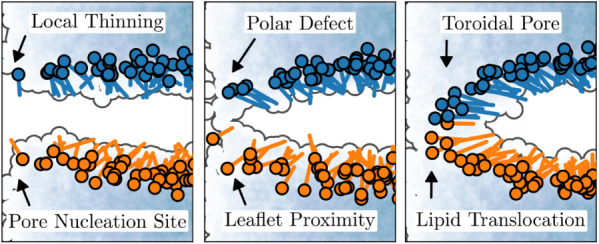 Figure 11
 Figure 12
 Figure 13
 Figure 14
 Figure 15
 Figure 16
 Figure 17
 Figure 18
 Figure 19
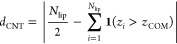 Figure 20
 Figure 21
 Figure 22
 Figure 23
 Figure 24
 Figure 25
 Figure 26
 Figure 27
 Figure 28
 Figure 29
 Figure 30
Peer Reviews
No public reviews on file for this paper yet. If you reviewed it on a platform where reviews are public (OpenReview, ICLR, NeurIPS, ICML), you can paste yours below so the community can read it here.
Videos
No videos yet. Explain this paper in a talk, walkthrough, or lecture? Add one.
Taxonomy
TopicsLipid Membrane Structure and Behavior · Cellular transport and secretion · Nanopore and Nanochannel Transport Studies