Local Pair Natural Orbital-Based Coupled-Cluster Theory through Full Quadruples (DLPNO–CCSDTQ)
Andy Jiang, Devin A. Matthews, David Poole, Connor G. Briggs, Justin M. Turney, C. David Sherrill, Henry F. Schaefer III

TL;DR
This paper introduces a new quantum chemistry method for accurately calculating molecular energies using advanced computational techniques.
Contribution
The novel method extends local pair natural orbital-based coupled-cluster theory to include full quadruples for higher accuracy.
Findings
The method achieves energy differences within 0.01–0.05 kcal mol–1 compared to canonical CCSDTQ.
Computations for complex systems like benzene dimer and adamantane become feasible with this approach.
Abstract
In this work, we implement a local pair natural orbital-based coupled-cluster method through the full treatment of quadruple excitations (CCSDTQ). The domain-based local pair natural orbital (DLPNO) approach, which has successfully been applied to lower levels of coupled-cluster theory, is utilized in our algorithm, and thus our algorithm is called DLPNO-CCSDTQ. For simplicity in the working equations and in the implementation, we t 1-dress the two-electron integrals as well as Fock matrix elements. Our method can recover CCSDTQ-CCSDT and CCSDTQ-CCSDT(Q) energy differences on the order of 0.01–0.05 kcal mol–1, even at a loose quadruples natural orbital (QNO) occupation number cutoff of 3.33 × 10⁻⁶. To highlight the capabilities of our code and its potential future applications, we showcase computations that would be intractable with canonical CCSDTQ, such as the benzene dimer, (H2O)17,…
Genes, proteins, chemicals, diseases, species, mutations and cell lines named across the full text — each resolved to its canonical identifier and authoritative record.
Click any figure to enlarge with its caption.
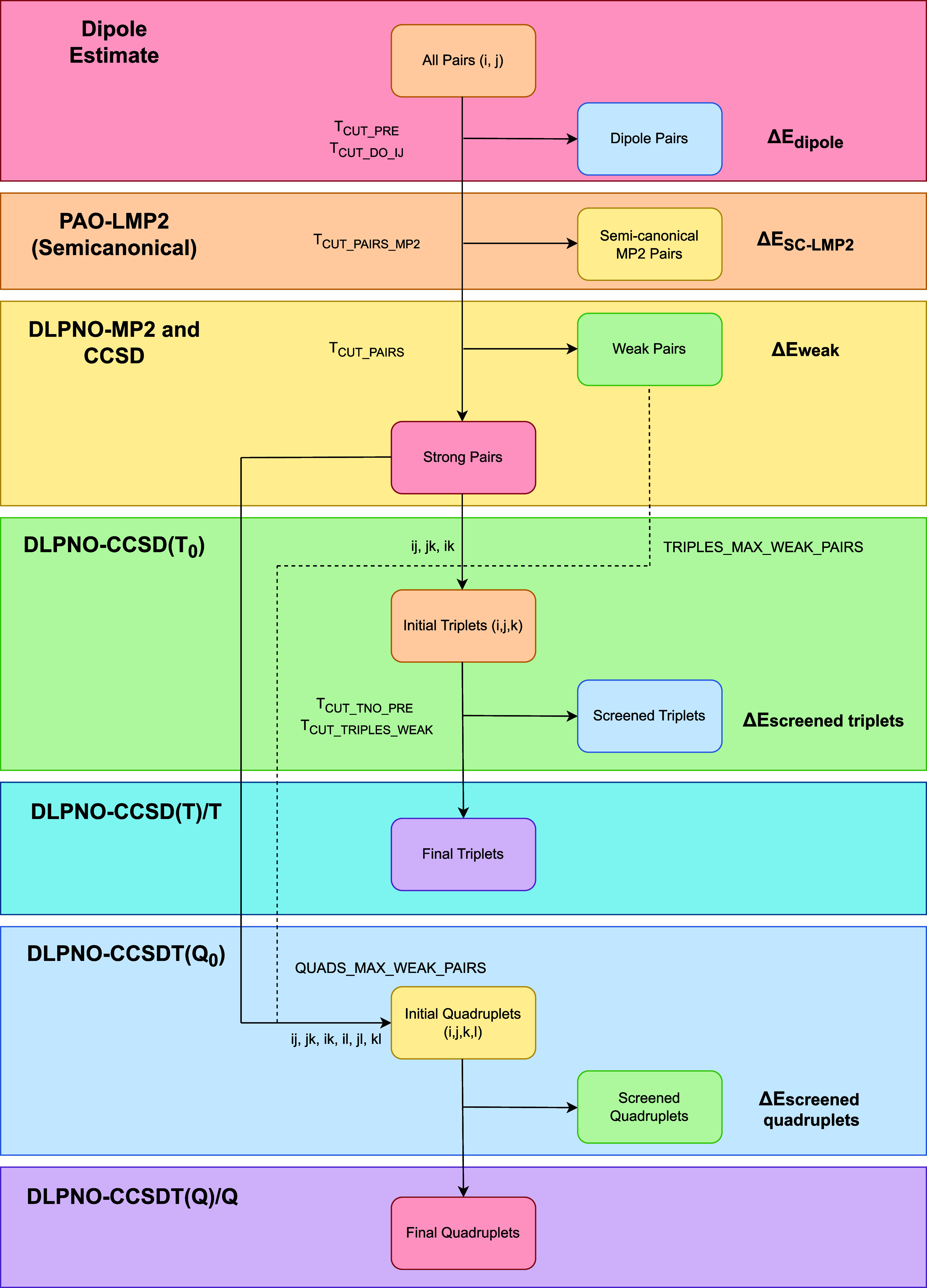 Figure 1
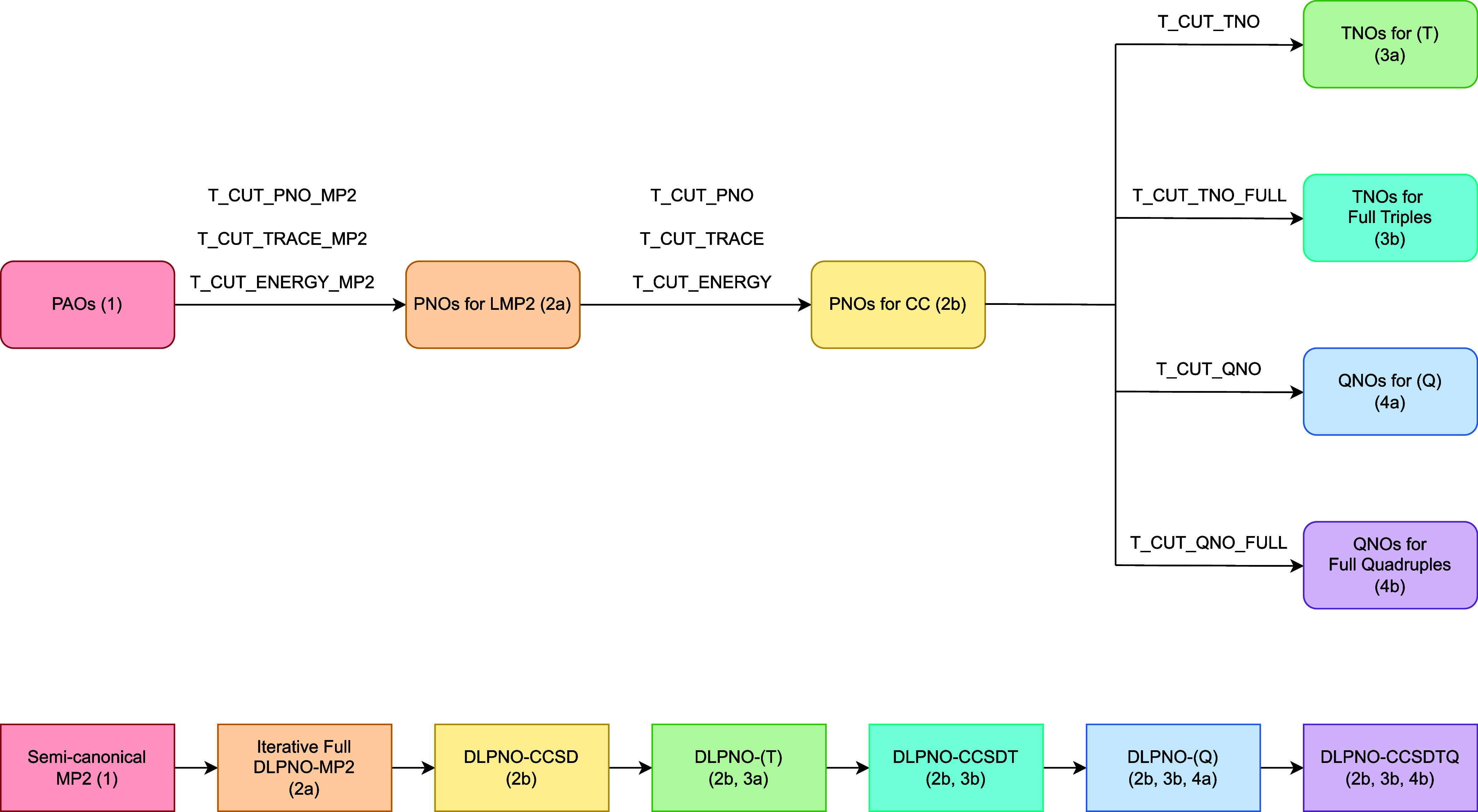 Figure 2
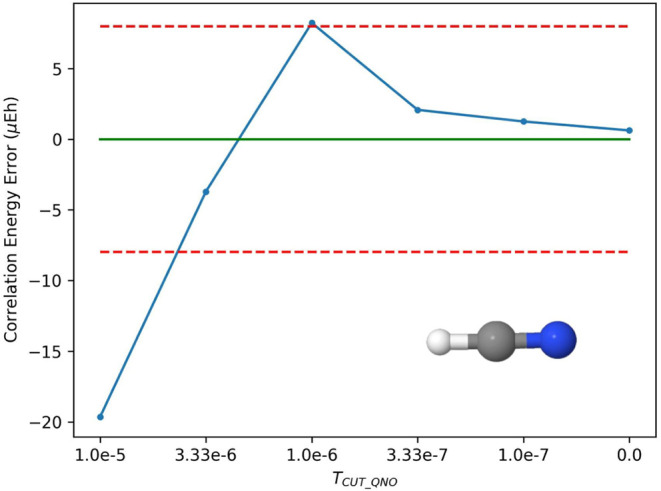 Figure 3
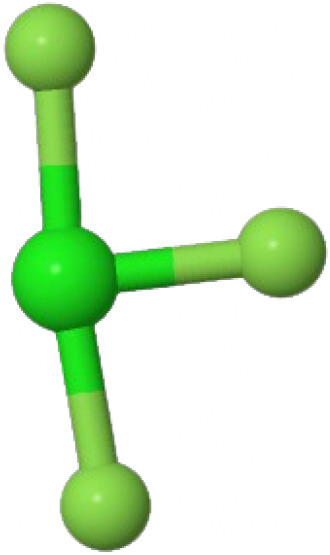 Figure 4
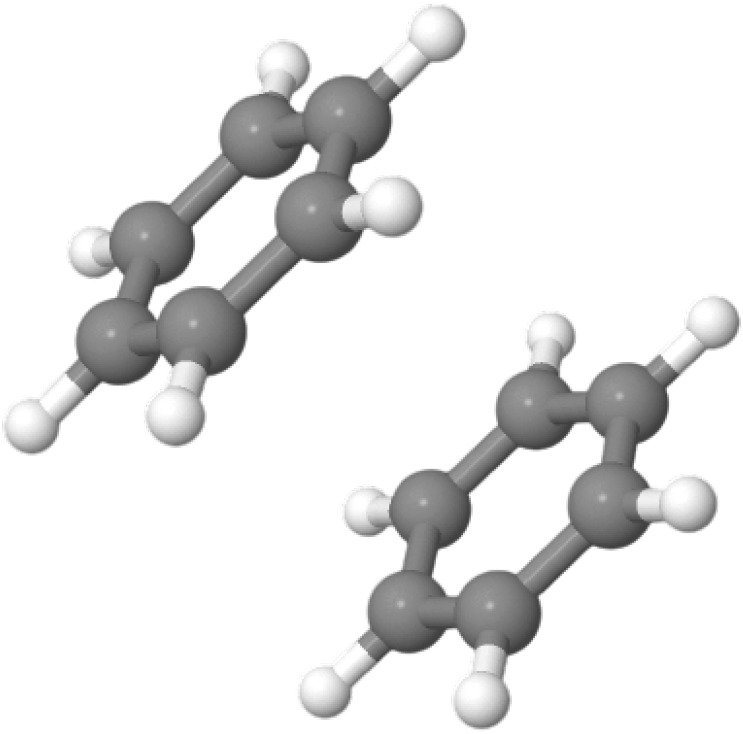 Figure 5
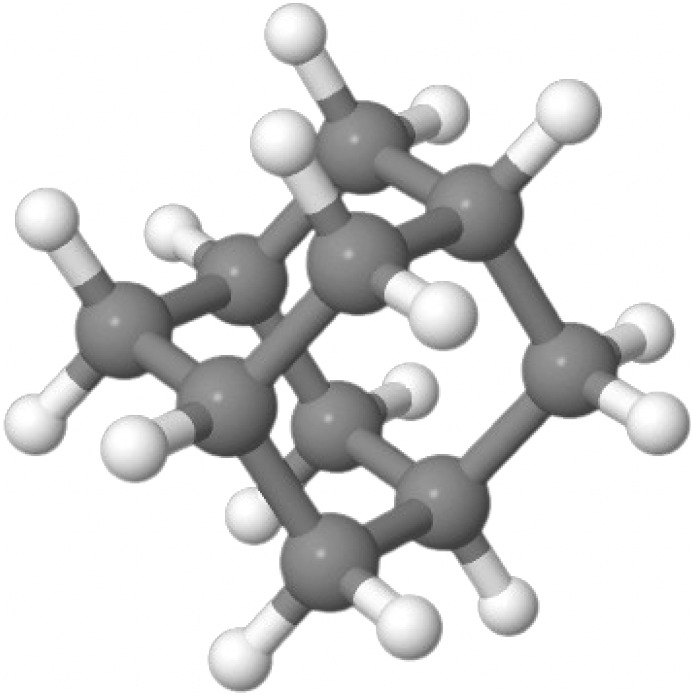 Figure 6
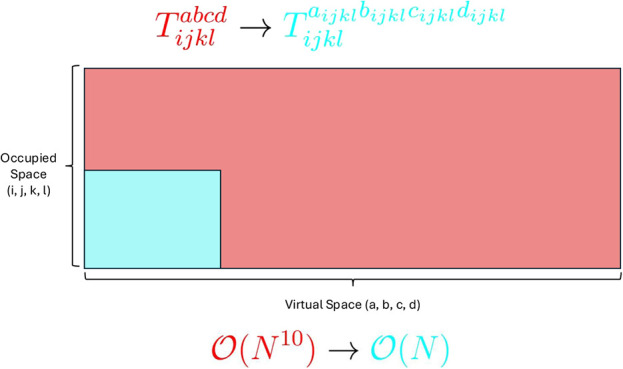 Figure 7
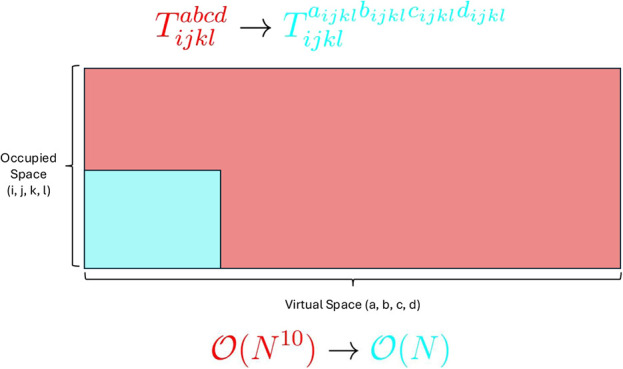 Figure 8
 Figure 9
 Figure 10
 Figure 11
 Figure 12
 Figure 13
 Figure 14
 Figure 15
 Figure 16
 Figure 17
 Figure 18
 Figure 19
 Figure 20
 Figure 21
 Figure 22
 Figure 23
 Figure 24
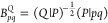 Figure 25
 Figure 26
 Figure 27
 Figure 28
 Figure 29
 Figure 30
 Figure 31
 Figure 32
 Figure 33
 Figure 34
 Figure 35
 Figure 36
 Figure 37
 Figure 38
 Figure 39
 Figure 40
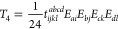 Figure 41
 Figure 42
 Figure 43
 Figure 44
 Figure 45
 Figure 46
 Figure 47
 Figure 48
 Figure 49
 Figure 50
Peer Reviews
No public reviews on file for this paper yet. If you reviewed it on a platform where reviews are public (OpenReview, ICLR, NeurIPS, ICML), you can paste yours below so the community can read it here.
Videos
No videos yet. Explain this paper in a talk, walkthrough, or lecture? Add one.
Taxonomy
TopicsAdvanced Chemical Physics Studies · Magnetism in coordination complexes · Synthesis and Properties of Aromatic Compounds