Defect-Limited Efficiency of Pnictogen Chalcohalide Solar Cells
Cibrán López, Seán R. Kavanagh, Pol Benítez, Edgardo Saucedo, Aron Walsh, David O. Scanlon, Claudio Cazorla

TL;DR
This paper investigates why pnictogen chalcohalide solar cells underperform, finding that chalcogen vacancies significantly reduce efficiency.
Contribution
The study provides a first-principles analysis of defect chemistry in Bi-based chalcohalides, identifying key performance-limiting defects.
Findings
Chalcogen vacancies act as deep nonradiative recombination centers, reducing theoretical maximum efficiencies by 6-10%.
BiSeI shows the best efficiency due to its optimal bandgap despite high recombination rates.
Chalcogen-rich synthesis and anion substitutions are proposed to mitigate harmful vacancies.
Abstract
Pnictogen chalcohalides (MChX) have recently emerged as promising nontoxic and environmentally friendly photovoltaic absorbers, combining strong light absorption coefficients with favorable low-temperature synthesis conditions. Despite these advantages and reported optimized morphologies, device efficiencies remain below 10%, far from their ideal radiative limit. To uncover the origin of these performance losses, we present a systematic and fully consistent first-principles investigation of the defect chemistry across the Bi-based chalcohalide family. Our results reveal a complex defect landscape dominated by chalcogen vacancies of low formation energy, which act as deep nonradiative recombination centers. Despite their moderate charge-carrier capture coefficients, the high equilibrium concentrations of these defects reduce the theoretical maximum efficiencies by 6% in BiSeI and by 10%…
Genes, proteins, chemicals, diseases, species, mutations and cell lines named across the full text — each resolved to its canonical identifier and authoritative record.
Click any figure to enlarge with its caption.
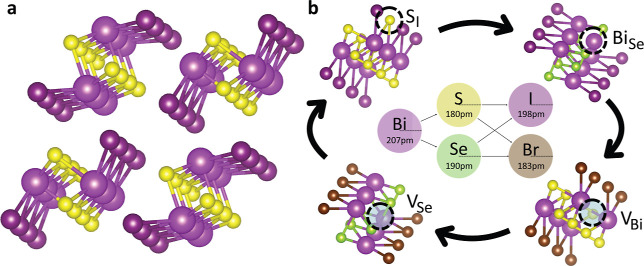 Figure 1
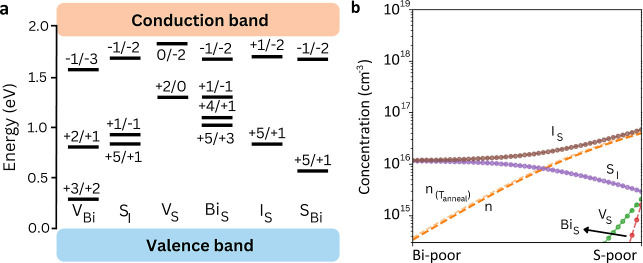 Figure 2
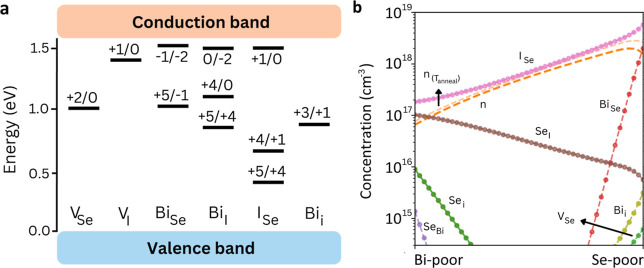 Figure 3
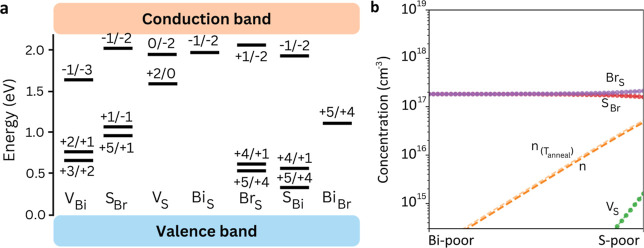 Figure 4
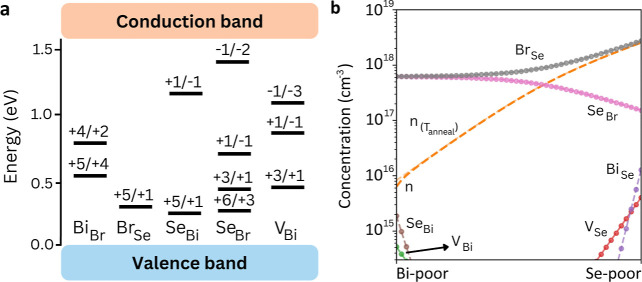 Figure 5
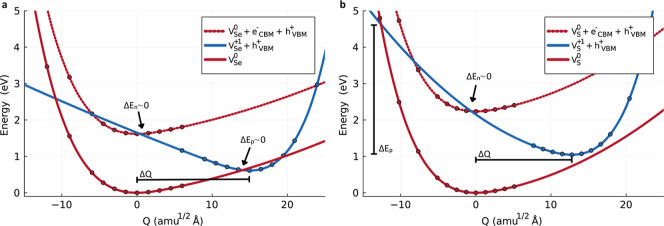 Figure 6
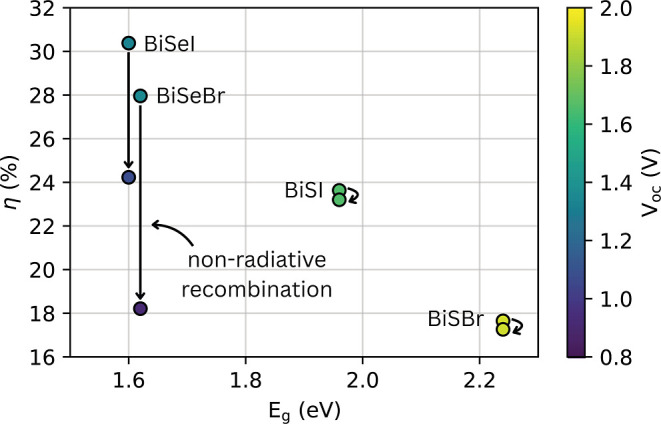 Figure 7
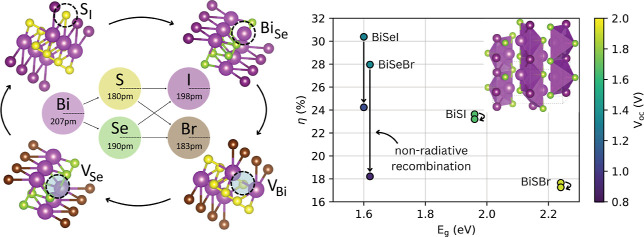 Figure 8
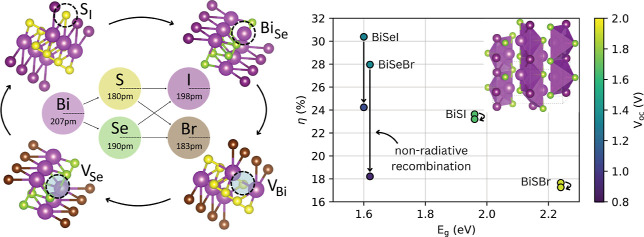 Figure 9
 Figure 10
 Figure 11
 Figure 12
 Figure 13
 Figure 14
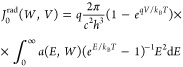 Figure 15
 Figure 16
 Figure 17
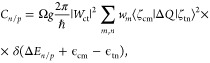 Figure 18
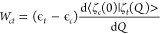 Figure 19
Peer Reviews
No public reviews on file for this paper yet. If you reviewed it on a platform where reviews are public (OpenReview, ICLR, NeurIPS, ICML), you can paste yours below so the community can read it here.
Videos
No videos yet. Explain this paper in a talk, walkthrough, or lecture? Add one.
Taxonomy
TopicsPerovskite Materials and Applications · Chalcogenide Semiconductor Thin Films · TiO2 Photocatalysis and Solar Cells