Exploring the Structural Basis of Cryptic Pocket Formation Driven by Extensive Protein Conformational Changes in Drug Targets
Martijn P. Bemelmans, Alberto Borsatto, Simone Marsili, Francesco L. Gervasio, Vineet Pande

TL;DR
The paper explores how cryptic pockets in drug targets form through large protein conformational changes and introduces a new computational method to study these dynamics.
Contribution
A novel computational method called SLICE is introduced to guide conformational sampling for cryptic pocket discovery.
Findings
Cryptic pockets form via large conformational changes driven by disrupting local intramolecular contacts.
Perturbations like benzene probes or temperature changes failed to induce cryptic pocket formation.
The SLICE method enables efficient exploration of structural plasticity around functional protein segments.
Abstract
Allosteric pockets that typically only emerge in the presence of a binder, known as cryptic pockets, can provide an avenue for drug discovery in challenging pharmaceutical targets. However, protein conformations exposing cryptic pockets are generally short-lived and can require significant structural rearrangements that complicate their discovery in experiment and simulation. Here, we investigate the structural basis of cryptic pocket formation in drug targets characterized by extensive dynamics using simulation-based methods. We find that functional protein segments can be anchored by local intramolecular contacts and that disrupting these interactions drives undirected large conformational changes to form cryptic pockets in PRMT5, PRMT6, SMARCA2, Abl1, and PI3Kα. Perturbing the contact networks with benzene probes, elevated temperature, or scaled protein–water interactions could not…
Genes, proteins, chemicals, diseases, species, mutations and cell lines named across the full text — each resolved to its canonical identifier and authoritative record.
Click any figure to enlarge with its caption.
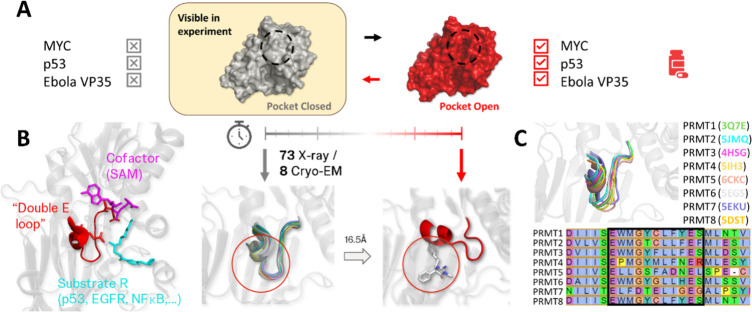 Figure 1
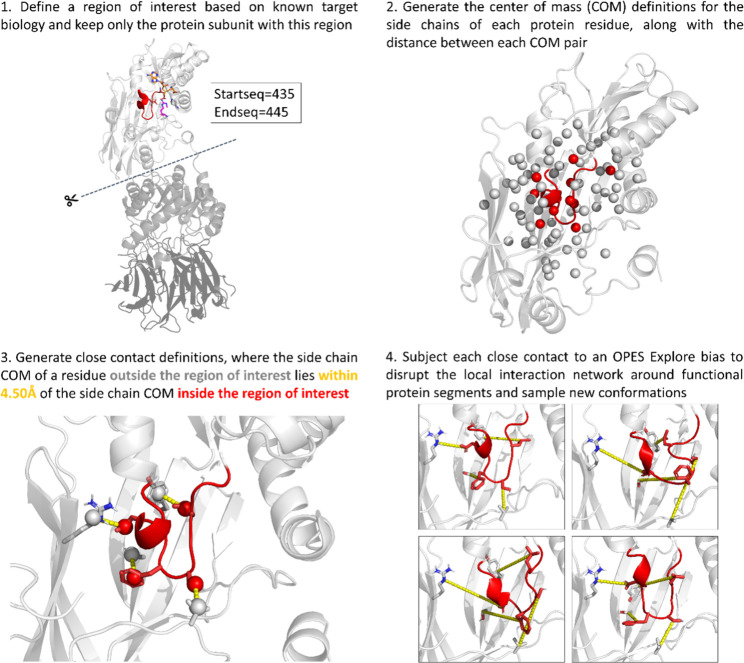 Figure 2
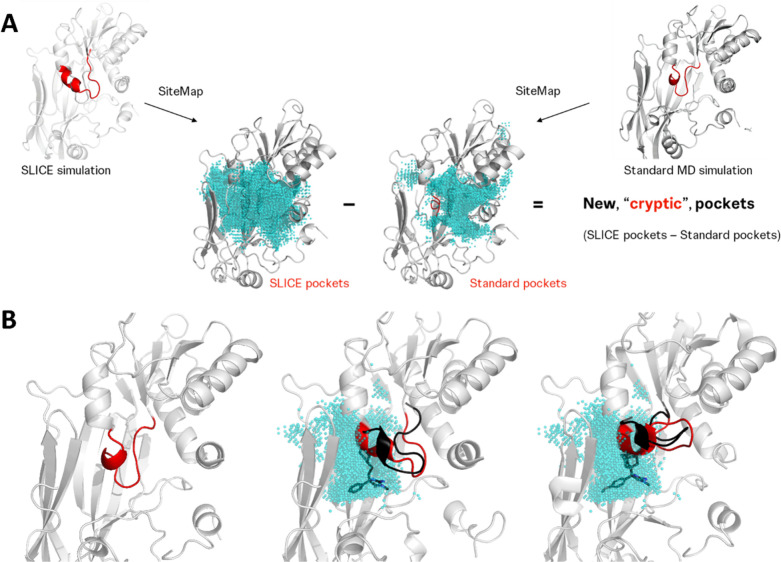 Figure 3
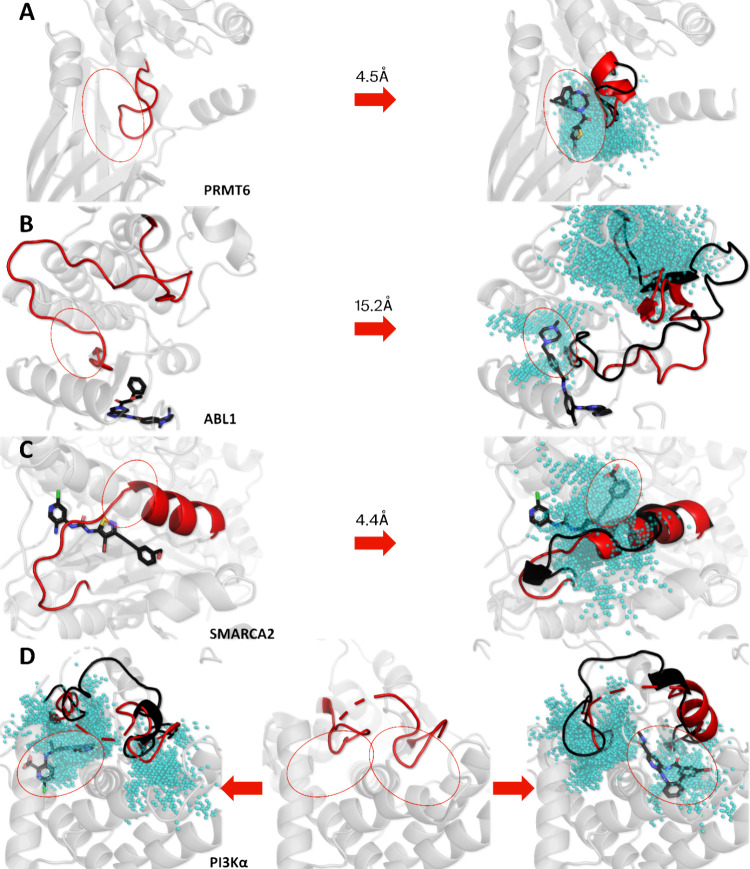 Figure 4
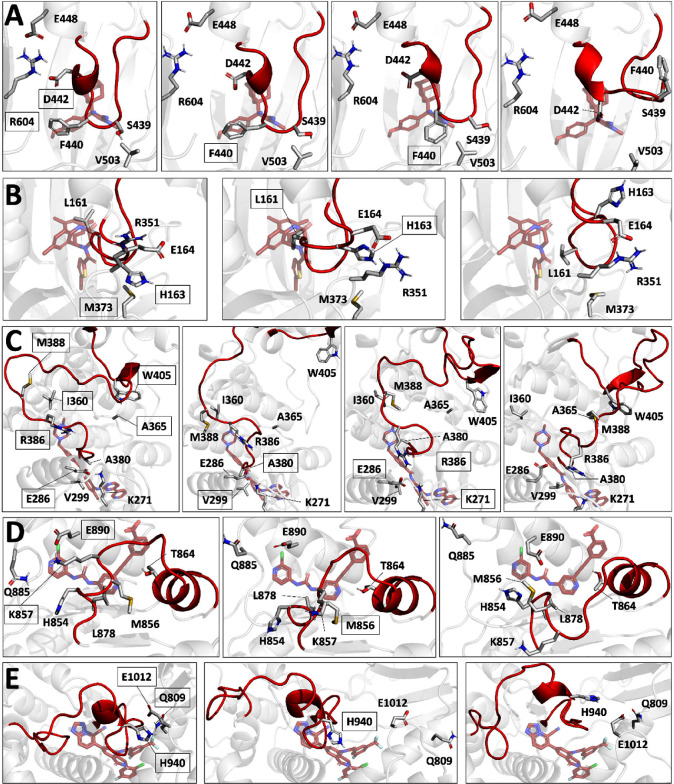 Figure 5
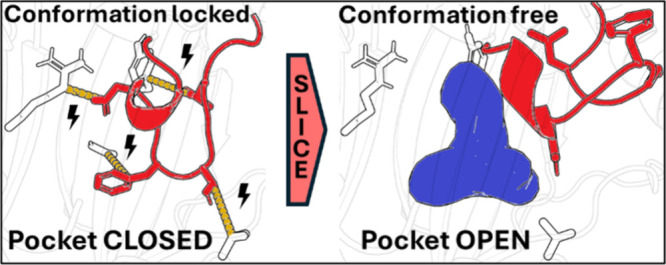 Figure 6
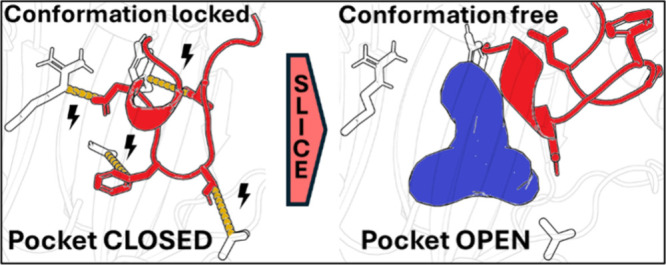 Figure 7
Peer Reviews
No public reviews on file for this paper yet. If you reviewed it on a platform where reviews are public (OpenReview, ICLR, NeurIPS, ICML), you can paste yours below so the community can read it here.
Videos
No videos yet. Explain this paper in a talk, walkthrough, or lecture? Add one.
Taxonomy
TopicsCancer-related gene regulation · Protein Degradation and Inhibitors · Protein Structure and Dynamics