Long-term outcomes of baseline grey-zone patients with HBeAg-negative chronic hepatitis B virus infection
Margarita Papatheodoridi, Sofia Paraskevopoulou, Panagiota Ioannidou, Paraskevi Fytili, Dimitrios S. Karagiannakis, Alkistis Papatheodoridi, Stratigoula Sakellariou, Evangelos Cholongitas, Ioannis Vlachogiannakos, George Papatheodoridis

TL;DR
This study shows that patients with grey-zone HBeAg-negative chronic HBV are at higher risk of liver cancer and other complications compared to typical cases, and need closer monitoring and better treatment strategies.
Contribution
The study provides real-world data on the long-term outcomes and management of grey-zone HBeAg-negative chronic HBV patients, highlighting their increased risks and treatment needs.
Findings
Grey-zone patients more frequently develop treatment indications and are treated more often than typical HBeAg-negative patients.
Grey-zone patients have lower HBsAg loss rates and higher risks of hepatocellular carcinoma and liver-related events.
They represent a large proportion of chronic HBV patients at tertiary centers and require careful monitoring.
Abstract
The optimal management and outcomes of patients with HBeAg-negative grey-zone (GZe-) chronic HBV infection remain debatable. We assessed the outcomes and real-life management of GZe-patients and compared them to patients with typical HBeAg-negative chronic infection (CIe-). We included all HBeAg-negative patients with baseline HBV DNA ≤20,000 IU/ml or HBV DNA >20,000 IU/ml and ALT <2x the upper limit of normal (ULN). Among patients without treatment indications in year 1, those with persistently normal ALT (≤ULN) and HBV DNA <2,000 IU/ml were defined as typical CIe-, and all others were classified as GZe-. Outcomes included treatment initiation, HBsAg loss, hepatocellular carcinoma (HCC), and liver-related events (LREs: HCC, decompensated cirrhosis, liver transplantation, or liver-related death). In total, 1,501 patients with a mean follow-up of 6.0 ± 4.6 years were included…
Genes, proteins, chemicals, diseases, species, mutations and cell lines named across the full text — each resolved to its canonical identifier and authoritative record.
Click any figure to enlarge with its caption.
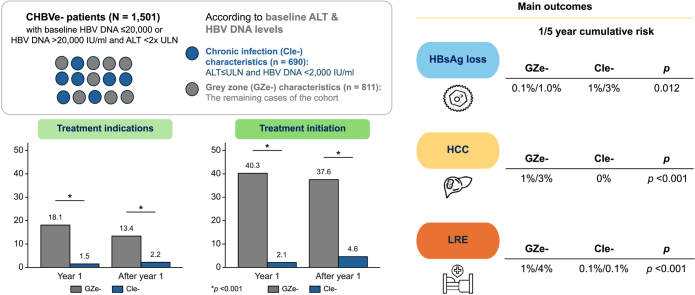 Figure 1
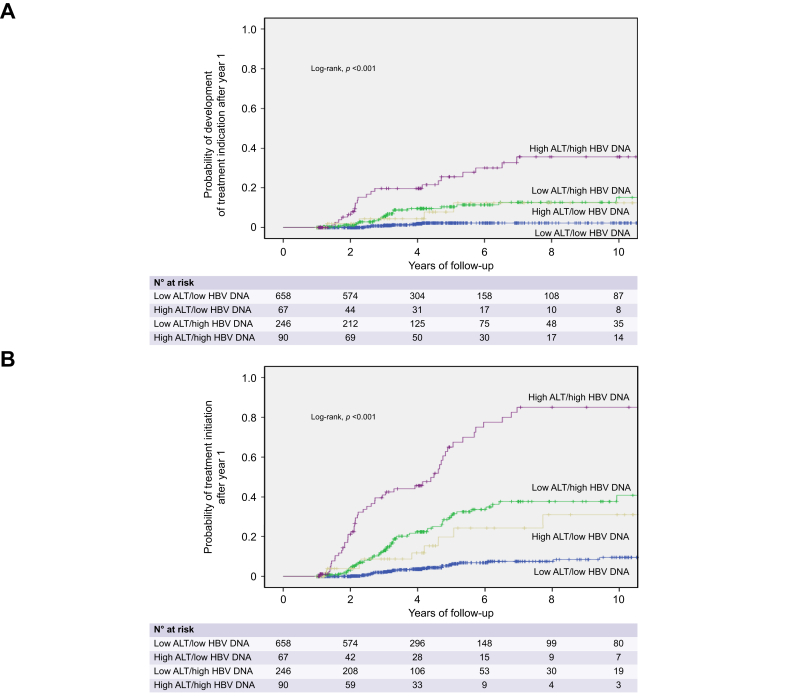 Figure 2
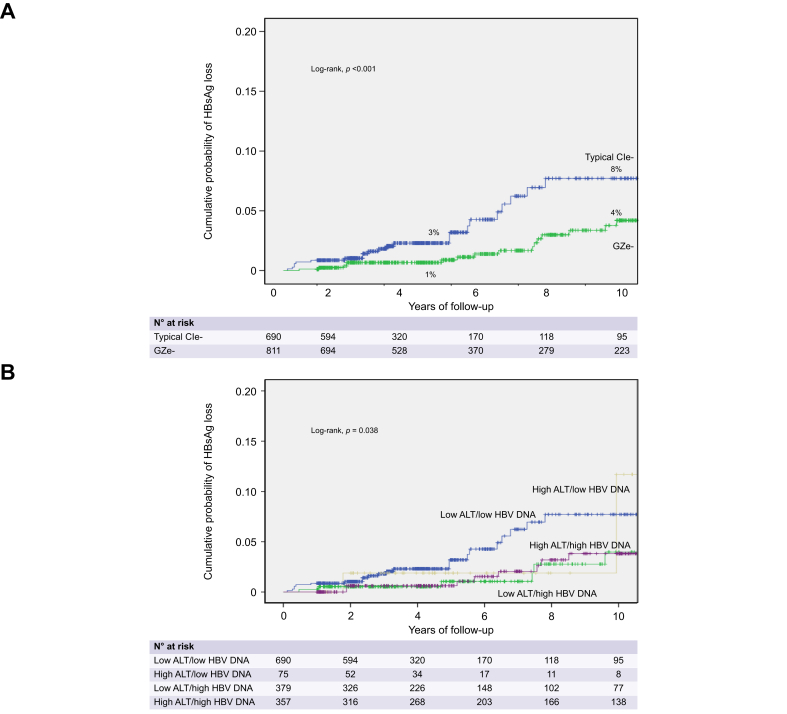 Figure 3
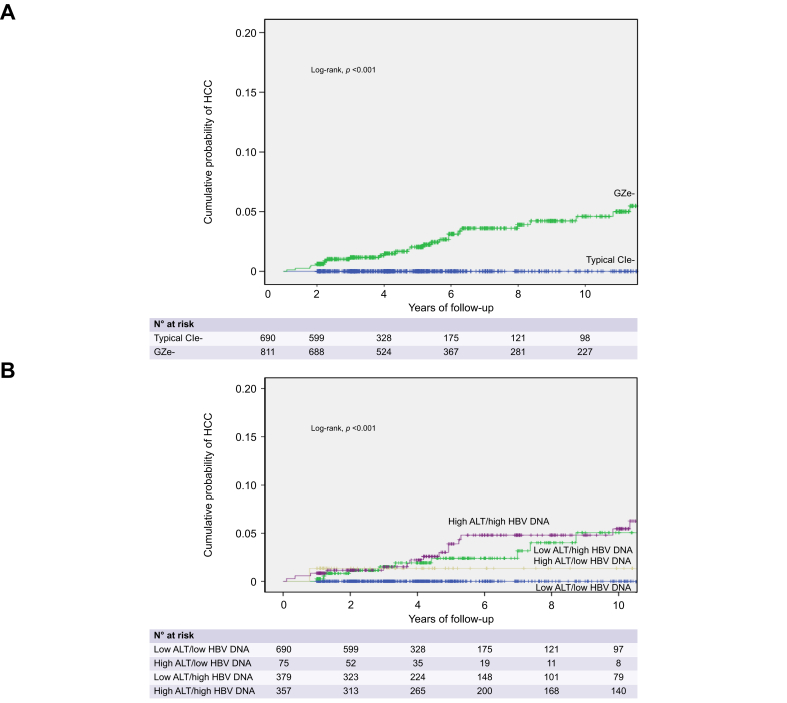 Figure 4
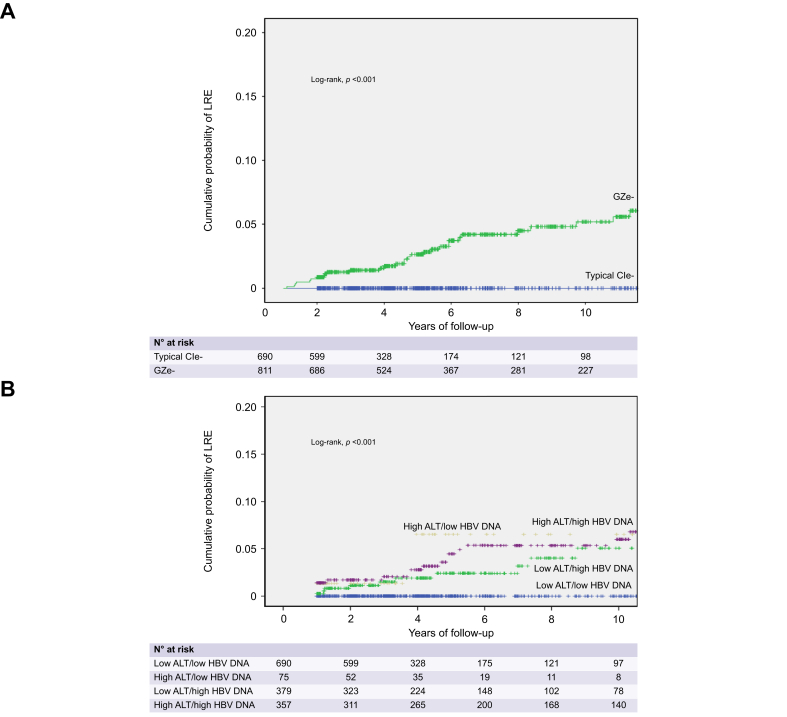 Figure 5
Peer Reviews
No public reviews on file for this paper yet. If you reviewed it on a platform where reviews are public (OpenReview, ICLR, NeurIPS, ICML), you can paste yours below so the community can read it here.
Videos
No videos yet. Explain this paper in a talk, walkthrough, or lecture? Add one.
Taxonomy
TopicsHepatitis B Virus Studies · Hepatitis Viruses Studies and Epidemiology · Hepatitis C virus research