Differences in residual lesion detection after treatment of metastatic prostate cancer based on dual-tracer PET/CT
Tengfei Li, Jianying Ma, Yaning Wang, Fei Li

TL;DR
This study compares two PET/CT imaging methods for detecting residual prostate cancer after treatment, finding that one method is more effective in identifying remaining tumors.
Contribution
The study provides new comparative evidence on the effectiveness of 68Ga-PSMA-11 versus 18F-FDG PET/CT for residual lesion detection in treated metastatic prostate cancer.
Findings
68Ga-PSMA-11 PET/CT showed higher detection rates (100%) for post-treatment primary tumors compared to 18F-FDG (92%).
68Ga-PSMA-11 had significantly higher SUVmax and TBR values for primary tumors, bone metastases, and lymph node metastases.
Combined use of both tracers could enhance detection of residual disease in treated metastatic prostate cancer patients.
Abstract
18F-fluorodeoxyglucose (18F-FDG) positron-emission tomography/computed tomography (PET/CT) and 68Ga-prostate-specific membrane antigen (68Ga-PSMA) PET/CT are widely used imaging modalities for the diagnosis and management of prostate cancer. However, comparative data on their performance in evaluating residual disease in treated metastatic prostate cancer remain limited. This study aimed to compare the efficacy of 68Ga-PSMA-11 and 18F-FDG PET/CT in detecting residual lesions after therapy in patients with metastatic prostate cancer. We retrospectively analyzed 26 metastatic prostate cancer patients who underwent both 68Ga-PSMA-11 PET/CT and 18F-FDG PET/CT at Nanyang Central Hospital between January 2023 and June 2025. A composite reference standard incorporating histopathology (when available) and follow-up contrast-enhanced CT or MRI was used to confirm metastatic lesions.…
Genes, proteins, chemicals, diseases, species, mutations and cell lines named across the full text — each resolved to its canonical identifier and authoritative record.
Click any figure to enlarge with its caption.
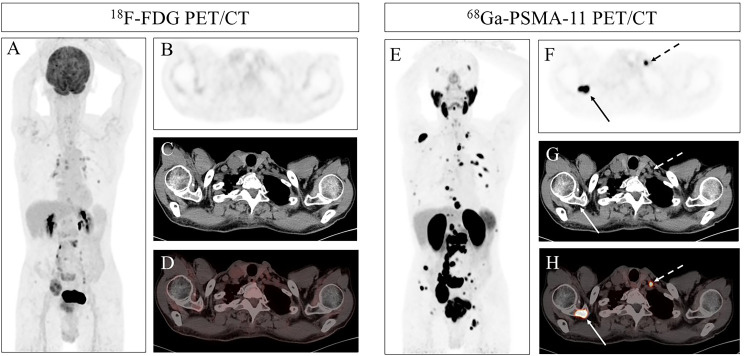 Figure 1
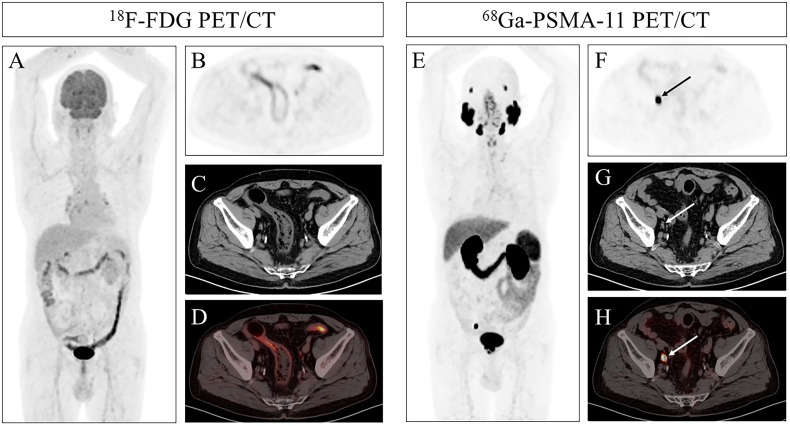 Figure 2
Peer Reviews
No public reviews on file for this paper yet. If you reviewed it on a platform where reviews are public (OpenReview, ICLR, NeurIPS, ICML), you can paste yours below so the community can read it here.
Videos
No videos yet. Explain this paper in a talk, walkthrough, or lecture? Add one.
Taxonomy
TopicsProstate Cancer Treatment and Research · Medical Imaging Techniques and Applications · Radiopharmaceutical Chemistry and Applications