Systematic and Quantitative Investigation of Newly Synthesized Proteins Reveals Distinct Ion Homeostasis and Mitochondrial Changes between Cuproptosis and Ferroptosis in Human Cells
Yue Wu, Longping Fu, Xing Xu, Pak San Chan, Ronghu Wu

TL;DR
This study compares two types of metal-dependent cell death, cuproptosis and ferroptosis, by analyzing newly synthesized proteins to reveal differences in ion balance and mitochondrial changes.
Contribution
The study provides a systematic and quantitative comparison of newly synthesized proteins in cuproptosis and ferroptosis, uncovering distinct ion homeostasis and mitochondrial responses.
Findings
Cuproptosis involves elevated zinc ion homeostasis and ubiquitin-mediated mitophagy for damaged mitochondria.
Ferroptosis is linked to increased calcium-binding proteins and reduced RNA splicing-related proteins.
Both cell death types share mitochondrial dysfunction and suppressed gene expression.
Abstract
Dysregulated metal ion metabolism and its connection to cell death attract great attention in cell biology and biomedicine. There are two major types of known metal ion-induced cell death so far. Well-documented ferroptosis is an iron-dependent form of cell death driven by lipid peroxidation, and the recently discovered cuproptosis is copper-dependent cell death, possibly related to mitochondrial damage and cell stress. Although some studies have suggested a possible link between cuproptosis and ferroptosis, the cellular responses and mechanistic differences between these two forms of metal ion-dependent cell death remain to be explored. Here, we systematically and quantitatively analyzed newly synthesized proteins (NSPs), which reflect rapid changes in gene expression, in cells undergoing ferroptosis and cuproptosis through integrating metabolic labeling, bioorthogonal chemistry, and…
Genes, proteins, chemicals, diseases, species, mutations and cell lines named across the full text — each resolved to its canonical identifier and authoritative record.
Click any figure to enlarge with its caption.
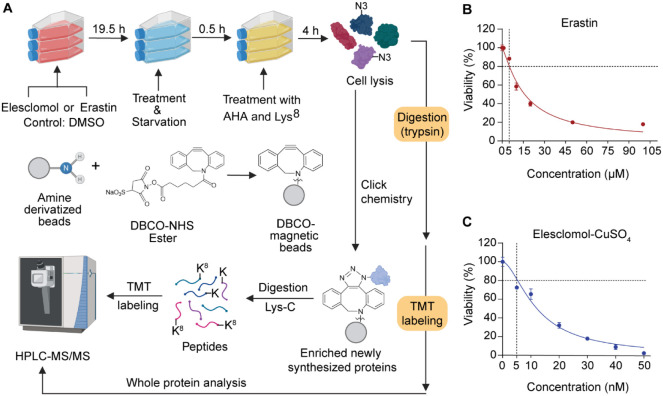 Figure 1
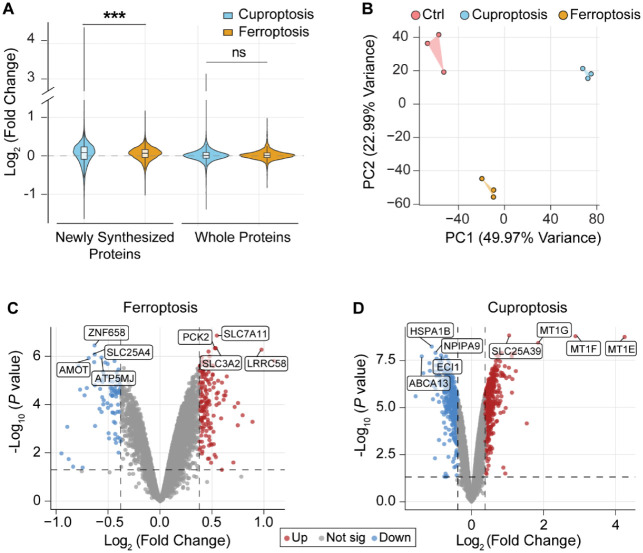 Figure 2
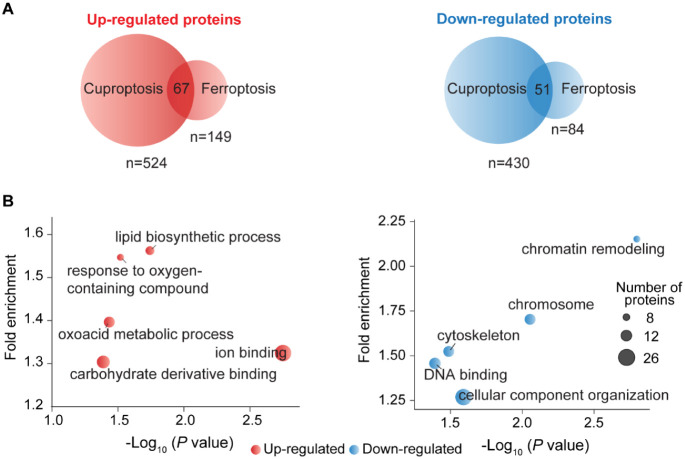 Figure 3
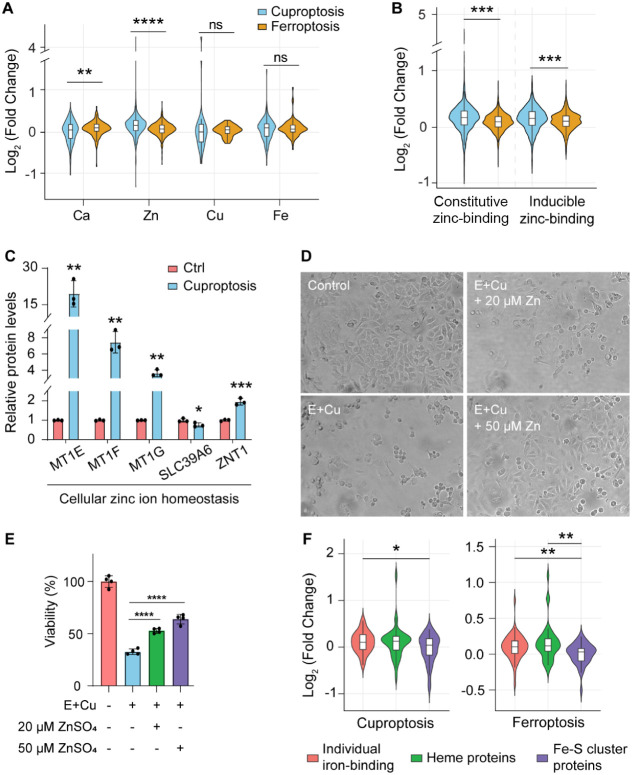 Figure 4
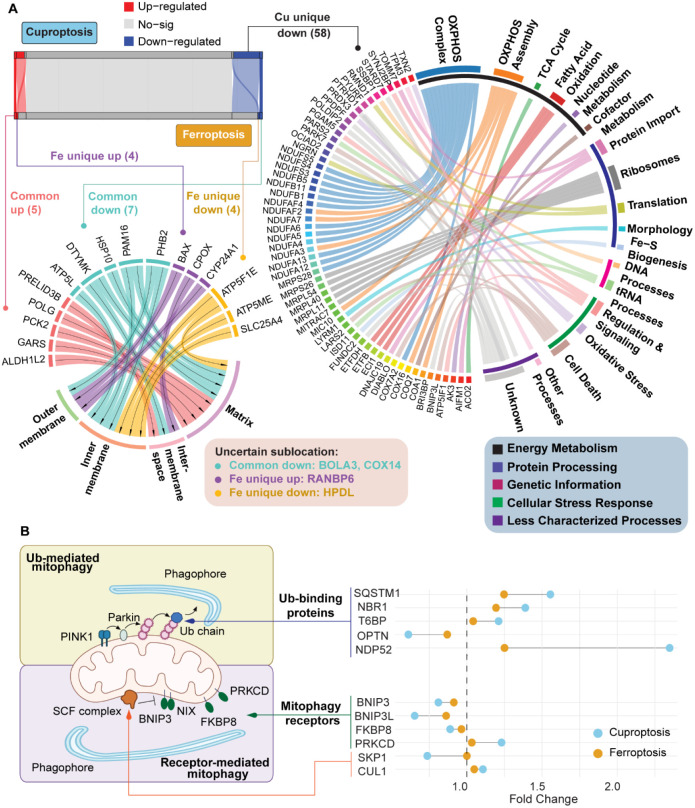 Figure 5
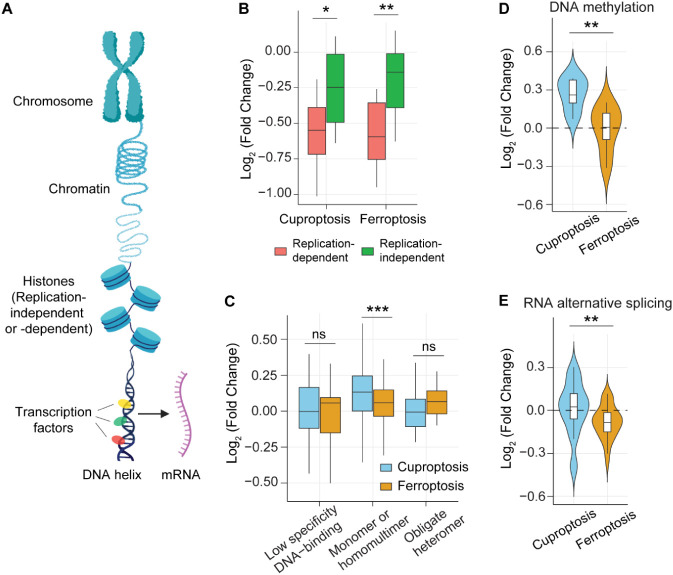 Figure 6
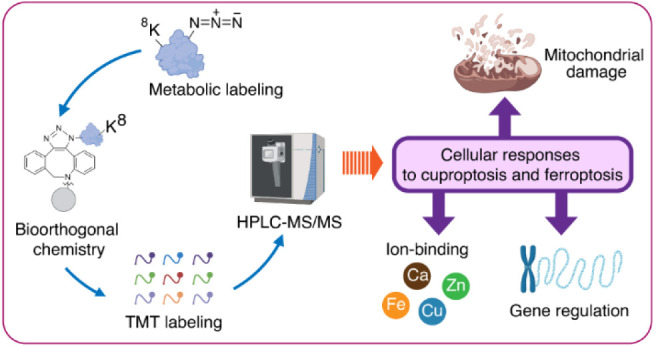 Figure 7
 Figure 8
Peer Reviews
No public reviews on file for this paper yet. If you reviewed it on a platform where reviews are public (OpenReview, ICLR, NeurIPS, ICML), you can paste yours below so the community can read it here.
Videos
No videos yet. Explain this paper in a talk, walkthrough, or lecture? Add one.
Taxonomy
TopicsFerroptosis and cancer prognosis · Trace Elements in Health · Machine Learning in Bioinformatics