Intrinsic N‑Terminal Reactivity and Improved Analysis of DSSO-Carbamate and Carbamate-Based Cross-Linkers
Alessio Di Ianni, Thomas Fabian Leischner, Bogdan-Razvan Brutiu, Iakovos Saridakis, Andrea Di Ianni, Hendrik Krolle, Christian H. Ihling, Saad Shaaban, Nuno Maulide, Andrea Sinz, Claudio Iacobucci

TL;DR
This paper introduces a new type of cross-linker for mass spectrometry that reacts more efficiently with protein N-termini, improving structural analysis.
Contribution
The study introduces and validates DSSO-carbamate, a new cross-linker with enhanced N-terminal reactivity and stability for XL-MS.
Findings
DSSO-carbamate shows improved cross-linking efficiency due to enhanced stability compared to traditional NHS esters.
Proteome-wide analysis confirms higher N-terminal cross-linking propensity with carbamate-based reagents.
N-terminal reactivity of carbamates is validated using α-synuclein and bovine serum albumin.
Abstract
Cross-linking mass spectrometry (XL-MS) has emerged as a powerful approach for probing protein structure and conformational dynamics. Conventional cross-linkers typically contain two N-hydroxysuccinimide (NHS) ester groups that primarily target lysine residues. Here, we report the optimization of the in-solution reactivity of disuccinimidyl sulfoxide carbamate (DSSO-carbamate), an analogue of DSSO in which the two NHS ester groups are replaced by NHS carbamates. The enhanced stability of the carbamate functionality reduces the degradation of DSSO through retro-ene sulfoxide elimination under standard XL-MS buffer conditions, thereby improving cross-linking efficiency. We further characterized the gas-phase dissociation behavior of DSSO-carbamate and optimized the collision energy (CE) parameters for automated data analysis with XL-MS search engines. Mapping of cross-linking sites for…
Genes, proteins, chemicals, diseases, species, mutations and cell lines named across the full text — each resolved to its canonical identifier and authoritative record.
Click any figure to enlarge with its caption.
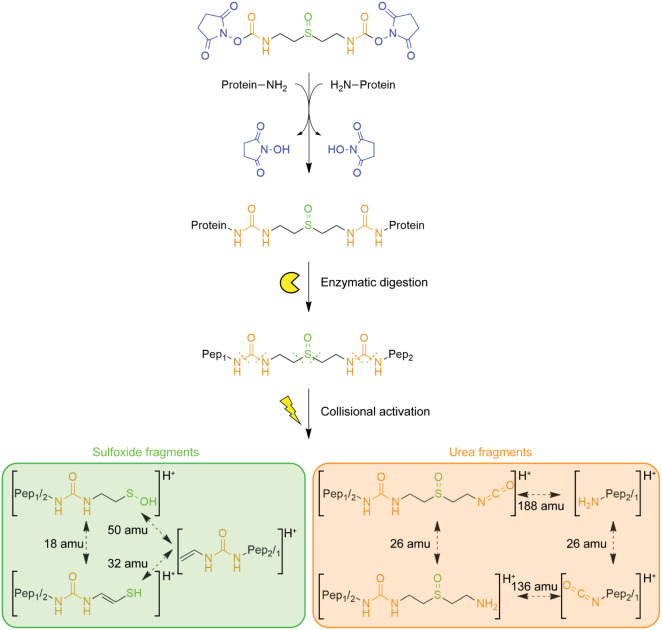 Figure 1
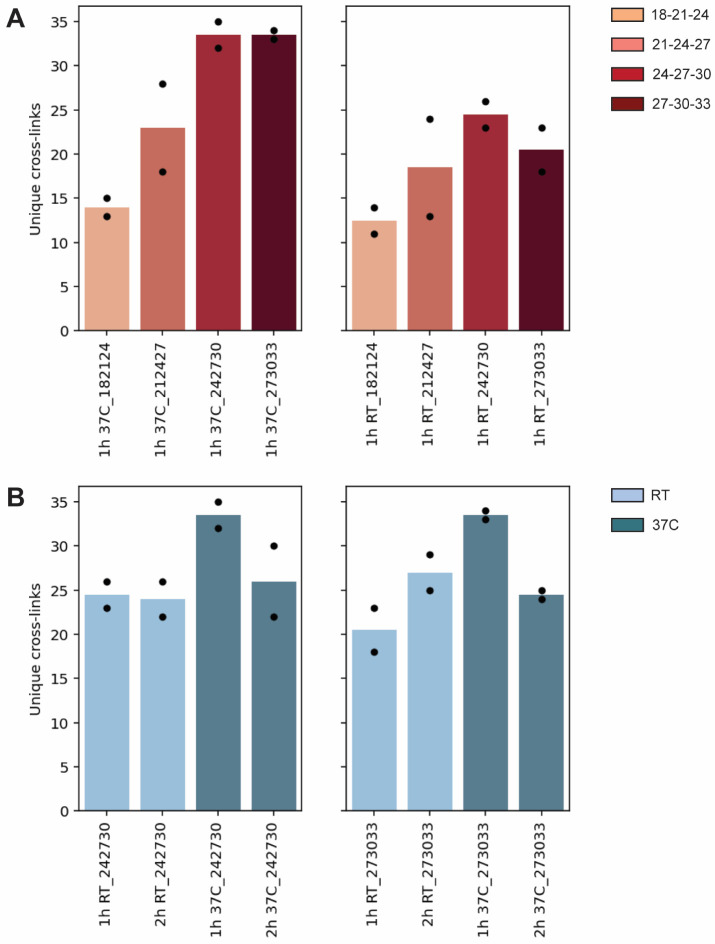 Figure 2
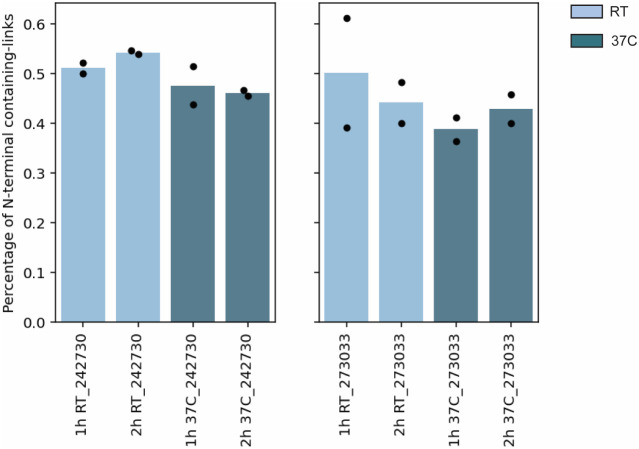 Figure 3
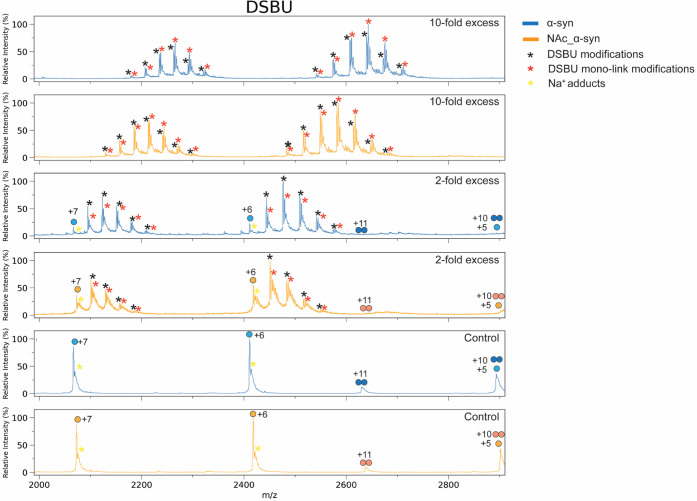 Figure 4
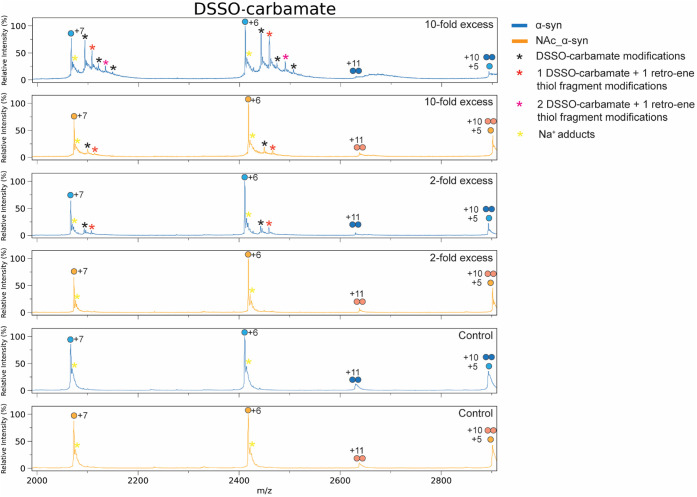 Figure 5
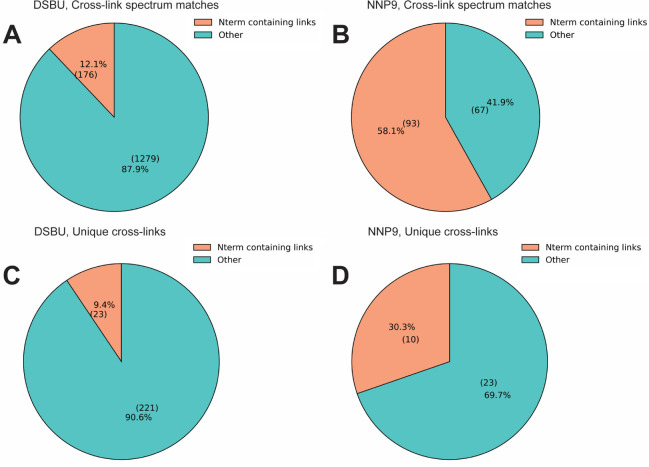 Figure 6
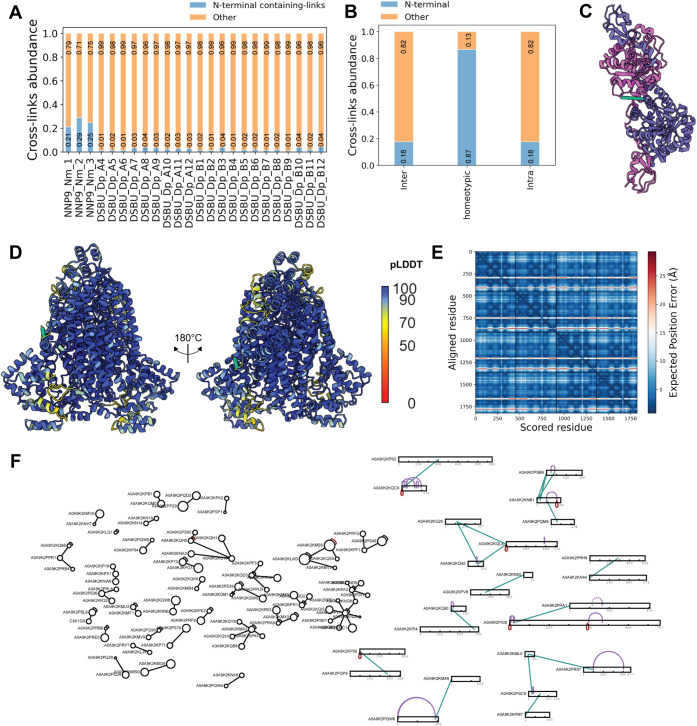 Figure 7
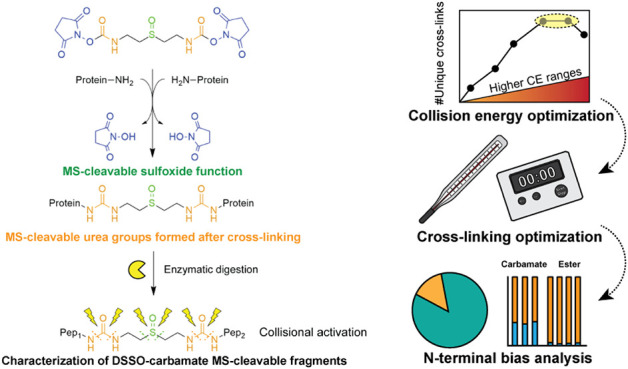 Figure 8
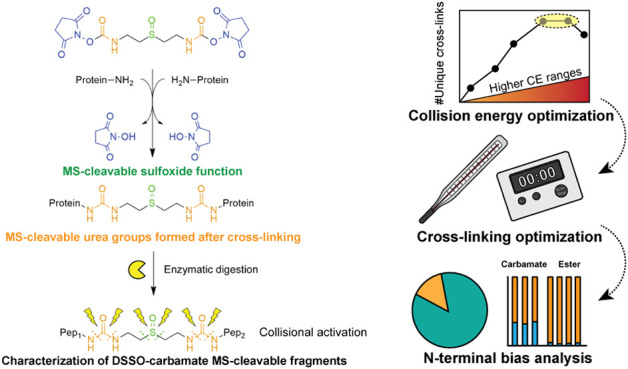 Figure 9
Peer Reviews
No public reviews on file for this paper yet. If you reviewed it on a platform where reviews are public (OpenReview, ICLR, NeurIPS, ICML), you can paste yours below so the community can read it here.
Videos
No videos yet. Explain this paper in a talk, walkthrough, or lecture? Add one.
Taxonomy
TopicsMass Spectrometry Techniques and Applications · Advanced Proteomics Techniques and Applications · Metabolomics and Mass Spectrometry Studies