Comparative Evaluation of Carbohydrate, Amino Acid, and Ionic Liquid Excipients for Flavivirus Vaccine Stabilization
Muhammadiqboli Musozoda, Lauren M. Paul, Chayah A. Boyd, Zachary J. Metott, David S.-J. Jang, Patrick C. Hillesheim, Scott F. Michael, Arsalan Mirjafari

TL;DR
This study compares different additives to stabilize flavivirus vaccines, finding that combinations of trehalose and histidine work best.
Contribution
The novel finding is that trehalose-histidine combinations significantly outperform other excipients in stabilizing flavivirus vaccines.
Findings
Trehalose and sucrose provided the greatest stabilization among carbohydrates.
Histidine was the most effective amino acid for stabilization.
Trehalose-histidine combinations preserved viral infectivity up to 19.4-fold better than buffer controls.
Abstract
Live-attenuated flavivirus vaccines (yellow fever, dengue, and Japanese encephalitis) exhibit poor thermal stability in liquid formulations, requiring lyophilization and storage between 2 and 8 °C to maintain potency. We evaluated carbohydrates, amino acids, and choline-based ionic liquids as preservatives for vaccine-like flavivirus. Among the carbohydrates tested, trehalose and sucrose provided greatest stabilization, while histidine demonstrated the strongest stabilizing effect among amino acids. Trehalose-histidine and sucrose-histidine combinations produced synergistic effects, preserving viral infectivity more effectively than individual components. Choline chloride and choline acetate formulations, despite their established efficacy in protein stabilization, demonstrated limited enhancement of flavivirus thermal stability compared to carbohydrate-amino acid formulations.…
Genes, proteins, chemicals, diseases, species, mutations and cell lines named across the full text — each resolved to its canonical identifier and authoritative record.
Click any figure to enlarge with its caption.
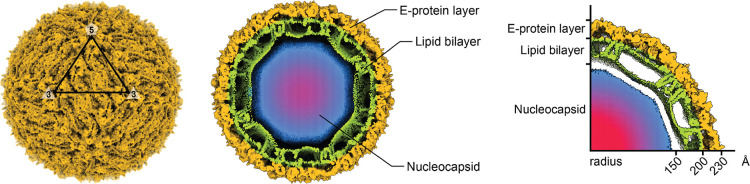 Figure 1
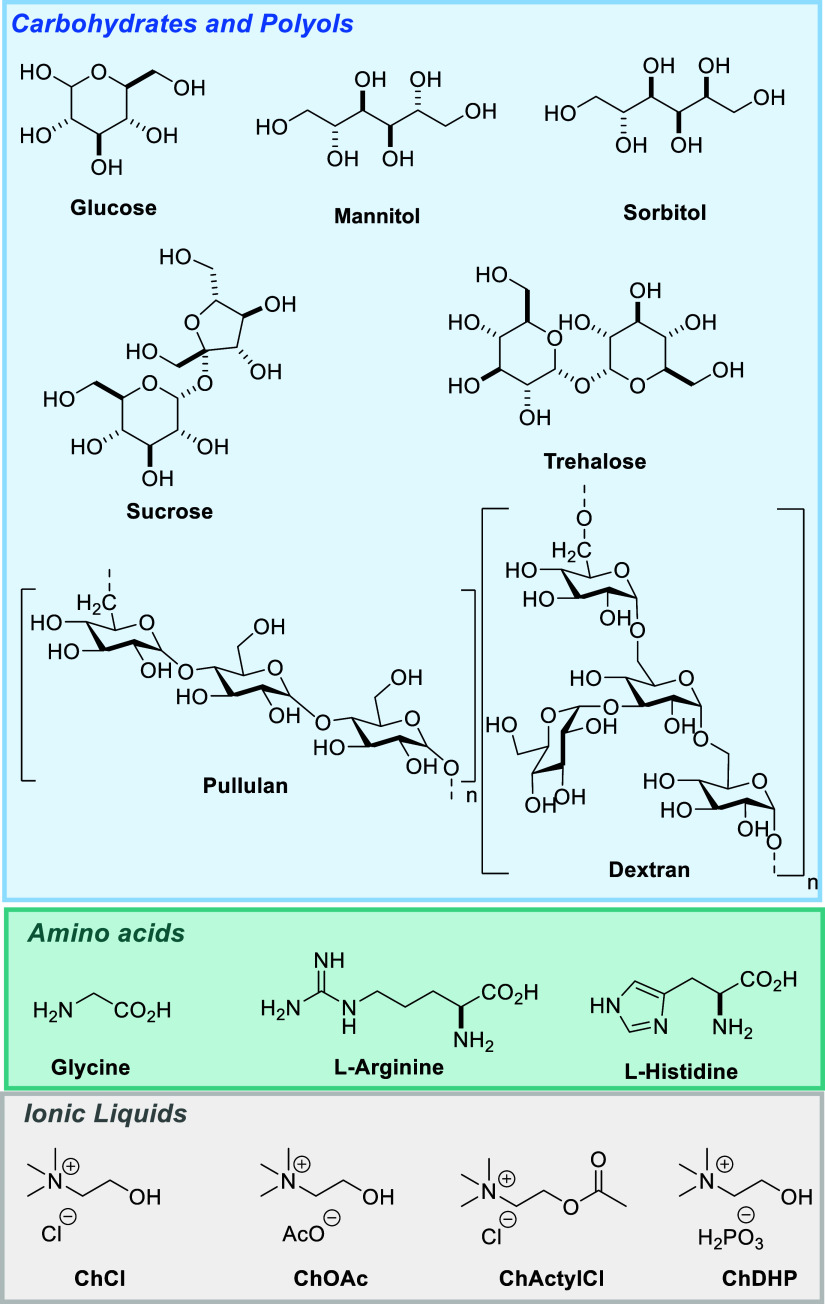 Figure 2
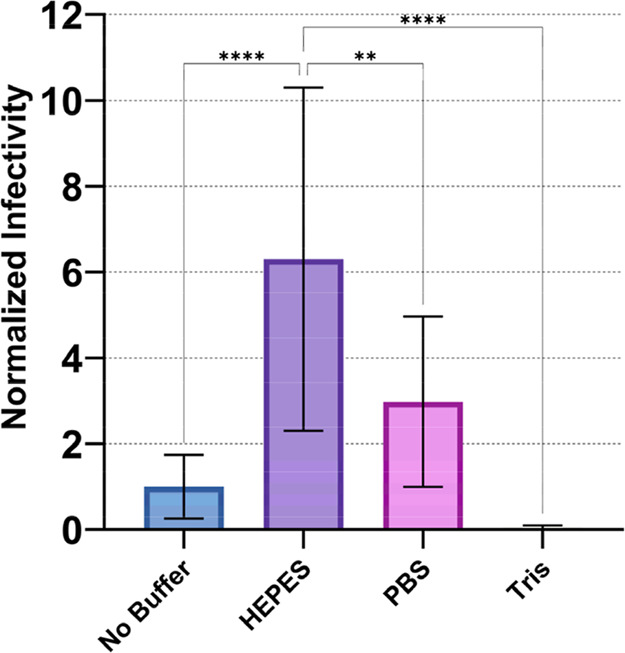 Figure 3
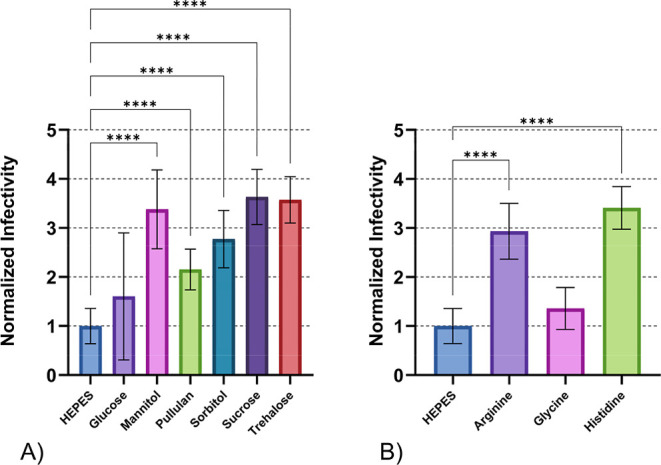 Figure 4
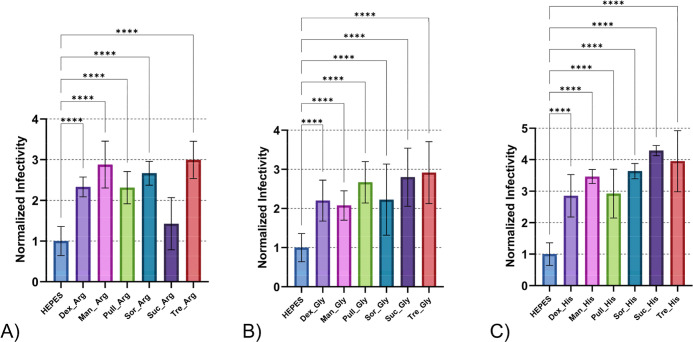 Figure 5
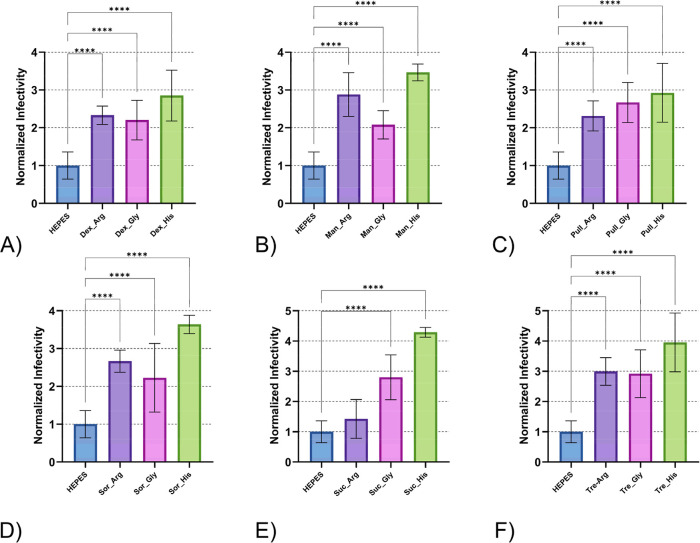 Figure 6
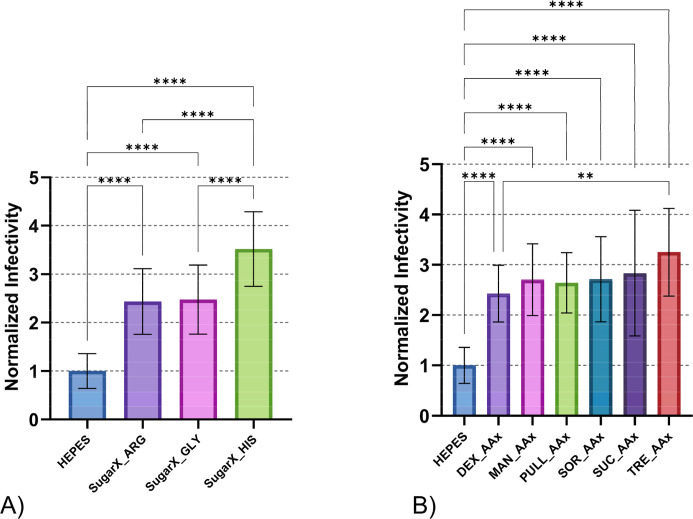 Figure 7
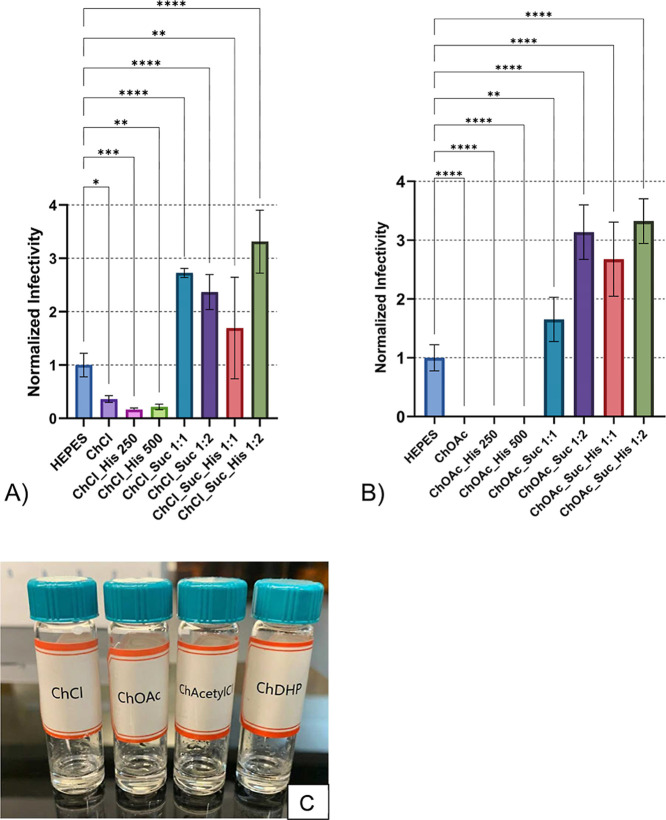 Figure 8
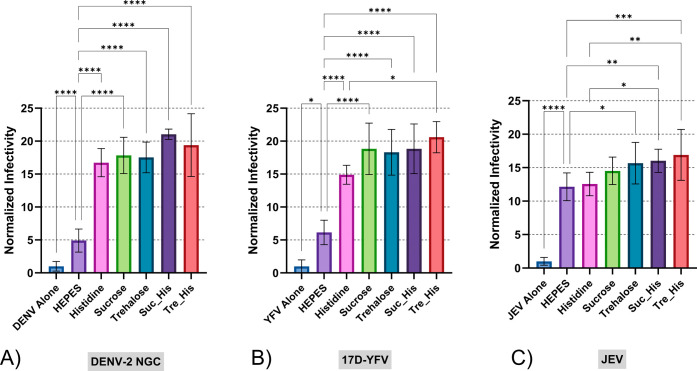 Figure 9
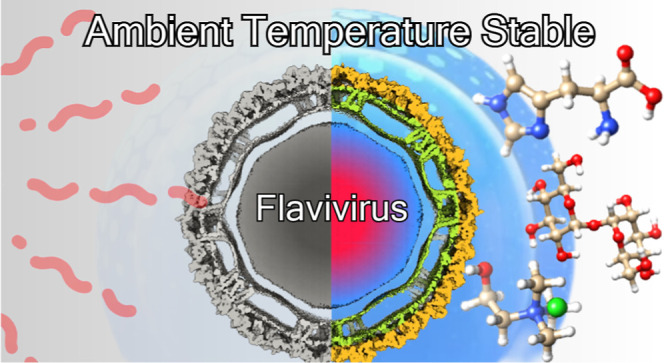 Figure 10
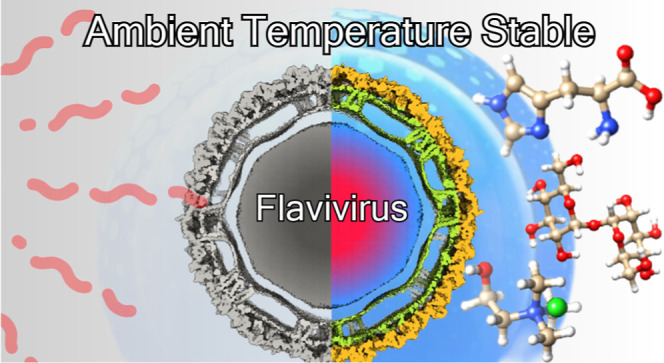 Figure 11
Peer Reviews
No public reviews on file for this paper yet. If you reviewed it on a platform where reviews are public (OpenReview, ICLR, NeurIPS, ICML), you can paste yours below so the community can read it here.
Videos
No videos yet. Explain this paper in a talk, walkthrough, or lecture? Add one.
Taxonomy
TopicsMosquito-borne diseases and control · Ionic liquids properties and applications · Biological Research and Disease Studies