Enhanced ORR Activity of Modified Recycled Graphite-Based Anode Materials
Sukanya Sukanya, Kimia Hoseinzade, Frederik Bettels, Lin Zhang, René Wilhelm

TL;DR
This paper shows how to recycle old battery graphite into a metal-free catalyst for oxygen reduction reactions, improving energy device efficiency.
Contribution
A circular-economy strategy is introduced to upcycle spent lithium-ion battery graphite into a tunable, metal-free ORR catalyst.
Findings
Acid activation of graphite increases defect density and ORR activity, achieving a half-wave potential of 0.782 V.
Functionalization with NDI-ASP improves kinetic current density and charge-transfer characteristics compared to acid-treated graphite.
XPS and SEM/EDX confirm successful incorporation of nitrogen- and phosphorus-containing species on the graphite surface.
Abstract
Addressing the kinetic limitations of the oxygen reduction reaction (ORR) is essential for improving the efficiency of electrochemical energy-conversion devices such as fuel cells and metal–air batteries. Here, we demonstrate a circular-economy–oriented upcycling strategy for transforming end-of-life lithium-ion battery graphite anodes into metal-free ORR catalysts through oxidative activation and targeted molecular functionalization. Spent graphite anode material was activated by using H2SO4/HNO3 mixtures to increase defect density and surface reactivity, followed by surface functionalization with BPDI-OH-Cl, NDI-alendronic acid (NDI-ALEN), and NDI-aspartic acid (NDI-ASP). Acid activation significantly enhanced apparent ORR activity, yielding the highest half-wave potential (0.782 V for the 8 M acid-treated material), attributed to increased defect density and improved electrolyte…
Genes, proteins, chemicals, diseases, species, mutations and cell lines named across the full text — each resolved to its canonical identifier and authoritative record.
Click any figure to enlarge with its caption.
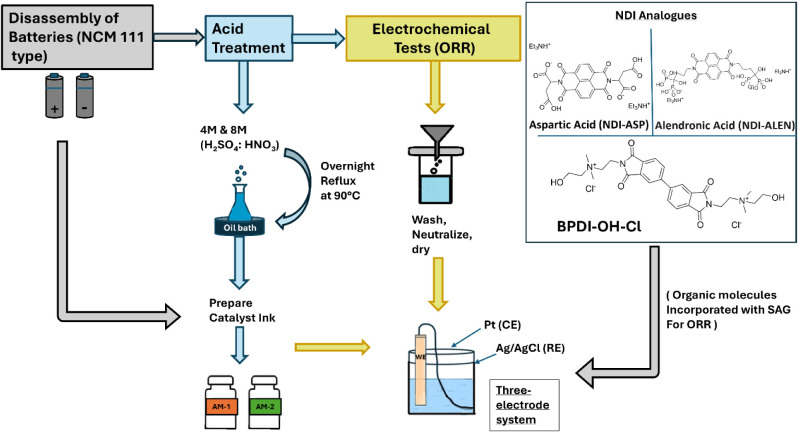 Figure 1
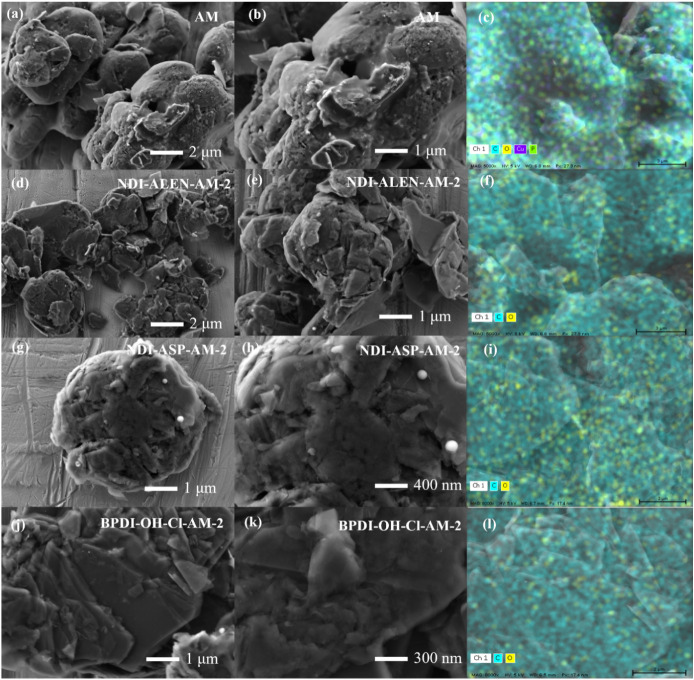 Figure 2
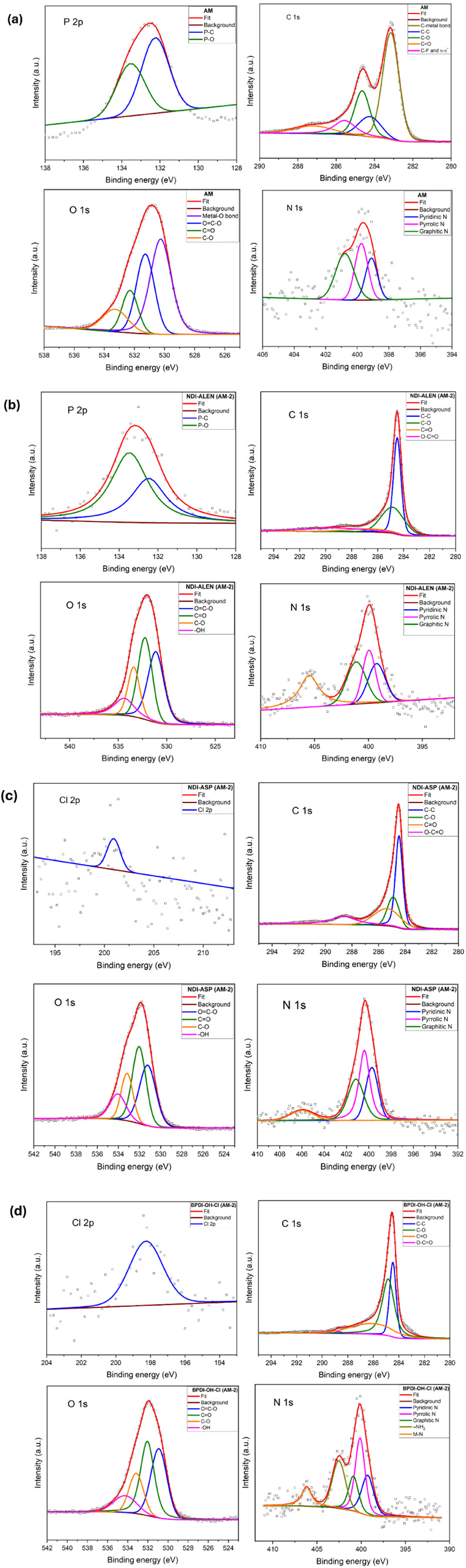 Figure 3
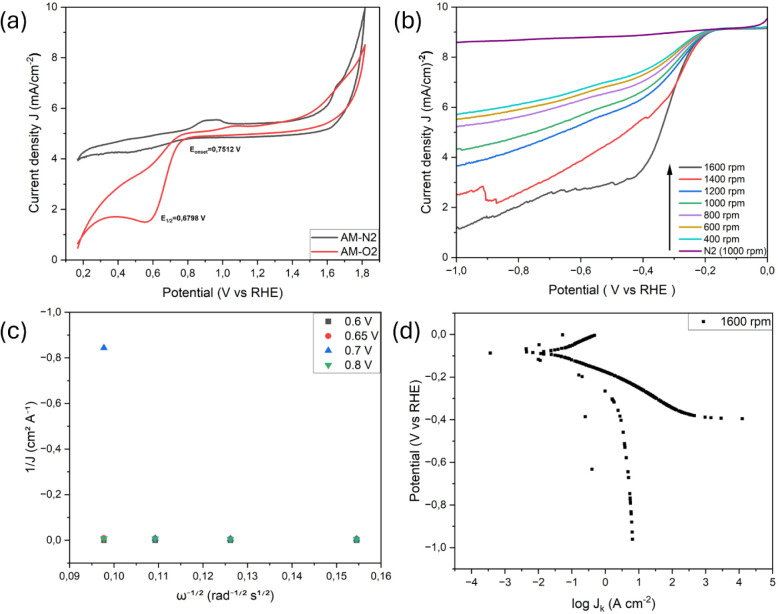 Figure 4
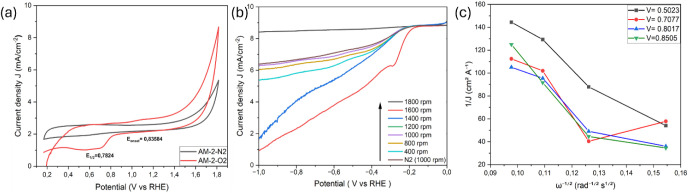 Figure 5
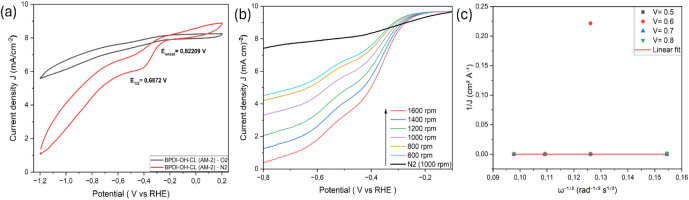 Figure 6
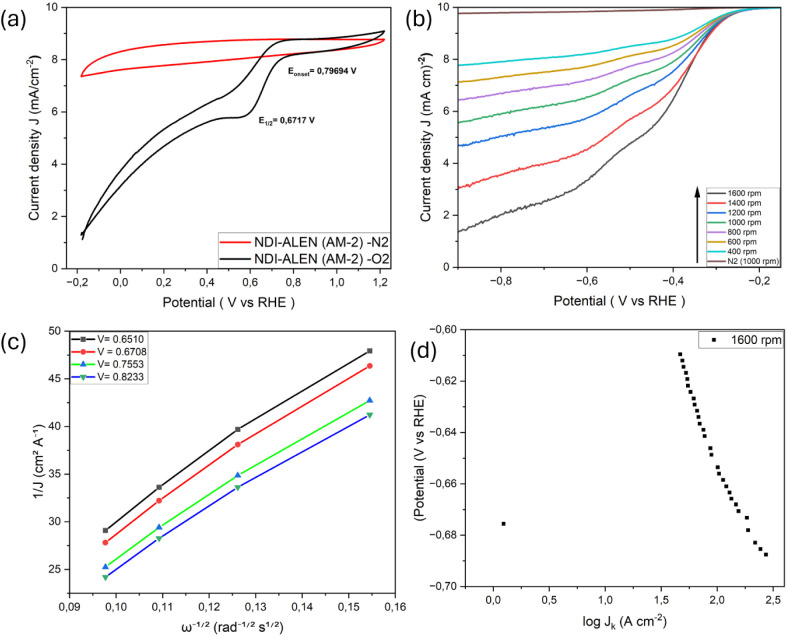 Figure 7
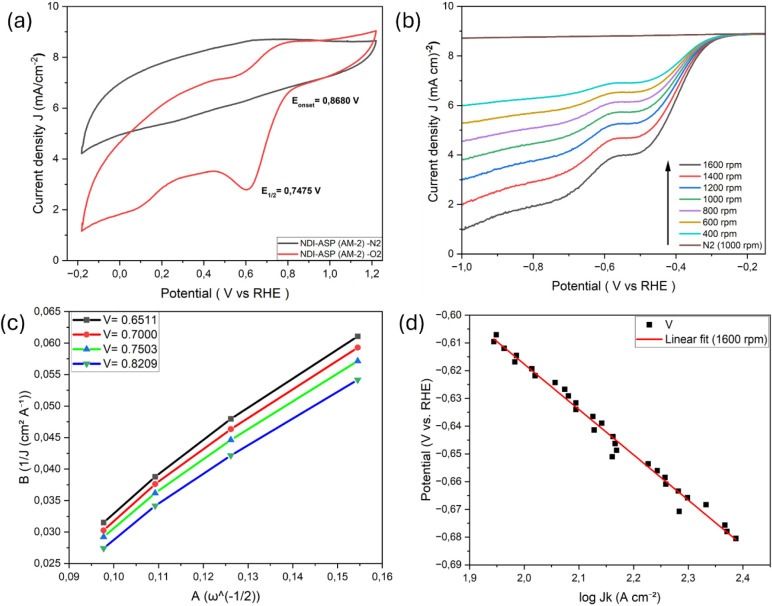 Figure 8
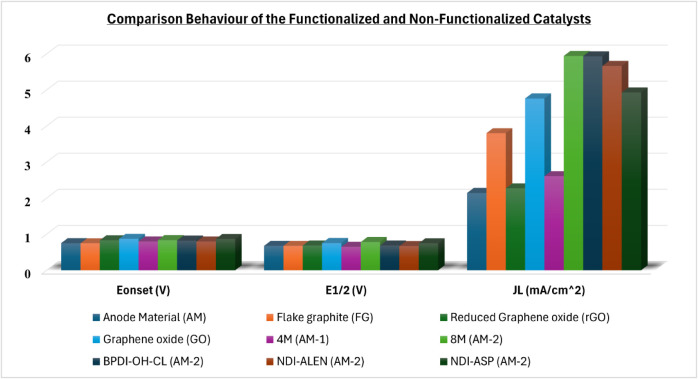 Figure 9
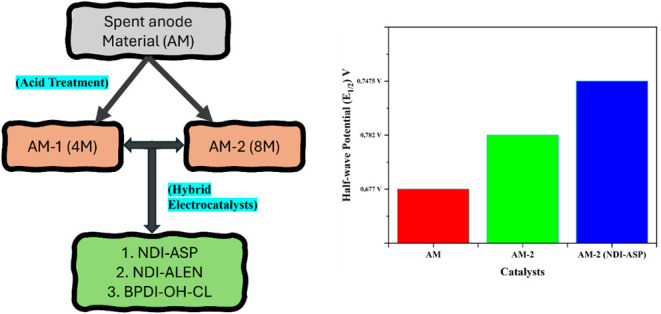 Figure 10
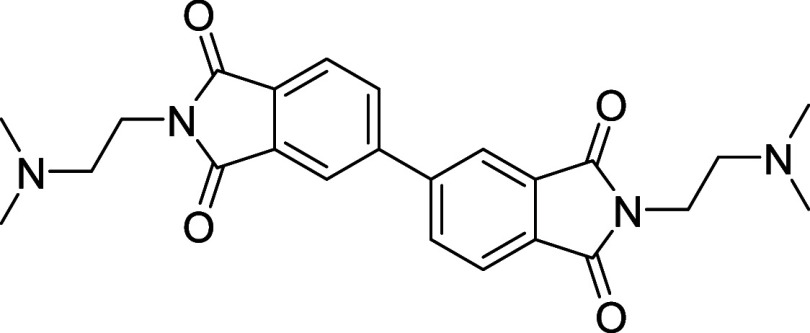 Figure 11
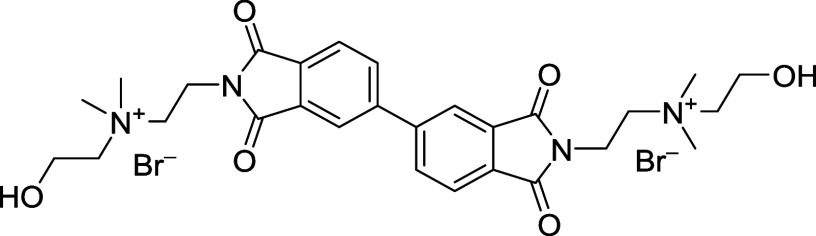 Figure 12
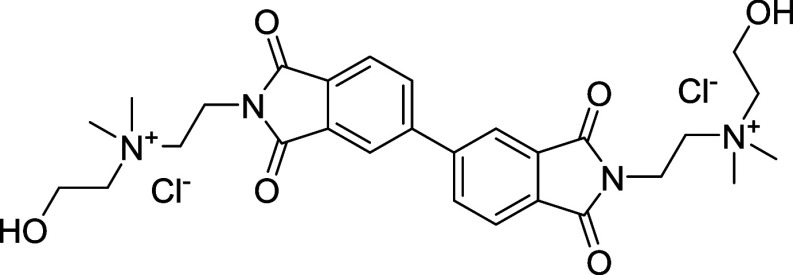 Figure 13
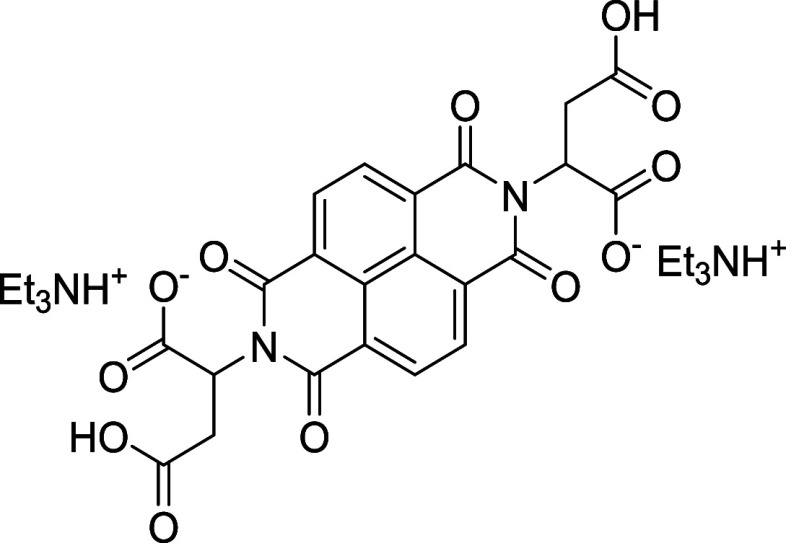 Figure 14
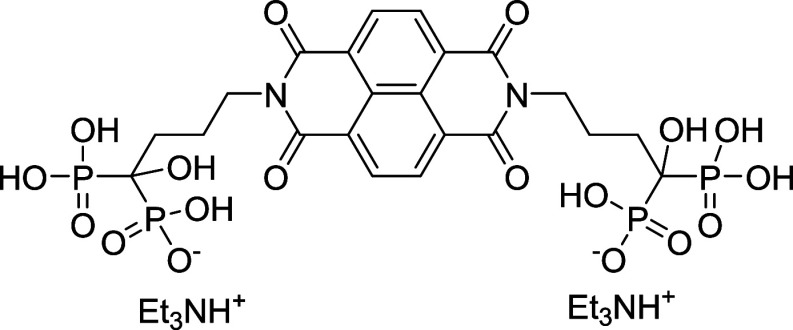 Figure 15
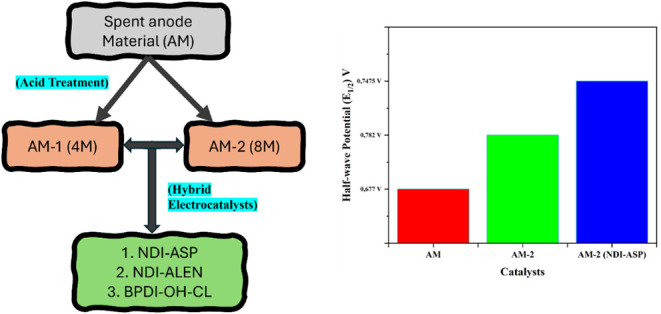 Figure 16
 Figure 17
Peer Reviews
No public reviews on file for this paper yet. If you reviewed it on a platform where reviews are public (OpenReview, ICLR, NeurIPS, ICML), you can paste yours below so the community can read it here.
Videos
No videos yet. Explain this paper in a talk, walkthrough, or lecture? Add one.
Taxonomy
TopicsAdvancements in Battery Materials · Advanced Battery Materials and Technologies · Fiber-reinforced polymer composites