Neutrophil extracellular traps in rheumatoid arthritis: biomarkers, drivers, and emerging therapeutic targets
Sangeeta Kumari, Katerina Pardali, Eric Meldrum, Christian Lood, Maarten Kraan

TL;DR
Neutrophil extracellular traps (NETs) are linked to rheumatoid arthritis (RA), acting as both a biomarker for disease activity and a potential target for new treatments.
Contribution
This paper reviews the role of NETs in RA, highlighting their dual function as biomarkers and drivers of disease progression.
Findings
Elevated NET components correlate with RA disease activity and treatment response.
Biological therapies reduce NET markers, while persistent NETs are linked to poor outcomes.
NETs contribute to autoantibody formation, Th17 activation, and bone destruction in RA.
Abstract
Neutrophil extracellular traps (NETs) are web-like structures composed of DNA, histones, and granule proteins released by activated neutrophils. While originally characterized as part of the innate immune response, NETs are now recognized as contributors to the pathogenesis of immune-mediated inflammatory diseases, including rheumatoid arthritis (RA). This review summarizes current clinical evidence linking NETs to RA, with a focus on their utility as biomarkers for disease activity and treatment response and their potential mechanistic role in disease progression. Elevated levels of NET components, such as myeloperoxidase–DNA complexes, citrullinated histones, and calprotectin, have been reported in RA and correlate with inflammatory markers and clinical disease activity scores. Treatment with biological disease-modifying anti-rheumatic drugs, including tumour necrosis factor alpha and…
Genes, proteins, chemicals, diseases, species, mutations and cell lines named across the full text — each resolved to its canonical identifier and authoritative record.
Click any figure to enlarge with its caption.
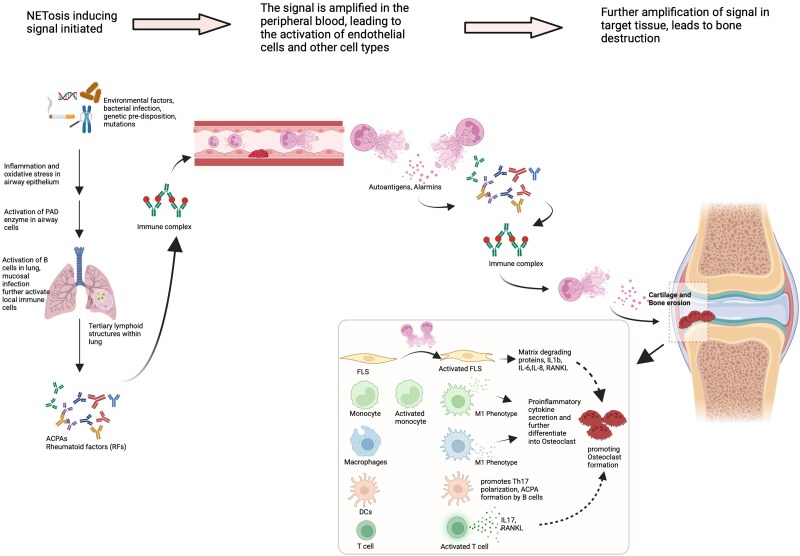 Figure 1
 Figure 2
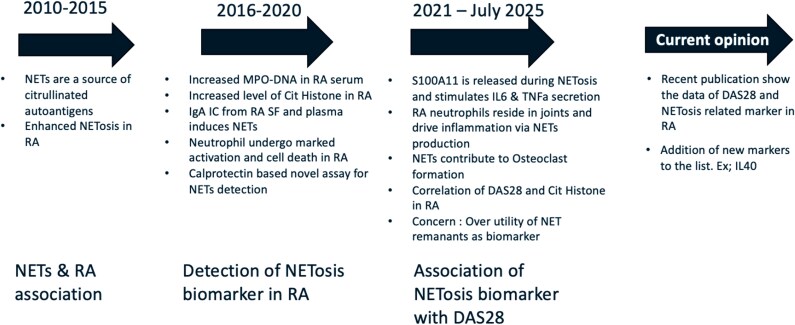 Figure 3
Peer Reviews
No public reviews on file for this paper yet. If you reviewed it on a platform where reviews are public (OpenReview, ICLR, NeurIPS, ICML), you can paste yours below so the community can read it here.
Videos
No videos yet. Explain this paper in a talk, walkthrough, or lecture? Add one.
Taxonomy
TopicsNeutrophil, Myeloperoxidase and Oxidative Mechanisms · Immune cells in cancer · Cell Adhesion Molecules Research