Inappropriate implantable cardioverter defibrillator shocks induced by capacitive–resistive electric transfer therapy: the first documented case report of electromagnetic interference with electrogram evidence
Jacopo Costantino, Massimiliano Campoli, Barbara Romani, Lorenzo Maria Zuccaro, Daniele Porcelli

TL;DR
A man with a heart device received unexpected electric shocks during a therapy session, showing a new safety risk for patients with heart implants.
Contribution
First documented case of TECAR therapy causing electromagnetic interference with an ICD, supported by electrogram evidence.
Findings
TECAR therapy induced inappropriate ICD shocks due to electromagnetic interference.
High-frequency signals were recorded on electrograms and misinterpreted as ventricular fibrillation.
Safety concerns are raised for ICD and other CIED patients undergoing TECAR therapy.
Abstract
Capacitive–resistive electric transfer (TECAR) therapy is a form of endogenous diathermy delivering radiofrequency current and is increasingly used for musculoskeletal rehabilitation. However, data regarding its safety in patients with cardiac implantable electronic devices (CIEDs) are limited. A 54-year-old man with a dual-chamber implantable cardioverter defibrillator (ICD) underwent lumbar TECAR therapy for muscular contracture. During the session, he experienced two inappropriate ICD shocks while remaining conscious and without clinical sequelae. Device interrogation revealed high-frequency, non-physiological signals simultaneously recorded on atrial and ventricular intracardiac electrograms (EGMs), which were interpreted by the ICD as ventricular fibrillation and resulted in shock delivery. This report represents the first documented case demonstrating EGM evidence of…
Genes, proteins, chemicals, diseases, species, mutations and cell lines named across the full text — each resolved to its canonical identifier and authoritative record.
Click any figure to enlarge with its caption.
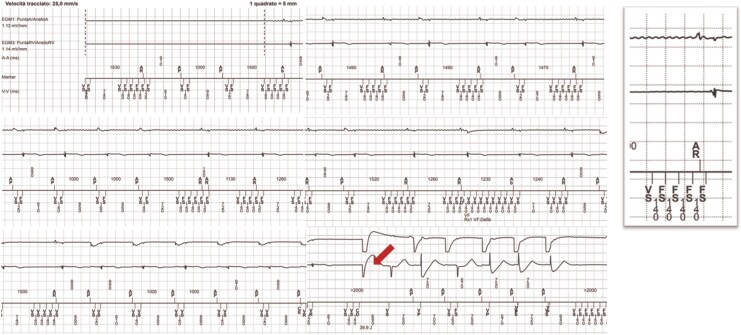 Figure 1
 Figure 2
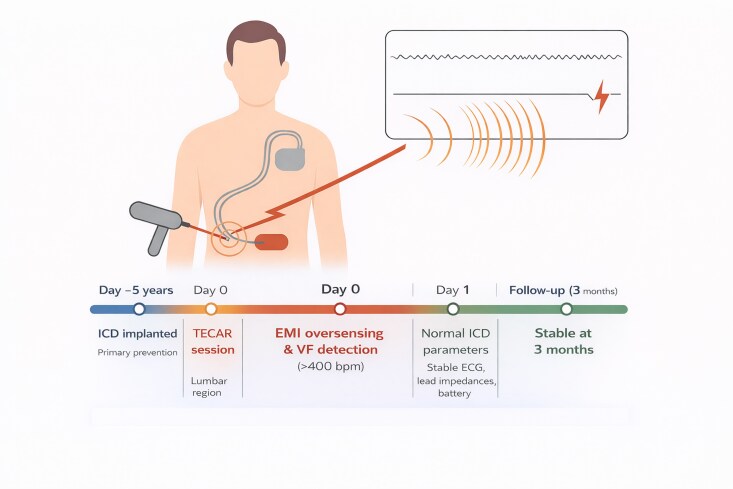 Figure 3
Peer Reviews
No public reviews on file for this paper yet. If you reviewed it on a platform where reviews are public (OpenReview, ICLR, NeurIPS, ICML), you can paste yours below so the community can read it here.
Videos
No videos yet. Explain this paper in a talk, walkthrough, or lecture? Add one.
Taxonomy
TopicsCardiac pacing and defibrillation studies · Electromagnetic Fields and Biological Effects · Cardiac electrophysiology and arrhythmias