IsoProDB: an integrated map of human protein isoforms for accelerated research
Sreelakshmi Pathappillil Soman, Samseera Ummar, Muktar Ahmed, Prathik Basthikoppa Shivamurthy, Sourav Sreelan, Poornima Ramesh, Mahammad Nisar, Yashwanth Subbannayya, Rajesh Raju

TL;DR
IsoProDB is a comprehensive database mapping human protein isoforms to help researchers study their roles in health and disease.
Contribution
IsoProDB integrates and aligns protein isoforms from multiple sources with detailed functional and structural annotations.
Findings
IsoProDB includes 110,149 human protein isoforms from 20,536 genes with features like PTMs and domain architecture.
The database supports comparative analysis of isoforms to identify conserved and nonconserved functional elements.
It links isoforms to disease relevance and provides visual tools for multiomics exploration.
Abstract
Emerging studies highlight the importance of protein isoforms, which often exhibit distinct functional roles and contribute to physiological diversity, disease mechanisms, and phenotypic variation, despite originating from the same gene. However, comprehensive isoform-level resources that characterize protein isoforms remain limited. IsoProDB is an integrative and unified one-stop database that aligns protein isoforms from RefSeq and UniProtKB, enabling cross-sequence visualization for protein isoform analysis in humans. It integrates features such as domain architecture, intrinsically disordered regions, sequence variants, transmembrane topology, and 52 distinct post-translational modifications (PTMs) mapped to protein isoforms from multiple resources. Currently, IsoProDB enables users to perform gene wise comparative analyses across 110 149 protein isoforms derived from 20 536…
Genes, proteins, chemicals, diseases, species, mutations and cell lines named across the full text — each resolved to its canonical identifier and authoritative record.
Click any figure to enlarge with its caption.
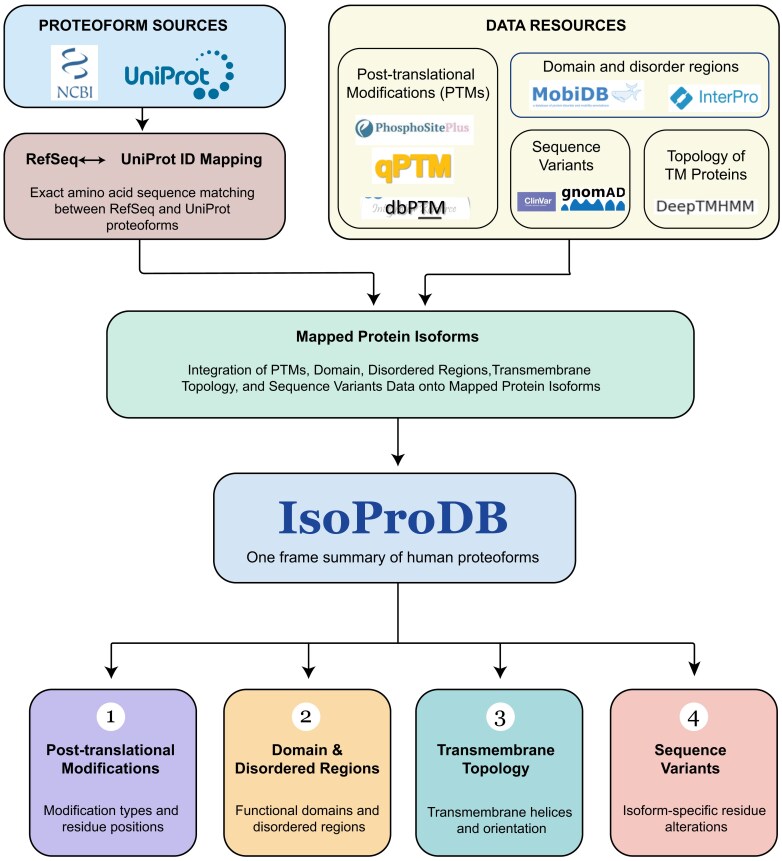 Figure 1
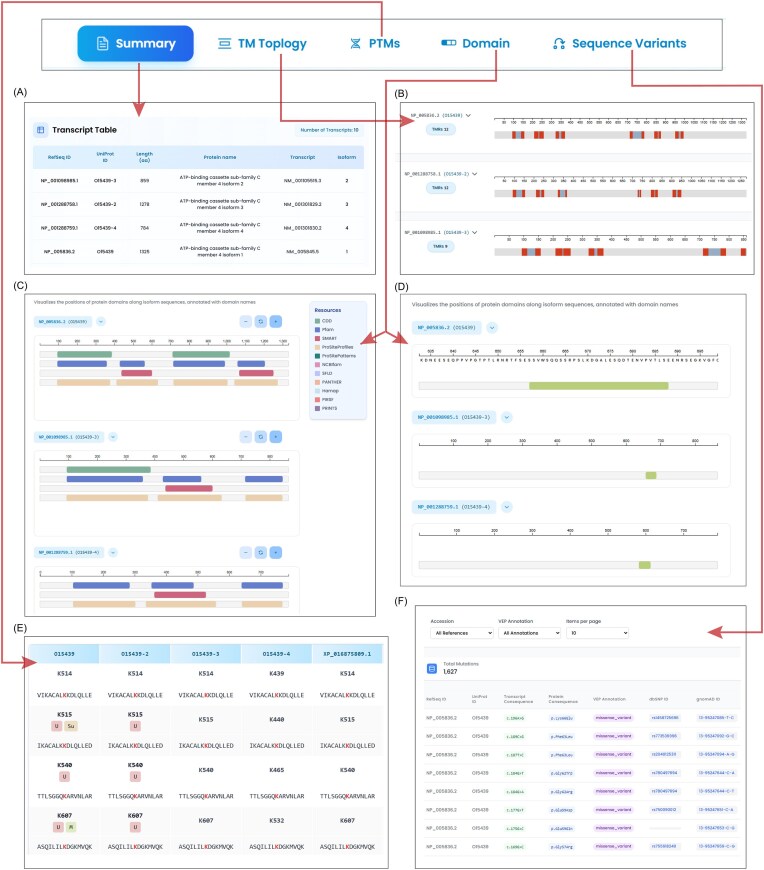 Figure 2
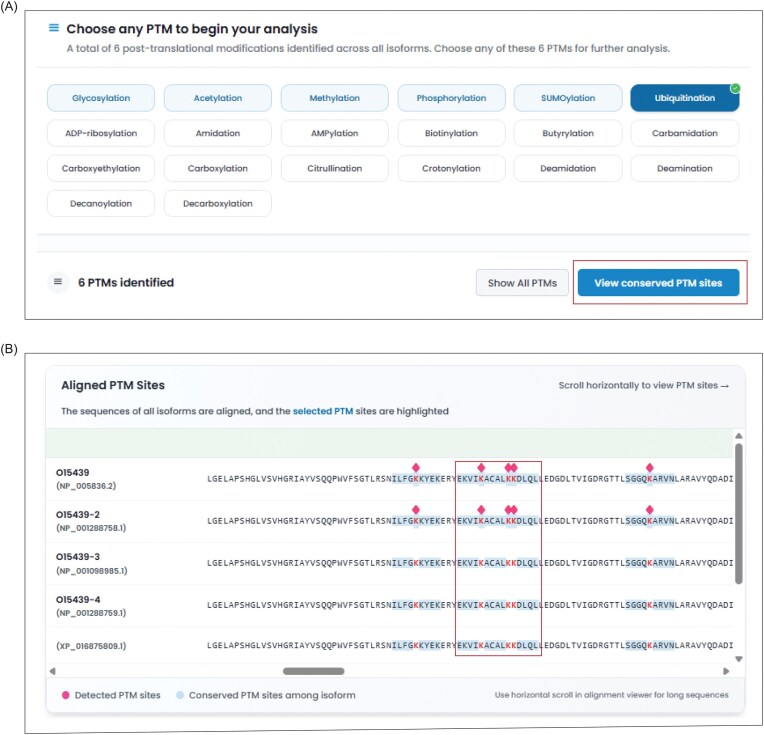 Figure 3
Peer Reviews
No public reviews on file for this paper yet. If you reviewed it on a platform where reviews are public (OpenReview, ICLR, NeurIPS, ICML), you can paste yours below so the community can read it here.
Videos
No videos yet. Explain this paper in a talk, walkthrough, or lecture? Add one.
Taxonomy
TopicsBioinformatics and Genomic Networks · Genomics and Rare Diseases · Machine Learning in Bioinformatics