Elimination of cis-cleavage in CRISPR diagnostics for one-pot rapid nucleic acid detection
Wenhao Yin, Zhili Jin, Qingyuan Jiang, Shuqi Jin, Xinping Wang, Ruyi He, Bin Qiao, Jie Qiao, Xianhua Zhang, Yi Liu

TL;DR
This paper introduces a new CRISPR-based diagnostic method that eliminates amplicon degradation, enabling faster and more sensitive one-pot nucleic acid detection.
Contribution
A PAM-independent and cis-cleavage-free Cas12a system using a bipartite split-crRNA is developed for improved one-pot diagnostics.
Findings
SCas12a eliminates cis-cleavage while maintaining trans-cleavage activity, improving sensitivity by 100–1000-fold.
The system reduces time-to-signal by >10-fold and detects targets at attomolar levels within 30 minutes.
SCas12a successfully detected HPV16, SARS-CoV-2, and TP53 SNPs in clinical samples with high selectivity.
Abstract
Current one-pot clustered regularly interspaced short palindromic repeats diagnostics are limited by the cis-cleavage activity of Cas nucleases, which leads to amplicon degradation during amplification. Here, we report a streamlined strategy that overcomes this limitation. By integrating a bipartite split-crRNA into Cas12a (SCas12a), we separate target recognition from PAM dependency and completely eliminate cis-cleavage while preserving robust trans-cleavage. This strategy is broadly applicable for one-pot testing, compatible with recombinase polymerase amplification, RT–RPA, and loop-mediated isothermal amplification, as well as multiple Cas12a orthologs, including As, Lb, and Ct Cas12a. Moreover, the SCas12a accelerates one-pot testing with 100–1000-fold improved sensitivity and achieves >10-fold reduction in time-to-signal, enabling detection of targets at attomolar levels within 30…
Genes, proteins, chemicals, diseases, species, mutations and cell lines named across the full text — each resolved to its canonical identifier and authoritative record.
Click any figure to enlarge with its caption.
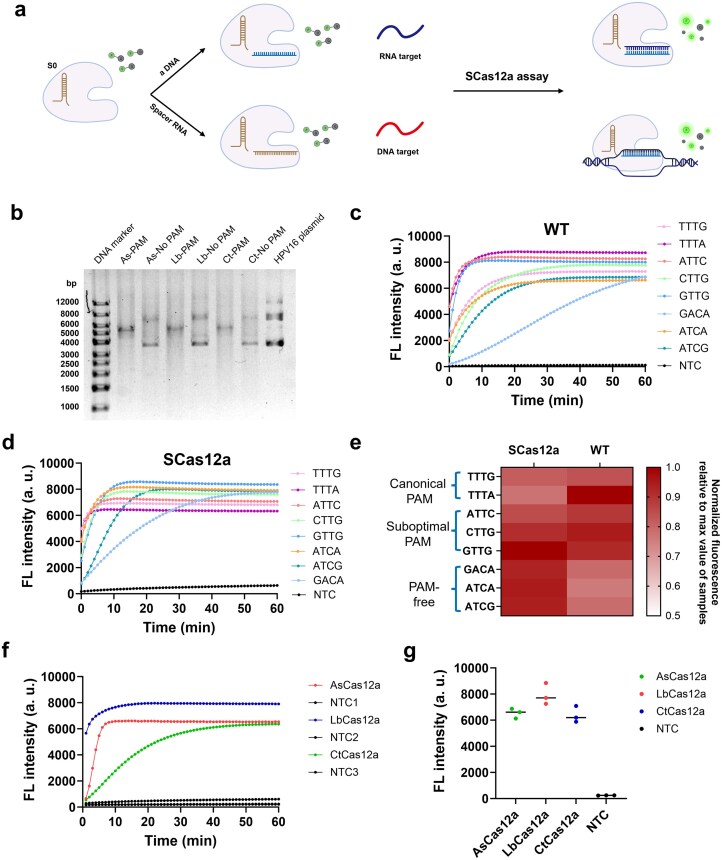 Figure 1
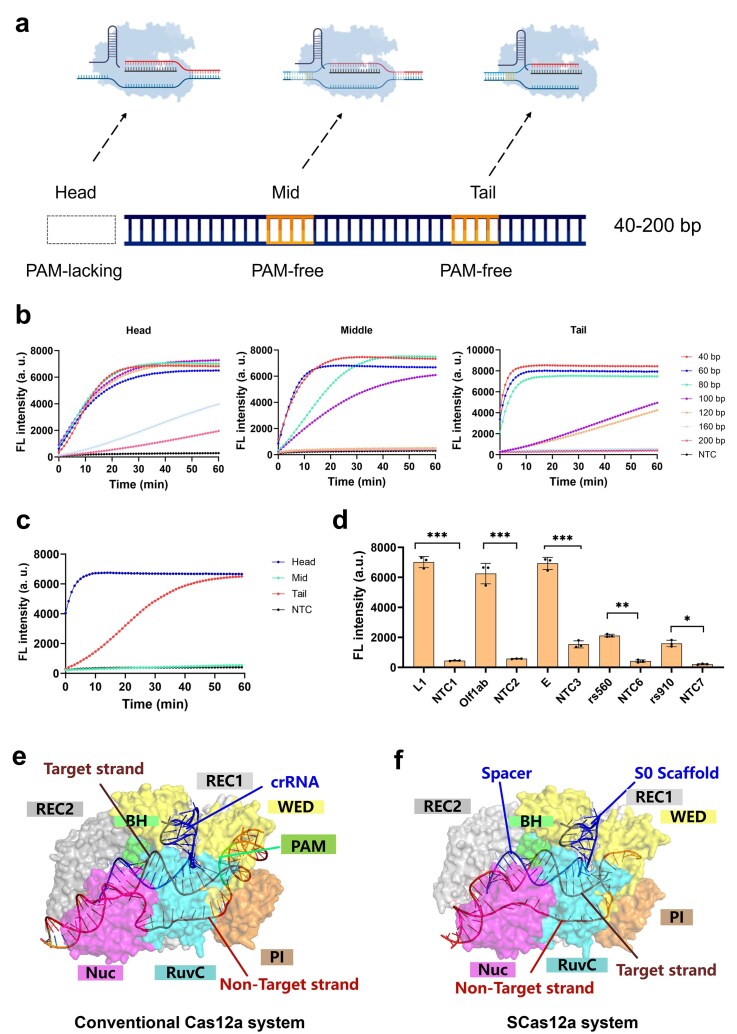 Figure 2
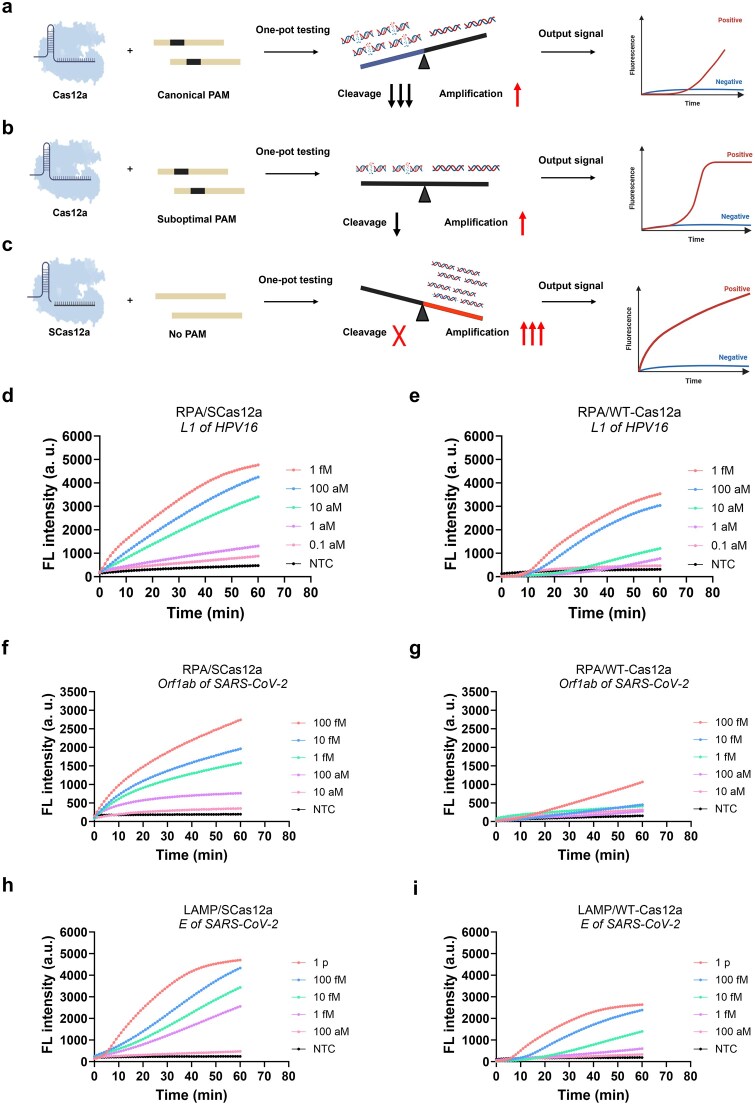 Figure 3
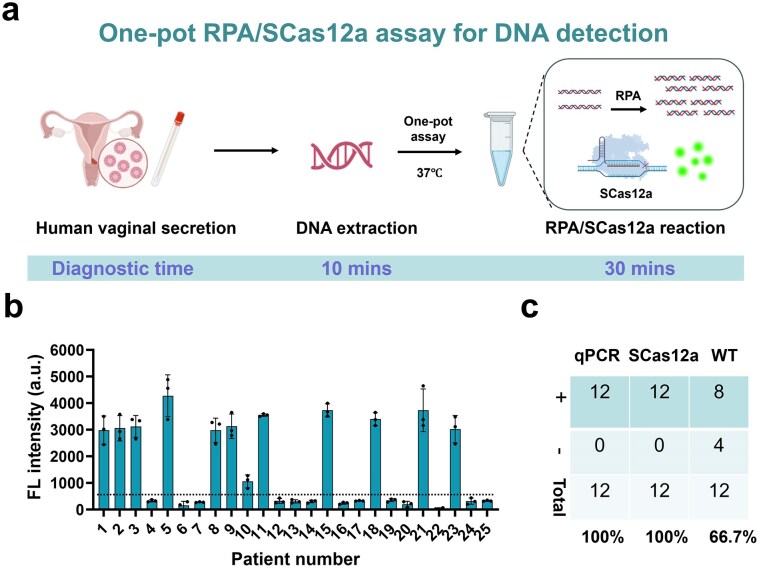 Figure 4
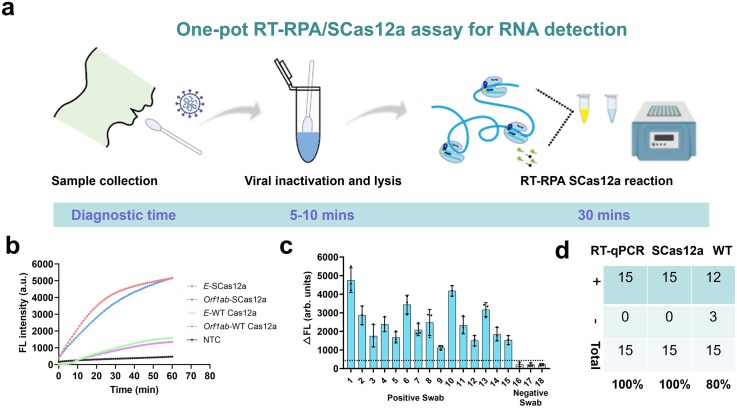 Figure 5
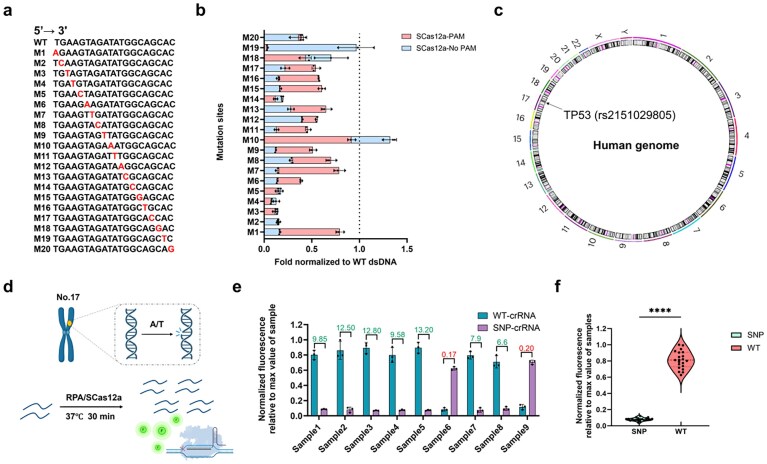 Figure 6
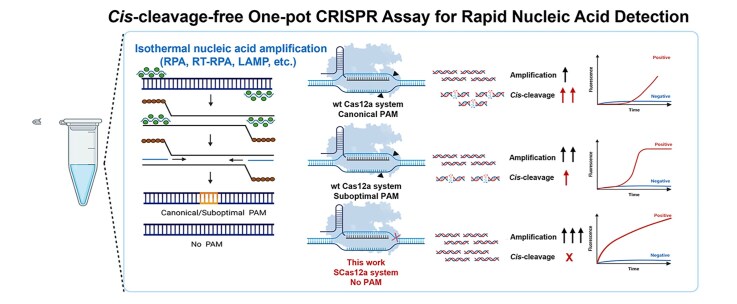 Figure 7
Peer Reviews
No public reviews on file for this paper yet. If you reviewed it on a platform where reviews are public (OpenReview, ICLR, NeurIPS, ICML), you can paste yours below so the community can read it here.
Videos
No videos yet. Explain this paper in a talk, walkthrough, or lecture? Add one.
Taxonomy
TopicsCRISPR and Genetic Engineering · Advanced biosensing and bioanalysis techniques · Biosensors and Analytical Detection