Bidirectional Roles of TRPV1 in a Latent Sensitization Model of Myofascial Low Back Pain
Vivian Blechschmidt, Bastian Schlickenrieder, Jonathan R. Husk, Ulrich Hoheisel, Handan Mörz, Rolf‐Detlef Treede, Wolfgang Greffrath

TL;DR
This study explores the role of TRPV1 in a rat model of chronic low back pain, finding that TRPV1 contributes to pain sensitization but is not essential for its development.
Contribution
The study reveals TRPV1's bidirectional roles in spinal sensitization and its potential regulatory function in pain homeostasis.
Findings
TRPV1 is upregulated during manifest sensitization but not essential for developing mechanical hypersensitivity.
TRPV1−/− rats showed prolonged hypersensitivity after a single NGF injection, suggesting TRPV1's role in pain homeostasis.
Repeated NGF injections induced anxiety-like behavior and delayed remote hypersensitivity in both genotypes.
Abstract
Chronic primary low back pain (cpLBP) is a global health concern with poorly understood pathomechanisms, potentially involving spinal sensitization. The capsaicin receptor TRPV1 plays a crucial role in sensitization across pain models. This study employed a rat model of cpLBP induced by two nerve growth factor (NGF) injections into lumbar muscles to explore TRPV1's roles in NGF‐induced spinal sensitization. Male wildtype (WT) and TRPV1−/− rats of both sexes (N = 10 each) underwent behavioural tests post NGF and vehicle injections. Tests included low back pressure pain thresholds (PPT), paw withdrawal thresholds (PWT), heat pain thresholds (HPT), and exploratory behaviour. Spinal TRPV1 expression after NGF injections was assessed in WT rats. WT rats displayed latent local mechanical hypersensitivity after a single NGF injection, turning into manifest after the second, with presynaptic…
Genes, proteins, chemicals, diseases, species, mutations and cell lines named across the full text — each resolved to its canonical identifier and authoritative record.
Click any figure to enlarge with its caption.
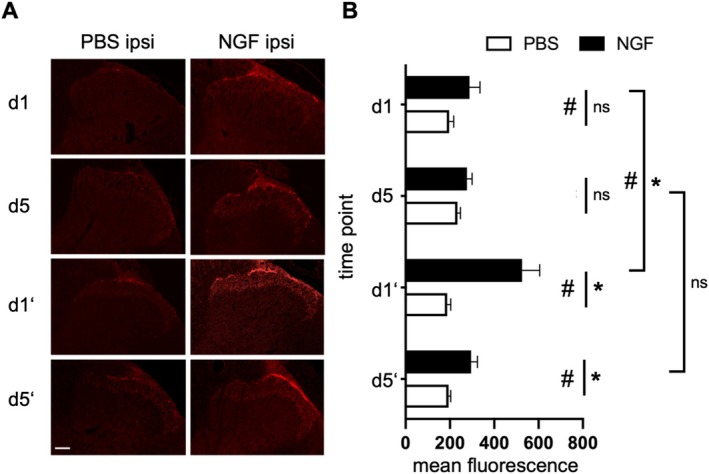 Figure 1
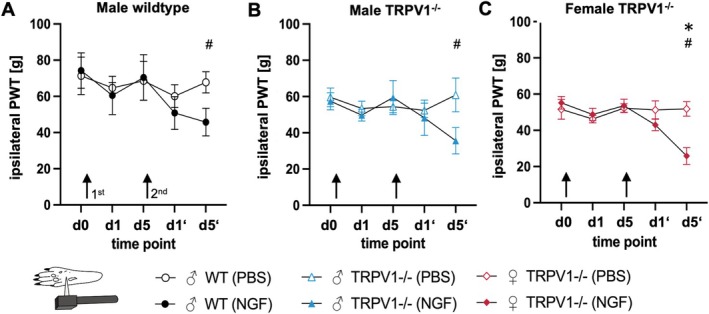 Figure 2
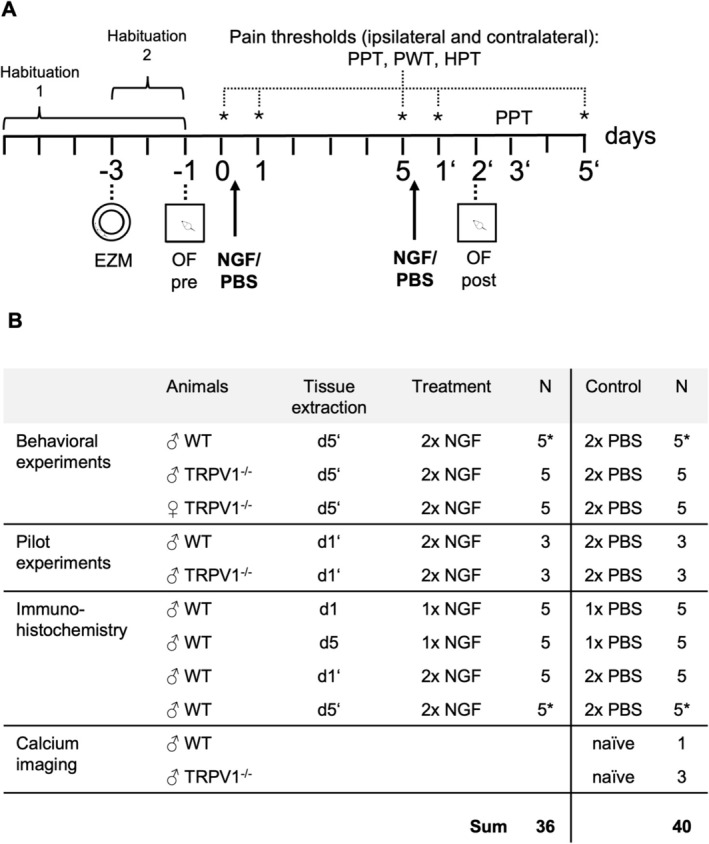 Figure 3
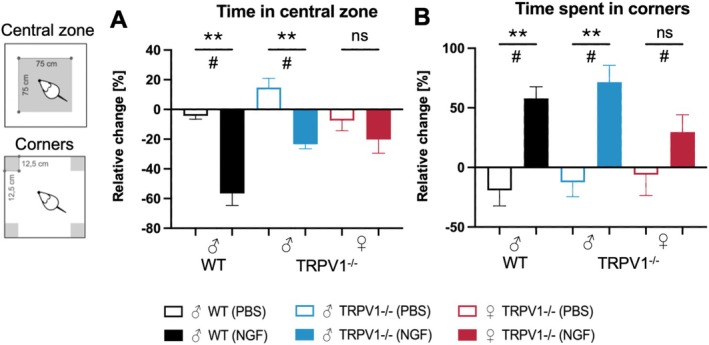 Figure 4
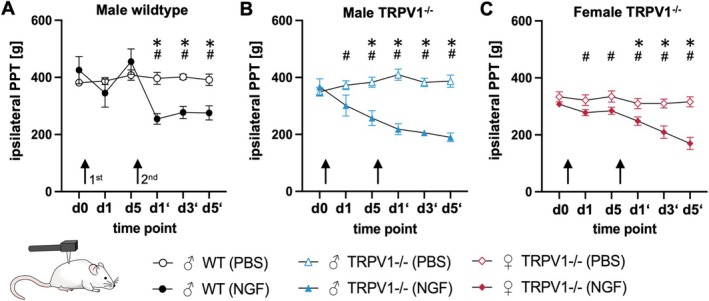 Figure 5
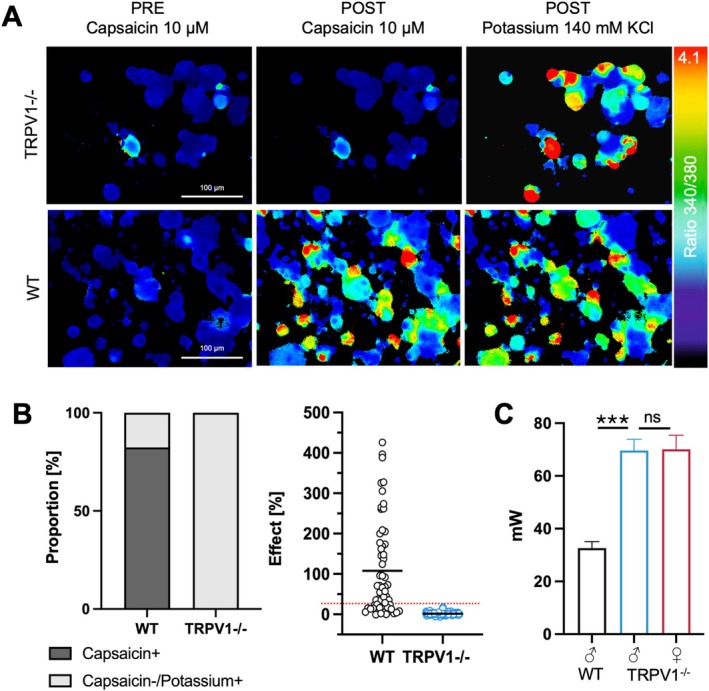 Figure 6
Peer Reviews
No public reviews on file for this paper yet. If you reviewed it on a platform where reviews are public (OpenReview, ICLR, NeurIPS, ICML), you can paste yours below so the community can read it here.
Videos
No videos yet. Explain this paper in a talk, walkthrough, or lecture? Add one.
Taxonomy
TopicsPain Mechanisms and Treatments · Ion Channels and Receptors · Gastrointestinal motility and disorders