Carbonate Acidizing: The Effect of Corrosion Inhibitor and Emulsion Preventer on Pore Volume to Breakthrough
Guilherme Mentges Arruda, Ernani Dias da Silva Filho, Myllena Rosana de Araújo Medeiros, Alicia Luzia da Costa Silva, Leonardo José do Nascimento Guimarães, José Antonio Barbosa, Mateus Palharini Schwalbert, Marcos Allyson Felipe Rodrigues

TL;DR
This study shows that additives in hydrochloric acid used for carbonate rock stimulation improve reaction control and wormhole formation efficiency.
Contribution
The study demonstrates that corrosion inhibitors and emulsion preventers significantly affect acid-rock reaction kinetics and wormhole formation in carbonate acidizing.
Findings
Additives reduced pore volume to breakthrough (PVbt) values at low flow rates, indicating improved wormhole formation efficiency.
The presence of additives decreased optimal interstitial velocity by 77%, suggesting better reaction control.
Micro-CT images confirmed dominant wormhole formation with additives, while samples without additives collapsed before breakthrough.
Abstract
Acid stimulation of carbonate rocks aims to create channels within the rock, known as wormholes, to restore or enhance permeability, increasing production. Among the acids used in this type of treatment, 15 wt % hydrochloric acid (HCl) stands out due to its high reactivity, formation of soluble reaction products in aqueous media, and cost-effectiveness. To minimize corrosion of metallic structures and avoid emulsion formation after contact with formation oil, acid solutions are commonly prepared with additives such as corrosion inhibitors and emulsion preventers. To evaluate the influence of these additives on wormhole formation, this study performed core flooding experiments at different injection rates to construct pore volume to breakthrough (PVbt) curves, both in the presence and absence of these additives. The tests employed 15 wt % HCl solutions, with and without additives, using…
Genes, proteins, chemicals, diseases, species, mutations and cell lines named across the full text — each resolved to its canonical identifier and authoritative record.
Click any figure to enlarge with its caption.
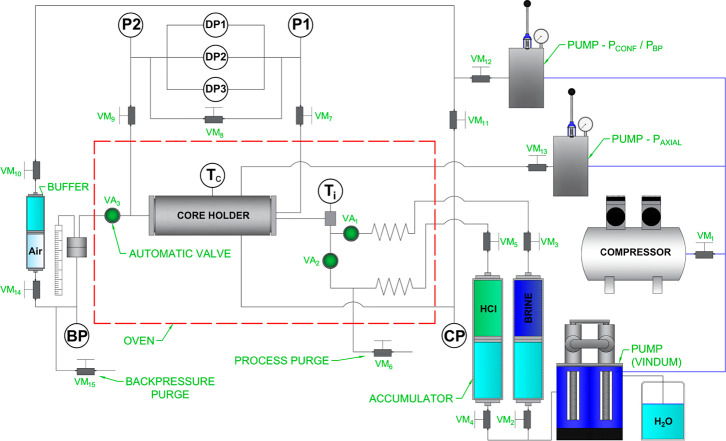 Figure 1
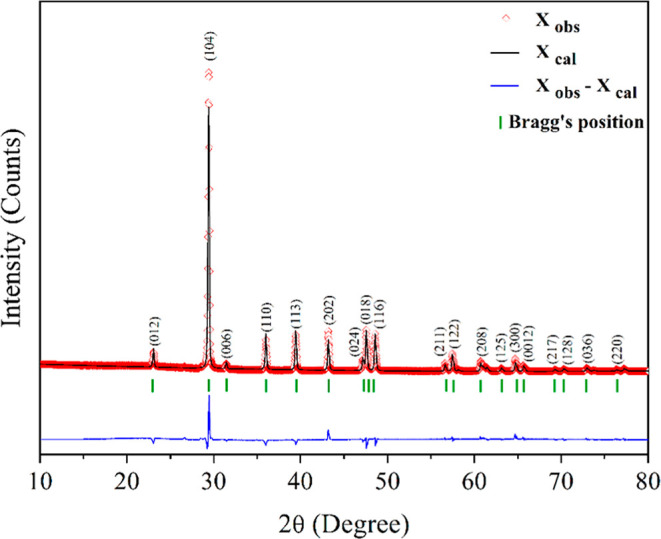 Figure 2
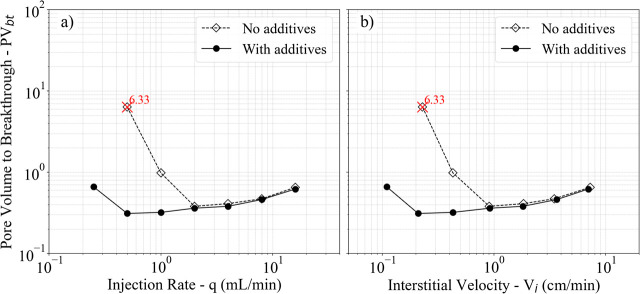 Figure 3
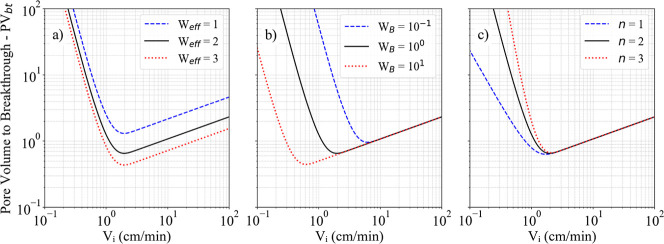 Figure 4
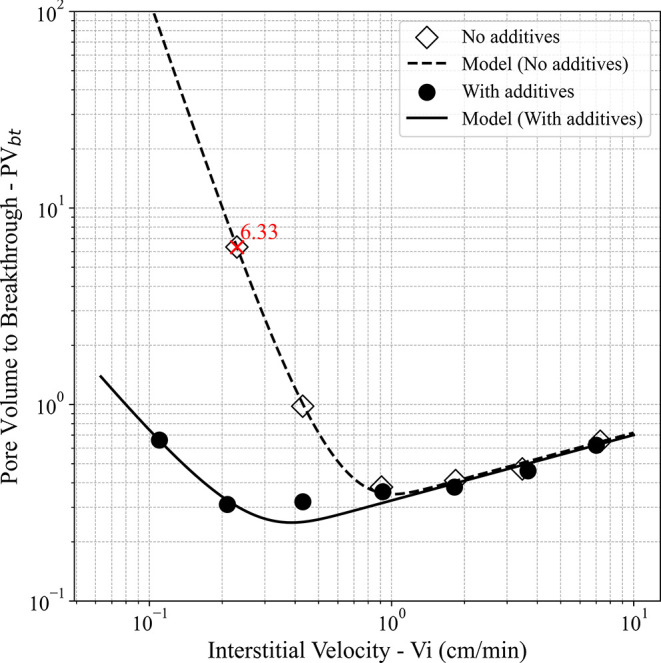 Figure 5
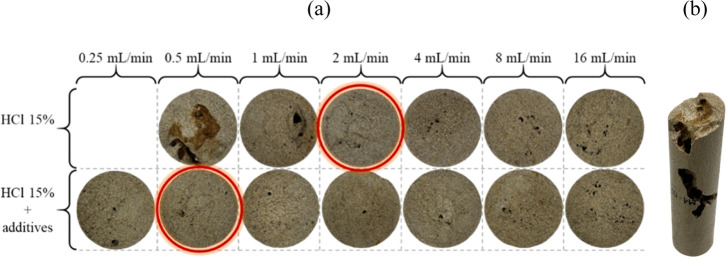 Figure 6
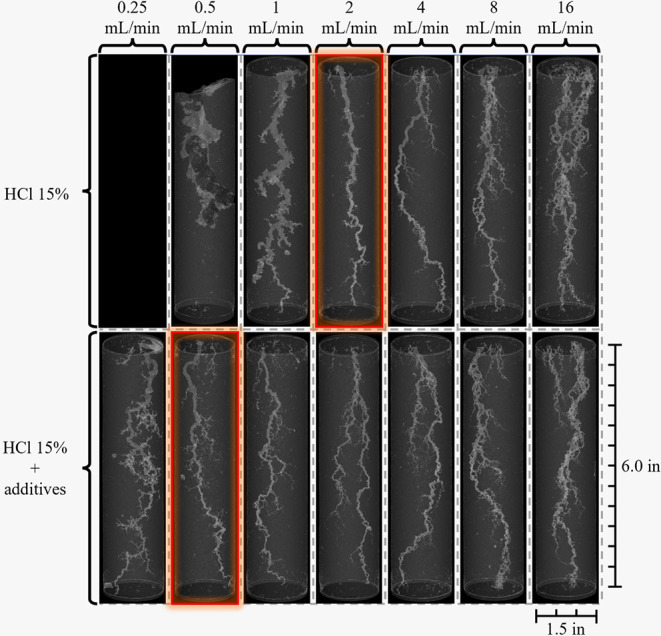 Figure 7
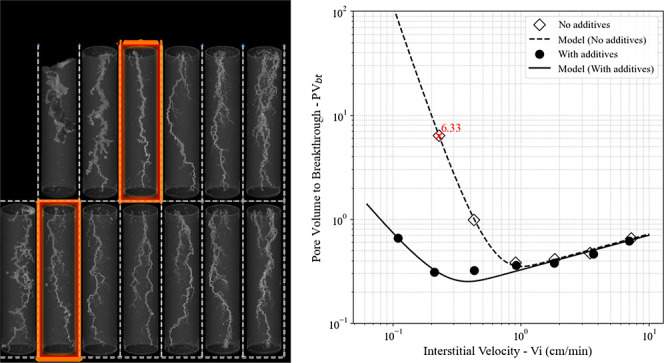 Figure 8
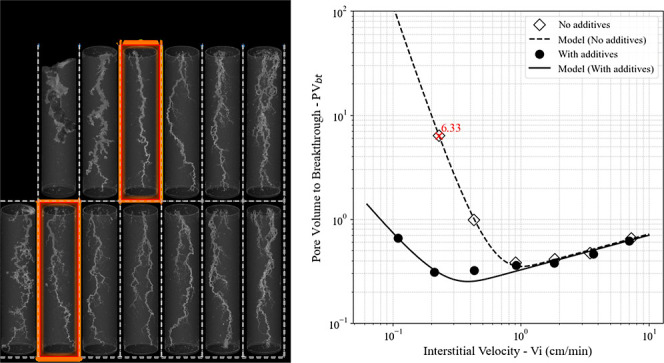 Figure 9
 Figure 10
 Figure 11
 Figure 12
 Figure 13
 Figure 14
 Figure 15
 Figure 16
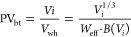 Figure 17
 Figure 18
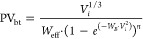 Figure 19
 Figure 20
 Figure 21
Peer Reviews
No public reviews on file for this paper yet. If you reviewed it on a platform where reviews are public (OpenReview, ICLR, NeurIPS, ICML), you can paste yours below so the community can read it here.
Videos
No videos yet. Explain this paper in a talk, walkthrough, or lecture? Add one.
Taxonomy
TopicsHydraulic Fracturing and Reservoir Analysis · Drilling and Well Engineering · Enhanced Oil Recovery Techniques