Design, Synthesis, and Characterization of N‑Doped Carbon Dots from a Ternary System of Citric Acid, Urea, and (E)‑2-(2,5-Dimethoxyphenyl)methylenebutane-1,4-dioic Acid
Vijo Poulose, Keerthivasan M. Latha, Gowtham Raj, Sabu Thomas, Józef T. Haponiuk, Reji Varghese, Thies Thiemann, Sreeraj Gopi

TL;DR
Researchers created new nitrogen-doped carbon dots using a green method, showing they are stable, emit blue light, and have antibacterial properties suitable for biomedical uses.
Contribution
A new type of nitrogen-doped carbon dot (ARI-NCDs) is synthesized using a ternary system with aryl itaconic acid, offering enhanced properties for biomedical applications.
Findings
ARI-NCDs show bright blue emission and higher quantum yield compared to control CDs.
They exhibit superior thermal stability and consistent surface charge at neutral pH.
ARI-NCDs demonstrate low cytotoxicity and strong antibacterial activity against both Gram-positive and Gram-negative bacteria.
Abstract
Synthesizing carbon dots (CDs) using therapeutic compounds as precursors has emerged as a promising strategy for biomedical applications, enabling simultaneous utilization of the beneficial properties of both nanoparticles and bioactive molecules without additional modification. In this work, we report the synthesis of novel CDs (ARI-NCDs) using citric acid, urea, and (E)-2-(2,5-dimethoxyphenyl)methylenebutane-1,4-dioic acid via a green, one-step hydrothermal process at 200 °C for 10 h. Control CDs prepared from citric acid and urea (U-NCDs) were synthesized identically. Comprehensive characterization by TEM, FT-IR, Raman, XRD and XPS confirmed nitrogen-doped, oxygen-rich surfaces and successful aryl functionalization. ARI-NCDs exhibited bright, nearly excitation-independent blue emission and a higher quantum yield than U-NCDs. TGA revealed the enhanced thermal stability of ARI-NCDs…
Genes, proteins, chemicals, diseases, species, mutations and cell lines named across the full text — each resolved to its canonical identifier and authoritative record.
Click any figure to enlarge with its caption.
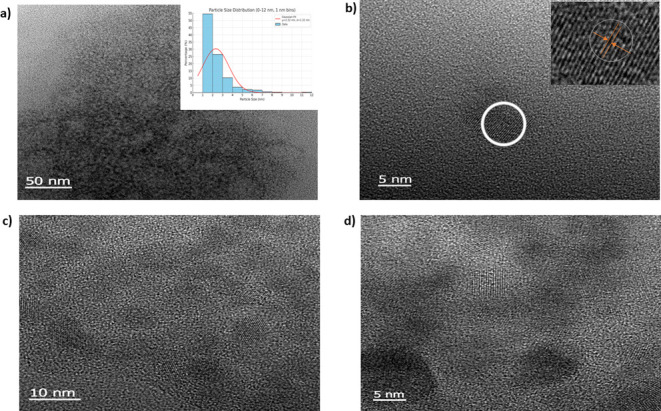 Figure 1
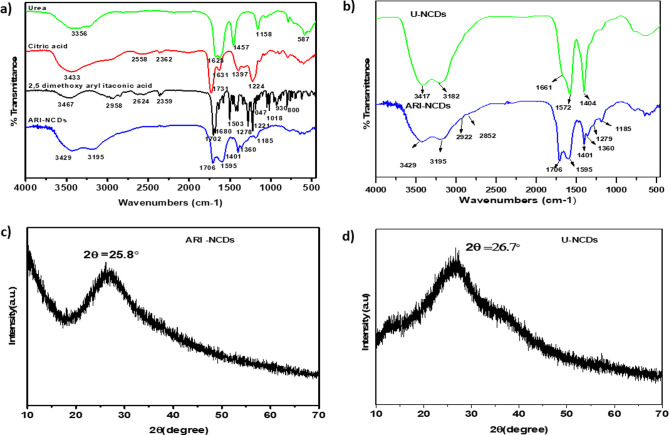 Figure 2
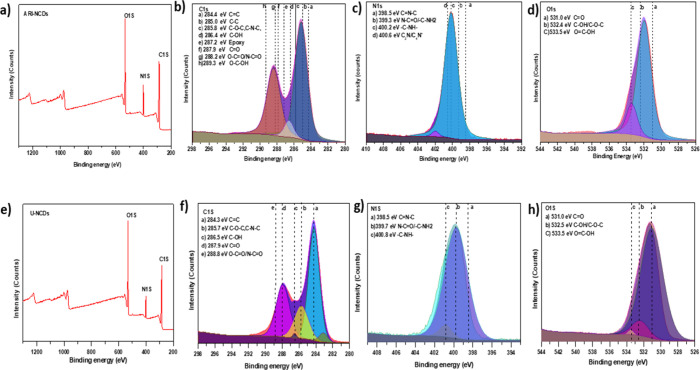 Figure 3
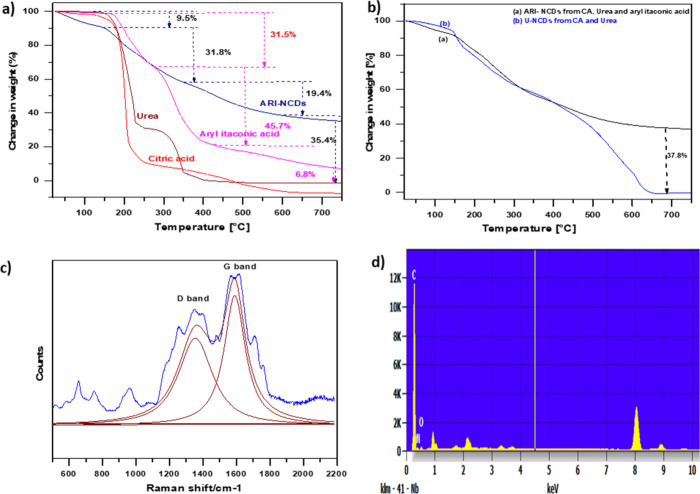 Figure 4
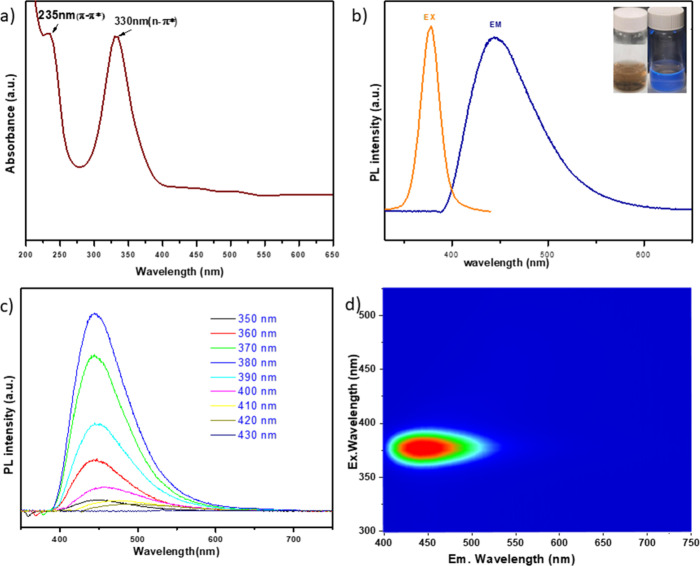 Figure 5
 Figure 6
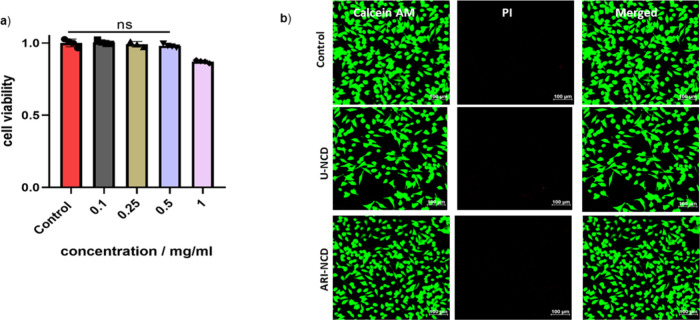 Figure 7
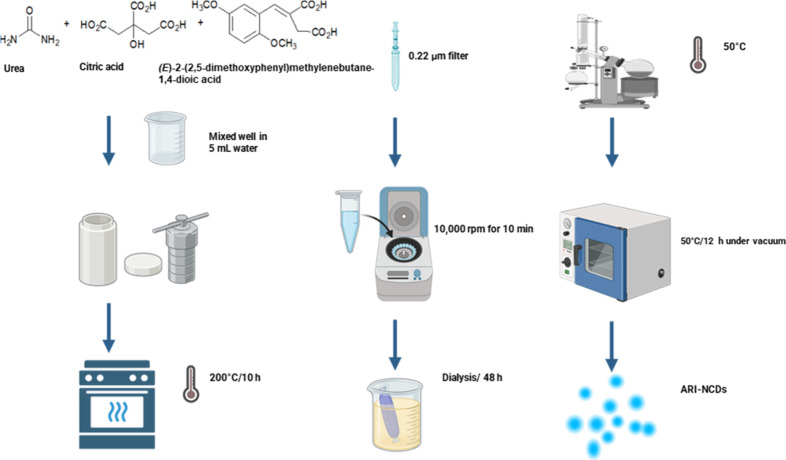 Figure 8
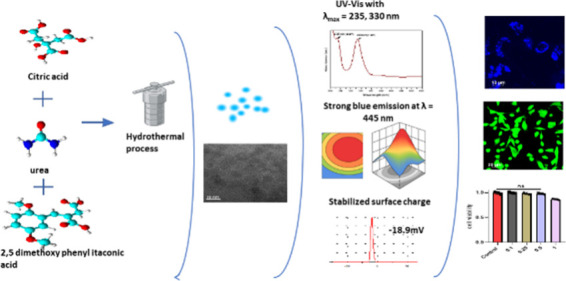 Figure 9
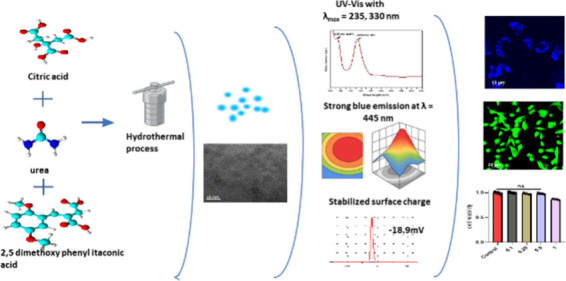 Figure 10
 Figure 11
Peer Reviews
No public reviews on file for this paper yet. If you reviewed it on a platform where reviews are public (OpenReview, ICLR, NeurIPS, ICML), you can paste yours below so the community can read it here.
Videos
No videos yet. Explain this paper in a talk, walkthrough, or lecture? Add one.
Taxonomy
TopicsCarbon and Quantum Dots Applications · Supercapacitor Materials and Fabrication · Electrochemical sensors and biosensors