Theoretical Exploration of the Physical-Chemical Properties of Divalent (np 2) Cation Mixing in Double Cs2AgBiBr6 Perovskite
Iván Ornelas-Cruz, Ramiro M. dos Santos, Matheus P. Lima, Juarez L. F. Da Silva

TL;DR
This paper explores how mixing different cations in a lead-free perovskite material affects its stability and electronic properties.
Contribution
The study introduces a theoretical framework for optimizing lead-free perovskites using heterovalent substitution to enhance optoelectronic performance.
Findings
Mixed-halide perovskites show high structural flexibility and entropy-driven stabilization.
Larger cations reduce octahedral distortions and promote lattice symmetry.
Sn- and Pb-rich compositions are energetically favored for better stability.
Abstract
Lead-free halide double perovskites have emerged as promising alternatives to conventional lead-based materials for photovoltaic applications, as they combine environmental compatibility with structural stability. However, their indirect band gaps limit optoelectronic performance, motivating compositional and structural optimization to achieve higher efficiency. In this work, we used density functional theory calculations to investigate complex mixed-halide double perovskites with general composition Cs2Ag x Bi x B y B' z Br6, where B,B′ = Ge, Sn, or Pb. By coupling electronic-structure calculations with high-throughput stress-tensor optimizations across thousands of configurations, we identified the energetic and structural principles governing their stability and electronic properties. The results revealed a narrow energy distribution, indicating high structural flexibility and…
Genes, proteins, chemicals, diseases, species, mutations and cell lines named across the full text — each resolved to its canonical identifier and authoritative record.
Click any figure to enlarge with its caption.
 Figure 1
 Figure 2
 Figure 3
 Figure 4
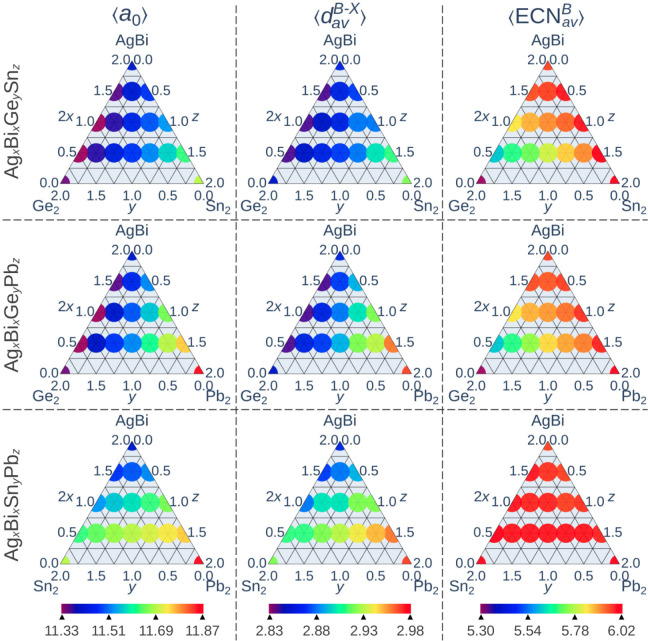 Figure 5
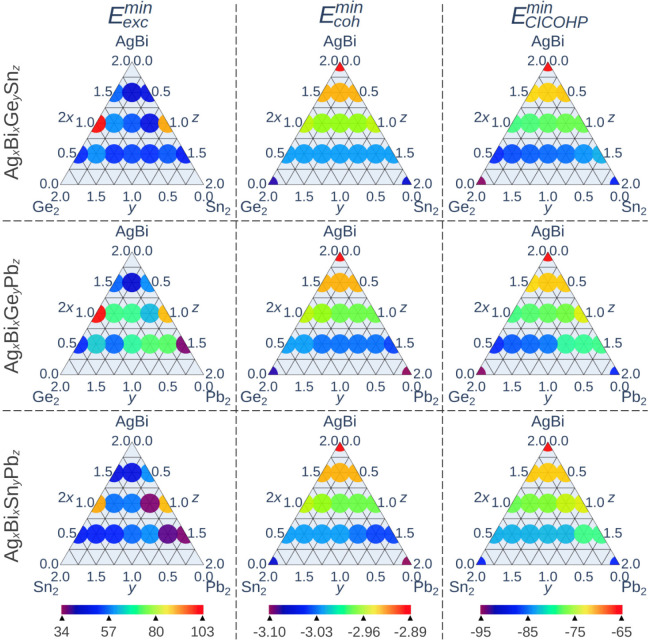 Figure 6
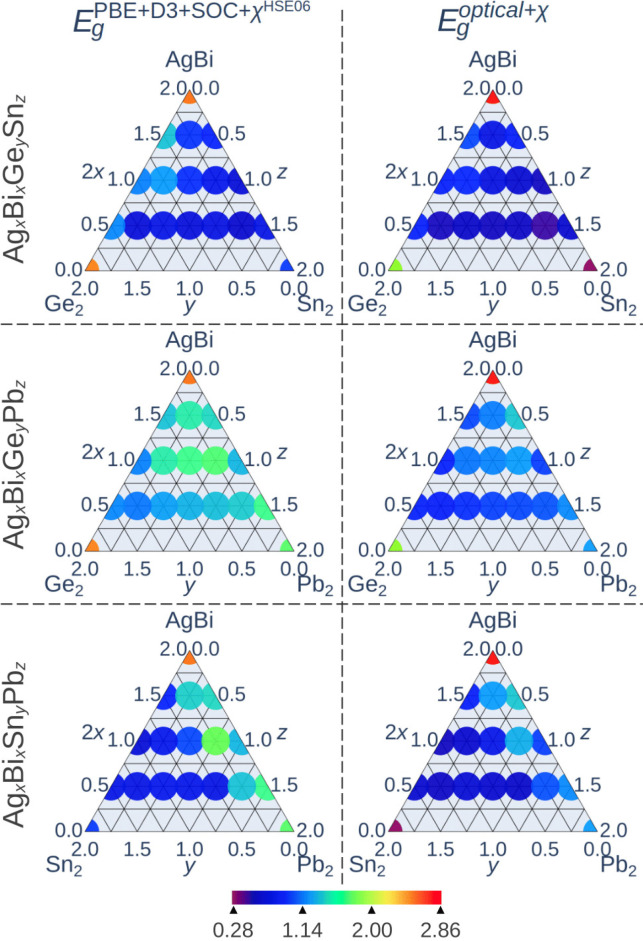 Figure 7
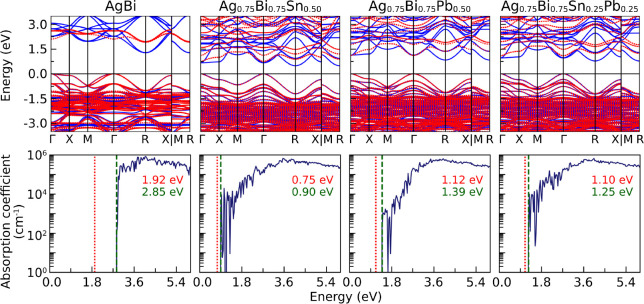 Figure 8
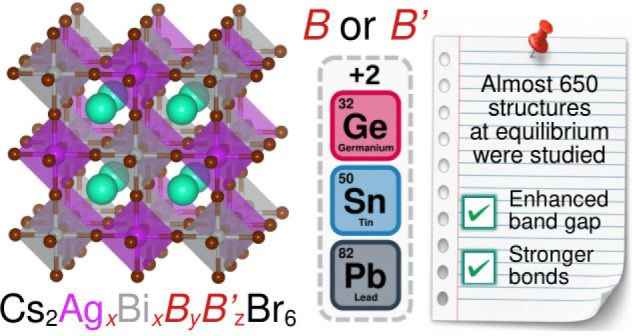 Figure 9
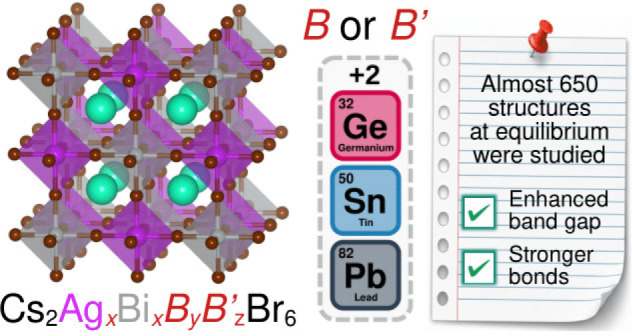 Figure 10
 Figure 11
 Figure 12
 Figure 13
 Figure 14
 Figure 15
 Figure 16
 Figure 17
 Figure 18
 Figure 19
 Figure 20
 Figure 21
 Figure 22
 Figure 23
 Figure 24
 Figure 25
Peer Reviews
No public reviews on file for this paper yet. If you reviewed it on a platform where reviews are public (OpenReview, ICLR, NeurIPS, ICML), you can paste yours below so the community can read it here.
Videos
No videos yet. Explain this paper in a talk, walkthrough, or lecture? Add one.
Taxonomy
TopicsPerovskite Materials and Applications · Heusler alloys: electronic and magnetic properties · Thermal Expansion and Ionic Conductivity