Ethnopharmacology- and Chemotaxonomy-Guided Evaluation of Apuleia leiocarpa Bark and Leaf Extracts against Oropouche, Mayaro, Chikungunya, and Zika Viruses
Maria Rosilda Valente de Sarges, Maria Clara Machado Oliveira, Mariana Pereira de Carvalho, Marília Bueno da S Menegatto, Ariane Coelho Ferraz, Sônia das Graças Santa Rosa Pamplona, Wandson Braamcamp Pinheiro, Cintia Lopes B. Magalhães, Milton Nascimento da Silva

TL;DR
This study explores the antiviral potential of Apuleia leiocarpa extracts against four viruses, finding that ethanolic bark extract is particularly effective against Oropouche virus.
Contribution
The study combines ethnopharmacology and chemotaxonomy to identify a promising natural antiviral source in Apuleia leiocarpa.
Findings
Ethanolic stem bark extract showed potent antiviral activity against Oropouche virus with an EC50 of 14.85 μg/mL.
Flavonoids, triterpenoids, and phenolic acids were identified in the extracts, linking them to antiviral effects.
All extracts exhibited antiviral activity against at least one of the four tested viruses.
Abstract
Apuleia leiocarpa (Vogel) J.F. Macbr. (Fabaceae) is traditionally used to treat fever and inflammatory symptoms, supporting an ethnopharmacological rationale for antiviral investigation. In addition, the chemotaxonomic context of the genus Apuleia, characterized by the prevalence of flavonoids and triterpenoids typical of Fabaceae, provides a complementary framework for the selection of this species. Guided by ethnopharmacological use and chemotaxonomic evidence, this study evaluated the in vitro antiviral activity of ethanolic and aqueous extracts obtained from the leaves and stem bark of A. leiocarpa against Mayaro, Chikungunya, Zika, and Oropouche viruses. Chemical characterization of the extracts was performed using liquid chromatography–tandem mass spectrometry combined with computational metabolomics tools, including molecular networking and mass spectral database searches.…
Genes, proteins, chemicals, diseases, species, mutations and cell lines named across the full text — each resolved to its canonical identifier and authoritative record.
Click any figure to enlarge with its caption.
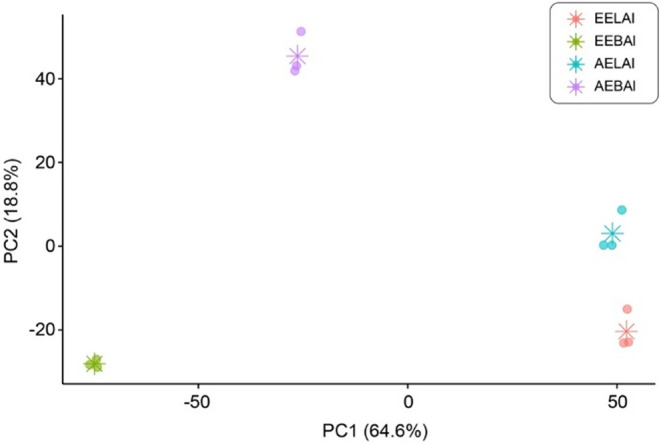 Figure 1
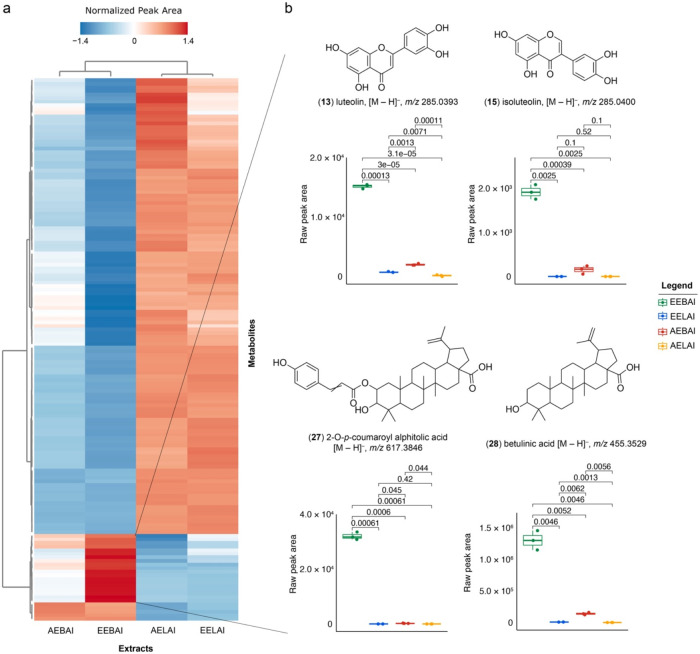 Figure 2
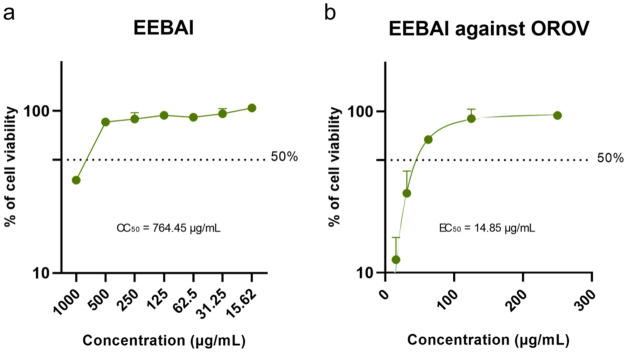 Figure 3
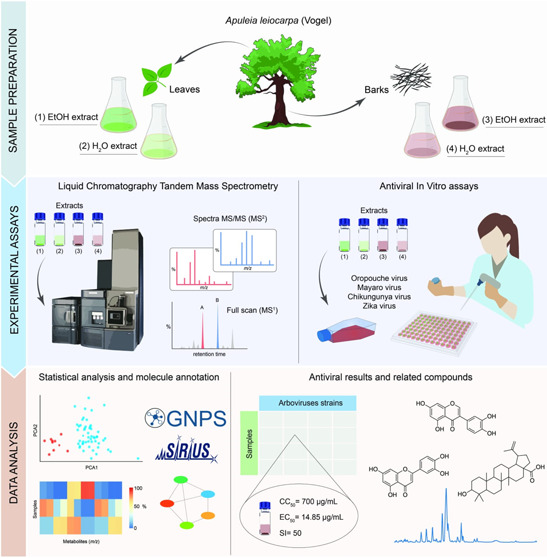 Figure 4
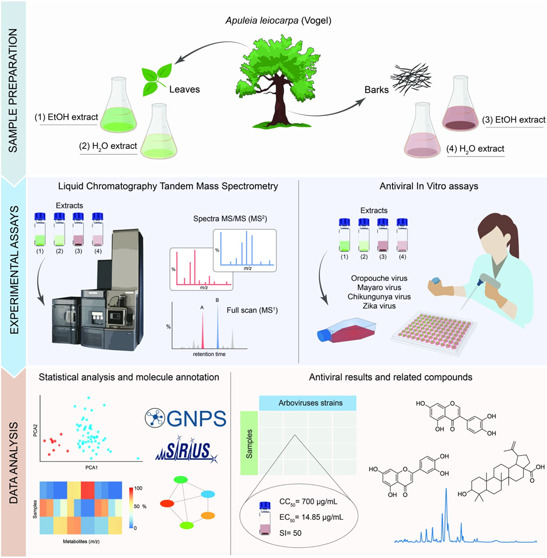 Figure 5
Peer Reviews
No public reviews on file for this paper yet. If you reviewed it on a platform where reviews are public (OpenReview, ICLR, NeurIPS, ICML), you can paste yours below so the community can read it here.
Videos
No videos yet. Explain this paper in a talk, walkthrough, or lecture? Add one.
Taxonomy
TopicsTraditional and Medicinal Uses of Annonaceae · Diverse Scientific Research Studies · Insect Pest Control Strategies