Potent Probiotic Yeast Saccharomyces cerevisiae TBRC 3616: Production Development for Food and Feed Applications
Sompot Antimanon, Nakul Rattanaphan, Rujirek Nopgason, Thanaporn Dechpreechakul, Warinthon Chamkhuy, Yutthana Kingcha, Sasitorn Jindamorakot, Somjit Am-in, Sukitaya Veeranondha, Krith Chokpipatpol, Kobkul Laoteng

TL;DR
This study develops a production process for a probiotic yeast strain, S. cerevisiae TBRC 3616, suitable for food and feed applications.
Contribution
A novel production framework for S. cerevisiae TBRC 3616 with optimized fermentation and freeze-drying methods is developed.
Findings
The strain exhibited key probiotic traits like acid and bile salt tolerance, cell adhesion, and antipathogen activity.
Fed-batch fermentation achieved a high yeast titer of 12.14 ± 0.03 log CFU L–1.
Freeze-drying with maltodextrin improved cell viability fourfold compared to the control.
Abstract
The global demand for probiotics has been increasing over the past few decades. Of these, Saccharomyces cerevisiae has attracted growing interest for use in functional foods and feed supplements due to its probiotic potential, nutritional value, and well-documented safety. For industrial applications, functional characterization, safety assessment, and robust production processes are key prerequisites. This study evaluated the probiotic properties and production potential of the S. cerevisiae strain TBRC 3616, isolated from decaying leaves in a tropical ecosystem in Thailand. The strain exhibited key probiotic traits, including acid and bile salt tolerance, Caco-2 cell adhesion, antipathogen activity, antioxidant capacity, and enzyme activities (catalase, protease, and esterase). The yeast exhibited no hemolytic activity and was not susceptible to the tested antibiotics, except colistin…
Genes, proteins, chemicals, diseases, species, mutations and cell lines named across the full text — each resolved to its canonical identifier and authoritative record.
Click any figure to enlarge with its caption.
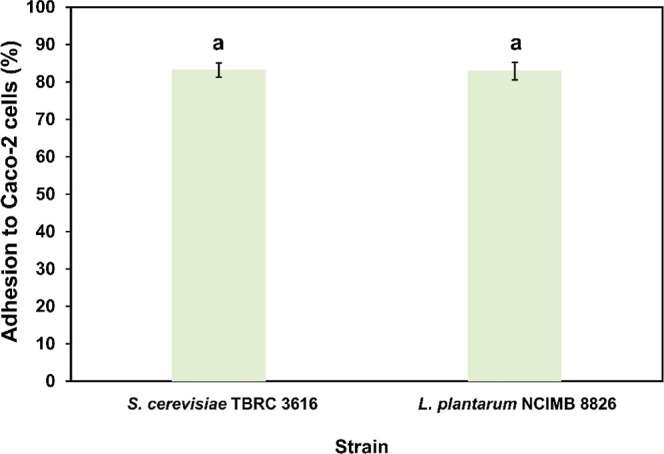 Figure 1
 Figure 2
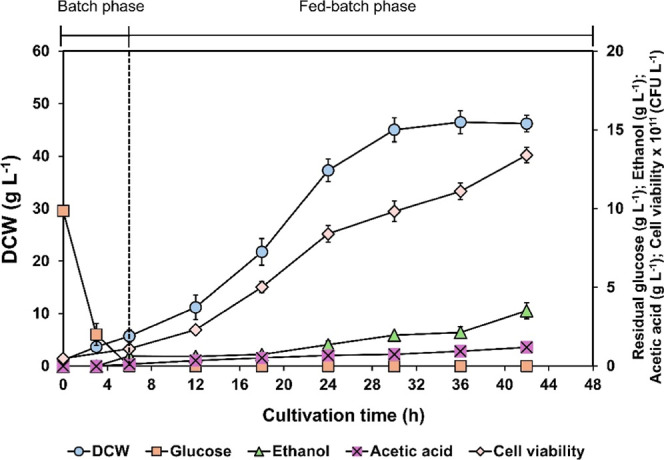 Figure 3
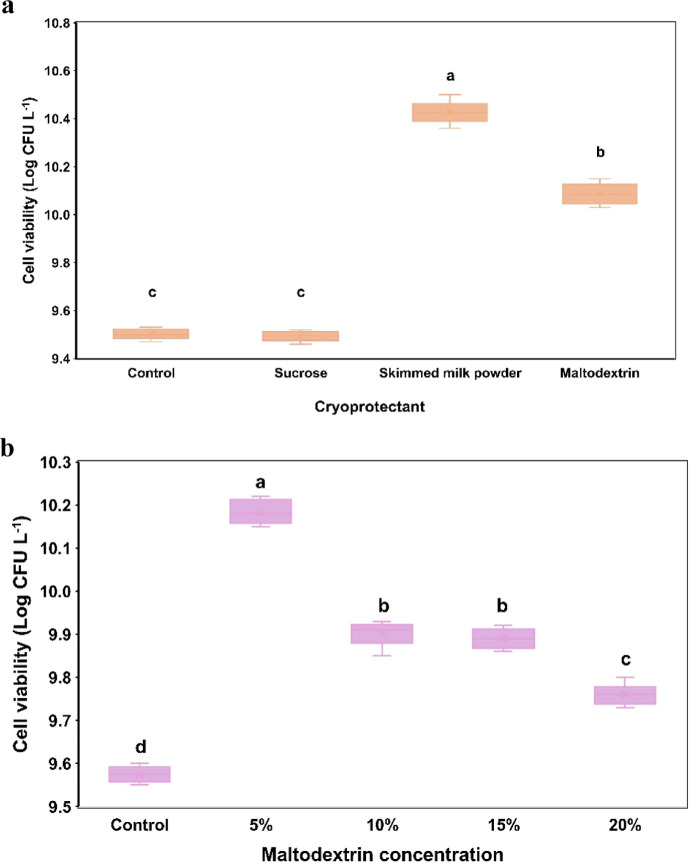 Figure 4
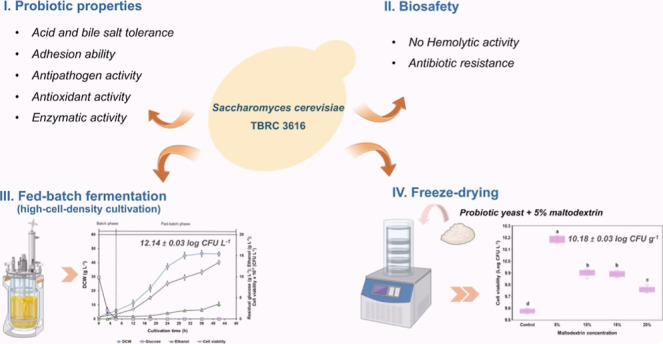 Figure 5
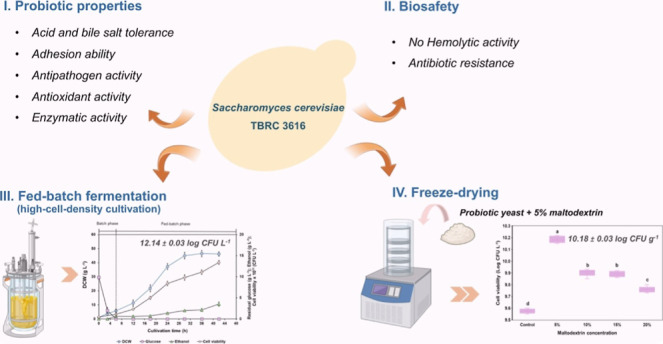 Figure 6
 Figure 7
 Figure 8
 Figure 9
 Figure 10
Peer Reviews
No public reviews on file for this paper yet. If you reviewed it on a platform where reviews are public (OpenReview, ICLR, NeurIPS, ICML), you can paste yours below so the community can read it here.
Videos
No videos yet. Explain this paper in a talk, walkthrough, or lecture? Add one.
Taxonomy
TopicsProbiotics and Fermented Foods · Microbial Metabolites in Food Biotechnology · Microbial Metabolism and Applications