Mercury Ion Sensing Using Mercaptosuccinic Acid-Derived Carbon Quantum Dots
Haven I. Blair, Rayna E. Nemcek, Hallie G. McKinnie, Sarah Saleh, Madison L. Walker, Justin M. Miller, Deon T. Miles

TL;DR
Researchers developed carbon quantum dots from mercaptosuccinic acid to detect mercury ions in water with high sensitivity.
Contribution
The study introduces a novel method for mercury ion sensing using MSA-derived carbon quantum dots with low detection limits.
Findings
Carbon quantum dots showed photoluminescence quenching when exposed to various metal ions, including Hg2+.
The lowest detection limit for Hg2+ was 1.4 ppm using green MSA-derived carbon quantum dots.
Spectral properties of the nanoparticles were moderately affected by changes in excitation wavelength and pH.
Abstract
Carbon quantum dots, prepared from mercaptosuccinic acid (MSA), were used to sense metal ions in aqueous solutions. Two fractions of nanoparticles were obtained after several purification steps, designated blue and green based on their color under UV illumination. We monitored the photoluminescence of the carbon nanoparticles upon the addition of metal ions. Stern–Volmer plots were made to determine whether photoluminescence quenching of the nanoparticles in solution occurred. Photoluminescence quenching was observed with adding Hg2+, Fe3+, Cr3+, Co2+, Ag+, Fe2+, Cu2+, and Ni2+. Most of these metal ions have partially filled d orbitals, contributing to the transfer of electrons from the photoexcited nanoparticles to the available empty orbitals of the metal ions. The detection limits for sensing the metal ions were calculated. The lowest detection limits observed were for Hg2+, with…
Genes, proteins, chemicals, diseases, species, mutations and cell lines named across the full text — each resolved to its canonical identifier and authoritative record.
Click any figure to enlarge with its caption.
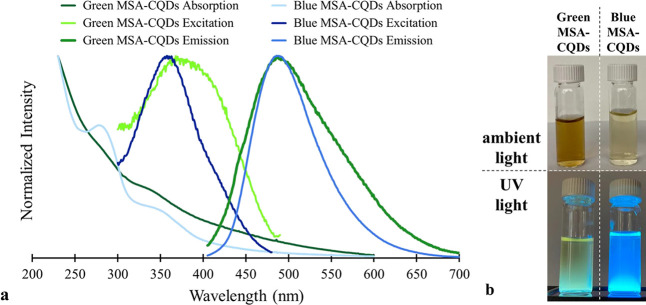 Figure 1
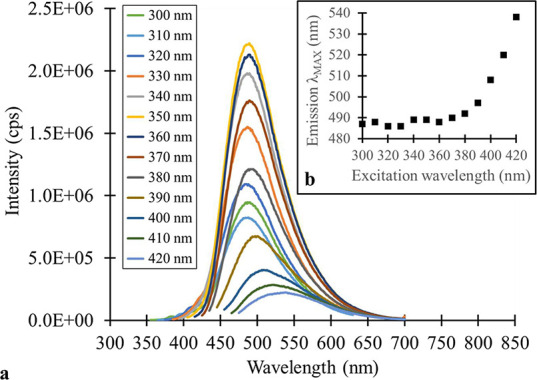 Figure 2
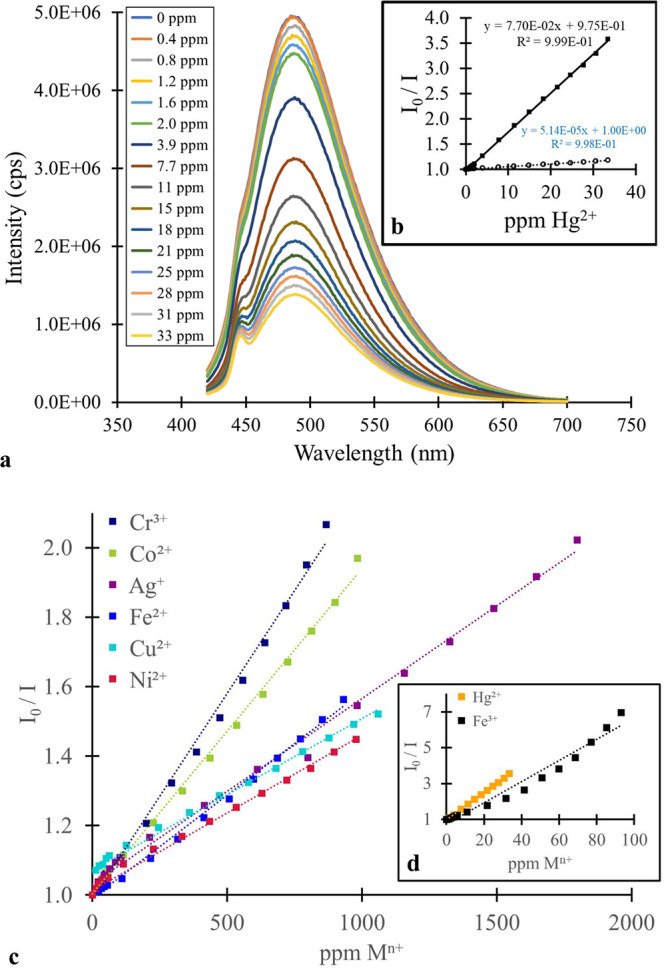 Figure 3
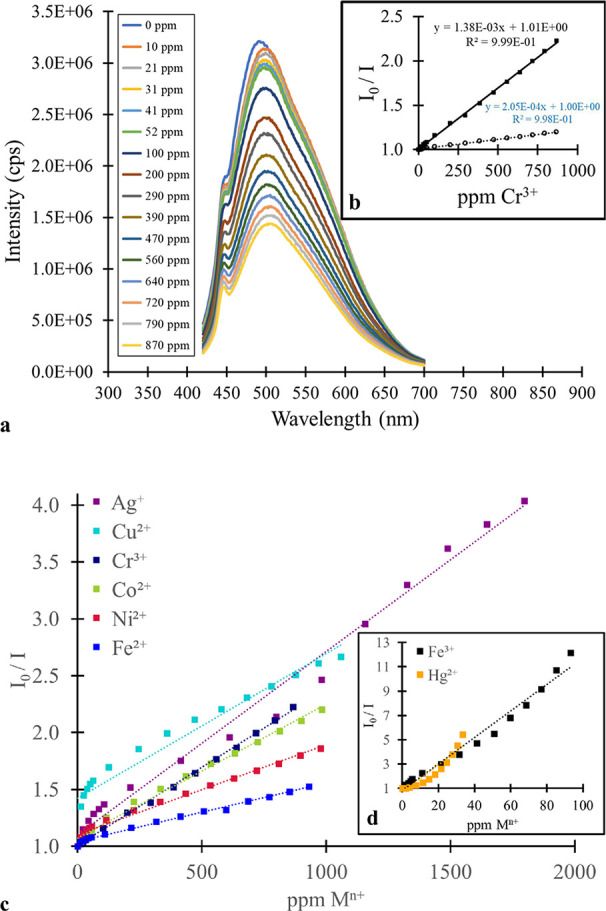 Figure 4
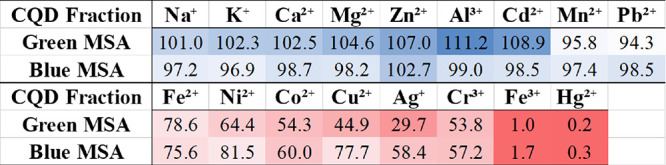 Figure 5
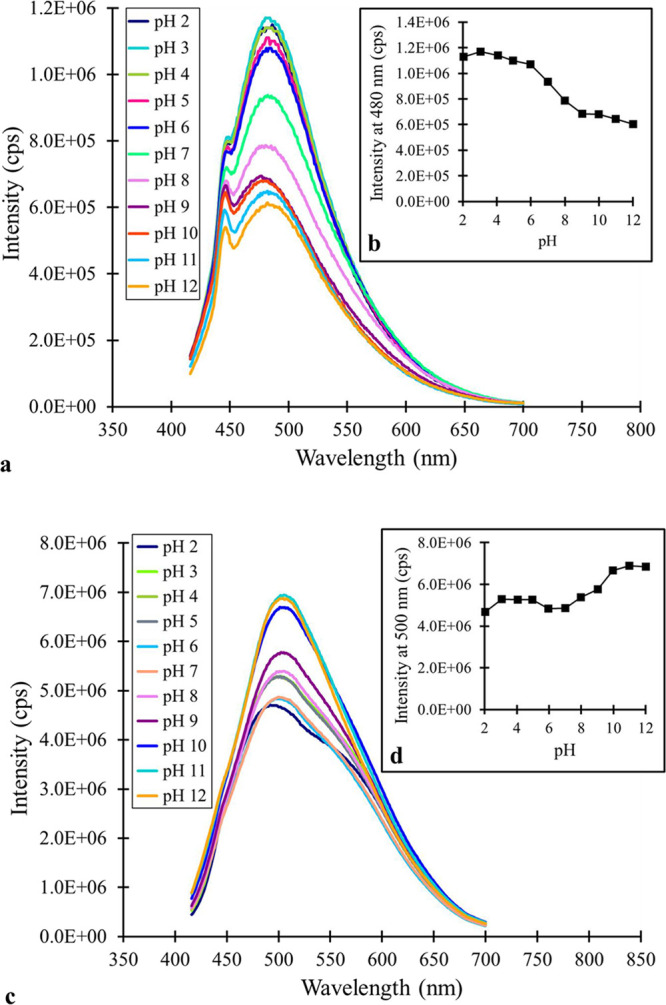 Figure 6
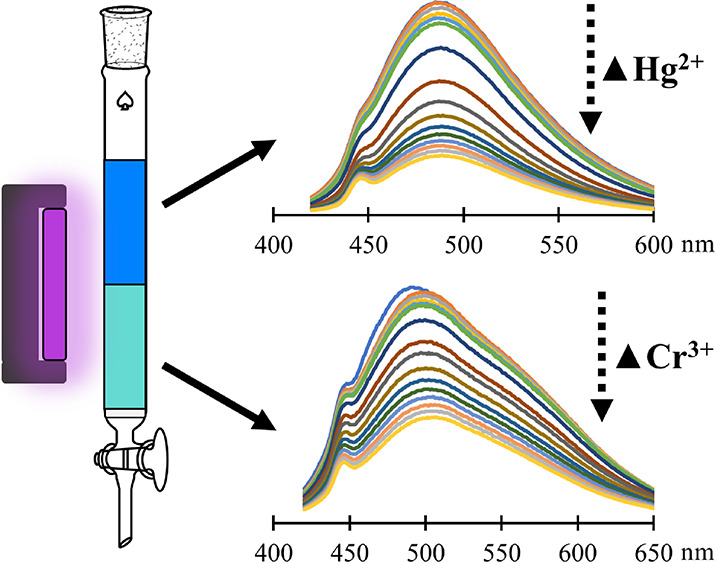 Figure 7
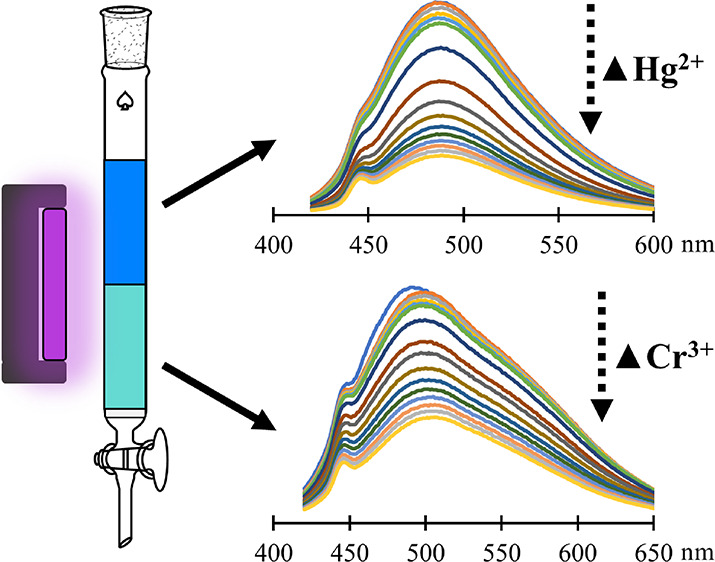 Figure 8
 Figure 9
 Figure 10
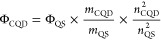 Figure 11
 Figure 12
 Figure 13
Peer Reviews
No public reviews on file for this paper yet. If you reviewed it on a platform where reviews are public (OpenReview, ICLR, NeurIPS, ICML), you can paste yours below so the community can read it here.
Videos
No videos yet. Explain this paper in a talk, walkthrough, or lecture? Add one.
Taxonomy
TopicsCarbon and Quantum Dots Applications · Molecular Sensors and Ion Detection · Polydiacetylene-based materials and applications