Spermidine Supplementation Reduces Genetic Damage in the Liver and Bone Marrow of Rodents
Janine Barcelos Chacon, Maria Clara Duarte, Michele Oliveira Carvalho, Patrícia Felix Ávila, Isabella Caroline Menon, Giulia de Mello Franco, Bruno Martins Dala Paula, Pollyanna Francielli de Oliveira

TL;DR
Spermidine supplementation in mice reduced DNA damage in the liver and bone marrow, especially when combined with a mutagen.
Contribution
The study shows spermidine's genoprotective effects in rodents under different dietary conditions.
Findings
Spermidine reduced micronucleated polychromatic erythrocytes in bone marrow.
Spermidine lowered DNA damage in liver cells, particularly without sucrose.
Antioxidant enzyme levels (CAT and SOD) increased with spermidine treatment.
Abstract
Mutations in DNA constitute the initial step in the process of carcinogenesis. While diets high in sugar increase the risk of various diseases, a balanced diet rich in bioactive compounds can mitigate DNA damage. Spermidine (SPD) is a polyamine with reported effects on autophagy induction, inflammation reduction, and the enhancement of immune function. Within this context, we investigated the effects of SPD supplementation [10 and 30 mg/kg body weight (bw)] in male Swiss mice over a period of 44 days. The animals were divided into two groups: one fed a standard diet (SDNuvilab CR1), and the other fed a standard diet enriched with 30% sucrose (SU) (SDSU). On day 44, the mutagenic agent methylmethanesulfonate [MMS 40 mg/kg bw intraperitoneal (ip)] was administered to induce mutagenicity. On day 45, bone marrow and liver cell samples were collected to evaluate the chemopreventive…
Genes, proteins, chemicals, diseases, species, mutations and cell lines named across the full text — each resolved to its canonical identifier and authoritative record.
Click any figure to enlarge with its caption.
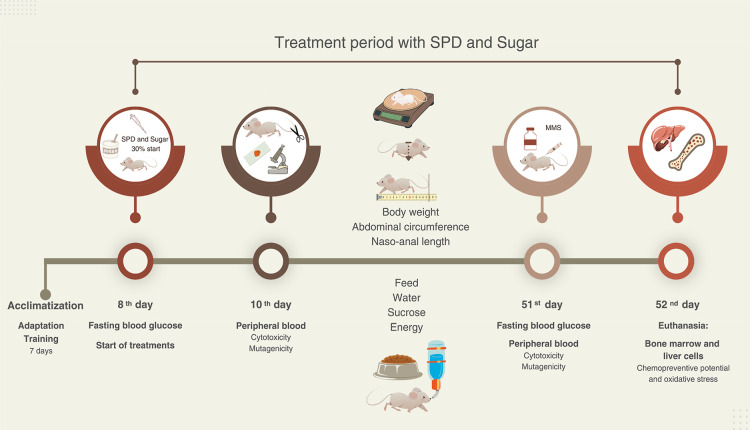 Figure 1
 Figure 2
 Figure 3
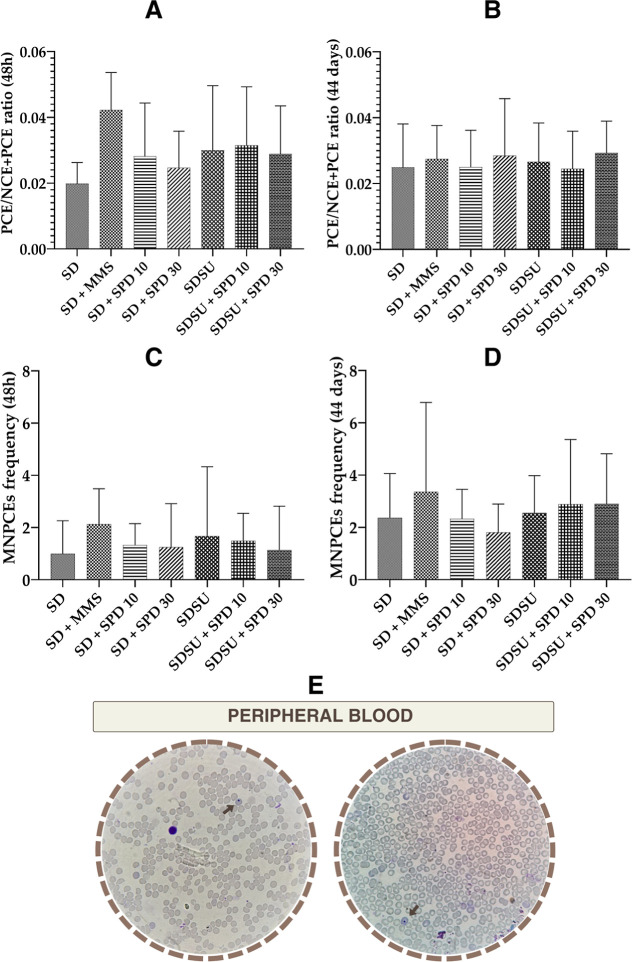 Figure 4
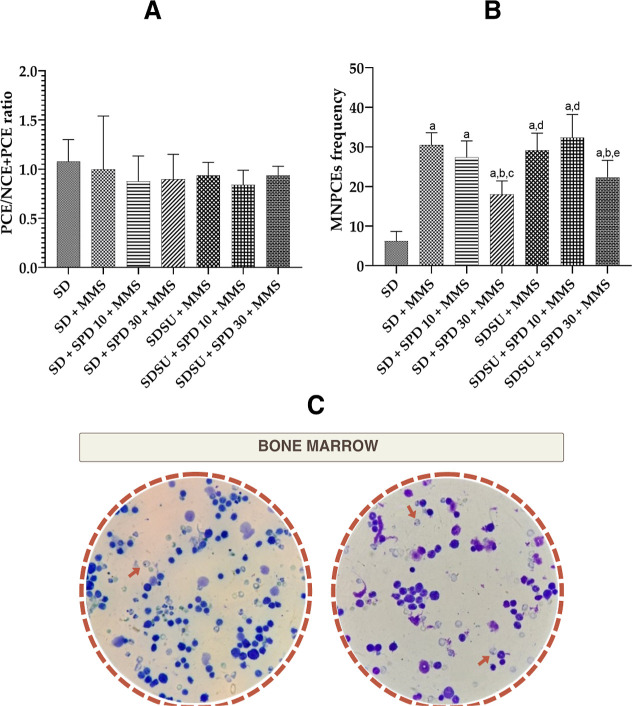 Figure 5
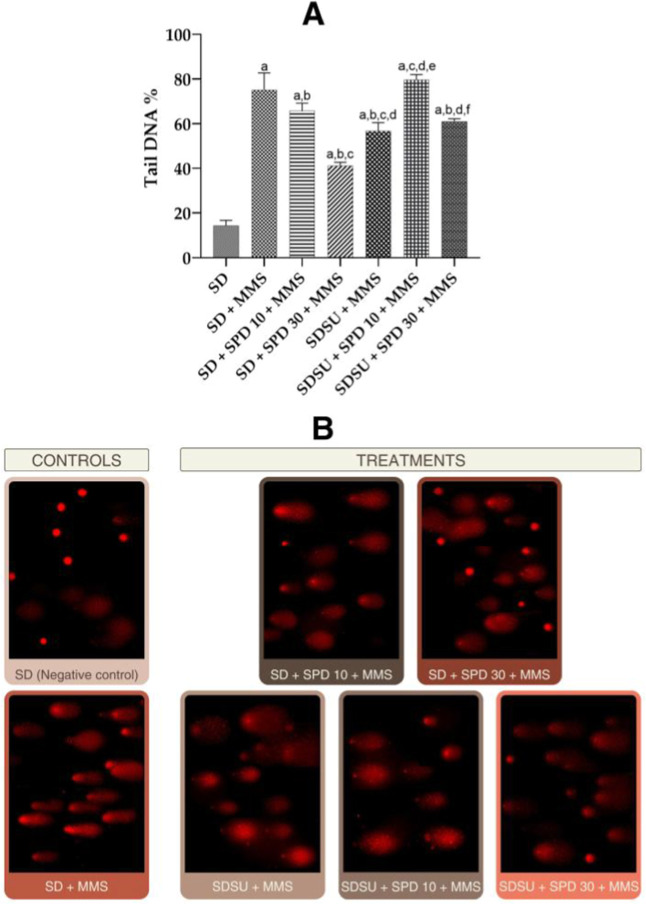 Figure 6
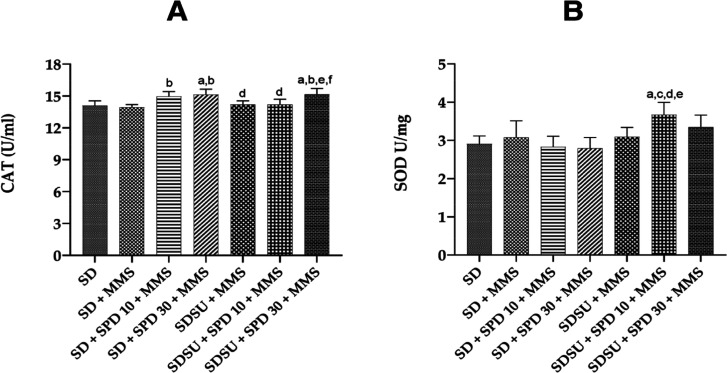 Figure 7
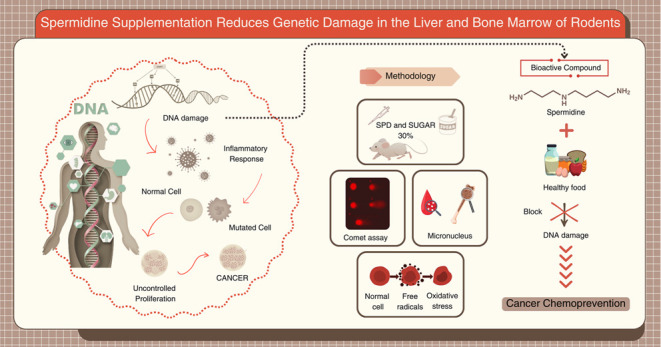 Figure 8
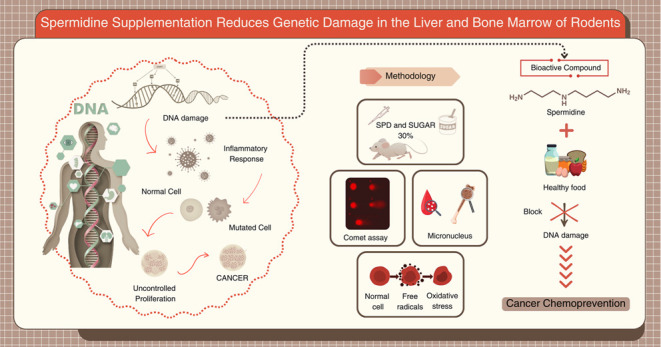 Figure 9
 Figure 10
Peer Reviews
No public reviews on file for this paper yet. If you reviewed it on a platform where reviews are public (OpenReview, ICLR, NeurIPS, ICML), you can paste yours below so the community can read it here.
Videos
No videos yet. Explain this paper in a talk, walkthrough, or lecture? Add one.
Taxonomy
TopicsPolyamine Metabolism and Applications · Carcinogens and Genotoxicity Assessment · Autophagy in Disease and Therapy