Synthesis and Antileishmanial Activity of Cinnamic Acid–Amantadine Amides
Érika Basílio Fernandes, Camila Simões de Freitas, Luciana Pereira Silva Viana, Cleiton Moreira da Silva, Natália Assis Guedes, Wanderson Romão, Valdemar Lacerda Jr, Nayara Araújo dos Santos, Fabrício Marques de Oliveira, Danilo Aniceto da Silva, Cristiane Isaac Cerceau

TL;DR
Scientists created new compounds by combining cinnamic acid and amantadine, which showed strong antileishmanial activity and could lead to better treatments for leishmaniasis.
Contribution
The study introduces novel cinnamic acid–amantadine amides with potent antileishmanial activity and improved pharmacological properties.
Findings
Five compounds showed >90% inhibition of promastigote viability at micromolar concentrations.
Compound 20 had the highest activity with an IC50 of 11.70–18.40 μM and a selectivity index up to 33.6.
Compounds 19 and 20 exhibited higher hydrophobicity and lower polar surface area, suggesting better membrane permeability.
Abstract
A novel series of cinnamic acid–amantadine amides was designed, synthesized, and evaluated for antileishmanial activity against Leishmania amazonensis, Leishmania braziliensis, and Leishmania infantum. The target compounds were obtained via amidation of cinnamic acid derivatives with amantadine, using EDC as a coupling reagent, and their structures were confirmed by IR, NMR, and HRMS analyses. Preliminary screening identified five derivatives (13, 16, 18, 19, and 20) with >90% inhibition of promastigote viability at micromolar concentrations. These five compounds exhibited IC50 values in the low micromolar range and favorable selectivity indices (SI > 9). Notably, compound 20, a brominated derivative, displayed the highest activity (IC50 = 11.70–18.40 μM; SI up to 33.6), followed by compound 19 bearing a trifluoromethyl substituent (IC50 = 17.30–26.70 μM; SI up to 24.6). In assays with…
Genes, proteins, chemicals, diseases, species, mutations and cell lines named across the full text — each resolved to its canonical identifier and authoritative record.
Click any figure to enlarge with its caption.
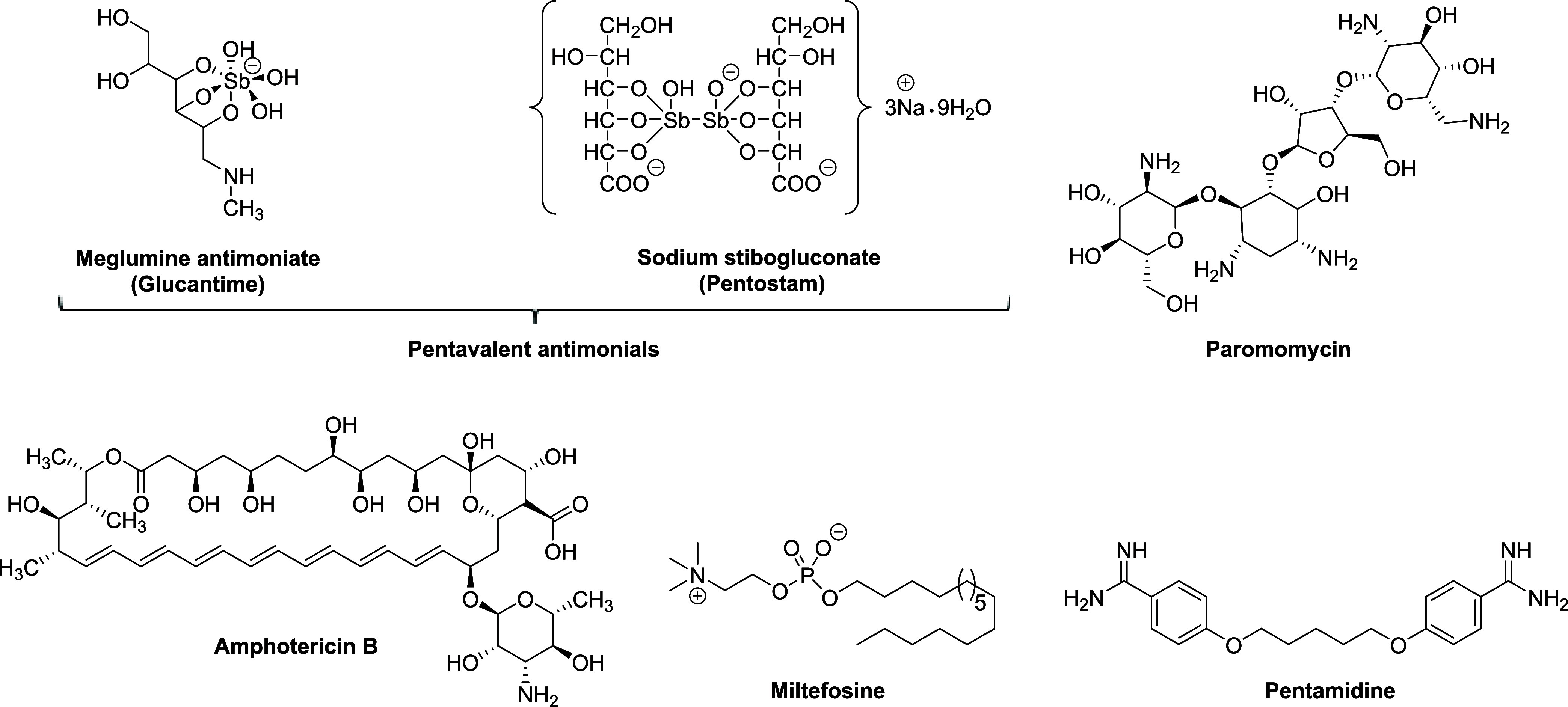 Figure 1
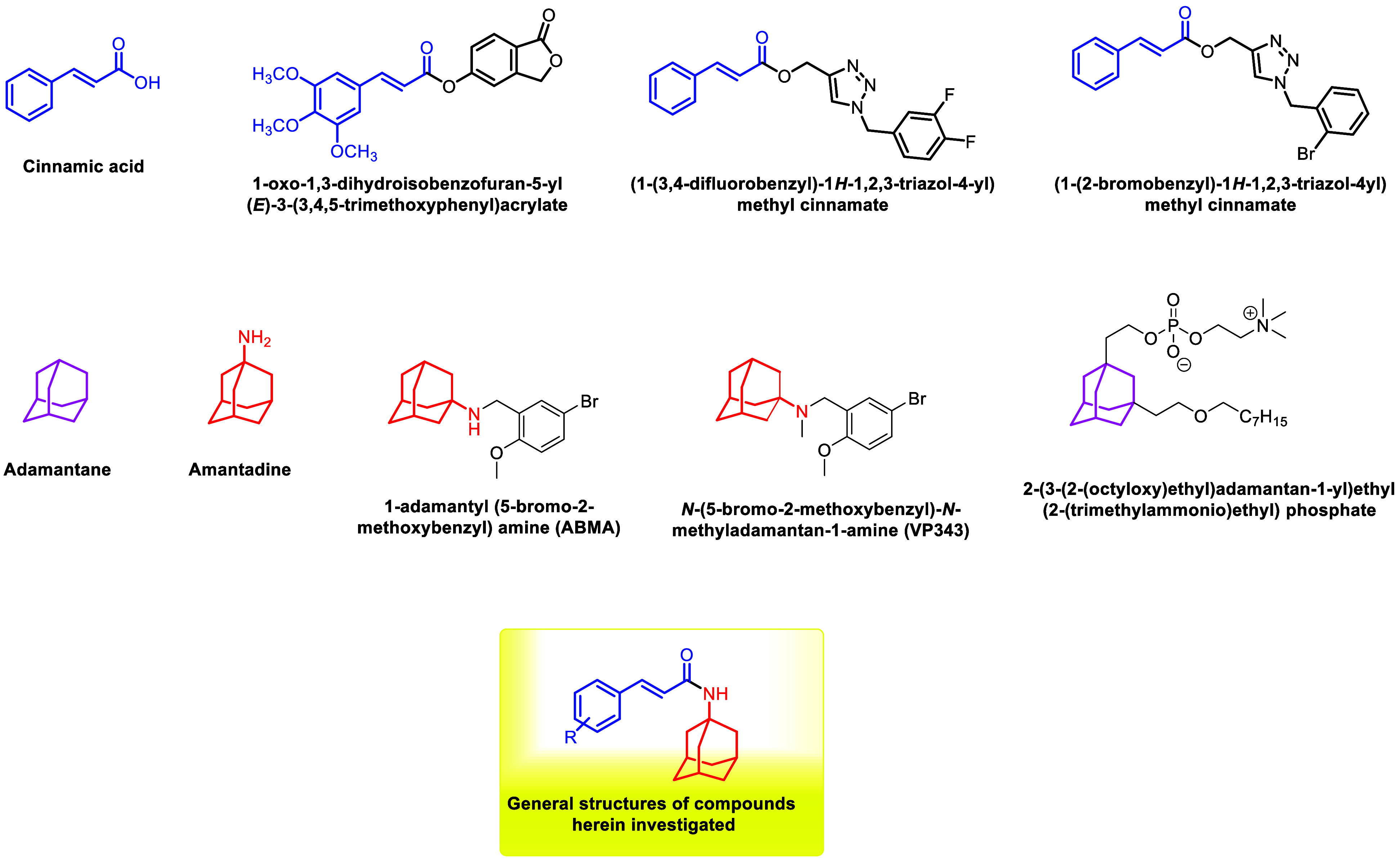 Figure 2
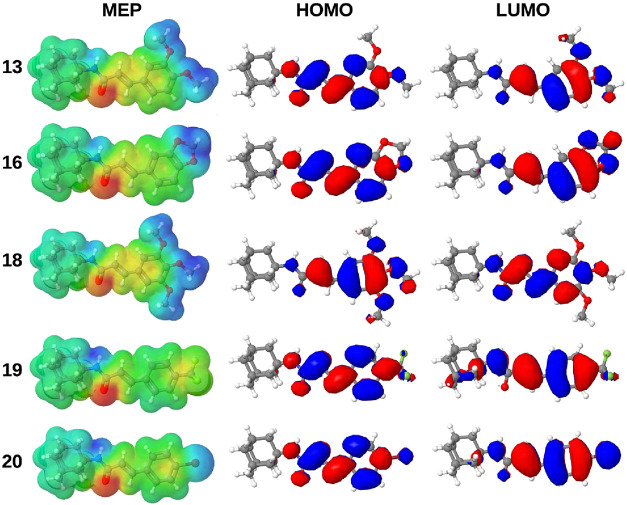 Figure 3
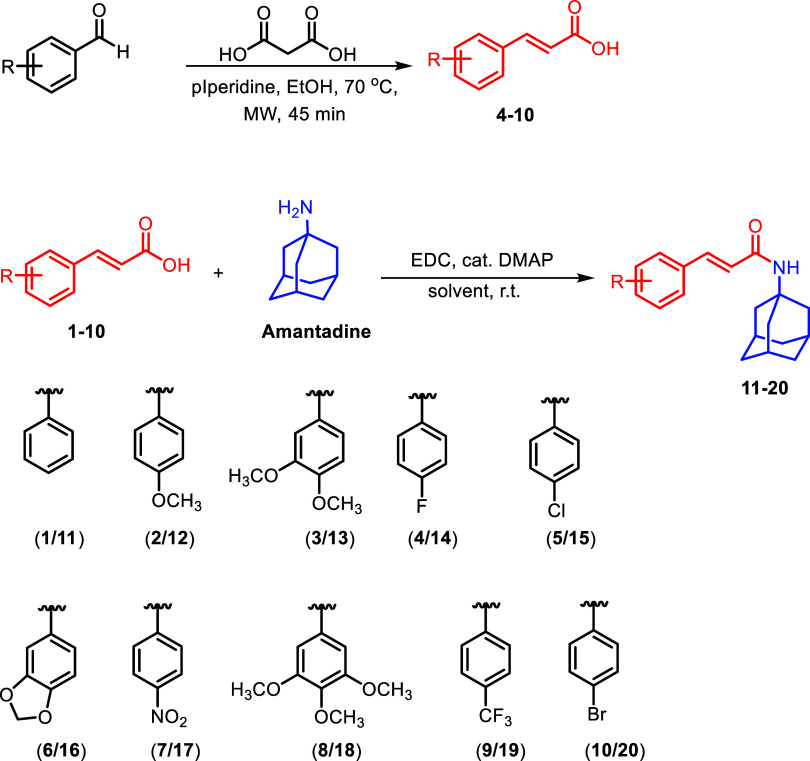 Figure 4
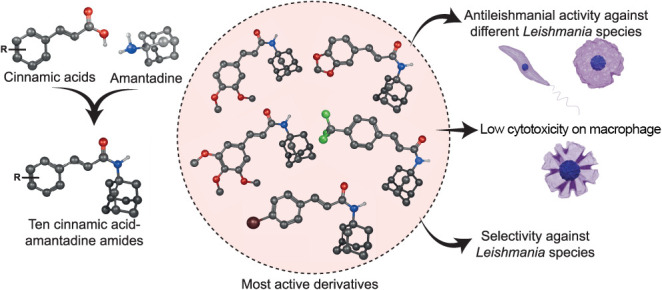 Figure 5
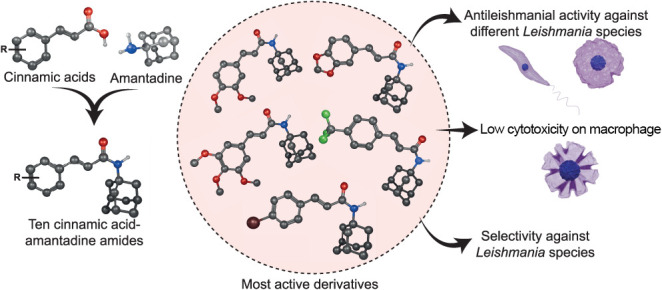 Figure 6
Peer Reviews
No public reviews on file for this paper yet. If you reviewed it on a platform where reviews are public (OpenReview, ICLR, NeurIPS, ICML), you can paste yours below so the community can read it here.
Videos
No videos yet. Explain this paper in a talk, walkthrough, or lecture? Add one.
Taxonomy
TopicsResearch on Leishmaniasis Studies · Trypanosoma species research and implications · Synthesis and biological activity