Evaluation of deliverable dose-mimicking automated volumetric arc radiation therapy planning for stage III non-small cell lung cancer patients: comparison with a commercial DVH-predicted automated planning system
Takeru Nakajima, Noriyuki Kadoya, Ryota Tozuka, Masaki Kondo, Shohei Tanaka, Kazuhiro Arai, Yoshiyuki Katsuta, Taichi Hoshino, Takaya Yamamoto, Keiichi Jingu

TL;DR
This study compares two automated planning methods for radiation therapy in lung cancer patients, finding that a dose-mimicking approach better replicates clinical plans than a DVH-predicted system.
Contribution
The study introduces and validates a dose-mimicking automated planning method for VMAT in NSCLC, demonstrating its superiority in capturing planner intent.
Findings
The dose-mimicking method (RGDose) showed no significant differences in OAR DVH parameters compared to clinical plans.
RGDose had lower mean absolute errors in dose distribution compared to the DVH-predicted method (RPDose).
The dose-mimicking approach better captured complex trade-offs between organs at risk than the conventional system.
Abstract
This study aimed to evaluate the clinical validity of a dose-mimicking automated planning for volumetric-modulated arc therapy (VMAT) in patients with stage III non-small cell lung cancer (NSCLC), through direct comparison with a commercial dose volume histogram (DVH)-predicted system. We retrospectively analyzed volumetric-modulated arc therapy plans from 75 patients with stage III NSCLC treated at our institution (60 for training, 15 for testing). The dose-mimicking method was implemented using RatoGuide, and the DVH-predicted method was implemented using RapidPlan. The RatoGuide 3D dose-prediction model was trained on the 60 training cases. For each test case, a predicted dose distribution was generated and converted to a deliverable plan (RGDose) in Eclipse using vendor-provided objective functions. A RapidPlan model trained and generated deliverable plans (RPDose) for the same…
Genes, proteins, chemicals, diseases, species, mutations and cell lines named across the full text — each resolved to its canonical identifier and authoritative record.
Click any figure to enlarge with its caption.
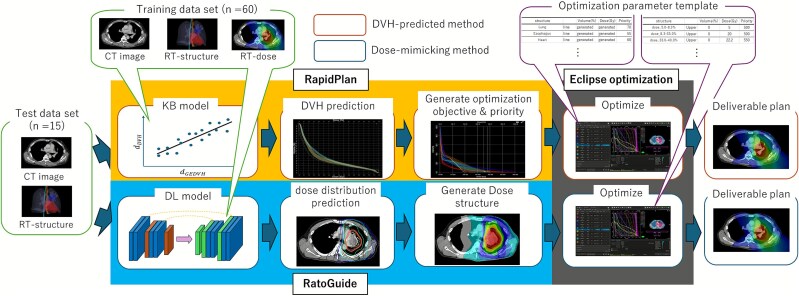 Figure 1
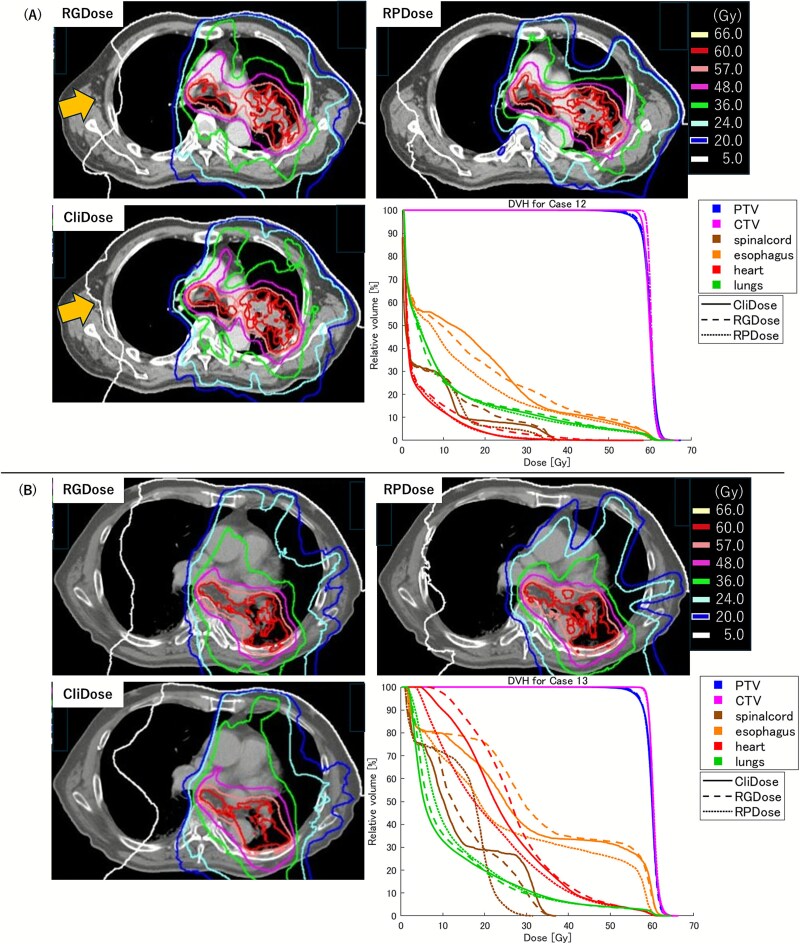 Figure 2
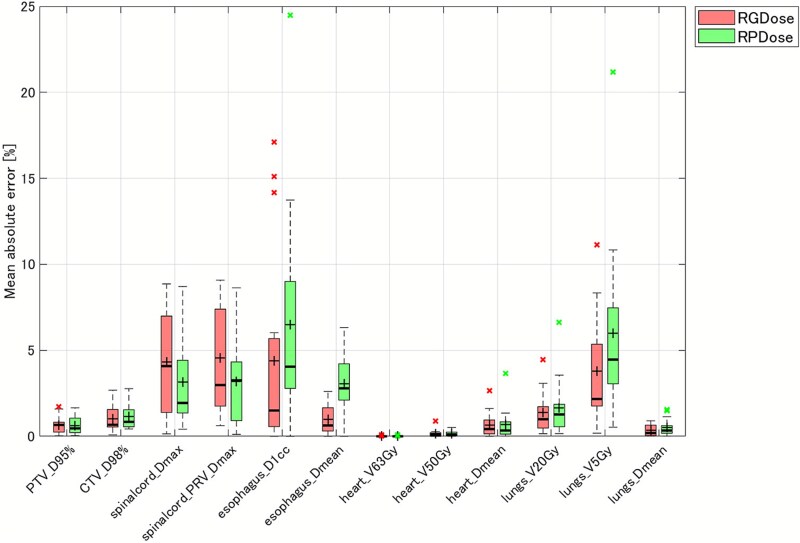 Figure 3
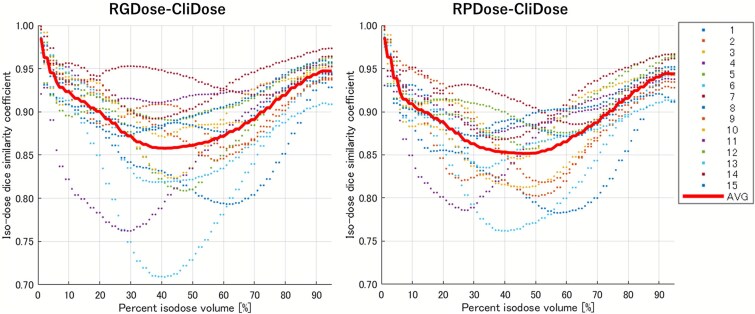 Figure 4
Peer Reviews
No public reviews on file for this paper yet. If you reviewed it on a platform where reviews are public (OpenReview, ICLR, NeurIPS, ICML), you can paste yours below so the community can read it here.
Videos
No videos yet. Explain this paper in a talk, walkthrough, or lecture? Add one.
Taxonomy
TopicsAdvanced Radiotherapy Techniques · Lung Cancer Diagnosis and Treatment · Effects of Radiation Exposure