Insecticidal Activity of Trichilia hirta L. (Sapindales: Meliaceae) Extracts Against Spodoptera frugiperda (Lepidoptera: Noctuidae) Larvae and the Identification of Bioactive Compounds
Mayara Barreto de Souza Arantes, Renata Rodrigues da Silva Robaina, Thalya Soares Ribeiro Nogueira, João Victor Panisset Lima Barcelos, Wanderson Rosa da Silva, Guilherme Ferreira Soares Passos, Renata Cunha Pereira, Ludimila Simões Peçanha, Gabriel Garreto dos Santos

TL;DR
This study shows that Trichilia hirta plant extracts are highly effective against Spodoptera frugiperda larvae and identifies specific compounds responsible for this insecticidal activity.
Contribution
The first identification of noreugenin in the Trichilia genus and the discovery of bioactive compounds in T. hirta against a major pest.
Findings
The crude methanolic extract of T. hirta caused 100% larval mortality in Spodoptera frugiperda.
The ethyl acetate fraction showed the highest insecticidal activity, reducing larval weight gain and causing mortality.
Four compounds, including noreugenin, were identified as potentially responsible for the observed bioactivity.
Abstract
Studying plants with insecticidal activity and the compounds responsible for this type of activity is a promising approach for discovering new insecticides. Plants from the Meliaceae family are rich in limonoids, compounds with proven insecticidal action against certain pests. This study investigated the insecticidal activity of the crude methanolic extracts from Trichilia hirta fruits against Spodoptera frugiperda larvae. An initial toxicity bioassay showed 100% larval mortality when testing T. hirta extract. The crude extract was partitioned using ethyl acetate, dichloromethane, and n‐butanol, and the LD50 dose (785.244 mg kg− 1) was used to test the solvent fractions against the larvae. The ethyl acetate fraction caused the highest mortality and reduced larval weight gain. This fraction was subjected to column chromatography, yielding 12 fractions, of which, fractions 5 to 9…
Genes, proteins, chemicals, diseases, species, mutations and cell lines named across the full text — each resolved to its canonical identifier and authoritative record.
Click any figure to enlarge with its caption.
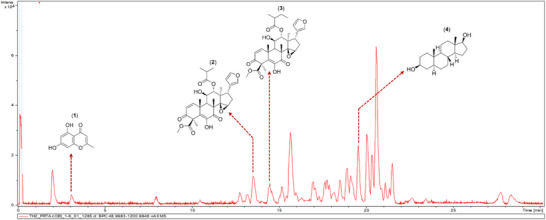 Figure 1
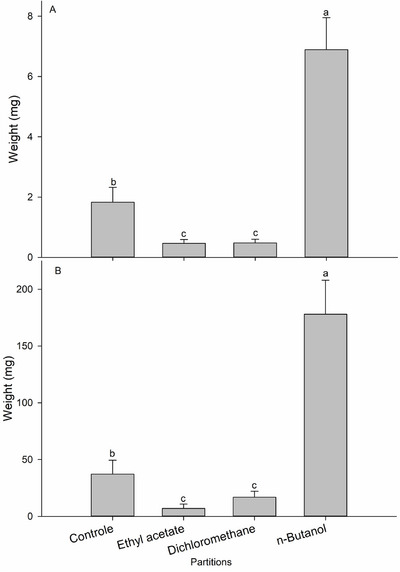 Figure 2
 Figure 3
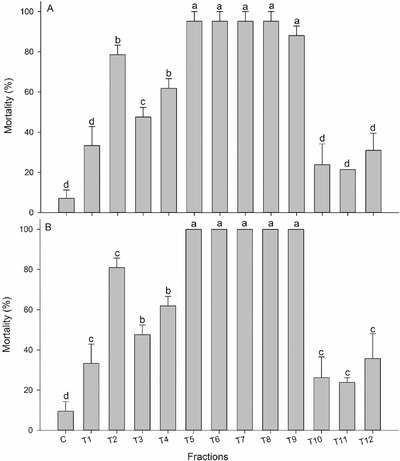 Figure 4
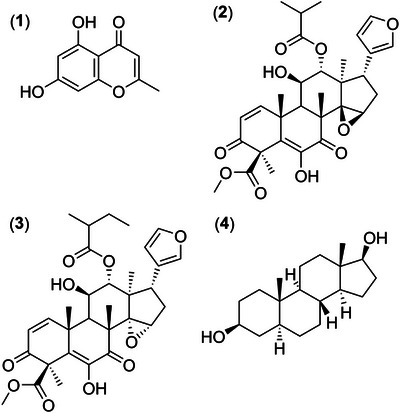 Figure 5
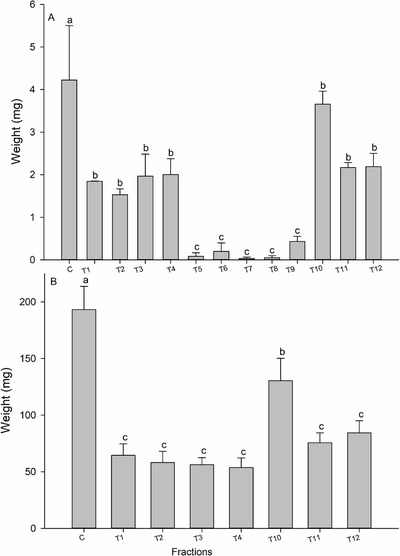 Figure 6
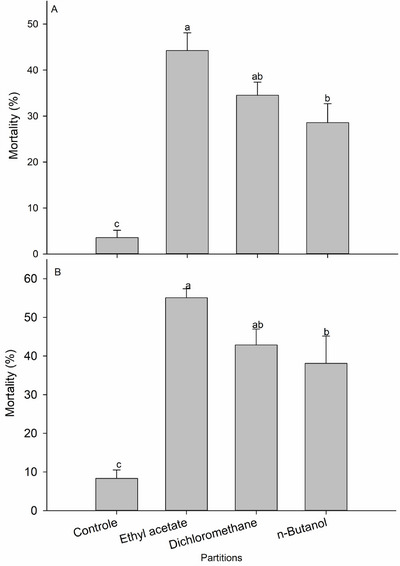 Figure 7
Peer Reviews
No public reviews on file for this paper yet. If you reviewed it on a platform where reviews are public (OpenReview, ICLR, NeurIPS, ICML), you can paste yours below so the community can read it here.
Videos
No videos yet. Explain this paper in a talk, walkthrough, or lecture? Add one.
Taxonomy
TopicsPhytochemical compounds biological activities · Insect Pest Control Strategies · Beetle Biology and Toxicology Studies