Europium Metal Complex [Eu(dbm)3.LAP] Promotes Antinociceptive Behavior via TRPA1 Neuromodulation and an Anti‐Inflammatory Effect in Adult Zebrafish
Emanuela de Lima Rebouças Borges, Antonio Wlisses da Silva, Erick Patrick Alves Moreira, Matheus Nunes da Rocha, Hélcio Silva dos Santos, Jorge Fernando Silva de Menezes, Aluísio Marques da Fonseca, Maria Izabel Florindo Guedes, Emmanuel Silva Marinho

TL;DR
This paper shows that a europium complex reduces pain and inflammation in zebrafish by targeting TRPA1 receptors and has good brain permeability.
Contribution
The first evaluation of a europium complex's antinociceptive and anti-inflammatory effects via TRPA1 modulation in zebrafish.
Findings
Eu(dbm)3.LAP reduced inflammation and oxidative stress in zebrafish tissues.
In silico analysis showed high brain permeability and low cardiotoxicity for the complex.
Molecular docking confirmed stable interactions with TRPA1 receptor residues.
Abstract
The identification of antinociceptive compounds often relies on animal models such as zebrafish, in which TRPA1 activation induces hyperlocomotion. This study presents the first evaluation of the anti‐inflammatory and antinociceptive properties of the europium complex [Eu(dbm)3.LAP], derived from Lapachol, and investigates its possible interaction with the TRPA1 channel in adult zebrafish. The complex was administered intramuscularly, and its effects were compared with camphor and morphine controls. In vivo findings were integrated with in silico docking, molecular dynamics simulations, and predictive pharmacokinetic analysis. Eu(dbm)3.LAP (40 mg/kg, oral) was effective specifically in the inflammatory phase, and its effect was blocked by camphor, indicating TRPA1 modulation. The compound also reduced carrageenan‐induced inflammation and attenuated oxidative stress in nerve and liver…
Genes, proteins, chemicals, diseases, species, mutations and cell lines named across the full text — each resolved to its canonical identifier and authoritative record.
Click any figure to enlarge with its caption.
 Figure 1
 Figure 2
 Figure 3
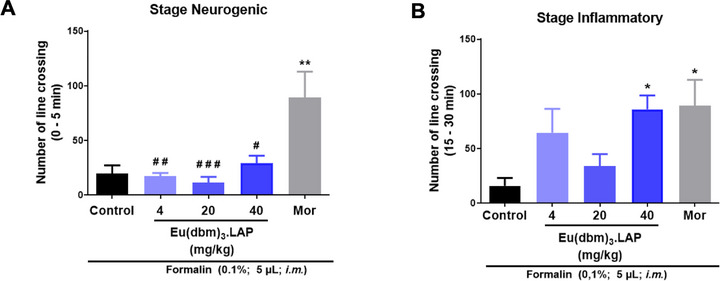 Figure 4
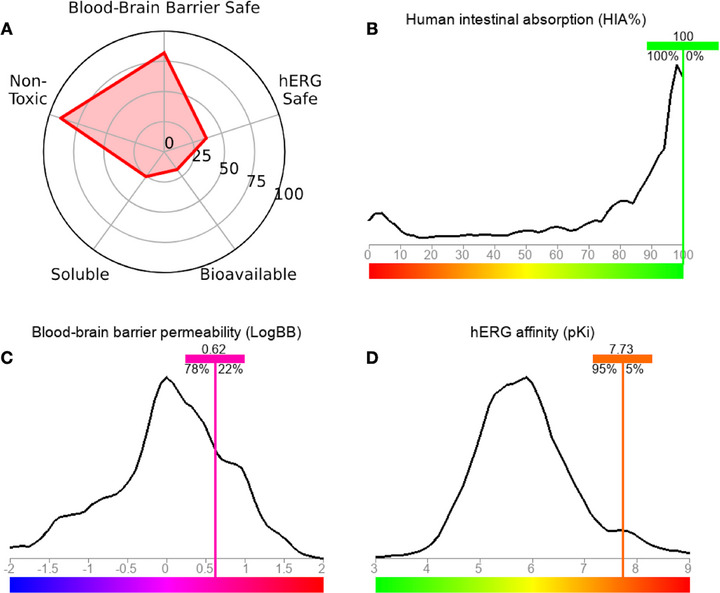 Figure 5
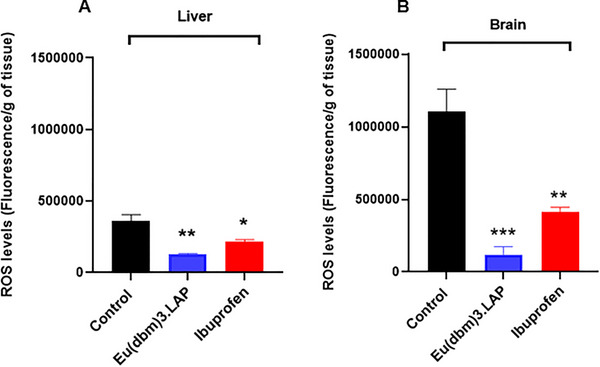 Figure 6
 Figure 7
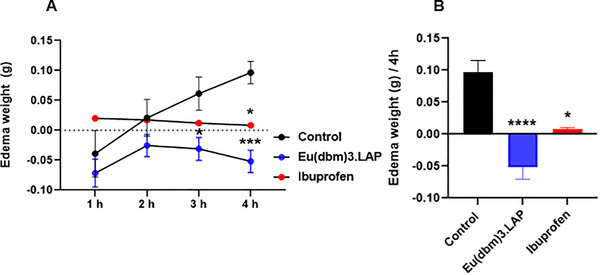 Figure 8
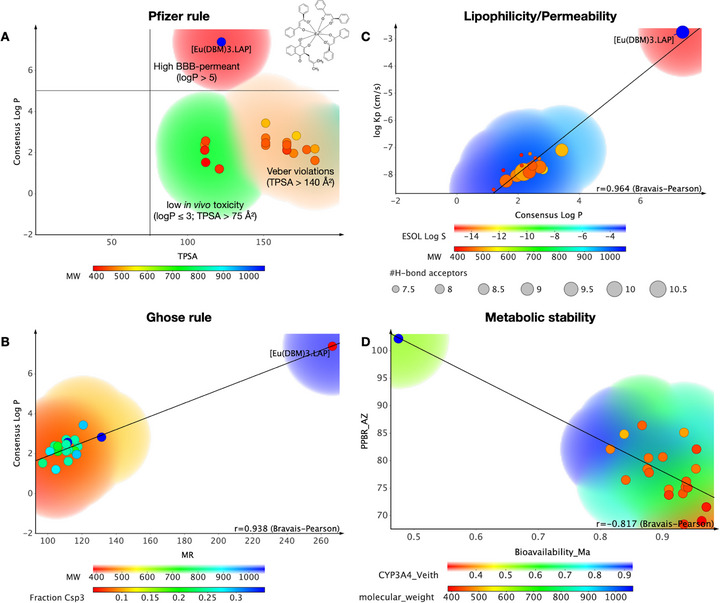 Figure 9
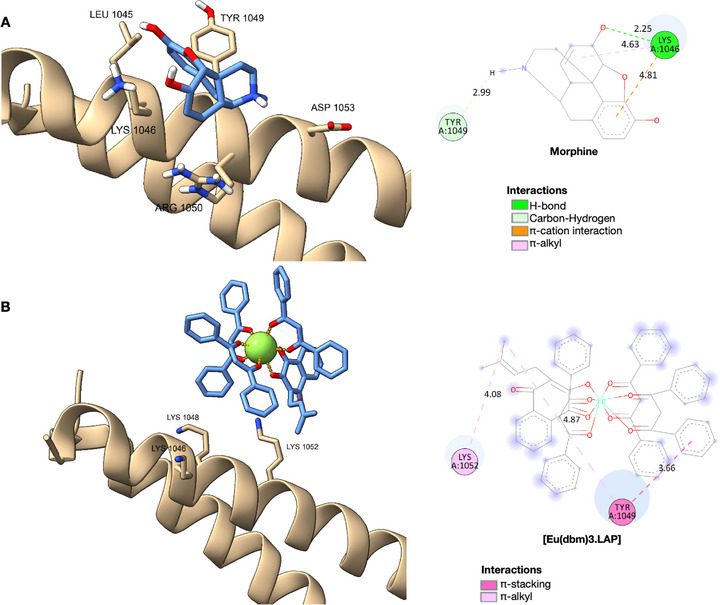 Figure 10
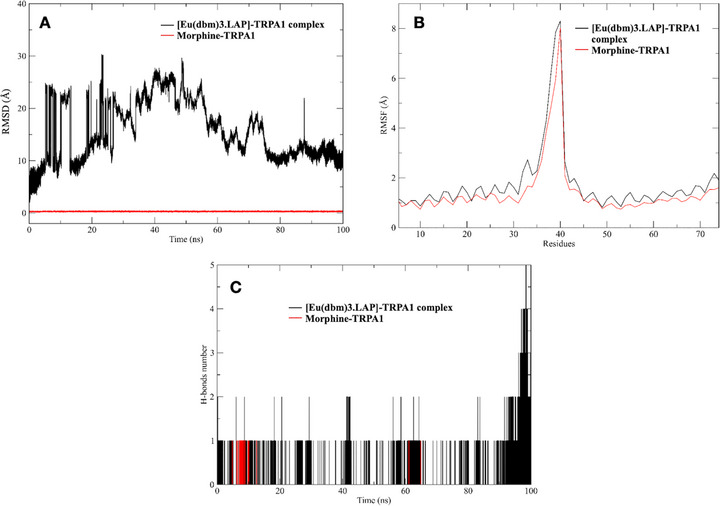 Figure 11
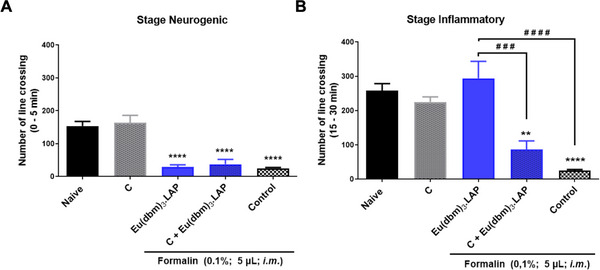 Figure 12
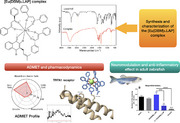 Figure 13
 Figure 14
Peer Reviews
No public reviews on file for this paper yet. If you reviewed it on a platform where reviews are public (OpenReview, ICLR, NeurIPS, ICML), you can paste yours below so the community can read it here.
Videos
No videos yet. Explain this paper in a talk, walkthrough, or lecture? Add one.
Taxonomy
TopicsIon Channels and Receptors · Magnesium in Health and Disease · Vanadium and Halogenation Chemistry