The prevalence and role of human respiratory syncytial virus in pediatric respiratory tract infections: a systematic review and meta-analysis of global data
Pegah Khales, Mohammad Hossein Razizadeh, Saied Ghorbani, Hassan Saadati, Zahra Salavatiha, Afagh Moattari, Ahmad Tavakoli

TL;DR
This study finds that human respiratory syncytial virus is a major cause of respiratory infections in children, especially in infants and inpatients, with significant regional and age-related variations.
Contribution
The study provides a global meta-analysis of hRSV prevalence in pediatric respiratory infections, including detailed subgroup analyses by age, region, and disease type.
Findings
The global prevalence of hRSV in children under 18 is 21.6%, highest in infants under 6 months and inpatients.
hRSV-A is more common than hRSV-B, with a 55.7% prevalence compared to 44.3%.
hRSV infection significantly increases the risk of respiratory infections, particularly lower respiratory infections, with an odds ratio of 7.0.
Abstract
Human respiratory syncytial virus (hRSV) is a major cause of respiratory tract infections in children worldwide. This study aims to describe the prevalence of hRSV in pediatric patients with respiratory tract infections, clarifying its association with such infections. We analyzed studies from PubMed, Scopus, and Web of Science up to August 15, 2025, focusing on polymerase chain reaction-confirmed cases in children under 18 years. Data from 539 studies (584 datasets) were included. Pooled prevalence was calculated using a random-effects model, with subgroup analyses by region, gender, age group, sampling time, type of respiratory disease, types of patient care, genotypes, and subtypes of hRSV. Odds ratios evaluated the association between hRSV infection and respiratory disease risk. The global prevalence among 1,733,341 children was 21.6%, with the highest rates in children aged less…
Genes, proteins, chemicals, diseases, species, mutations and cell lines named across the full text — each resolved to its canonical identifier and authoritative record.
Click any figure to enlarge with its caption.
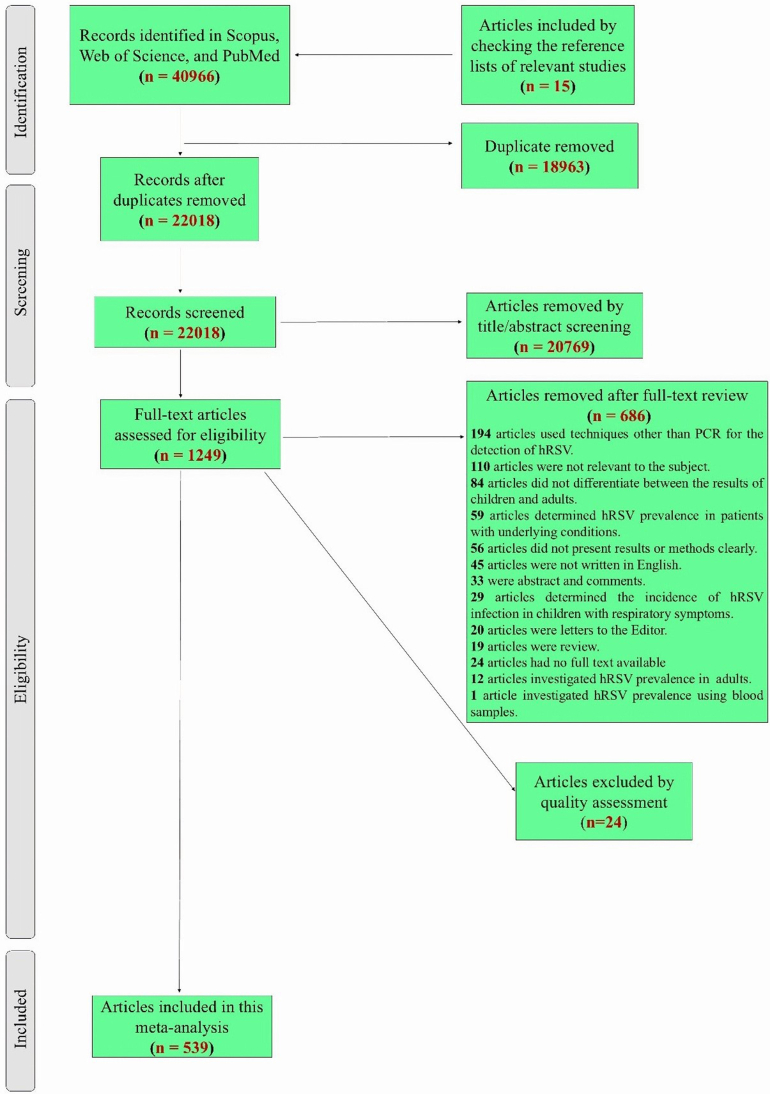 Figure 1
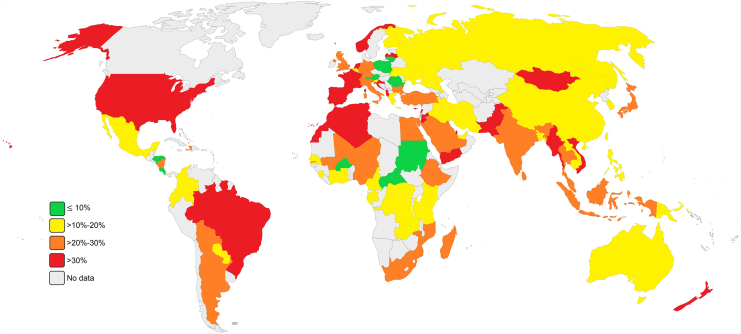 Figure 2
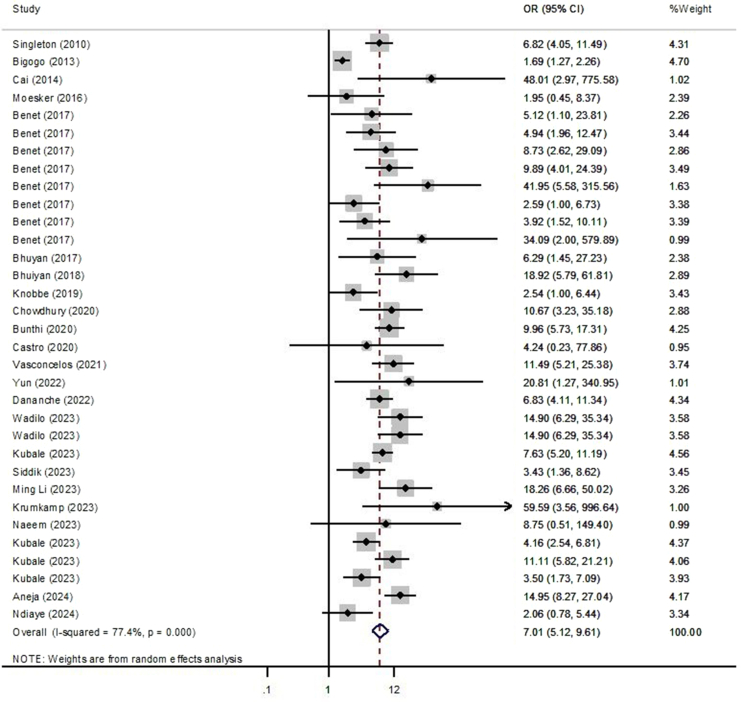 Figure 3
 Figure 4
Peer Reviews
No public reviews on file for this paper yet. If you reviewed it on a platform where reviews are public (OpenReview, ICLR, NeurIPS, ICML), you can paste yours below so the community can read it here.
Videos
No videos yet. Explain this paper in a talk, walkthrough, or lecture? Add one.
Taxonomy
TopicsRespiratory viral infections research · Virus-based gene therapy research · Cystic Fibrosis Research Advances