VERMONT non-optimised: Feasibility of angiography-derived vFFR using baseline diagnostic catheter images
Daniel Akrawi, Krishna Kadappu, James Xu, Tamer Yousef Naguib Badie, Oliver Gibbs, Hashim Kachwalla, Phong TD Nguyen, Rahul Kurup, Upul Premawardhana, Sidney Lo, Justyn Huang, Hao Tran, Kavie Soosapilla, Aiden O’loughlin, Annemarie Hennessy, Giuseppe Femia

TL;DR
This study shows that vFFR calculated from standard angiogram images is accurate for identifying heart artery blockages, similar to using optimized images.
Contribution
Demonstrates the feasibility of using baseline diagnostic catheter images for real-time vFFR with strong diagnostic accuracy.
Findings
vFFR from baseline images had 94% sensitivity and 75% specificity for detecting significant lesions.
Baseline and optimized vFFR showed strong correlation (R = 0.87) and excellent agreement (ICC = 0.93).
vFFR from baseline images achieved an AUC of 0.91 for identifying lesions with FFR ≤ 0.80.
Abstract
Vessel-fractional-flow-reserve (vFFR) estimates coronary physiology from the three-dimensional reconstruction of two angiographic projections using computational fluid dynamics. Although its diagnostic accuracy using optimised angiographic acquisitions is well established, evidence supporting its use with baseline diagnostic catheter images remains limited. To evaluate the diagnostic performance of real-time vFFR derived from baseline diagnostic catheter images against wire-based FFR, and to compare its performance with vFFR computed from optimised angiographic projections. VERMONT Non-Optimised was a prospective, single-centre, blinded study in which real-time vFFR derived from both baseline diagnostic and optimised images were measured and compared with simultaneous wire-based FFR. A wire-based FFR of ≤ 0.80 defined a physiologically significant lesion. In 195 patients with 205…
Genes, proteins, chemicals, diseases, species, mutations and cell lines named across the full text — each resolved to its canonical identifier and authoritative record.
Click any figure to enlarge with its caption.
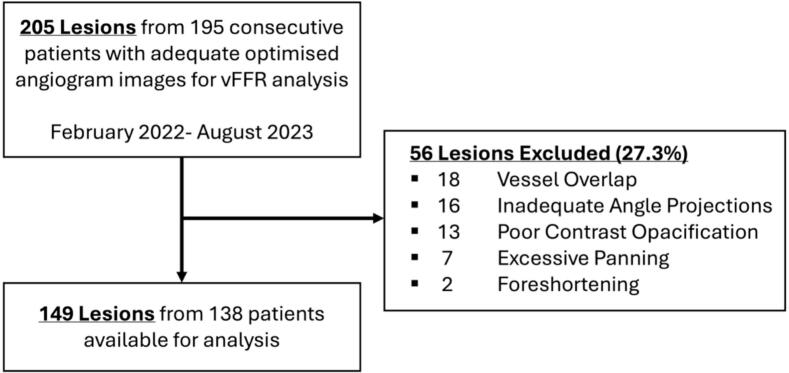 Figure 1
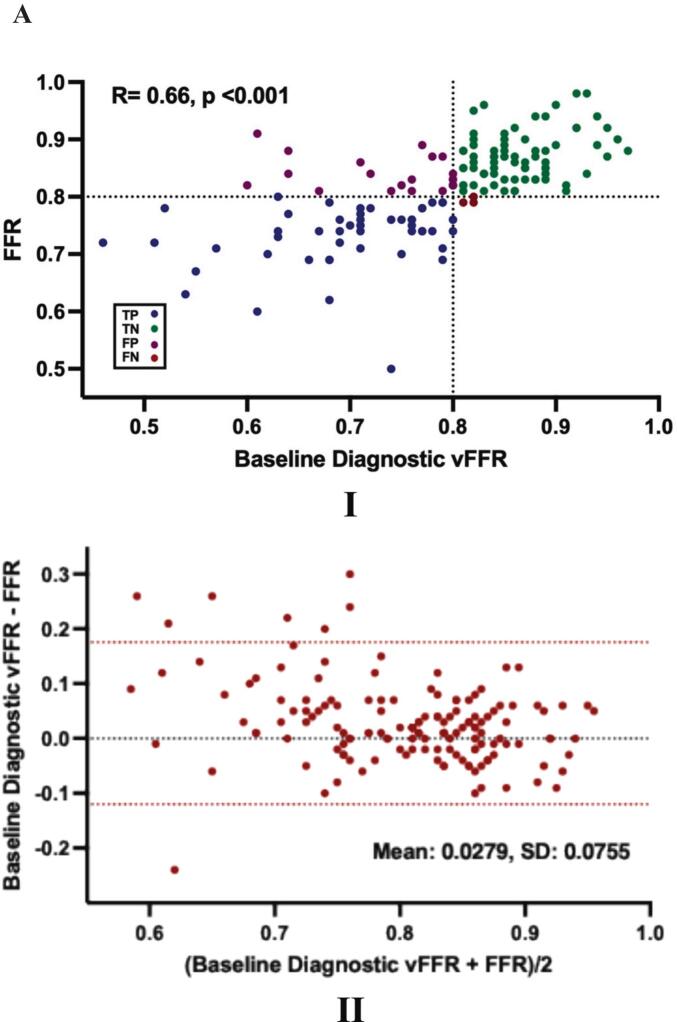 Figure 2
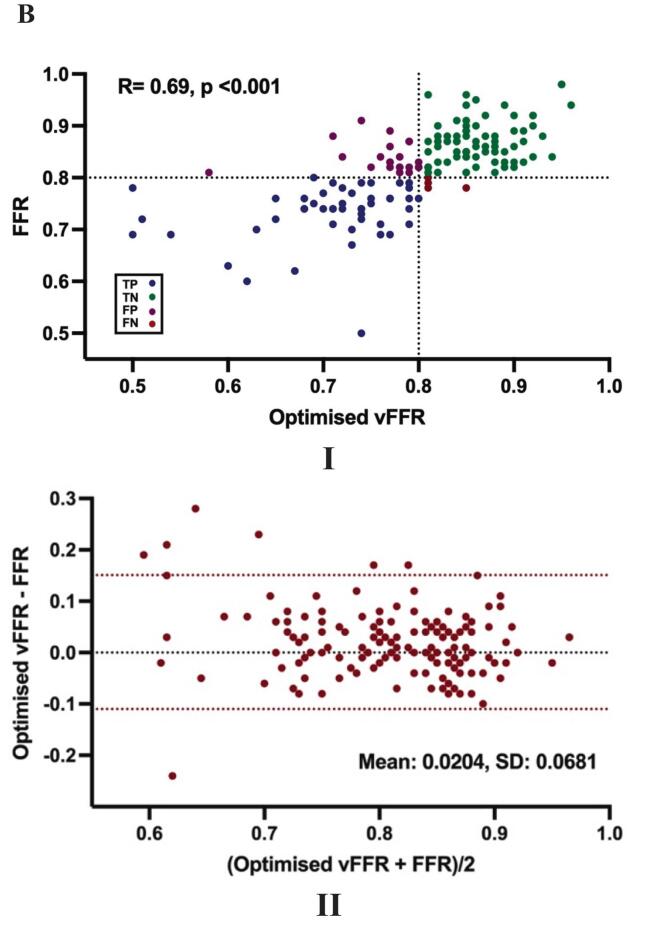 Figure 3
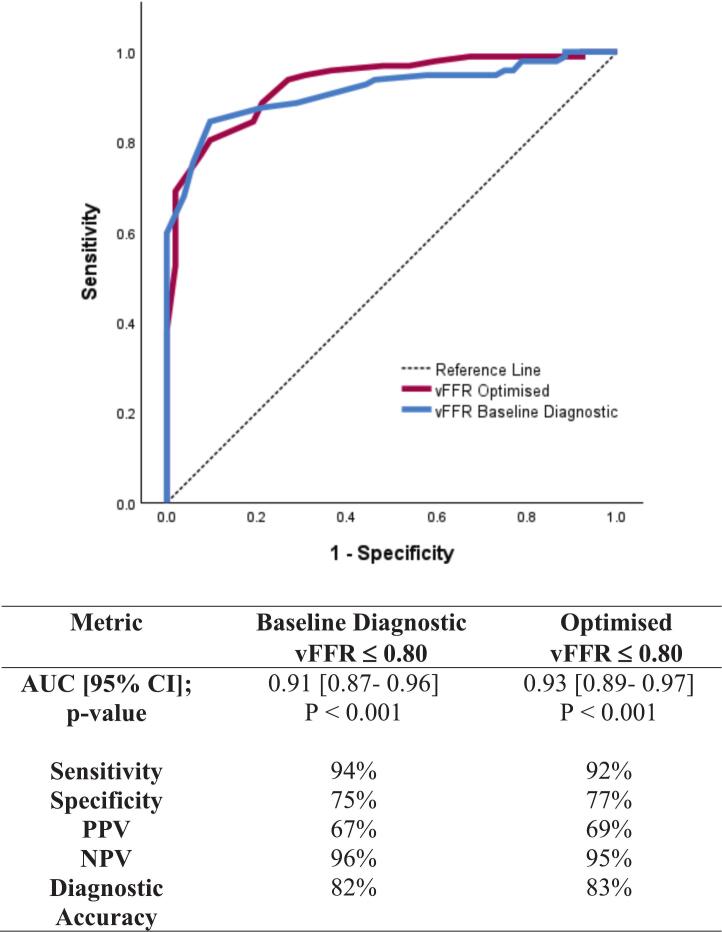 Figure 4
Peer Reviews
No public reviews on file for this paper yet. If you reviewed it on a platform where reviews are public (OpenReview, ICLR, NeurIPS, ICML), you can paste yours below so the community can read it here.
Videos
No videos yet. Explain this paper in a talk, walkthrough, or lecture? Add one.
Taxonomy
TopicsCoronary Interventions and Diagnostics · Cardiac Imaging and Diagnostics · Coronary Artery Anomalies