Exploring survival-associated transcriptomic subtypes in ovarian cancer using RNAseq from FFPE tissues in a clinical trial cohort
Maj K Kjeldsen, Frederik Otzen Bagger, Henrik Roed, Gitte-Bettina Nyvang, Charlotte Aaquist Haslund, Anja Oer Knudsen, Anne Krejbjerg Motavaf, Susanne Malander, Maarit Anttila, Gabriel Lindahl, Johanna Mäenpää, Maria Dimoula, Theresa Werner, Trine Zeeberg Iversen

TL;DR
This study explores transcriptomic subtypes in ovarian cancer using RNAseq from FFPE tissues, identifying potential prognostic genes and challenges in classification.
Contribution
The study validates RNAseq from FFPE tissues for transcriptomic subtyping in ovarian cancer and identifies differentially expressed genes linked to survival.
Findings
FFPE tissues provided high-quality RNAseq data suitable for transcriptomic analysis.
Eighteen genes were differentially expressed between long- and short-term survivors, including DPEP3 and SLC14A1.
Transcriptomic subtypes showed moderate agreement but no significant survival differences were observed.
Abstract
•Transcriptomic subtyping was applied to RNAseq data from advanced EOC patients using established algorithms.•FFPE tumor tissues yielded high-quality RNAseq data, demonstrating feasibility for transcriptomic analyses.•Subtype classification showed significant agreement across algorithms but lacked OS differences in this patient cohort.•Distinct immunoreactive clusters were identified, suggesting utility in stratifying patients for immunotherapy trials.•DEGs between long- and short-term survivors highlight prognostic markers and potential therapeutic targets inEOC. Transcriptomic subtyping was applied to RNAseq data from advanced EOC patients using established algorithms. FFPE tumor tissues yielded high-quality RNAseq data, demonstrating feasibility for transcriptomic analyses. Subtype classification showed significant agreement across algorithms but lacked OS differences in this…
Genes, proteins, chemicals, diseases, species, mutations and cell lines named across the full text — each resolved to its canonical identifier and authoritative record.
Click any figure to enlarge with its caption.
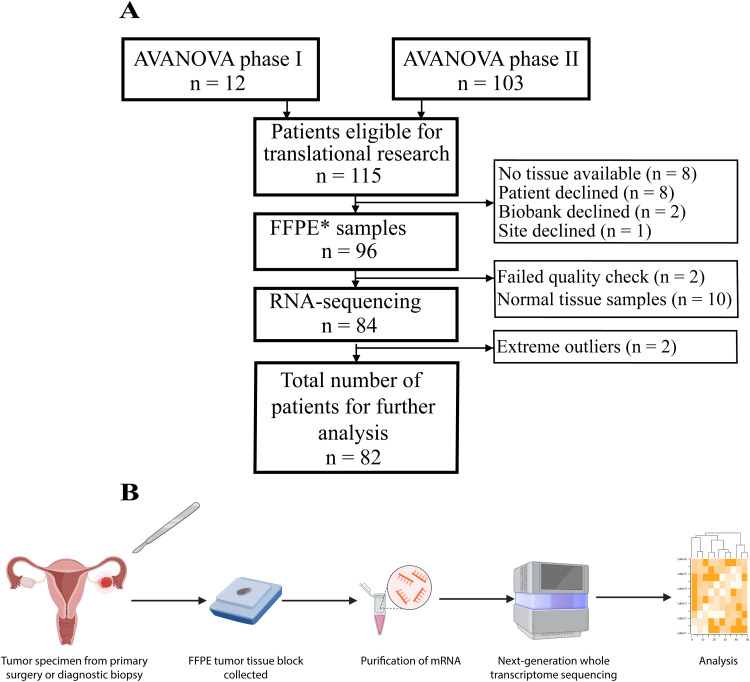 Figure 1
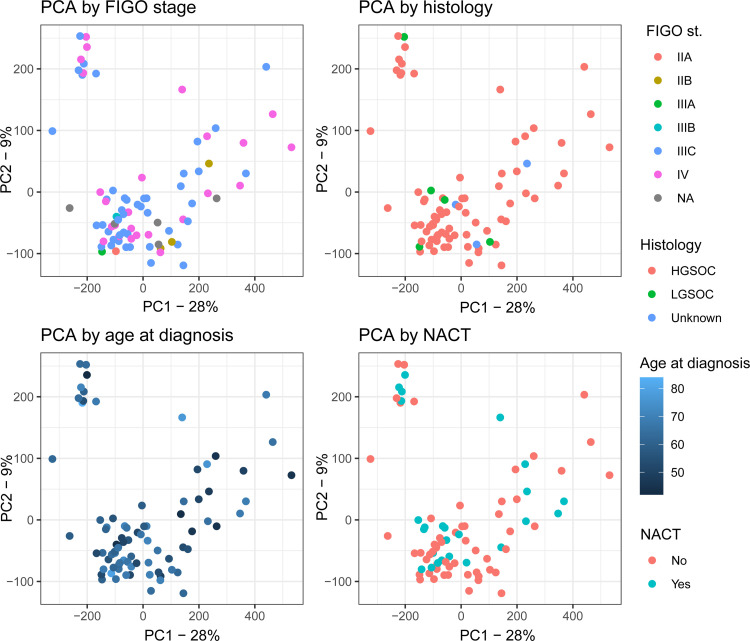 Figure 2
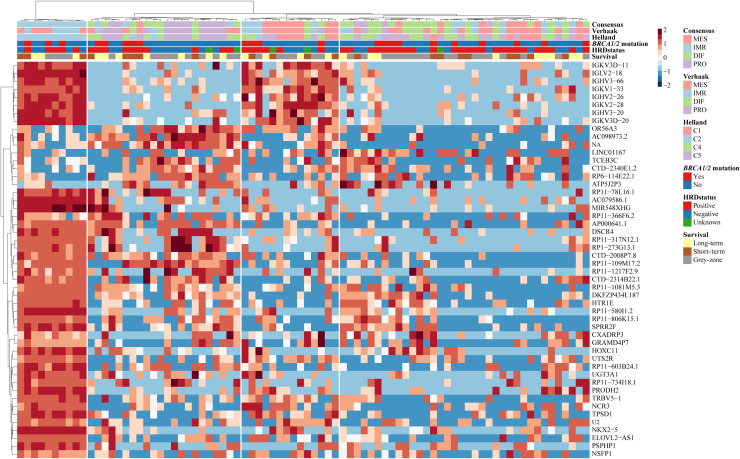 Figure 3
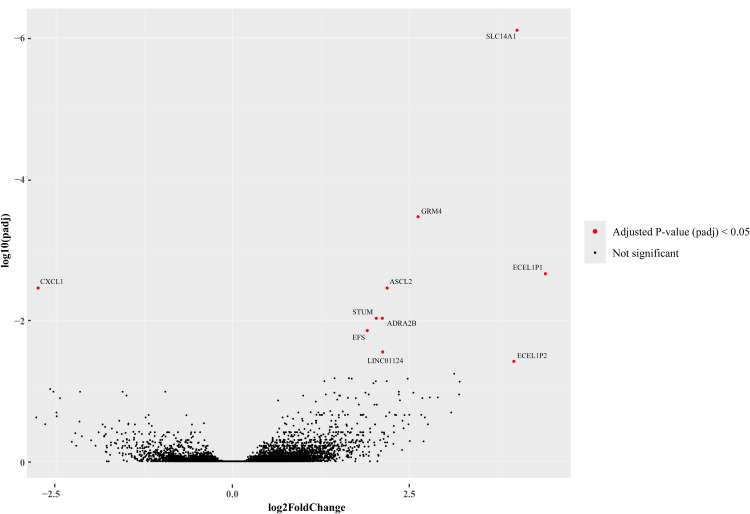 Figure 4
Peer Reviews
No public reviews on file for this paper yet. If you reviewed it on a platform where reviews are public (OpenReview, ICLR, NeurIPS, ICML), you can paste yours below so the community can read it here.
Videos
No videos yet. Explain this paper in a talk, walkthrough, or lecture? Add one.
Taxonomy
TopicsGene expression and cancer classification · Ferroptosis and cancer prognosis · Molecular Biology Techniques and Applications