Analysis and prediction of cardiovascular research hotspots, trends and interdisciplinarity
Zeye Liu, Ziping Li, Hong Jiang, Guangyu Pan, Wenchao Li, Fengwen Zhang, Wen-Bin Ou-yang, Shouzheng Wang, Cheng Wang, Xuanqi An, Anlin Dai, Ruibing Xia, Yakun Li, Xiaochun Sun, Yi Shi, Chengliang Yin, Xiang-Bin Pan

TL;DR
This study analyzes cardiovascular research trends and highlights key areas like minimally invasive treatments and interdisciplinary collaboration.
Contribution
The paper introduces a novel AI-driven approach to identify and predict cardiovascular research hotspots and interdisciplinary trends.
Findings
Clinical studies showed the most significant growth in cardiovascular research.
Minimally invasive treatments for valve disease and hypertension prevention are current research hotspots.
Interdisciplinary collaboration is increasing, as shown by citation relationships between document clusters.
Abstract
Comprehensive data and analyses on cardiovascular research could clarify recent research trends for the academic community and facilitate policy development. We examined publications and reference data to identify research topics, trends and interdisciplinarity for cardiovascular disease (CVD). We extracted and clustered text fragments from the titles and abstracts of 2 512 445 publications using artificial intelligence techniques, including natural language processing (NLP) for semantic analysis. Cardiovascular experts identified topics and document clusters based on the output of those semiautomatic methods. We also applied machine learning algorithms to predict the trends over the next 5 years in each field. We examined the crossover between the two cluster groups using citation relationships in the documents. Research in clinical studies showed the most notable increase; that was…
Genes, proteins, chemicals, diseases, species, mutations and cell lines named across the full text — each resolved to its canonical identifier and authoritative record.
Click any figure to enlarge with its caption.
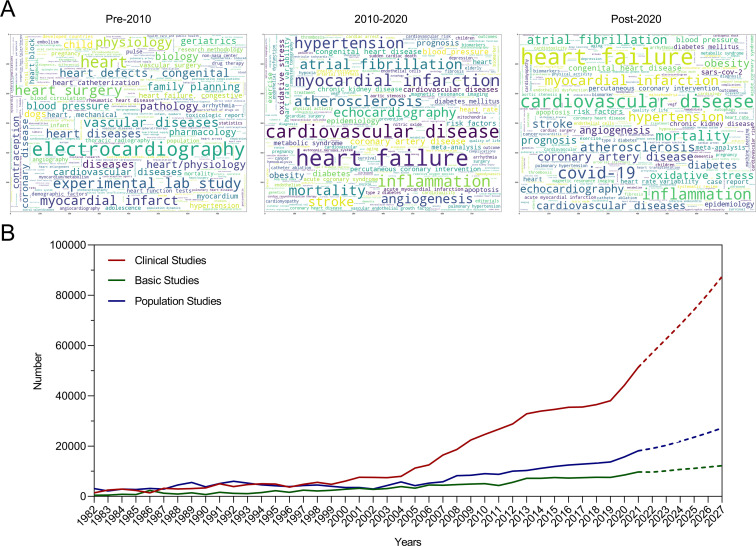 Figure 1
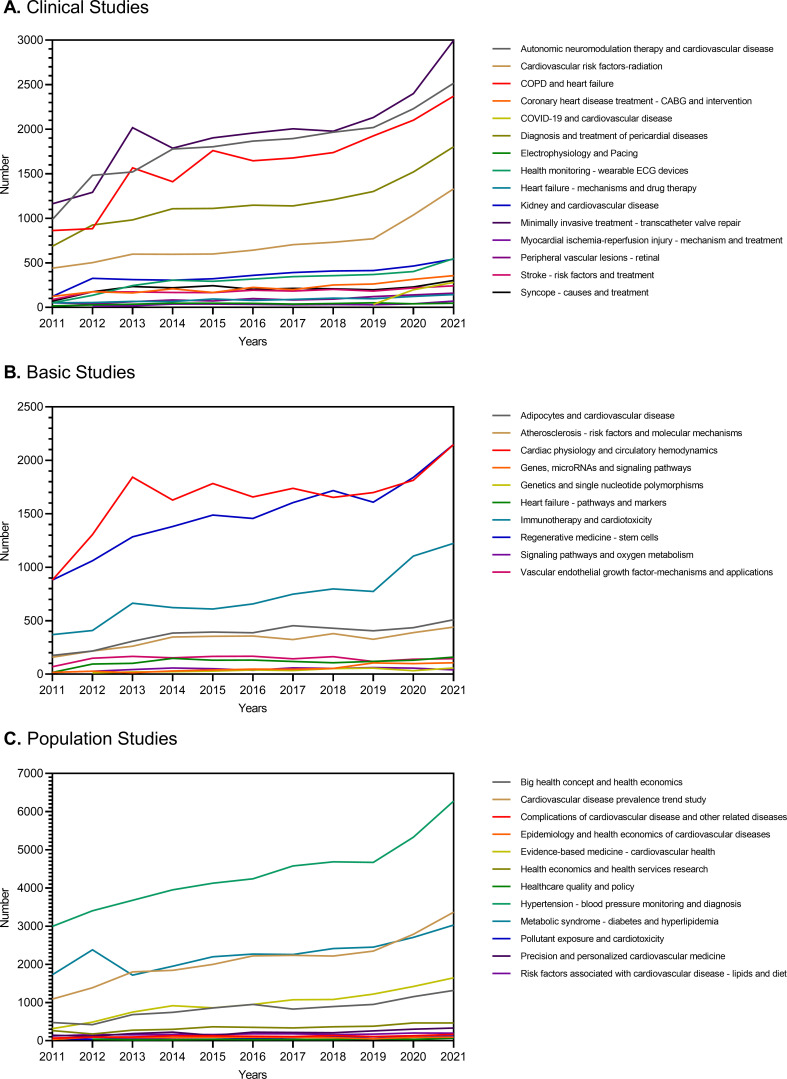 Figure 2
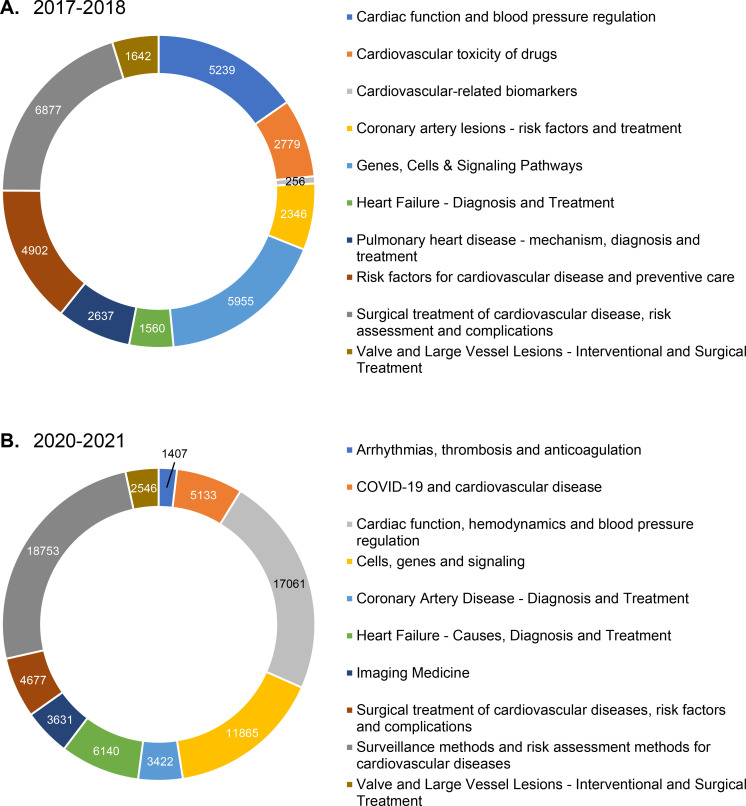 Figure 3
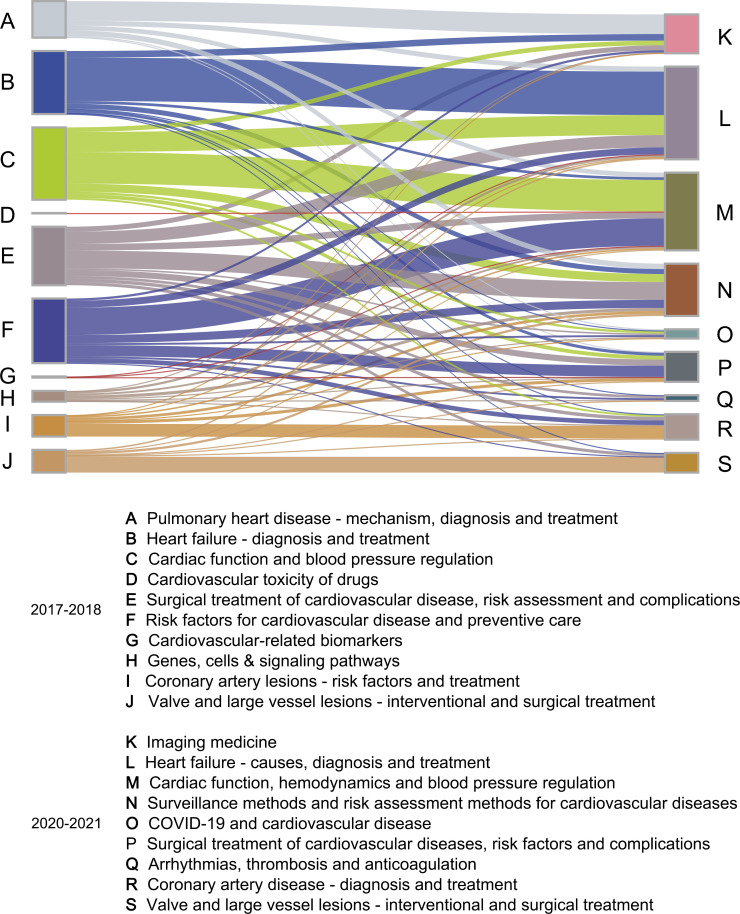 Figure 4
Peer Reviews
No public reviews on file for this paper yet. If you reviewed it on a platform where reviews are public (OpenReview, ICLR, NeurIPS, ICML), you can paste yours below so the community can read it here.
Videos
No videos yet. Explain this paper in a talk, walkthrough, or lecture? Add one.
Taxonomy
TopicsArtificial Intelligence in Healthcare and Education · Frailty in Older Adults · Cardiac Health and Mental Health