Sit-to-stand and stand-to-sit transitions stimulate cardiac autonomic regulation and lead to age-dependent short-term patterns in heart rate
Max J. Heidelbach, Silke Lange, Friedrich Edelhäuser, Dirk Cysarz

TL;DR
Standing up and sitting down briefly stimulate heart regulation, with effects that change with age.
Contribution
The study identifies reproducible heart rate patterns during sit-to-stand and stand-to-sit transitions and shows age-related changes in these patterns.
Findings
Standing up and sitting down cause reproducible heart rate transitions within 30 seconds.
Heart rate patterns show age-related delays in reaching local minima and reduced HRmin/HRmax ratios with increasing age.
Abstract
Sedentary behaviors pose health risks, which can be mitigated by regular exercise. The impact of everyday movements on cardiac autonomic regulation is not well-established. The present study investigated whether standing up and sitting down from a chair leads to a reproducible transition pattern in heart rate. Furthermore, age-related changes in this pattern were assessed. Forty healthy participants (18–65 years, 22 female) performed eight repetitions of standing up from a chair and sitting down. Electrocardiogram and accelerometer data were recorded throughout the procedure. The average RR interval series was used to quantify the transition pattern evoked by the movement. Both movements resulted in a transition pattern in the RR interval and corresponding heart rate (HR) series within 30 s. After the initiation of movement, a local maximum HR appeared at a median of 8.1 s (standing…
Click any figure to enlarge with its caption.
 Figure 1
 Figure 2
 Figure 3
 Figure 4
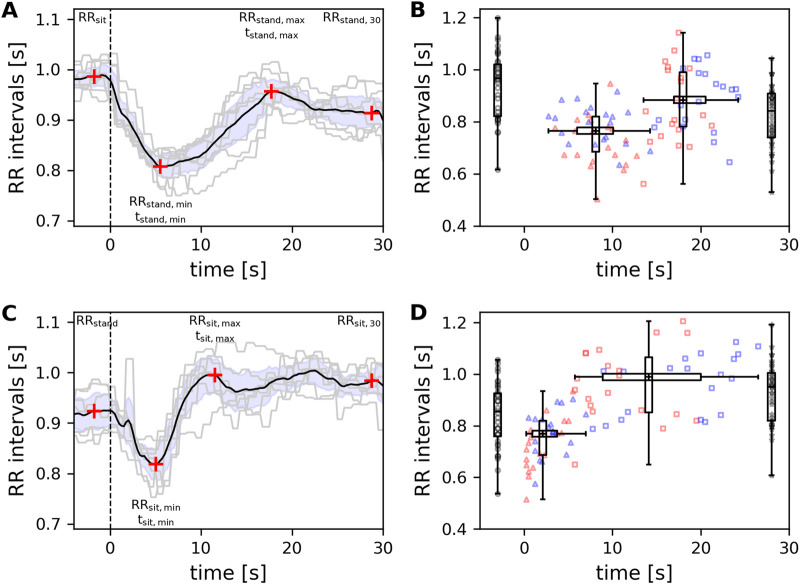 Figure 5
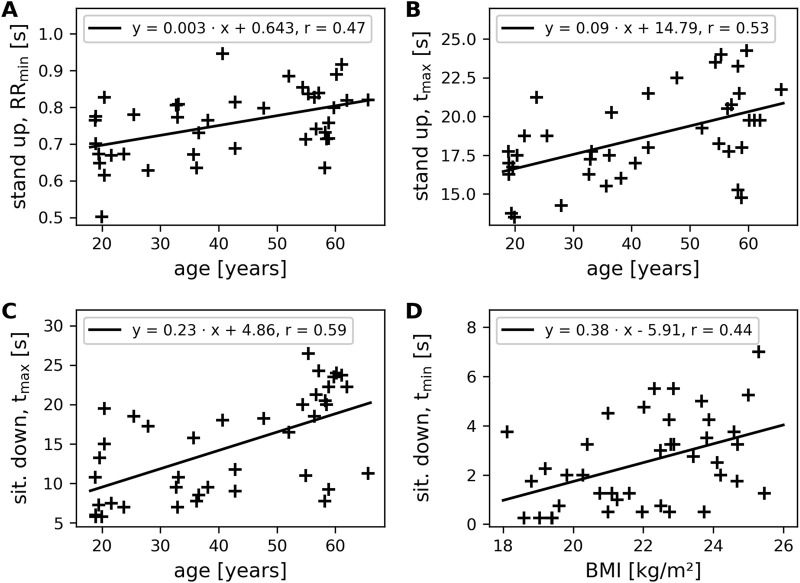 Figure 6
Peer Reviews
No public reviews on file for this paper yet. If you reviewed it on a platform where reviews are public (OpenReview, ICLR, NeurIPS, ICML), you can paste yours below so the community can read it here.
Videos
No videos yet. Explain this paper in a talk, walkthrough, or lecture? Add one.
Taxonomy
TopicsHeart Rate Variability and Autonomic Control · Cardiovascular Syncope and Autonomic Disorders · Cardiovascular and exercise physiology