Interferon gamma applied ex vivo restores function to neutrophils from critically ill patients
Cameron J Lake, Jonathan Scott, Marie-Hélène Ruchaud-Sparagano, John H Thompson, Fiona Dewar, Polina Yarova, Wendy Funston, Richard CH Davidson, Kathryn M Musgrave, Stephen E Wright, Ian Clement, Alistair I Roy, Wezi Sendama, Jason Powell, Daniel Brooks, Chung Mun Alice Lin

TL;DR
Applying interferon gamma to neutrophils from critically ill patients can restore their ability to fight infections.
Contribution
Ex vivo application of IFN-γ improves neutrophil function in critically ill patients through PI3K-γ and FcγR pathways.
Findings
IFN-γ significantly improved phagocytosis, bacterial killing, and superoxide generation in dysfunctional neutrophils.
PI3K-γ inhibition blocked IFN-γ's restorative effects on neutrophil functions.
FcγR blockade also prevented IFN-γ's improvement of bacterial killing.
Abstract
Critically ill patients commonly develop acquired neutrophil dysfunction, which increases susceptibility to intensive care unit-acquired infection (ICU-AI). This study aimed to assess whether interferon gamma (IFN-γ) can restore function in dysfunctional neutrophils from critically ill patients and to uncover potential underlying mechanisms. This was an observational cohort study. Neutrophils were isolated from whole blood donated by critically ill patients (n=31) in four separate teaching hospital intensive care units (ICUs). Neutrophils were subsequently treated with recombinant human IFN-γ or vehicle for 1 hour following either Fc gamma receptor (FcγR) blockade, selective inhibition of the gamma isoform of phosphoinositide 3-kinase (PI3K-γ) or vehicle control for 30 min. Neutrophil phagocytosis, bacterial killing, superoxide generation, phagocytic receptor expression and small Rho…
Genes, proteins, chemicals, diseases, species, mutations and cell lines named across the full text — each resolved to its canonical identifier and authoritative record.
Click any figure to enlarge with its caption.
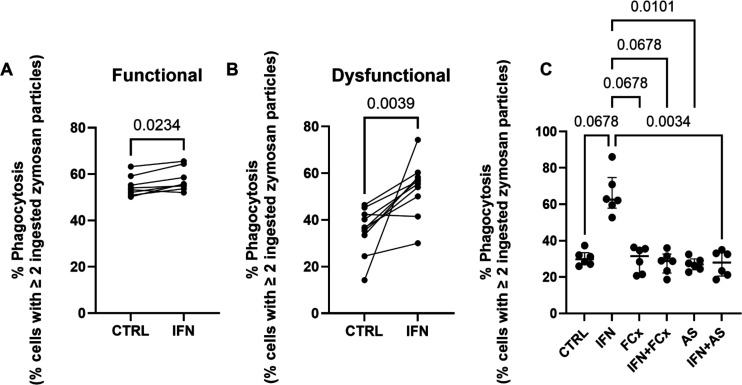 Figure 1
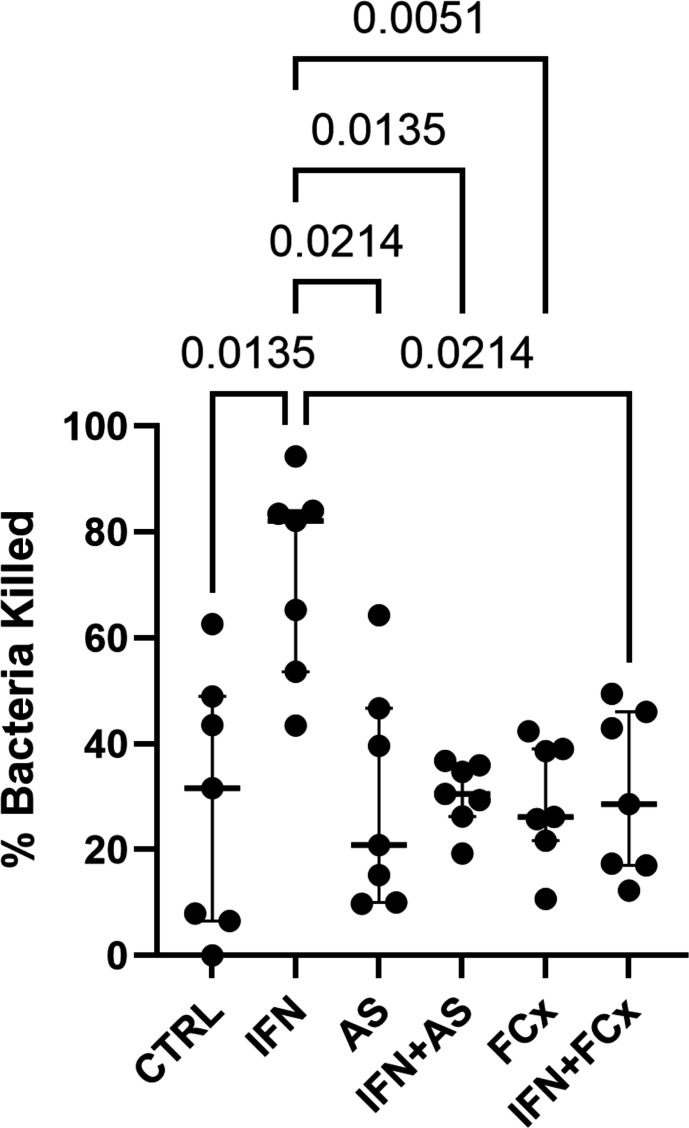 Figure 2
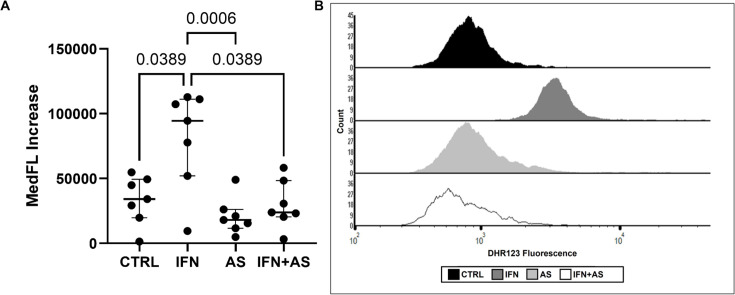 Figure 3
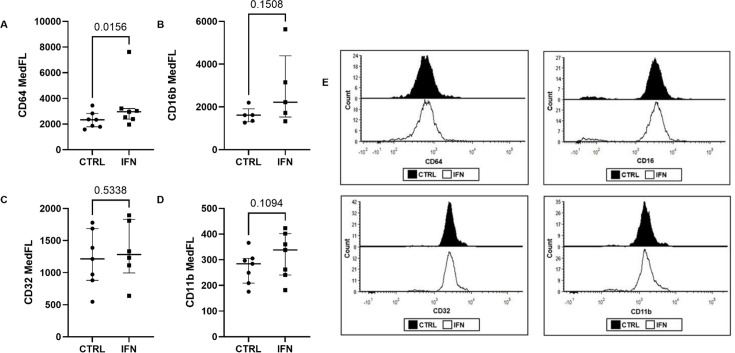 Figure 4
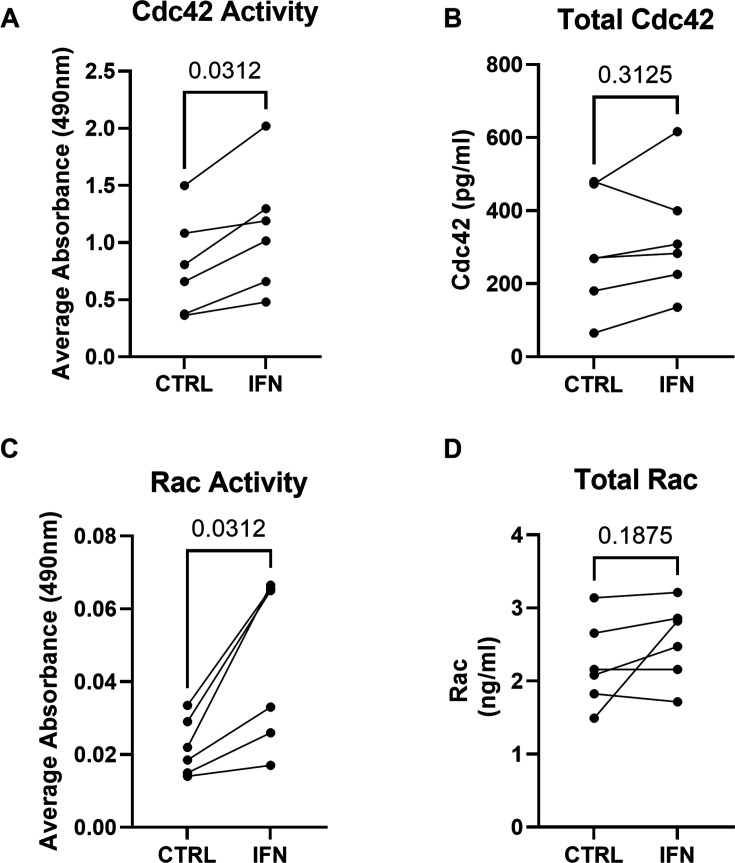 Figure 5
Peer Reviews
No public reviews on file for this paper yet. If you reviewed it on a platform where reviews are public (OpenReview, ICLR, NeurIPS, ICML), you can paste yours below so the community can read it here.
Videos
No videos yet. Explain this paper in a talk, walkthrough, or lecture? Add one.
Taxonomy
TopicsNeutrophil, Myeloperoxidase and Oxidative Mechanisms · Sepsis Diagnosis and Treatment