Multimodal AI for Alzheimer Disease Diagnosis: Systematic Review of Datasets, Models, and Modalities
Ziwen Yu, Anthony Mulholland, Tianyan Huang, Qiang Liu

TL;DR
This paper reviews how combining different data types with AI improves Alzheimer's diagnosis and prediction, but highlights the need for standardized benchmarks and better generalization.
Contribution
The paper provides a unified synthesis of multimodal AI models for AD diagnosis across diverse datasets, enabling cross-domain performance comparisons.
Findings
Multimodal AI models consistently outperformed single-modal approaches in Alzheimer's diagnosis and prognosis.
ADNI-based models achieved 92.5% average accuracy, while MCI conversion models reached 0.922 average AUC.
Self-collected datasets showed high accuracy (96%) but lacked generalizability due to small sample sizes.
Abstract
Early detection of Alzheimer disease (AD) is essential for timely intervention; yet, diagnostic performance varies widely across modalities and datasets. Recent multimodal artificial intelligence (AI) models have made significant progress, but the evidence base remains fragmented due to heterogeneous datasets, modeling frameworks, and reporting quality. This systematic review aimed to analyze studies on multimodal AI models for AD diagnosis, prognosis, and risk prediction over 5 years. We evaluated dataset characteristics, modality combinations, modeling strategies, performance metrics, and methodological limitations. We further discuss real-world implications and translational pathways. Following PRISMA (Preferred Reporting Items for Systematic Reviews and Meta-Analyses) 2020 guidelines, we systematically searched PubMed, IEEE Xplore, Scopus, ACM Digital Library, Cochrane, and arXiv,…
Genes, proteins, chemicals, diseases, species, mutations and cell lines named across the full text — each resolved to its canonical identifier and authoritative record.
Click any figure to enlarge with its caption.
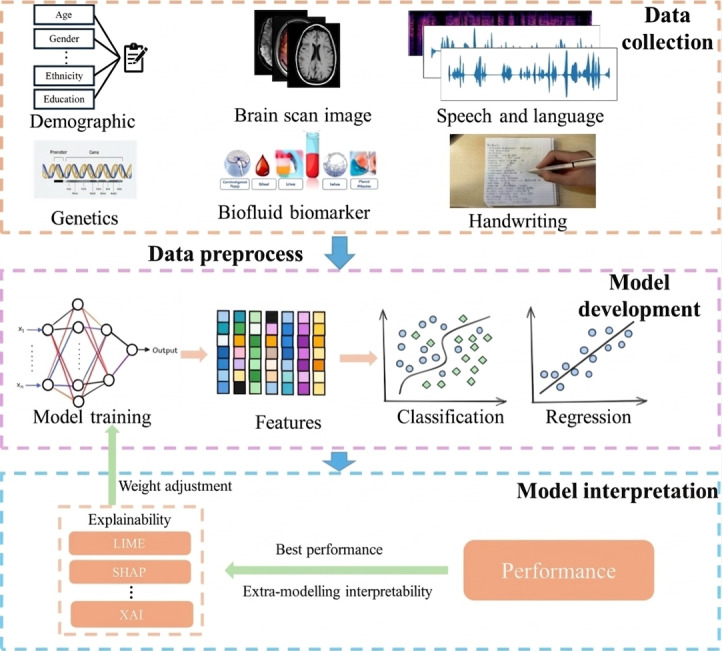 Figure 1
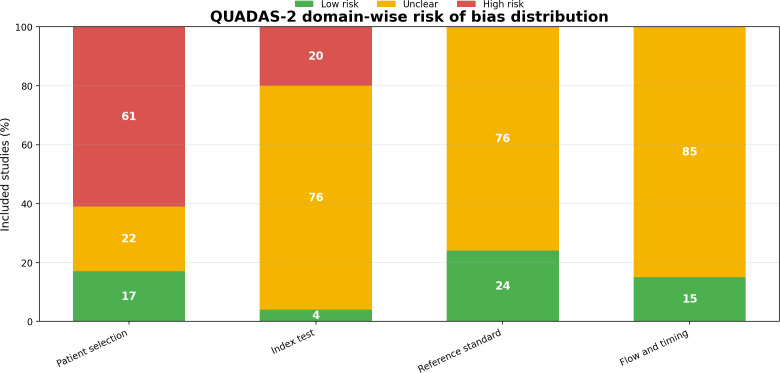 Figure 2
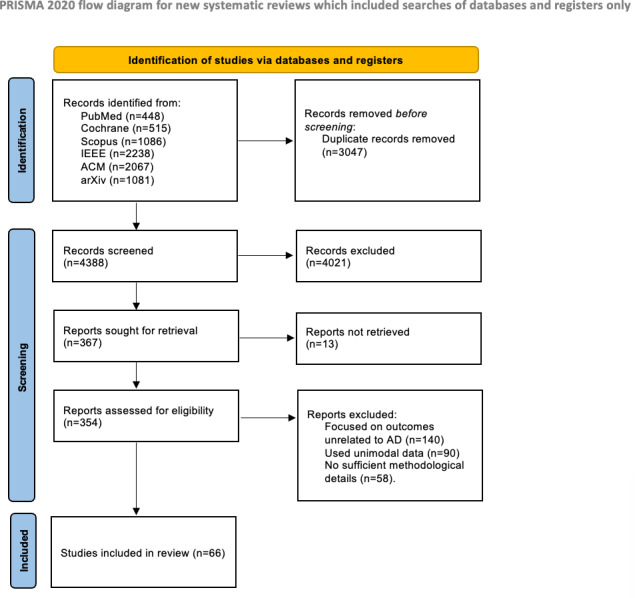 Figure 3
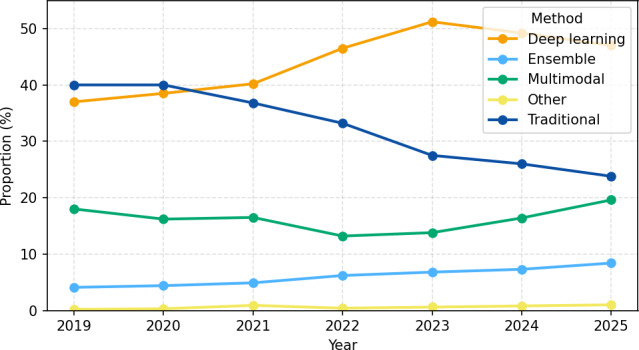 Figure 4
Peer Reviews
No public reviews on file for this paper yet. If you reviewed it on a platform where reviews are public (OpenReview, ICLR, NeurIPS, ICML), you can paste yours below so the community can read it here.
Videos
No videos yet. Explain this paper in a talk, walkthrough, or lecture? Add one.
Taxonomy
TopicsMachine Learning in Healthcare · Artificial Intelligence in Healthcare and Education · Artificial Intelligence in Healthcare