How do clinician and parent-reported data differ? An analysis of similarity and difference in the datasets from a cross-syndrome genetics cohort study (GenROC)
Karen Jaqueline Low, Huw Day, Mevmi Lasanya Kodippuli Thanthilla, Suzanne Alsters, Charlotte Davis, Helen V Firth, Caroline Wright

TL;DR
This study compares parent-reported and clinician-reported data in a genetics cohort, finding differences in the types and details of phenotypic information collected.
Contribution
The paper provides a detailed comparison of parent and clinician-reported data across multiple systems and genes in a cross-syndrome cohort.
Findings
Parent-reported data included more terms for dental, gastroenterology, immunology, and respiratory systems.
Clinician-reported data provided more detail for most gene subgroups and neurology.
Similarity scores were highest for cardiac and lowest for ENT systems.
Abstract
Parent/patient-reported (PRD) datasets provide ready access to phenotypic data for monogenic neurodevelopmental disorders, yet their concordance with clinical data is unclear. In the GenROC study, 547 children (mean age 7.6 years, balanced sex ratio) had parallel parent-reported web questionnaires and clinician-reported (CRD) Human Phenotype Ontology proformas. We compared the two sources per participant by system, gene and gene group and overall for quantity, detail and similarity. 547 probands were analysed ranging in age from infancy to 16 years (mean 7.6) with similar gender distribution. PRD provided more terms for dental, gastroenterology, immunology and respiratory systems and for vision (p<0.001 for all) and to a lesser degree for cardiac (p=0.0012). CRD provides more detail than PRD for most gene subgroups, combined systems and for neurology (p<0.001). Similarity scores were…
Genes, proteins, chemicals, diseases, species, mutations and cell lines named across the full text — each resolved to its canonical identifier and authoritative record.
Click any figure to enlarge with its caption.
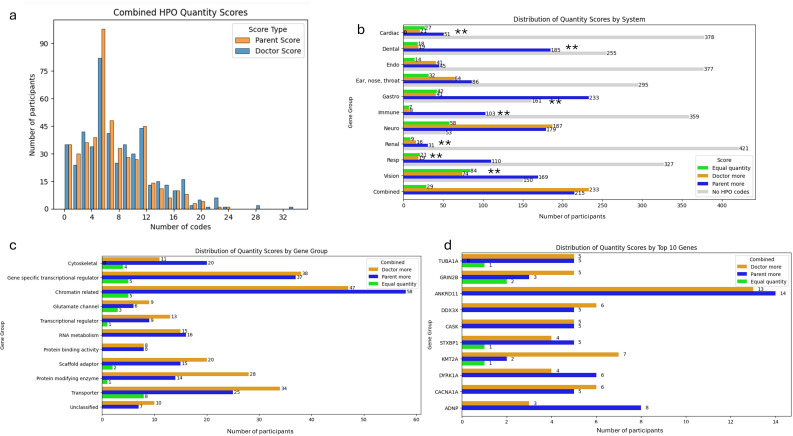 Figure 1
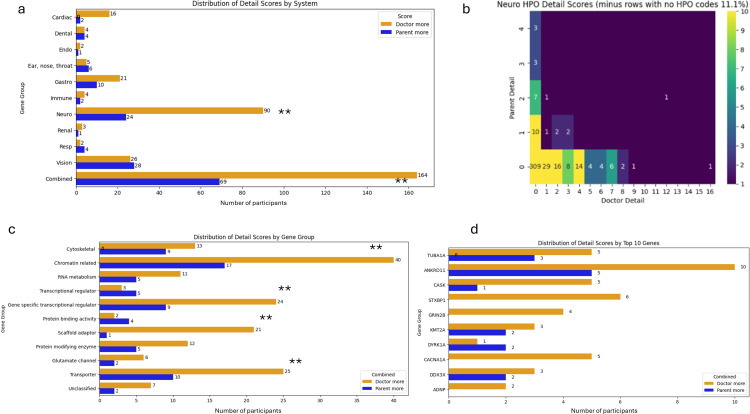 Figure 2
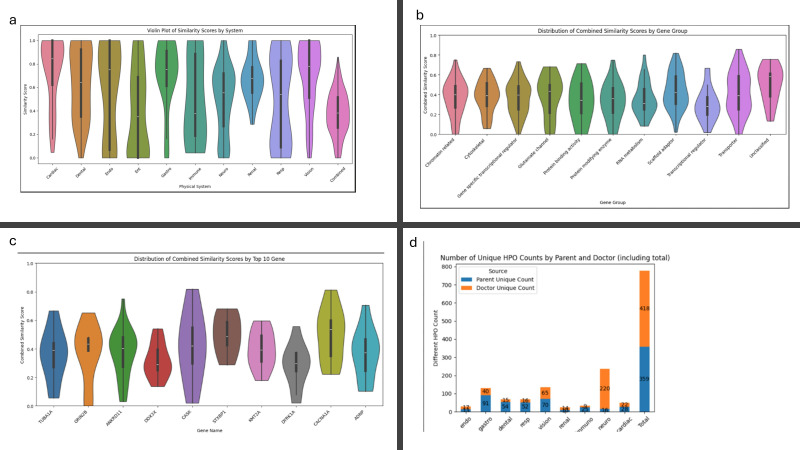 Figure 3
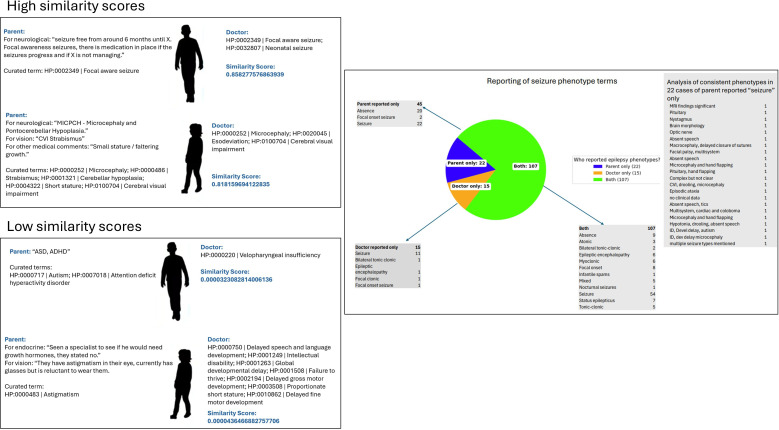 Figure 4
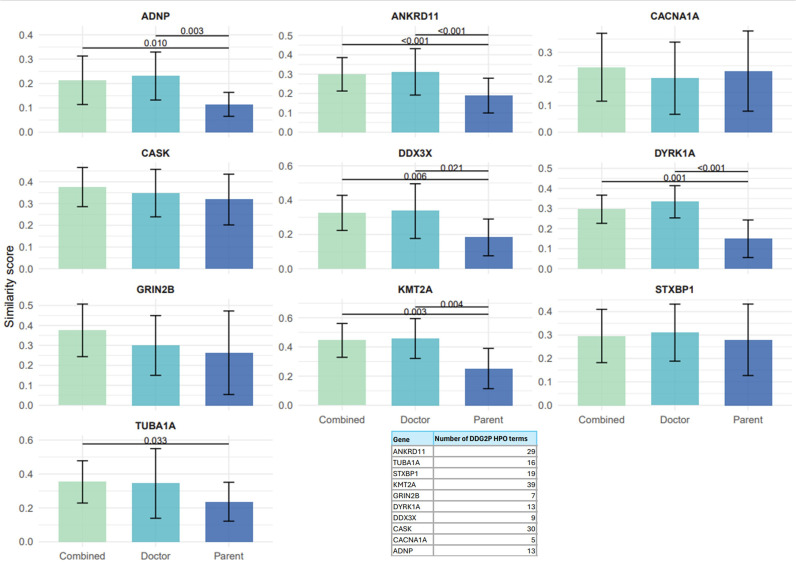 Figure 5
Peer Reviews
No public reviews on file for this paper yet. If you reviewed it on a platform where reviews are public (OpenReview, ICLR, NeurIPS, ICML), you can paste yours below so the community can read it here.
Videos
No videos yet. Explain this paper in a talk, walkthrough, or lecture? Add one.
Taxonomy
TopicsGenomics and Rare Diseases · Genetic Associations and Epidemiology · Genomic variations and chromosomal abnormalities